Scottish National Gallery: Edinburgh's finest art collection
Edinburgh: City Sightseeing hop-on hop-off bus tour
Is the Scottish National Gallery worth visiting?
Yes, absolutely — and it is free. The permanent collection includes Velázquez, Raphael, Vermeer, Rembrandt, Titian, and an exceptional Scottish painting collection in a neoclassical building on The Mound. Allow two to three hours for a focused visit. One of Edinburgh's most rewarding cultural experiences, widely overlooked by visitors focused on the Old Town.
Scotland’s greatest painting collection — and it is free
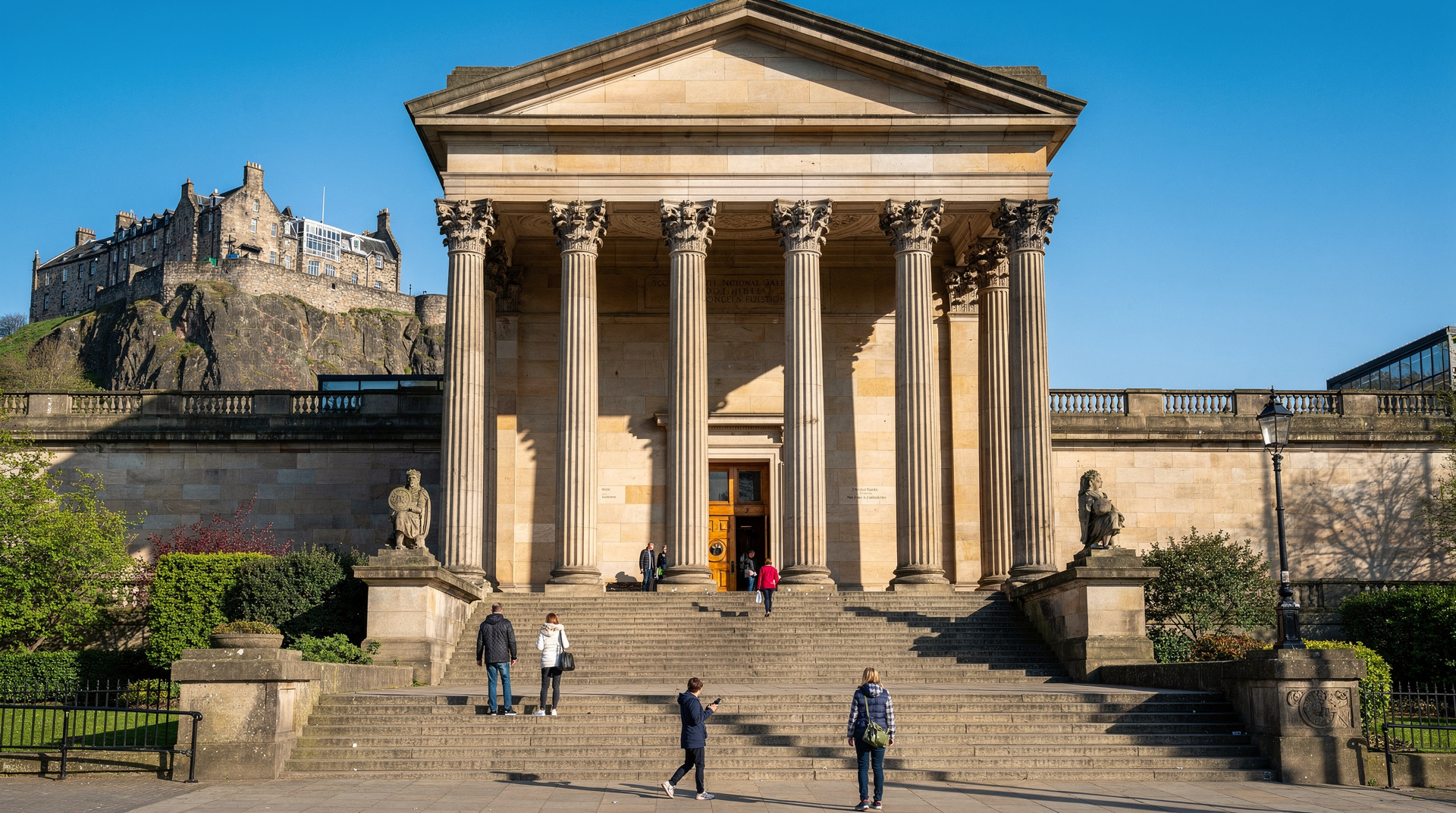
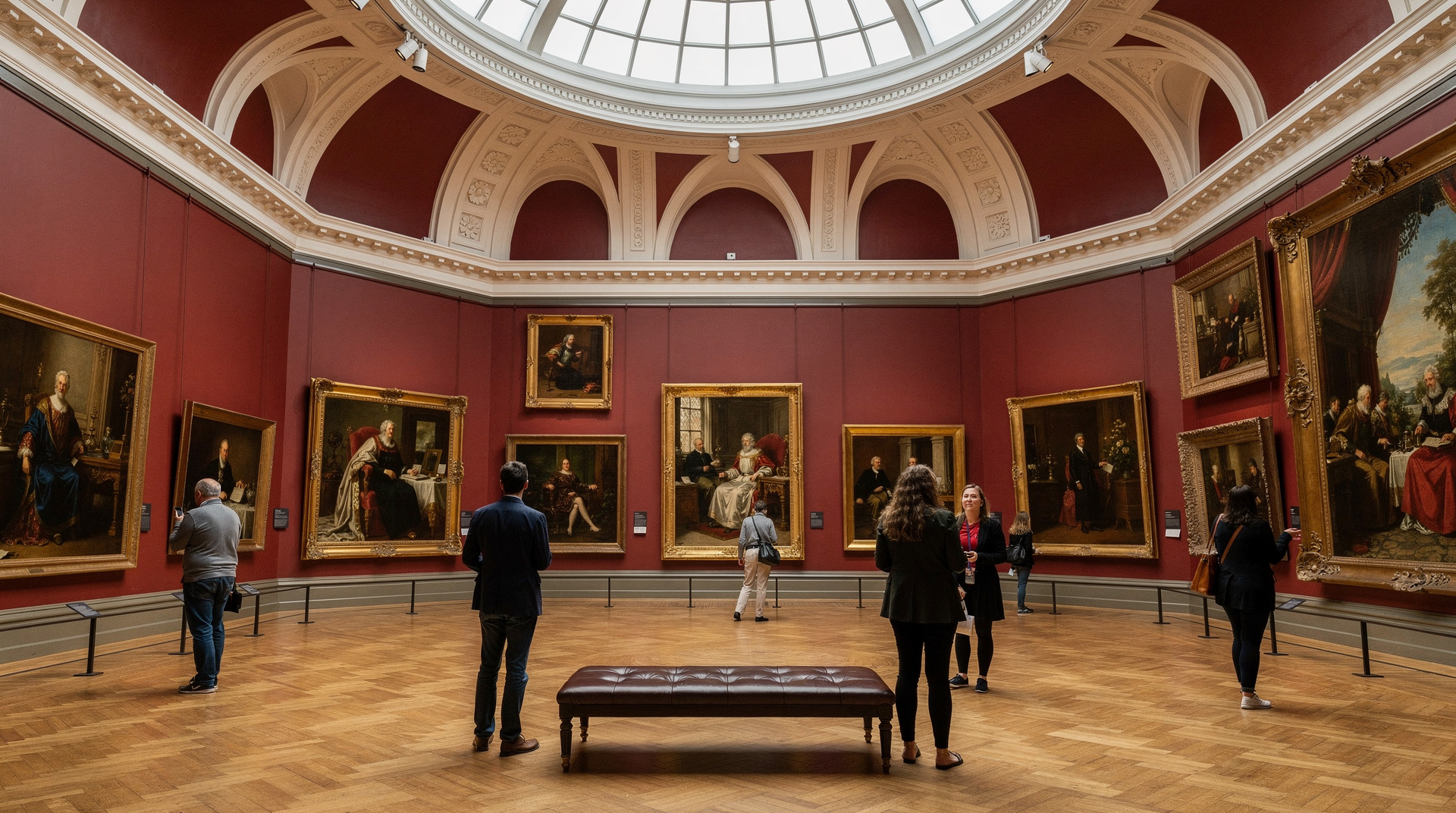
The Scottish National Gallery sits at the foot of The Mound, the man-made embankment that connects the Old Town to the New Town, in a confident neoclassical building designed by William Henry Playfair and opened in 1859. It houses Scotland’s greatest collection of paintings and is, by any reasonable measure, one of the finest small art galleries in Europe. Yet a significant proportion of visitors to Edinburgh walk past it without going in because they do not realise what is inside.
The collection spans from the early Renaissance to the Post-Impressionists and includes works by Raphael, Botticelli, Titian, Velázquez, Vermeer, Rembrandt, El Greco, Rubens, Poussin, Gainsborough, Constable, Turner, Monet, Van Gogh, Gauguin, and Cézanne — alongside the finest collection of Scottish painting anywhere in the world. All of this is permanently free to view.
This guide covers what to see, how long to allow, and how to combine a gallery visit with the rest of Edinburgh’s cultural landscape.
| Where | The Mound, between the Old Town and New Town |
| Cost | free (special exhibitions may charge) |
| Time needed | 2 hours for highlights, 3 hours for a thorough visit |
| Getting there | 5-minute walk from Princes Street or the Royal Mile |
| Best time | weekday mornings, outside August festival crowds |
The permanent collection: where to begin
The gallery is laid out roughly chronologically across two floors, with the lower floor covering early Italian, Flemish, and Dutch painting and the upper floor moving through Spanish and French painting toward the British collection and the Scottish rooms.
Italian Renaissance: the early rooms
The early Italian galleries contain works that would anchor any major European collection. Raphael’s The Bridgewater Madonna (c.1507) — a circular painting of the Virgin and Child on a rich blue ground — is one of the gallery’s most important possessions. The softness of expression and the technical mastery of the tondo form are immediately apparent even to non-specialists.
The collection also includes Botticelli’s The Virgin Adoring the Sleeping Christ Child (c.1485), a work of restrained tenderness that repays close attention. The gradations of light in the landscape behind the figures demonstrate Botticelli at his most technically accomplished.
Dutch and Flemish masters
The Rembrandt holdings are modest but significant — the portrait A Woman in Bed (c.1647) shows the late Rembrandt at his most intimate and psychologically probing. The Vermeer painting in the collection, Christ in the House of Mary and Martha (c.1654–1656), is unusual in the artist’s output: a large-scale New Testament subject rather than the domestic interiors he is famous for. It is the earliest known Vermeer and shows the young artist working out his relationship to the Italian and Flemish traditions he was absorbing.
The Flemish collection includes works by Rubens and Van Dyck. Rubens’ The Feast of Herod (c.1638), a large theatrical work showing the moment Salome presents John the Baptist’s head to the king, is among the gallery’s most dramatic paintings.
Spanish painting: Velázquez and El Greco
The gallery has a small but exceptional Spanish collection. Velázquez’s An Old Woman Cooking Eggs (c.1618) — an early genre scene painted when the artist was around 18 or 19 — is a masterpiece of observed light and texture. The pottery, eggs, and cooking implements are painted with a precision that anticipates the later technical brilliance of his court portraits. It is one of the most visited paintings in the gallery and deservedly so.
El Greco’s The Saviour of the World (c.1600) demonstrates the artist’s distinctive elongated figures and intensely spiritual palette.
French painting: Poussin and the Grand Manner
The French collection covers the seventeenth through nineteenth centuries, with particular strength in Poussin. His pair of paintings The Mystic Marriage of Saint Catherine and Seven Sacraments are here, and the collection of his work forms a coherent picture of one of the most intellectually rigorous painters in Western art history.
The nineteenth-century French rooms include Monet, Degas, Cézanne, Gauguin, and Van Gogh. Van Gogh’s Olive Trees (1889) — painted during the artist’s stay at Saint-Rémy-de-Provence — is among the gallery’s most beloved works. The impasto surface, visible as texture from a close distance, dissolves into shimmering movement at the normal viewing distance.
The Scottish collection: the gallery’s distinctive contribution
The Scottish rooms on the upper floor constitute the most important collection of Scottish painting in the world. Henry Raeburn’s portrait work — Scotland’s great eighteenth-century portraitist — is represented in depth, including the iconic The Reverend Robert Walker Skating on Duddingston Loch (c.1790s). This single painting, combining Enlightenment dignity with an entirely informal subject, has become one of Scotland’s most recognisable cultural images. Whether it is actually the greatest Scottish painting or simply the most reproduced is a question worth holding.
The collection also includes major works by Alexander Nasmyth, who painted Edinburgh’s landscapes and portraits during the city’s Enlightenment golden age; David Wilkie, whose genre scenes of Scottish life in the early nineteenth century have recently been re-evaluated as among the most significant British paintings of their era; and later Scottish Colourists (S.J. Peploe, Francis Cadell, J.D. Fergusson, Leslie Hunter) whose work in the early twentieth century brought a Post-Impressionist colour intensity to Scottish subjects.
The Scottish Colourists: Edinburgh’s most accessible modern art
If you have limited time but want a concentrated encounter with excellent painting, the Scottish Colourists rooms are the most immediately rewarding section of the gallery. Peploe’s still lifes — tulips in vases, roses on tabletops — use the lessons of Cézanne and Matisse in a way that is purely enjoyable. Cadell’s Edinburgh interiors (particularly the series of paintings of New Town interiors with elegantly dressed figures) document a world that no longer exists but makes it feel immediate.
The Colourists worked in a tradition that combined French Post-Impressionism with a specifically Scottish sensitivity to light, particularly the light of Iona and the Inner Hebrides, where several of them painted extensively. The transition from the Edinburgh interiors to the Iona landscapes in consecutive rooms is one of the pleasures of the gallery’s hang.
Weston Link: connecting to the Portrait Gallery
The Weston Link, an underground connection between the Scottish National Gallery and the Royal Scottish Academy building next door, opened in 2004 and extended the gallery space significantly. It includes additional gallery rooms for special exhibitions and connects to the Academy, which hosts major temporary shows.
The Royal Scottish Academy building (also designed by Playfair, opened in 1826) is separated from the National Gallery only by its function — it hosts exhibitions by the Royal Scottish Academy, Scotland’s oldest fine arts institution. Entry to Academy exhibitions may carry a charge.
Practical information
Opening hours: 10am–5pm daily (official National Galleries of Scotland site).
Entry: Free for all permanent collections. Special exhibitions may charge admission.
Duration: Two hours covers the highlights; three hours for a thorough visit that includes the Scottish collection in depth.
The café: The basement café at the Weston Link level is one of Edinburgh’s better museum cafés — good coffee, fresh food, a comfortable space. Worth using for a mid-visit break.
Shop: The gallery shop has a well-curated selection of art books, prints, and gifts with genuine art historical content rather than just branded merchandise. The print reproductions of Scottish Colourist works in particular are good quality and make meaningful gifts.
Combining gallery visits in Edinburgh
Edinburgh has four National Galleries of Scotland, of which the Scottish National Gallery is the main collection site. The others are:
The Scottish National Portrait Gallery (1 Queen Street, New Town) covers Scottish history through portraits from the sixteenth century to the present. Free entry. Its Victorian Gothic interior is spectacular and the portrait collection provides a visual companion to the historical content at the National Museum of Scotland.
The Scottish National Gallery of Modern Art (Belford Road, west of Dean Village) covers art from 1900 to the present in two connected buildings. Particularly strong on Surrealism (a significant Eduardo Paolozzi collection), Scottish modern and contemporary art, and the landscaped grounds. Free. A pleasant walk from Stockbridge.
The Scottish National Gallery (covered in this guide) is the right starting point.
For a dedicated art-focused Edinburgh visit across all four galleries, see the Edinburgh for art lovers guide, which plans a multi-day cultural programme.
For a city overview that includes the gallery, the City Sightseeing hop-on hop-off bus stops near The Mound and allows you to connect the gallery with other Edinburgh highlights in a single day without walking the full distances. The Edinburgh all the highlights walking tour covers the main sights including the gallery area in a guided format.
The gallery and Edinburgh’s urban landscape
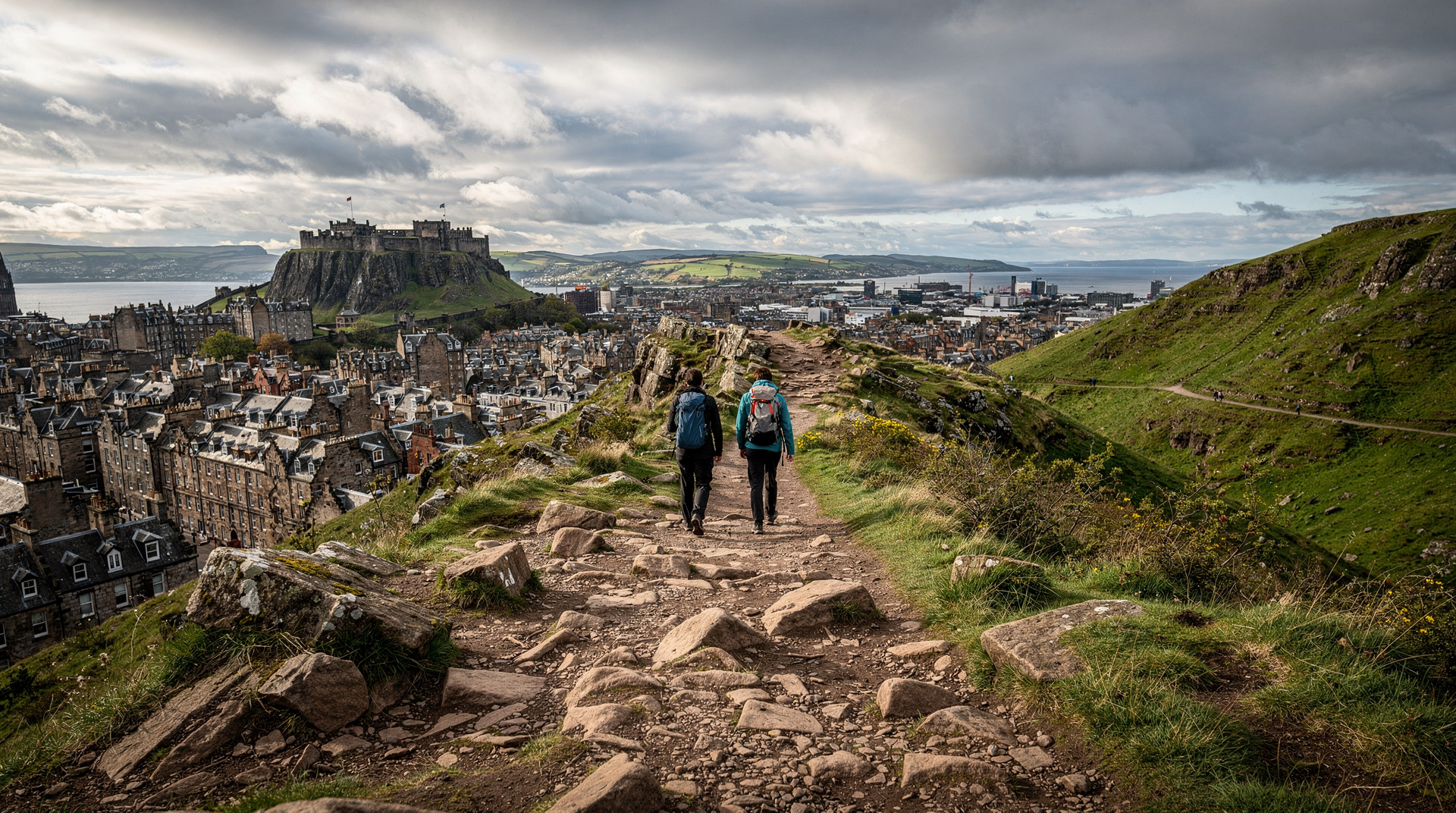
The National Gallery sits at a specific juncture in Edinburgh’s topography — at the base of The Mound, between the Old Town to the south and the New Town to the north, with Princes Street Gardens stretching to either side. The Scott Monument (the Victorian Gothic rocket that dominates the east end of the gardens) is visible from the gallery entrance. The castle sits above on its rock to the west.
Standing on the steps of the gallery looking east along the gardens toward Calton Hill is one of Edinburgh’s canonical views — all of the city’s layered history compressed into a single sightline. It is worth pausing here before going in.
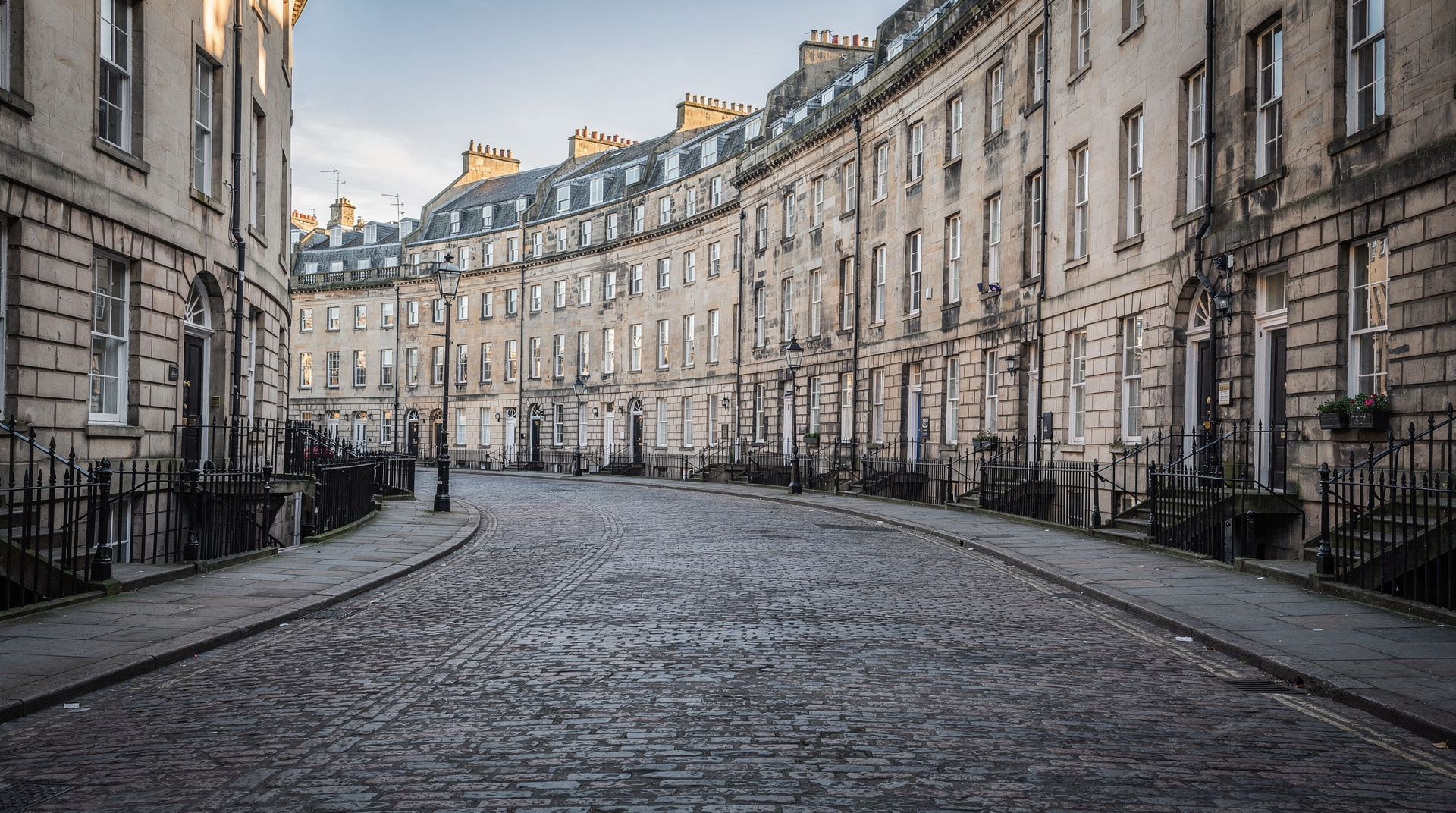
The New Town destination guide covers the Georgian neighbourhood that begins immediately north of the gallery and is one of Europe’s finest examples of planned urban design from the eighteenth century.
The architecture: Playfair’s neoclassical vision
William Henry Playfair, Edinburgh’s most significant Victorian architect, designed the Scottish National Gallery (and the adjacent Royal Scottish Academy building) as a pair of neoclassical temples at the foot of The Mound, creating what has become one of Edinburgh’s most photographed architectural set pieces. Playfair worked in a strict Greek Revival style — the Ionic columns and clean pediments of both buildings are directly modelled on ancient Athenian temples — reflecting the Edinburgh’s self-image as the “Athens of the North” during the Enlightenment period.
The Scottish National Gallery opened in 1859, twelve years after Playfair’s death. The building’s relationship to the Edinburgh landscape — framed by the castle above, the New Town gardens on either side, and Calton Hill in the distance — was clearly considered in the design: from the gallery steps, the view west toward the castle is one of Edinburgh’s most deliberate urban compositions.
The Weston Link underground extension (2004) significantly increased the gallery’s space without altering Playfair’s exterior. The new spaces are modern, neutral, and well-lit — a contrast to the gallery’s Victorian interiors that some visitors find jarring and others appreciate as a functional extension.
The collection’s history: how Edinburgh got its old masters
The Scottish National Gallery’s collection was assembled through a combination of government purchase, gift, and the fortunate acquisition of several entire private collections in the nineteenth and early twentieth centuries.
The foundation of the old master collection came partly from the collection of the Earl of Bridgewater, which provided the Raphael Madonna among other works. Subsequent acquisitions under the gallery’s early directors — including the significant Duke of Sutherland loan (a collection of Renaissance and Flemish works that has been on loan to the gallery since 1945) — established the breadth that makes the gallery competitive with European collections many times its size.
The Scottish collection grew more organically through ongoing purchases and gifts from Scottish artists and patrons. The Henry Raeburn paintings, which now define the gallery’s Scottish identity, were acquired piecemeal over decades rather than in a single decisive purchase.
The gallery and the Scottish Enlightenment
The Scottish National Gallery sits at the centre of the geography of the Enlightenment that made Edinburgh internationally significant in the eighteenth century. Within fifteen minutes’ walk of the gallery: the Old College of the University of Edinburgh (where David Hume taught and Adam Smith lectured), the house of James Craig (who designed the New Town), the Royal Society of Edinburgh’s meeting rooms, and numerous institutional buildings of the period.
The gallery itself is a product of this tradition — the application of classical learning (Greek architecture, European old master painting) to the specific circumstances of a northern capital that had decided it would educate and refine itself to European standards. The self-consciousness of this project — Edinburgh choosing to be a “Athens of the North” rather than accepting its peripheral status — is visible in the building’s confident Ionic columns and in the quality of the collection assembled behind them.
Photography and the gallery
Photography for personal use is permitted throughout the permanent galleries without flash. The most photographed works are predictably the Reverend Walker skating (limited by the viewing angle and the protective glass) and the Velázquez Cooking Eggs (photographed from any angle with interesting results).
The Scottish Colourists rooms photograph particularly well because the works are displayed at standard height and the lighting is favourable. Peploe’s still lifes and Cadell’s interior scenes are especially rewarding in photographs because the saturated palette translates well to screen.
Visiting with children: what actually works
Families sometimes assume an old masters collection will not hold a child’s attention, but the Scottish National Gallery works better for children than its reputation suggests, provided the visit is planned selectively rather than attempted as a full tour.
Large-scale dramatic works — Rubens’ Feast of Herod, the Velázquez kitchen scene — tend to engage children more readily than smaller, quieter paintings, and a simple game of spotting animals or specific colours across the rooms keeps younger visitors moving with purpose rather than dragging through room after room. The Edinburgh with kids guide covers this and other family-friendly cultural stops, including timing a gallery visit around nap schedules and the café break that most families find essential by the halfway point.
Pairing the gallery with the National Museum of Scotland
Visitors with a broader interest in Scottish culture often combine the gallery with the National Museum of Scotland, a ten-minute walk south on Chambers Street. The pairing works well thematically — the museum covers Scotland’s natural and social history, while the gallery covers its visual art — and both are free, making a full day of culture achievable without a single entry fee. Doing the gallery in the morning, when light and energy levels are best for close looking at paintings, and the museum in the afternoon, which rewards a more exploratory wander, is the sequence most visitors find works best.
A budget-friendly Edinburgh highlight
For visitors managing costs carefully, the Scottish National Gallery is one of the best-value stops in the city precisely because it costs nothing while delivering a world-class experience. The Edinburgh on a budget guide lists it among the free attractions worth prioritising, alongside the New Town itself and the free Old Town closes. If you are trying to balance paid attractions like Edinburgh Castle against a limited budget, building in a free morning at the gallery is an easy way to keep the day’s spending down without sacrificing quality.
Literary Edinburgh nearby
The gallery sits within easy walking distance of several sites relevant to Edinburgh’s literary history, covered in the Edinburgh bookshops and literary guide — including independent bookshops on nearby streets and the Writers’ Museum up on the Royal Mile. Combining an art-focused morning with a literary-themed afternoon makes for a culturally dense day that barely touches the more crowded tourist circuit.
After the gallery: the Gardens and the Royal Mile
After a gallery visit, the Princes Street Gardens on either side of The Mound provide a natural continuation. The east garden has the Scott Monument, the Ross Bandstand, and the Floral Clock; the west garden has flower beds and a direct sightline to the castle. Both are free and pleasant for a post-gallery walk.
From The Mound, it is a five-minute walk up the Mound path to the Royal Mile — a connection that links the gallery to the Old Town’s historic attractions and to the Edinburgh Castle at the top of the hill. The one-day Edinburgh itinerary builds a route that incorporates the gallery into a broader Old Town and New Town circuit.
Frequently asked questions about the Scottish National Gallery
How does the Scottish National Gallery compare to other UK galleries?
In terms of sheer quality per square metre, it is competitive with the National Gallery in London and the Ashmolean in Oxford. The collection is smaller than the National Gallery’s but has been assembled with exceptional taste — there are no weak rooms. The Scottish painting collection, which covers ground that no other public collection matches, is an additional reason to choose Edinburgh over London for an art pilgrimage.
What is the most famous painting in the Scottish National Gallery?
The Reverend Robert Walker Skating on Duddingston Loch (attributed to Raeburn) is the most reproduced image in the collection and probably the most immediately recognised. Velázquez’s An Old Woman Cooking Eggs is arguably more important in art-historical terms. Both are in the collection.
Is the gallery suitable for children?
Yes, particularly if the visit is selective rather than exhaustive. Children respond well to large-scale dramatic paintings (Rubens, Velázquez), the skating Reverend, and the Colourists’ bright palette. Two hours is a reasonable limit for most children; the café break in the middle helps. The gallery runs family-specific activities during school holidays.
Do I need to book tickets for the permanent collection?
No. The permanent collection is free and does not require booking. Special exhibitions may require tickets and advance booking is recommended for popular shows. Check the website for current exhibitions and their entry arrangements.
Where is the best place to eat near the gallery?
The gallery’s own basement café is reliable. Above ground on The Mound, the Princes Street gardens café is pleasant in summer. The New Town has the better restaurant options — Thistle Street (a two-minute walk north) has Café St Honoré and several good coffee shops. See the where to eat in Edinburgh guide for the full picture.
Is the gallery a good option on a rainy day?
Yes, and it is one of the better wet-weather options in the city precisely because it is indoors, free, and rarely feels overcrowded even when the Old Town streets are miserable. See the rainy day Edinburgh with kids guide for how it fits alongside other indoor options if you are travelling with children.
How does the gallery compare to the National Museum of Scotland for a first visit?
They are complementary rather than competing choices — the gallery covers painting specifically, while the National Museum of Scotland covers a much broader sweep of natural history, science, and Scottish social history. Visitors with only a few hours in Edinburgh’s museums and galleries often find the Museum’s variety more immediately engaging, while art specifically wanting quality painting should prioritise the gallery.
Top experiences
Bookable activities with verified prices and instant confirmation on GetYourGuide.