Avoiding tartan tat shops in Edinburgh: where to buy quality instead
Edinburgh: discovering malt whisky day tour with entry
Where should you buy Scottish gifts in Edinburgh that are not tourist tat?
Avoid the Royal Mile shops. For whisky: Royal Mile Whiskies or The Scotch Malt Whisky Society. For textiles: Anta or Bill Baber in the Old Town. For food gifts: Valvona and Crolla, Iain Mellis. For general quality souvenirs: the National Museum of Scotland gift shop. All offer genuine Scottish products at fair prices.
| Avoid | Royal Mile tourist shops — cashmere, whisky, shortbread, “kilts” |
| Whisky instead | Royal Mile Whiskies, Scotch Malt Whisky Society, Cadenhead’s |
| Textiles instead | Anta, Bill Baber, Ragamuffin |
| Food gifts instead | Valvona and Crolla, Iain Mellis, Edinburgh Farmers’ Market |
| Budget | Genuine cashmere from £80+; good single malt from £35+ |
The tartan tat problem
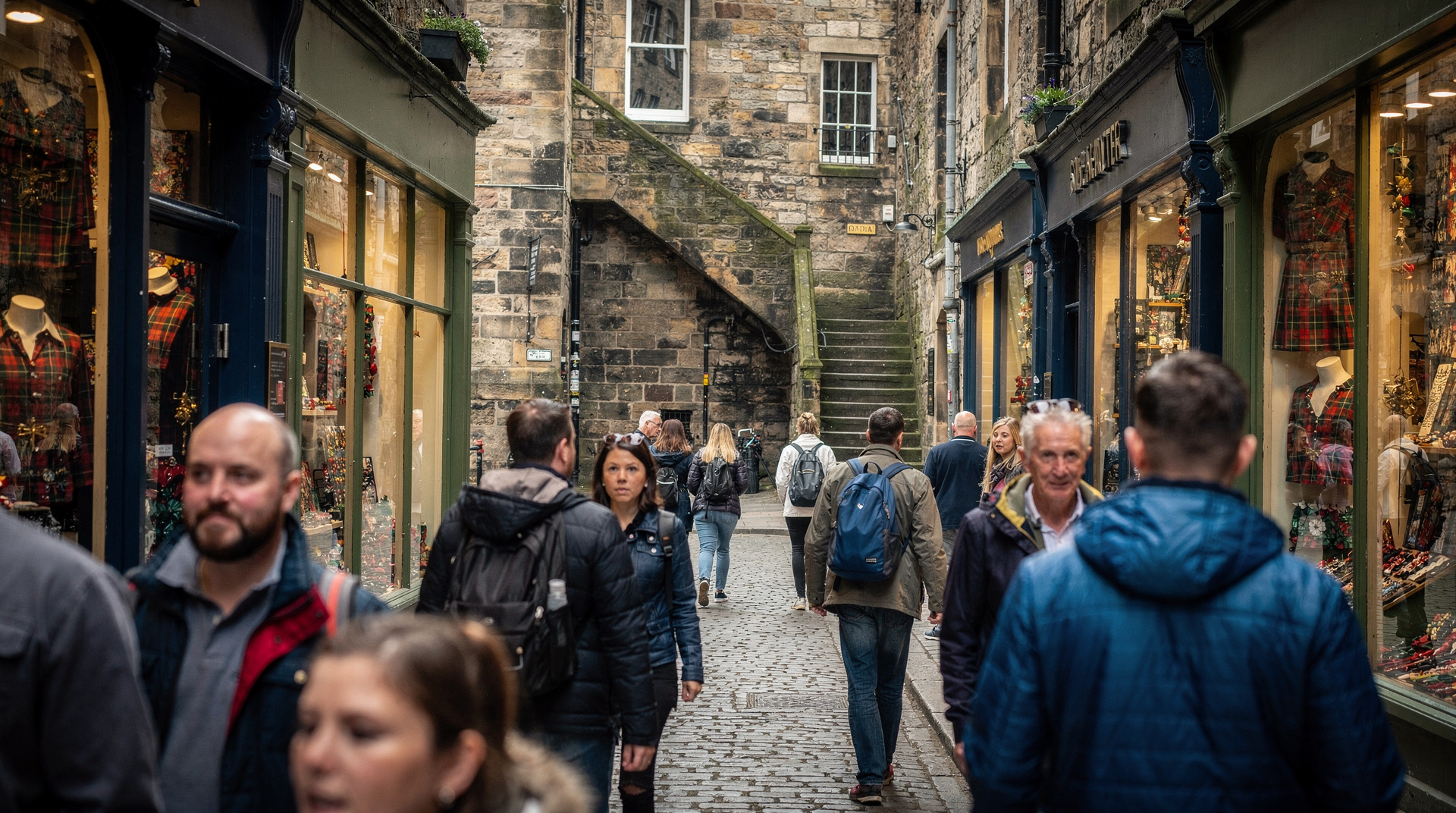
Edinburgh has a thriving and almost entirely tourist-facing retail sector along the Royal Mile and surrounding streets. Walking from Edinburgh Castle toward Holyrood, you pass dozens of shops selling near-identical products: tartan scarves, shortbread tins, mugs with Loch Ness monsters, whisky miniature sets, generic “Scottish” gifts with thistle motifs, and Highland cow plush toys. Most of this merchandise is made overseas, marked up significantly for tourist location, and indistinguishable between shops.
This is not uniquely Edinburgh’s problem — every heavily visited historic city in Europe has the same dynamic. But Edinburgh’s density of tourist shops along the Royal Mile is particularly high, and the price premium over the alternatives is significant.
This guide tells you specifically what to avoid, where the genuinely good shops are, and what “quality Scottish products” actually means in practice.
What to avoid on the Royal Mile
The cashmere shops: Edinburgh and Scotland are famous for textile production, but the “cashmere” and “Merino wool” products in many Royal Mile tourist shops are not produced in Scotland or even in the UK. Check labels carefully — products labelled “Scottish design” are not necessarily Scottish-made. Genuine Scottish cashmere (from producers like Johnstons of Elgin or Edinburgh Woollen Mill’s quality range) exists but not at the price points in tourist shops. Genuine cashmere should be soft, lightweight, and priced from £80-100 upwards for a quality scarf — if it is £25-30, it is not quality cashmere.
The whisky shops: The standard Royal Mile whisky shops sell the same bottles you can buy at Edinburgh Airport duty free, at Tesco, or at most UK supermarkets — at prices 20-40% higher than any of those channels. Buying a mainstream bottle of Glenfiddich, Laphroaig, or Glenlivet on the Royal Mile is simply paying extra for the location. The exception is specialist whisky retailers (covered below) that stock independent bottlings and rare expressions unavailable elsewhere.
The shortbread and food tins: Scotland has excellent food producers, but the branded shortbread tins and fudge boxes on the Royal Mile are mass-produced products available online and in UK supermarkets. If you want genuinely good Scottish food products to take home, there are better options (covered below).
The kilt shops: Authentic Highland dress is a legitimate Scottish craft product but also a significant purchase. A full Highland outfit (kilt, jacket, sporran, belt, sgian-dubh, hose, ghillie brogues) costs £400-800 minimum for quality. The tourist kilt shops selling “Scottish” kilts at £30-50 are not selling anything recognisable to the Scottish Highland dress tradition. If you actually want a kilt, visit a proper kiltmaker (Hector Russell, Geoffrey Tailor on the Royal Mile are genuine specialists) and expect to pay accordingly.
Where to buy good whisky
Royal Mile Whiskies (379 High Street, near the top of the Royal Mile): The best whisky shop in Edinburgh and one of the best in Scotland. It specialises in independent bottlings, rare expressions, and distillery exclusives unavailable elsewhere. The staff are knowledgeable and helpful rather than sales-oriented. If you want to take home whisky worth drinking — from a small independent distillery, an unusual vintage, or a seriously rare single malt — this is where to go. Prices start from around £25 for interesting bottles and go into hundreds for premium expressions.
The Scotch Malt Whisky Society (28 Queen Street, New Town): A members’ club that sells uniquely bottled single cask whiskies from distilleries that choose to remain anonymous. Non-members can visit the bar and purchase bottles with a day membership for a small fee (around £10). This is the right address for whisky enthusiasts who want something genuinely unusual.
Cadenhead’s (172 Canongate, lower Royal Mile): Scotland’s oldest independent bottler, operating since 1842. Sells aged and unusual single cask bottlings at reasonable prices for the quality. A genuine specialist.
For more on whisky tasting and purchasing, see the Edinburgh whisky guide and the best whisky bars guide.
Where to buy quality textiles
Anta (91-93 George Street, New Town): Scottish-designed and manufactured textiles — tartan, tweed, throws, cushions — of genuine quality. Founded in Scotland, made in Scotland. Prices are honest for what they are (a Anta throw costs £60-150 depending on size and weave) but the quality justifies it. The retail shop on George Street is worth a visit as a design experience as well as a purchasing opportunity.
Bill Baber (66 Grassmarket): A genuine weaving workshop and shop in the Grassmarket, producing knitwear designed and made in Edinburgh. Bill Baber’s designs are contemporary interpretations of Scottish textile traditions — wearable, distinctive, and genuinely locally made. Jumpers and cardigans run £80-200.
Ragamuffin (278 Canongate, lower Royal Mile): A long-running quality knitwear shop with genuine Scottish and Irish knitwear alongside more mainstream items. Better than the generic tourist shops.
Woollen Mill Outlets: The Edinburgh Woollen Mill in the city operates several outlet locations that sell genuine wool products (including cashmere in their quality range) at below-retail prices. Not Edinburgh-made, but the products are genuine and the quality is what the labels say.
Where to buy quality food gifts
Valvona and Crolla (19 Elm Row, Broughton area, northeast of New Town): Edinburgh’s oldest and best Italian deli — operating since 1934 — is also the best place to buy quality Scottish and European food products to take home. Whisky, cheese, smoked salmon, and Scottish produce sit alongside Italian specialities. A genuine Edinburgh institution.
Iain Mellis Cheesemonger (multiple locations: Stockbridge, Old Town, Bruntsfield): Scotland’s best cheesemonger, with an extraordinary range of Scottish, English, and European artisan cheeses. For bringing home quality Scottish cheese (in proper packaging for travel), this is where to go.
Earthy (33-41 Ratcliffe Terrace, Newington, also Portobello): An organic and local food shop with an excellent range of Scottish food products — smoked fish, artisan baking, local meats, preserves. Better for genuine local producers than any Royal Mile shop.
Edinburgh Farmers’ Market (Castle Terrace, every Saturday, 9am-2pm): The best single source for genuine local Scottish food products in Edinburgh — producers from across Scotland selling directly. Excellent for cheese, charcuterie, baked goods, and seasonal produce.
The best general souvenir shops
National Museum of Scotland gift shop (Chambers Street): The best single souvenir shop in Edinburgh, bar none. Books on Scottish history, natural history, culture, and art at good prices. Quality prints of museum objects. Jewellery and decorative items based on genuine Scottish craft traditions. Nothing embarrassing. Nothing made in China with a thistle sticker applied.
Printmakers Workshop Gallery (23 Union Street, Broughton): Original prints, cards, and artworks by Scottish artists. Small, genuine, well-selected. Original prints from £20-30.
Analogue Books and Art (various locations): Independent bookshops with art, photography, and design sections alongside Scottish literature. The best option for book gifts.
The broader Edinburgh shopping picture
The genuinely good shopping in Edinburgh is not on the Royal Mile. It is on Thistle Street and William Street in the New Town, in Stockbridge, and in the Grassmarket area for independent shops. See the Edinburgh shopping guide for a full overview, and the Royal Mile shopping guide for more specifics on what to skip.
Each of these areas has its own character, so it helps to know the ground before you set out. The Royal Mile is where most of the tat sits, while Stockbridge and the Grassmarket reward a slower, independent-shop kind of wander. For a broader look at the strip you are avoiding, our Royal Mile tourist traps guide goes through it shop type by type.
How to spend a morning shopping in Edinburgh properly
A properly structured shopping morning in Edinburgh, focused on genuine quality, looks like this:
Start at Valvona and Crolla (Elm Row, 20 minutes’ walk from the castle in the Broughton direction) when it opens. Browse the Italian and Scottish food section, pick up smoked salmon, good cheese, whisky, or preserved goods for gifts. Have breakfast in the cafe section while you are there.
Walk south to the New Town streets (Thistle Street, William Street, the side streets) for independent fashion and gift shops. Anta on George Street for Scottish textiles if that is on your list. The Scottish Gallery on Dundas Street for original art.
Head to the Old Town via Stockbridge (15-minute walk through the Georgian grid) and pick up Iain Mellis cheese on the way. Continue to the Grassmarket area for Bill Baber knitwear.
End at Royal Mile Whiskies at the top of the Mile for whisky. Then the National Museum gift shop on Chambers Street for books and quality Scotland-specific gifts.
This itinerary covers five genuinely good shopping stops, none of which are tourist traps, in about four hours with a reasonable amount of walking. The total purchasing range is enormous — from a £4 book at the National Museum to a £200 knitwear piece at Bill Baber — and everything you buy will be a genuine Edinburgh or Scottish product.
Compare this to four hours on the Royal Mile, at the end of which you have paid tourist prices for generic products and experienced nothing specific to Edinburgh.
The whisky purchase decision in detail
Whisky is the single most common expensive purchase Scottish visitors make, and the difference between buying well and buying badly on the Royal Mile is significant.
The basic hierarchy:
Worst value: Mainstream supermarket brands (Glenfiddich, Glenlivet, Jameson, Johnnie Walker) bought from Royal Mile tourist shops. These are available everywhere in the UK and the world at prices 20-40% lower than the tourist strip.
Better value: The same mainstream brands from the Royal Mile Whiskies shelf (which prices more competitively) or from Edinburgh’s Marks and Spencer, Tesco, or Lidl (all accessible in or near the city centre).
Good value: Independent bottlings from smaller or lesser-known distilleries, bought from Royal Mile Whiskies or Cadenhead’s. You are paying for rarity and specificity rather than brand recognition, and the whisky is genuinely interesting.
Best value for a whisky enthusiast: A bottle from the Scotch Malt Whisky Society — single cask, unique expressions, often genuinely extraordinary whisky at fair prices for the quality. Not widely available elsewhere.
The key point is that buying whisky as a souvenir in Edinburgh is only a distinctive Scottish experience if you buy something that is specifically Scottish and not available everywhere. A standard Glenfiddich 12 is available in every UK supermarket and is not a specifically Edinburgh purchase.
Farmers’ markets and seasonal food events
Edinburgh has several regular markets that give access to genuine Scottish food producers:
Edinburgh Farmers’ Market (Castle Terrace, every Saturday, 9am-2pm year-round): The best single source of genuine Scottish food produce in Edinburgh. Cheesemakers, bakers, meat producers, fruit growers, game suppliers. The quality is consistently high and the producers are the people who made the products. This is the right place to buy Scottish food gifts.
Stockbridge Market (Jubilee Gardens, Stockbridge, every Sunday, 10am-5pm): A combination of farmers’ market and artisan craft market. Smaller than the Castle Terrace market but in a beautiful Stockbridge setting. Good for baked goods, handmade items, and seasonal produce.
Grassmarket Market (Grassmarket, various Saturdays): A smaller market in the atmospheric Grassmarket setting. Particularly good for cheese and artisan food.
Edinburgh Christmas Market (Princes Street Gardens, late November-December): Includes a section of Scottish food producers alongside the German-style market stalls. Worth seeking out the Scottish section specifically — it includes good cheese, smoked products, and seasonal specialities.
These markets represent the real Edinburgh food culture — direct from producer to consumer, with genuine local provenance — in a way that no Royal Mile shop can replicate. See the Scottish food guide for more on what to look for.
The broader problem: why Royal Mile retail is what it is
The commercialisation of the Royal Mile is not a conspiracy — it is the predictable outcome of market forces in a high-footfall tourist corridor with high rents and one-time visitors who have no reason to return if disappointed. Understanding why the Royal Mile looks the way it does helps make better choices.
Rents: The Royal Mile has some of the highest commercial rents in Edinburgh. Only businesses that can generate very high revenue per square metre can survive there. This drives out independent operators with lower margins (quality bookshops, genuine craft workshops) and keeps in operators with high-margin, high-volume products — which in a tourist corridor means generic souvenirs.
Visitor demographics: Most Royal Mile visitors are on a one- or two-day trip. They have no personal relationship with Edinburgh that would make them seek out quality. They have no ability to compare prices across multiple visits. They are, in the terminology of tourism economics, a one-time capture rather than a repeat customer. This eliminates the feedback loop that forces quality improvement in residential retail.
Supply chain: Many of the products in Royal Mile tourist shops are sourced from the same international wholesale suppliers that stock tourist shops in Amsterdam, Rome, and Prague. The thistle motif is applied locally; the underlying product is identical. This is not unique to Edinburgh — it is the same in every major tourist city — but it is worth knowing so you do not confuse Scottish branding with Scottish manufacture.
The genuine Scottish craft sector: what it looks like
Scotland has a genuine and substantial craft and textile sector that exists largely outside the Royal Mile tourist circuit. Key areas:
Textiles: Scotland produces genuinely world-class wool and cashmere textiles. The primary production areas are the Scottish Borders (Johnstons of Elgin in Elgin, the Borders mills), Harris Tweed (woven on croft looms in the Outer Hebrides), and Shetland (Fair Isle and Shetland wool). None of these are primarily sold on the Royal Mile. Harris Tweed specifically carries a certification mark (the Orb) that guarantees it was woven in the Outer Hebrides — look for this mark before buying anything described as Harris Tweed.
Ceramics: Several Edinburgh-based potters sell work at the Edinburgh Farmers’ Market and in independent galleries. Work from Crail Pottery, Stonebridge Pottery, and several others is available in the city and represents genuine Scottish craft at reasonable prices.
Glass: Edinburgh Crystal (now Waterford Crystal, but production maintained in Edinburgh) is a genuine historical Scottish product. Caithness Glass is another recognised Scottish manufacturer. These products exist in specialist shops but rarely in the tourist strip.
Jewellery: Scottish gemstones — Cairngorm quartz, bloodstone (heliotope) from the Isle of Rum, Scottish freshwater pearls (now protected) — are used in genuine Scottish jewellery. Look for SJSA (Scottish Jewellery Sector Association) marks or specific Scottish provenance rather than “Scottish-style” jewellery made in Thailand with Celtic motifs.
Buying a genuine clan tartan
Visitors with Scottish ancestry sometimes want a specific clan tartan rather than a generic pattern, and this is one area where the Royal Mile tourist shops are particularly unreliable — many display a wall of “clan tartans” with no verification that the pattern is registered to that name at all. The Scottish Register of Tartans (the official government-maintained database) is the authoritative source for confirming a tartan’s registration and correct weave. A proper kiltmaker such as Hector Russell or Geoffrey Tailor can check a specific tartan against the register and weave or source it correctly, which a generic souvenir shop selling a pre-printed scarf cannot reliably do.
If you do not know your family’s tartan, or your surname has no registered clan association (common for many surnames), the “universal” tartans — Black Watch, Hunting Stewart, Flower of Scotland — are legitimate and widely worn without any clan claim attached. This is a more honest purchase than a shop-assigned “clan match” based on a surname list of dubious accuracy.
How to identify quality products from tourist products
Several practical indicators:
Country of origin labelling: Legally required on most products. “Made in Scotland” is a protected statement — it means what it says. “Scottish design” means only that the design originated in Scotland; the product may have been manufactured anywhere in the world.
Natural fibre content: Quality cashmere and Merino wool products feel distinctly soft and lightweight. Acrylic feels different. If a “cashmere” product is very cheap (under £40 for a scarf), the cashmere content is either minimal or the quality is very low.
Provenance specificity: Genuine Scottish producers are specific about their origin — Johnstons of Elgin cashmere from Elgin, Harris Tweed woven in the Outer Hebrides, whisky from a named distillery with a named age statement. Products described generically as “Scottish” or “traditional Scottish” without specifics are usually neither traditional nor specifically Scottish.
Price as a rough guide: Quality Scottish products are not cheap. A genuine full-cashmere scarf from a Scottish mill costs £80-120+. A quality bottle of aged single malt costs £30+. A properly made kilt starts at £400+. Anything substantially below these prices is either not quality or not genuinely Scottish.
Edinburgh’s craft and design galleries
Several Edinburgh galleries sell original work from Scottish and Edinburgh-based artists and craftspeople at prices that are more accessible than you might expect:
Printmakers Workshop Gallery (23 Union Street): Operates since 1967, selling original prints from Scottish printmakers. Prints from around £20. A genuine original artwork from a Scottish artist for the price of a tourist T-shirt.
The Scottish Gallery (16 Dundas Street, New Town): One of Scotland’s longest-established art galleries, representing contemporary Scottish artists. Original paintings from £200-500 at the accessible end of the range. Not cheap, but genuine.
The Royal Scottish Academy shop (The Mound): During RSA exhibitions, original works in a wide price range. Member prints and reproductions are available year-round.
Quality shopping by category: quick reference
| Category | Skip | Go instead | Typical fair price |
|---|---|---|---|
| Whisky | Royal Mile tourist shops | Royal Mile Whiskies, Cadenhead’s | £35-60 for something genuinely interesting |
| Textiles | ”Cashmere” under £40 | Anta, Bill Baber | £80-150 for a real cashmere scarf |
| Food | Branded shortbread tins | Valvona and Crolla, Iain Mellis | Varies; buy from a named producer |
| General gifts | Thistle-sticker souvenirs | National Museum of Scotland shop | £4-30 for books, prints, jewellery |
| Kilts | £30-50 “Scottish” kilts | Hector Russell, Geoffrey Tailor | £400-800+ for genuine Highland dress |
Tasting before you buy: a guided alternative
For whisky specifically, tasting before committing to a bottle avoids the single most common shopping mistake — buying an expensive single malt you turn out not to enjoy. An Edinburgh whisky tasting experience lets you sample several styles (peated, sherry-cask, coastal, Highland) with a knowledgeable guide before deciding what to bring home. This is particularly useful for visitors who want to buy something distinctive from the Scotch Malt Whisky Society or an independent bottler but are unsure which flavour profile they prefer — tasting first, buying second, is a far better strategy than picking a bottle off a shelf based on packaging alone.
If you would rather learn how to read a whisky label before you spend money, a session with a Scottish whisky expert guiding you through the styles gives you the vocabulary to shop with confidence. It pairs well with our guide to understanding Scotch regions, which explains why a coastal malt tastes so different from a Speyside one, and with the list of distilleries near Edinburgh if you would rather buy a bottle at the source.
Shipping and taking purchases home
Quality Scottish purchases are often heavier or more fragile than typical souvenirs, and it is worth planning for this before you buy. Whisky bottles must go in checked luggage (never hand luggage, due to liquid restrictions) and are best wrapped in clothing inside a hard-sided suitcase; some specialist shops, including Royal Mile Whiskies, offer protective packaging or postal shipping to certain countries for a fee, which is worth asking about for multiple-bottle purchases.
Cashmere and knitwear pack easily and add negligible weight. Ceramics and glass from the Edinburgh Farmers’ Market or independent galleries are the most fragile category — ask the seller about bubble wrap or a box, and consider carrying delicate items in hand luggage if airline rules permit.
For visitors buying in quantity — whisky for a group, or several textile pieces — check your destination country’s duty-free allowances before travelling, as bringing back more than the personal allowance can trigger import duty on arrival.
Pounds sterling are the only currency most independent shops are happy to deal in without a poor exchange rate, so our money and currency guide is worth a read before you head out with a shopping list. If you are building the shopping morning into a wider trip, the one-day Edinburgh itinerary and the common tourist mistakes guide help you fit it in without wasting a precious day.
Frequently asked questions about Edinburgh souvenir shopping
What is a typical price for a good Scottish whisky to take home?
A genuinely interesting Scottish single malt — something worth drinking, from an independent bottler or a less well-known distillery — runs £35-60 at a quality whisky shop. Mainstream expressions (Glenfiddich 12-year, Laphroaig 10-year) are available from £30-40. Any bottle under £25 that claims to be a quality single malt should be examined carefully.
Are there any Royal Mile shops worth stopping in?
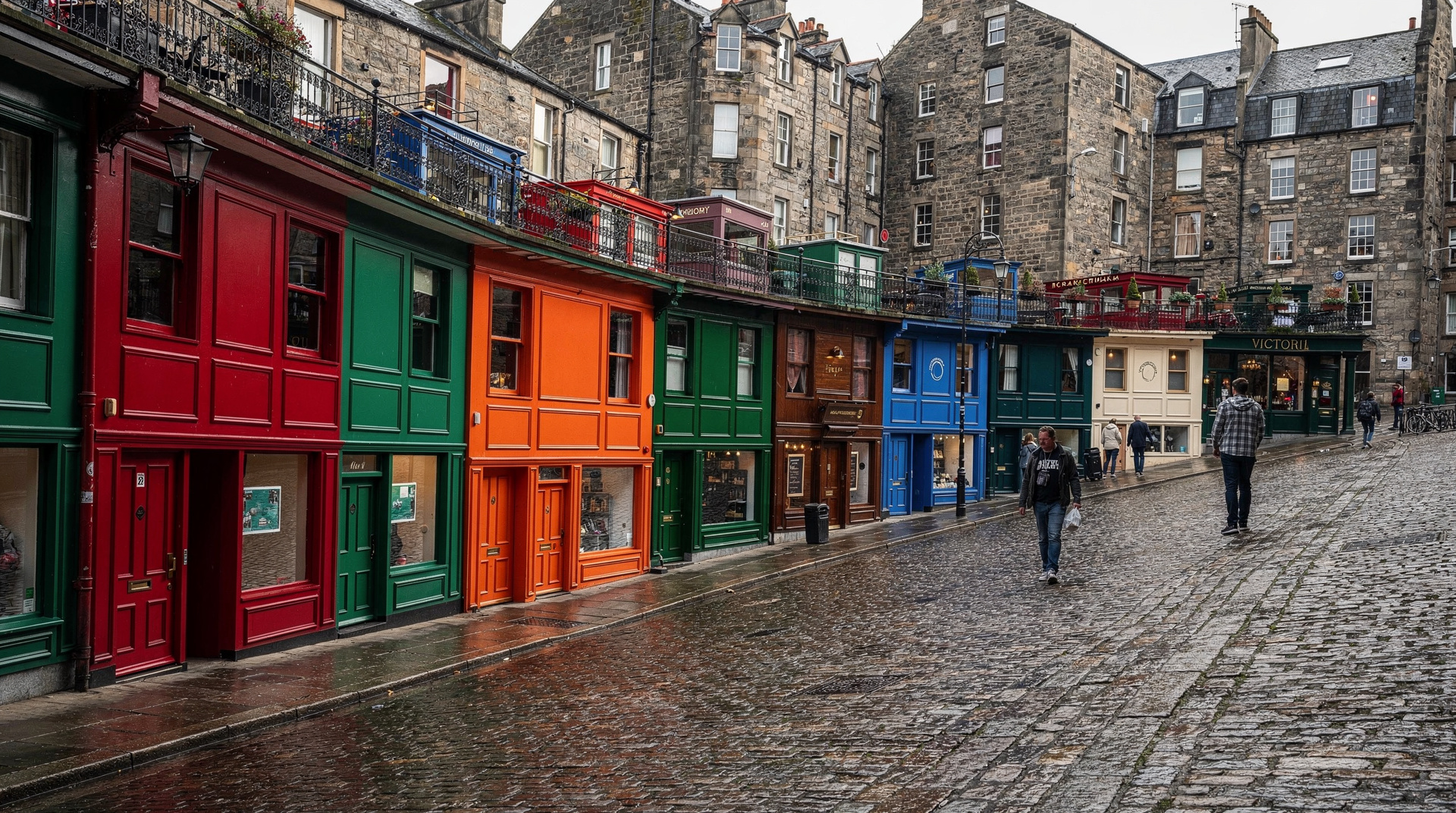
Royal Mile Whiskies (near the castle) for whisky enthusiasts. Ragamuffin (Canongate) for knitwear. Otherwise, the shops worth visiting in the Old Town are mostly on the side streets: Grassmarket, Victoria Street, and the Cowgate area.
What are genuinely Scottish products (not just Scottish-branded)?
Genuinely Scottish products include: whisky from Scottish distilleries (almost all whisky called Scotch is Scottish by law), Arran Sense of Scotland toiletries, cashmere from Johnstons of Elgin, shortbread from Walkers of Aberlour (genuinely Scottish, genuinely good), and smoked salmon from Scottish fisheries (usually specified on the label as Scottish or Hebridean). Look for the origin labelling and read it.
Is Edinburgh good for antique shopping?
The Causewayside area (Southside, 15-20 minutes from the centre) has Edinburgh’s best concentration of antique dealers. St Stephen Street in Stockbridge has independent vintage and antique shops. Neither is a major international antiques market, but both have interesting shops with genuine variety. See the shopping guide for details.