Edinburgh tourist mistakes: what most first-timers get wrong
Edinburgh: all the highlights walking tour
What are the biggest tourist mistakes in Edinburgh?
Eating all your meals on the Royal Mile, visiting Loch Ness without understanding the journey time, not booking Edinburgh Castle in advance, ignoring free attractions like Arthur's Seat and the National Museum, and visiting in August without planning months ahead. This guide covers all of them.
Why tourists leave Edinburgh disappointed (and how to avoid it)
Edinburgh is consistently ranked among the best city-break destinations in Europe, and it deserves that reputation — but only if you approach it right. The city has enough tourist-trap infrastructure to fill several disappointing days if you follow the path of least resistance: Royal Mile restaurants, generic ghost tours, overpriced souvenir shops, and Loch Ness day trips that leave you exhausted.
The information needed to avoid these mistakes is not hidden. But it is not well-packaged either. This guide gives the specific advice — not generic travel tips — that makes the difference between a visit you talk about for years and one you chalk up to experience.
| Biggest mistake | Eating every meal on the Royal Mile |
| Fix | Walk 5-10 minutes to Stockbridge, Leith, or the Southside |
| Cost of not fixing | 30-50% higher prices for lower quality |
| Best avoided in | August without booking months ahead |
| Read before | Booking accommodation or a Loch Ness day trip |
Mistake 1: spending three days eating on the Royal Mile
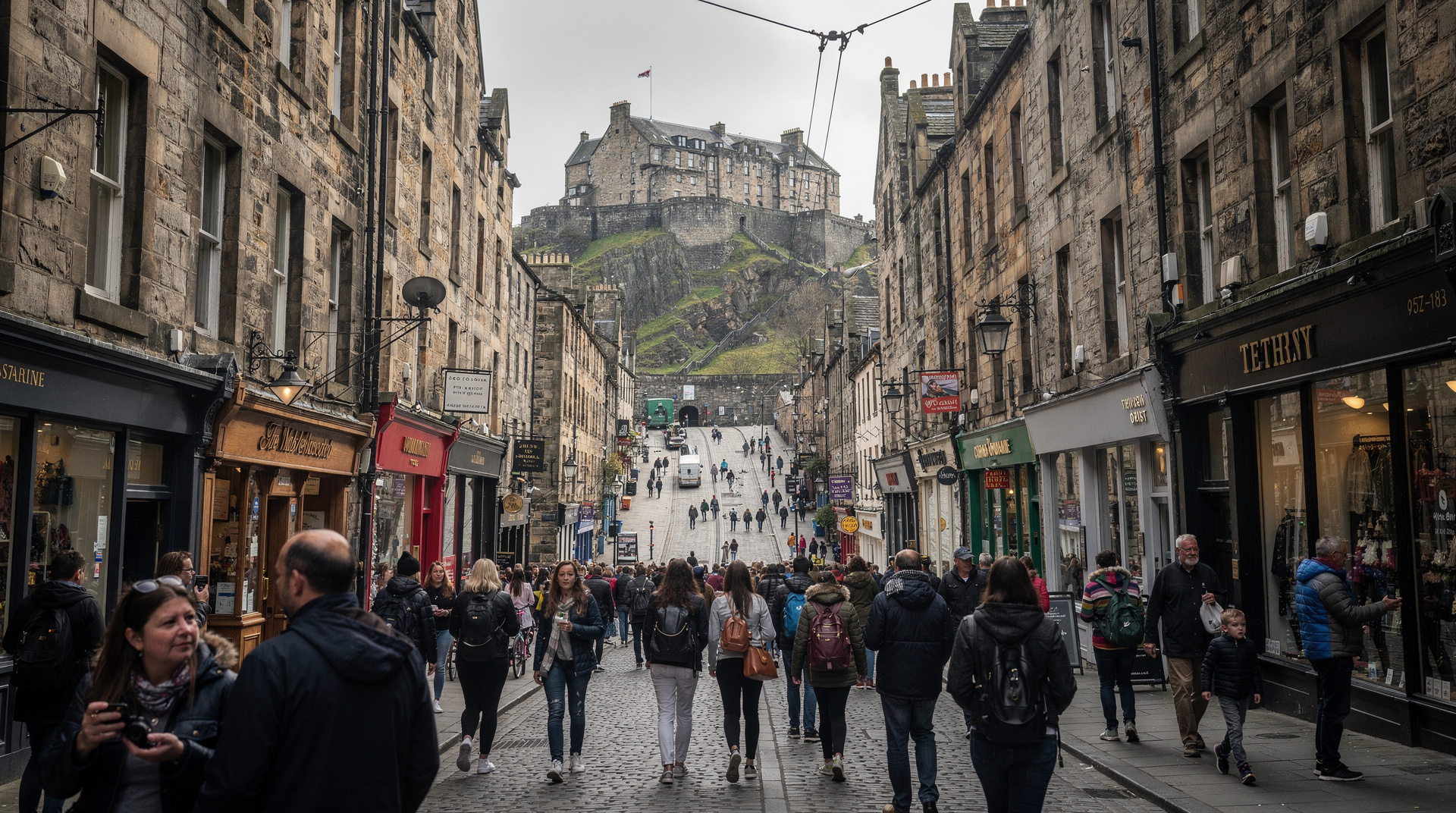
This is the most consistent source of Edinburgh visitor disappointment. The Royal Mile has been designed — over decades of tourist pressure — to capture as much visitor spending as possible. The restaurants that survive there survive because of tourist footfall, not because of quality. Most first-time visitors spend at least half their meals on the Royal Mile and come away feeling they overpaid for mediocre food in a crowded room.
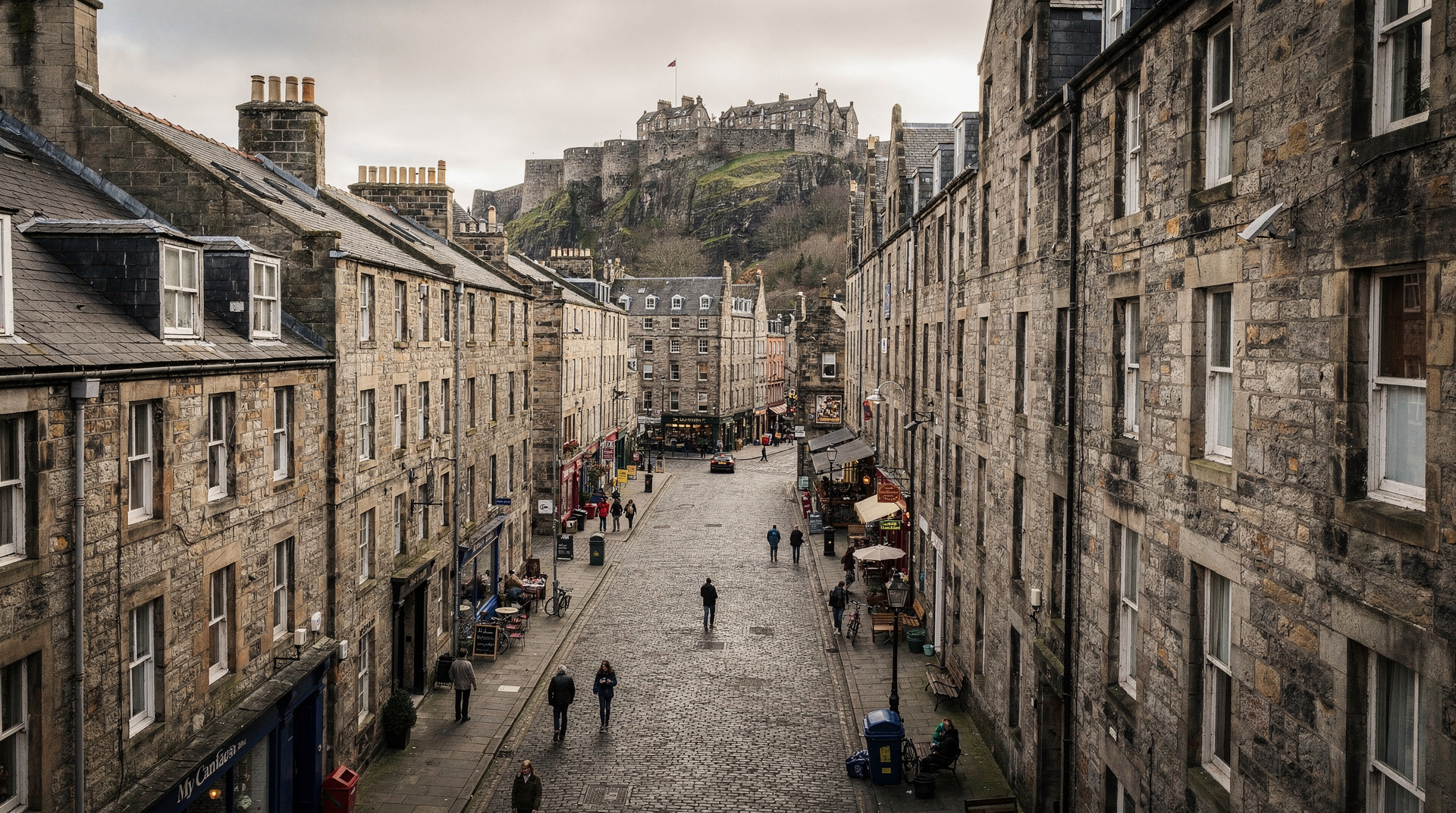
The fix: Eat off the Mile. You are never more than five to ten minutes from streets with significantly better food at significantly better prices. The Grassmarket (below the castle via Victoria Street steps) has decent pubs. George IV Bridge has Ondine (excellent seafood, honest pricing). The Mosque Kitchen on Nicholson Square is Edinburgh’s best-known local secret for cheap, genuinely good food.
For all your meals, see the eating on the Royal Mile guide and the where to eat in Edinburgh guide.
Mistake 2: not booking Edinburgh Castle in advance
Edinburgh Castle in peak season (June-September) has queues that can run to 30-40 minutes just to buy a ticket at the gate. The castle entrance is also the starting point of the main tourist circuit, so the crowds compound from there.
Pre-booking online takes five minutes and means you walk past the queue to the pre-booked entry lane. It does not cost more (tickets are the same price online and at the gate in 2026). There is no reason not to do it.
If you also want a guided tour of the castle — recommended for a first visit — book the guided Edinburgh Castle walking tour with entry in advance as well. Good guides sell out days or weeks ahead in summer.
See the Edinburgh Castle guide for full planning advice.
Mistake 3: trying to do Loch Ness as a casual day trip
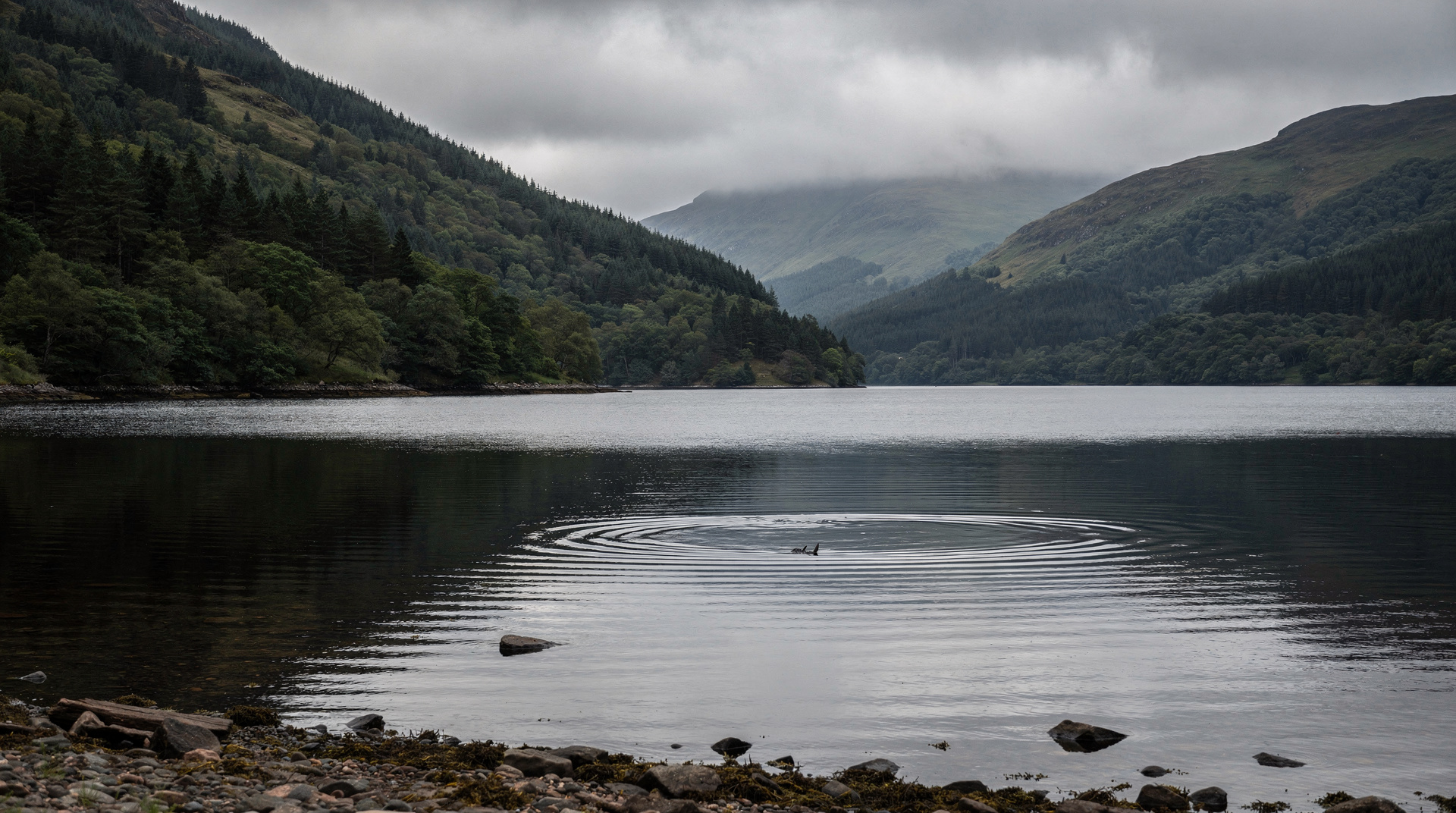
Loch Ness is 3.5 hours from Edinburgh by road. Round trip, that is 7 hours before you see anything. Organised coach tours run 12-13 hours door to door. Many visitors book a Loch Ness day trip without processing what a 7-hour vehicle journey involves, particularly with young children or if they are not natural long-distance travellers.
The honest assessment: Loch Ness is a long loch with a famous legend attached to it. The monster is not real. The scenery is pleasant but not dramatically more spectacular than other Scottish lochs that are much closer to Edinburgh.
If the Highlands are the main draw, Glencoe (2.5 hours from Edinburgh) offers dramatically more visually spectacular scenery at a shorter distance. If you specifically want to visit Loch Ness, combining it with Glencoe on the return journey — which several tours do — gives you the best of both.
See the Loch Ness reality check guide for the honest breakdown.
Mistake 4: going to Edinburgh in August without planning six months ahead
The Edinburgh Festival Fringe in August is extraordinary — the largest arts festival in the world, transforming the city for the entire month. It is also the most crowded, expensive, and logistically demanding version of Edinburgh.
In August, accommodation prices double or triple. The Royal Mile is so crowded mid-afternoon that it is difficult to walk. Restaurants require reservations for dinner every night. Every free space in the Old Town has been converted into a performance venue.
If you know this in advance and book accommodation and Fringe tickets six to twelve months ahead, August in Edinburgh can be the most extraordinary cultural experience in Europe. If you arrive hoping to find a last-minute hotel room for less than £200, you will be disappointed.
For any visit outside August, the planning pressure is substantially reduced. May, June, and September are excellent — similar weather to August (often better), a third of the tourists, and 30-40% lower accommodation prices.
See the best time to visit Edinburgh guide and the guide to avoiding crowds.
Mistake 5: ignoring the free attractions
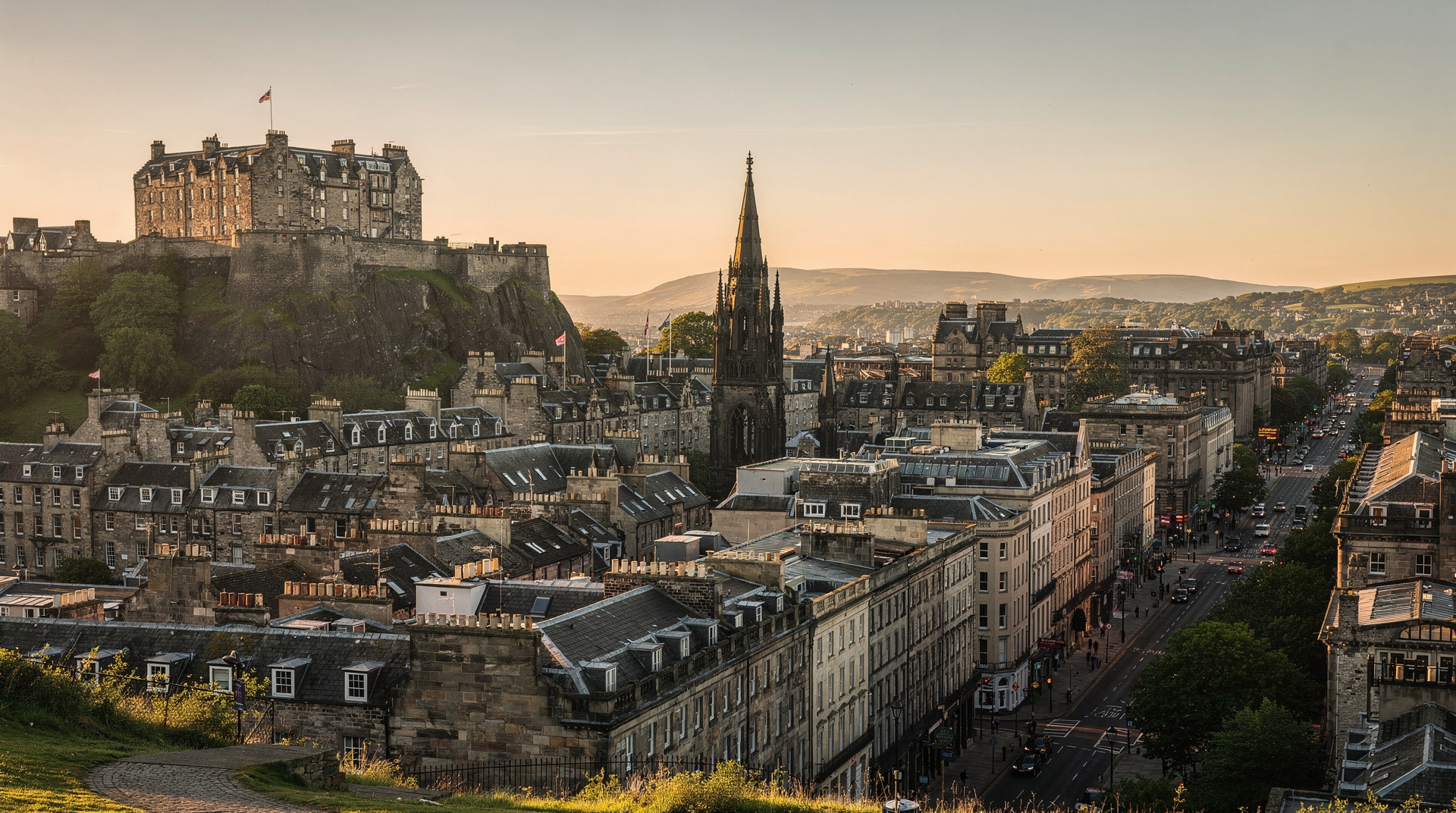
Edinburgh has world-class free attractions that many visitors skip in favour of paid tourist experiences. The National Museum of Scotland (free) is consistently among the best national museums in the UK. The Scottish National Gallery (free) has a genuinely outstanding European and Scottish art collection. Arthur’s Seat (free) is one of the most dramatic hill climbs in any European city. Calton Hill (free) offers the best panoramic view of Edinburgh.
These are not consolation prizes for visitors who have run out of money. The National Museum and the Scottish National Gallery are better than many attractions visitors pay significant amounts to see in Edinburgh. Not visiting them because they are free — because the assumption is that paid things are more valuable — is one of the more ironic mistakes a first-time visitor can make.
See the Edinburgh on a budget guide for the full free attractions list.
Mistake 6: spending the whole trip in the Old Town
The Old Town is Edinburgh’s most famous neighbourhood and deserves the attention it receives. But visitors who spend three days between Edinburgh Castle and Holyrood without crossing to New Town, Stockbridge, Leith, or Dean Village miss a substantial part of what makes Edinburgh exceptional.
The New Town — Edinburgh’s Georgian planned city, built from 1766 onwards — is one of the great pieces of European urban design and entirely different in character from the medieval Old Town. Stockbridge, a 15-minute walk from Princes Street, has Edinburgh’s best neighbourhood food culture. Leith, a 20-minute bus ride, has the best restaurants and the Royal Yacht Britannia. Dean Village, a former milling village preserved almost intact between Stockbridge and the New Town, is one of Edinburgh’s most photographically striking spaces and almost unknown to short-stay visitors.
See the Old Town vs New Town guide and the Stockbridge guide for what these areas offer.
Mistake 7: choosing a ghost tour purely based on the first flyer you receive
The ghost tour market in Edinburgh is enormous and quality is highly variable. Getting handed a leaflet on the Royal Mile by someone in a kilt or Victorian costume is not a quality indicator. Several of Edinburgh’s ghost tours are genuinely excellent — the underground vaults with Mercat Tours, Mary King’s Close — and several others charge premium prices for theatrical performances that substitute jump scares for historical knowledge.
The ghost tours guide gives specific recommendations for each type of experience. In summary: book through a reputable platform with verified reviews, and look for tours that specify their historical content rather than just their entertainment value.
Mistake 8: buying all souvenirs on the Royal Mile
The tartan shops, whisky shops, and souvenir outlets on the Royal Mile are optimised for capturing tourist spending rather than for providing value. The same mainstream whisky bottles available in M&S on Princes Street are sold on the Royal Mile at 20-40% premium. Most textile products are not Scottish-made regardless of the thistle motifs. Most shortbread tins are available online for significantly less.
Better alternatives exist a short walk away: Royal Mile Whiskies for genuine whisky expertise, the National Museum gift shop for quality souvenirs, Valvona and Crolla for quality food gifts, and independent shops in Stockbridge and the Grassmarket for things that feel genuinely local.
See the tartan tat guide for specific alternatives.
Mistake 9: not orienting with a walking tour on arrival
Edinburgh’s Old Town is dense with history that looks like undifferentiated old stone without context. A good walking tour on the first day or first evening significantly improves everything that follows — you understand why the closes are there, what the different periods of building represent, and where the genuinely interesting parts are versus the tourist corridor.
An Old Town history and tales walking tour gives the narrative context that makes subsequent exploring intelligible. The Edinburgh all the highlights walking tour covers the main points of interest in a compressed format if you are on a short trip.
Mistake 10: underestimating how much Edinburgh requires good footwear
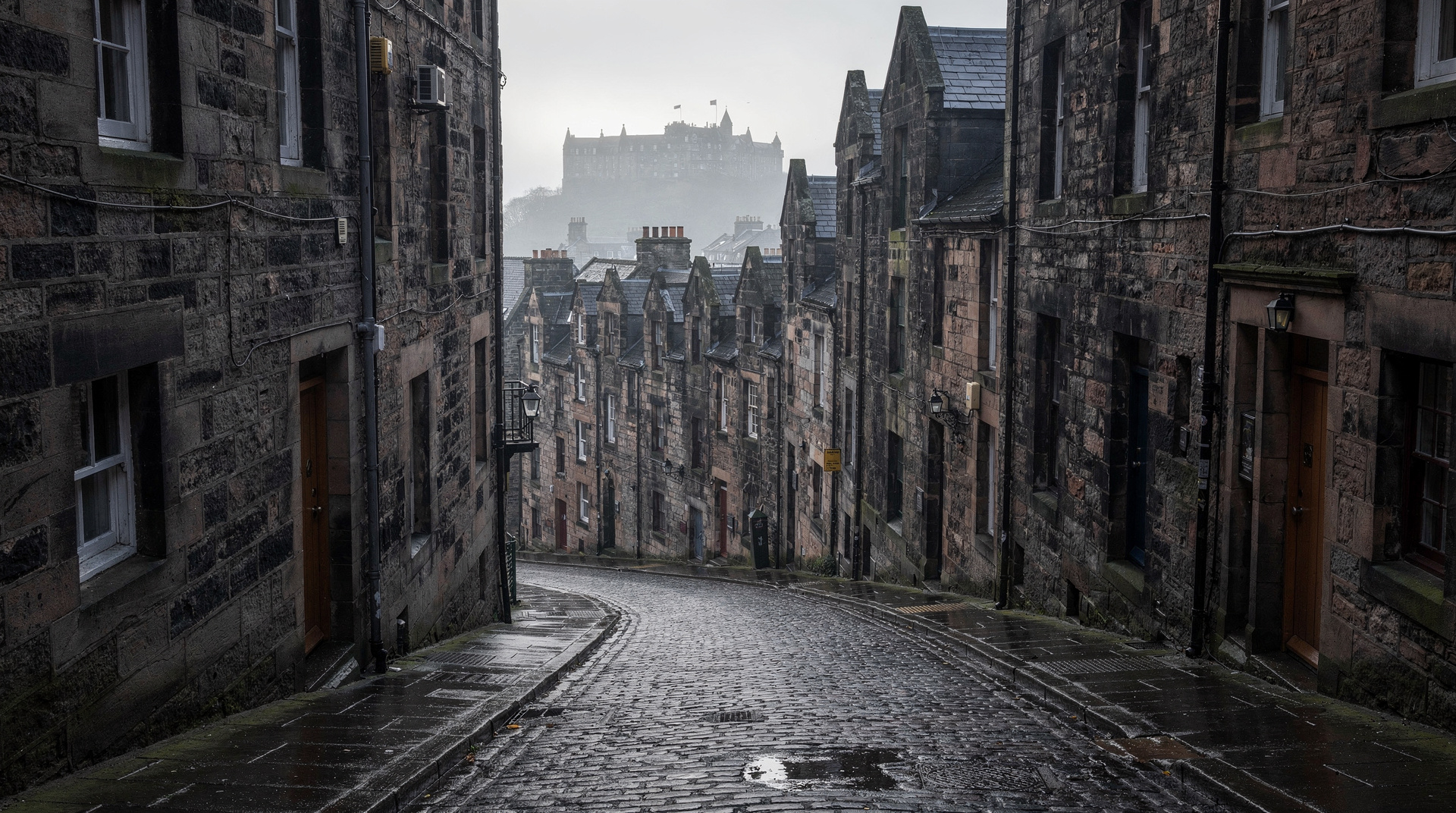
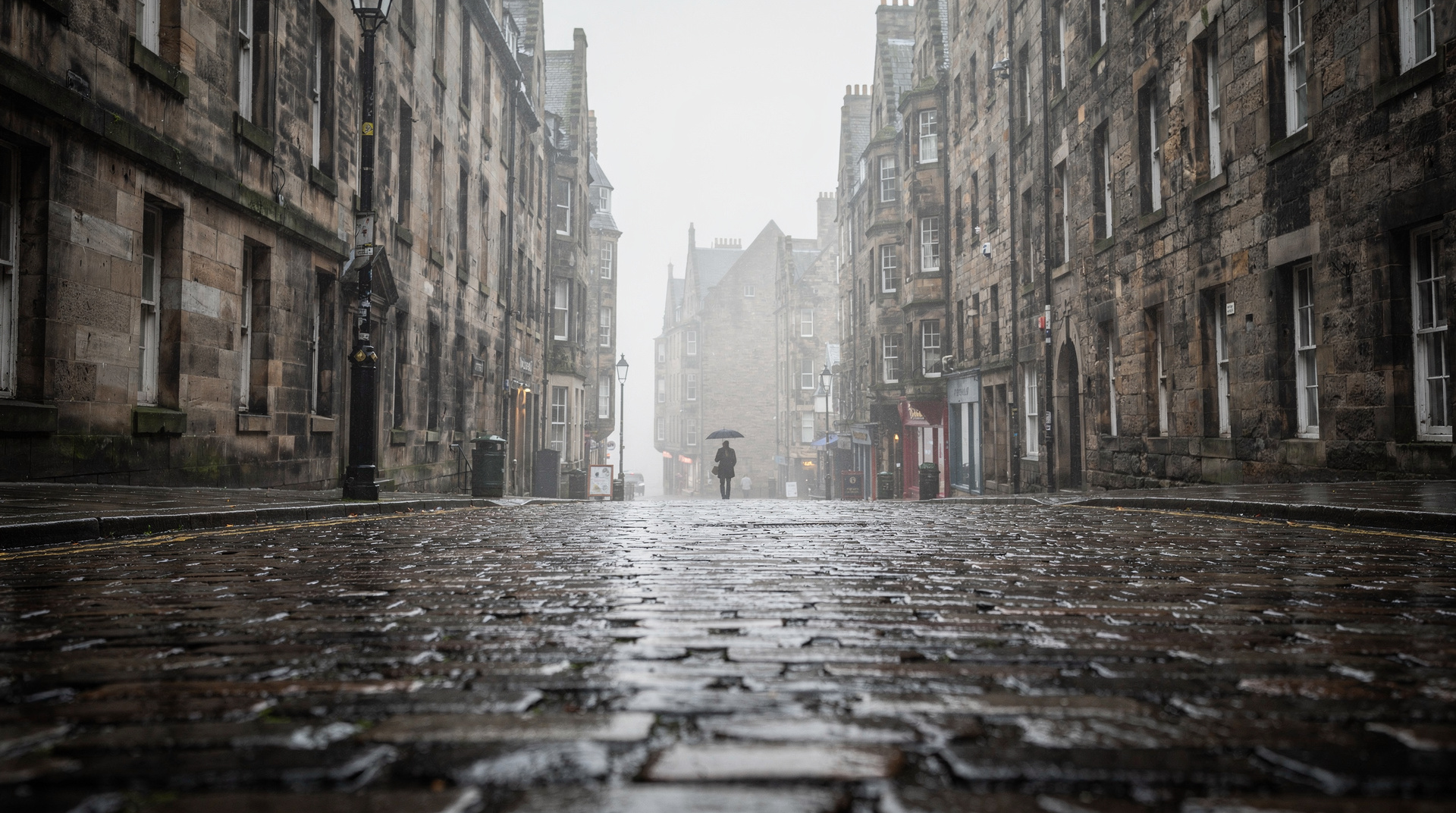
The Old Town is cobbled and steep. Arthur’s Seat is a proper hill walk. The closes are uneven underfoot. Visitors in inadequate shoes spend significant time uncomfortable or avoiding the most interesting terrain. Comfortable flat shoes or walking shoes are genuinely necessary, not optional.
Mistake 11: skipping Arthur’s Seat because it “looks too difficult”
Arthur’s Seat — the 251-metre extinct volcano in Holyrood Park — is one of Edinburgh’s most accessible and rewarding experiences. The main route takes about 45-60 minutes from the Holyrood Palace car park entrance. It is steep in sections but not technical or dangerous. Most reasonably fit adults can summit it. The views from the top — across the city, over the Firth of Forth to Fife, and on clear days to the Pentland Hills — are exceptional.
Many visitors see Arthur’s Seat on the map, decide it looks difficult, and go to a paid attraction instead. This is a mistake. See the Arthur’s Seat guide for the routes and logistics.
Mistake 12: not checking currency and card fees before arriving
Some visitors arrive with a pocket of euros or a card that charges heavy foreign transaction fees, only to discover euros are not accepted anywhere and every card purchase is quietly costing extra. Edinburgh runs entirely on pounds sterling, and cards are near-universal, so the fix is simple: bring a fee-free card and only a modest amount of cash. See the Edinburgh money and currency guide for the full detail on exchange rates and where to avoid poor rates.
Mistake 13: assuming taxis are the easiest way around
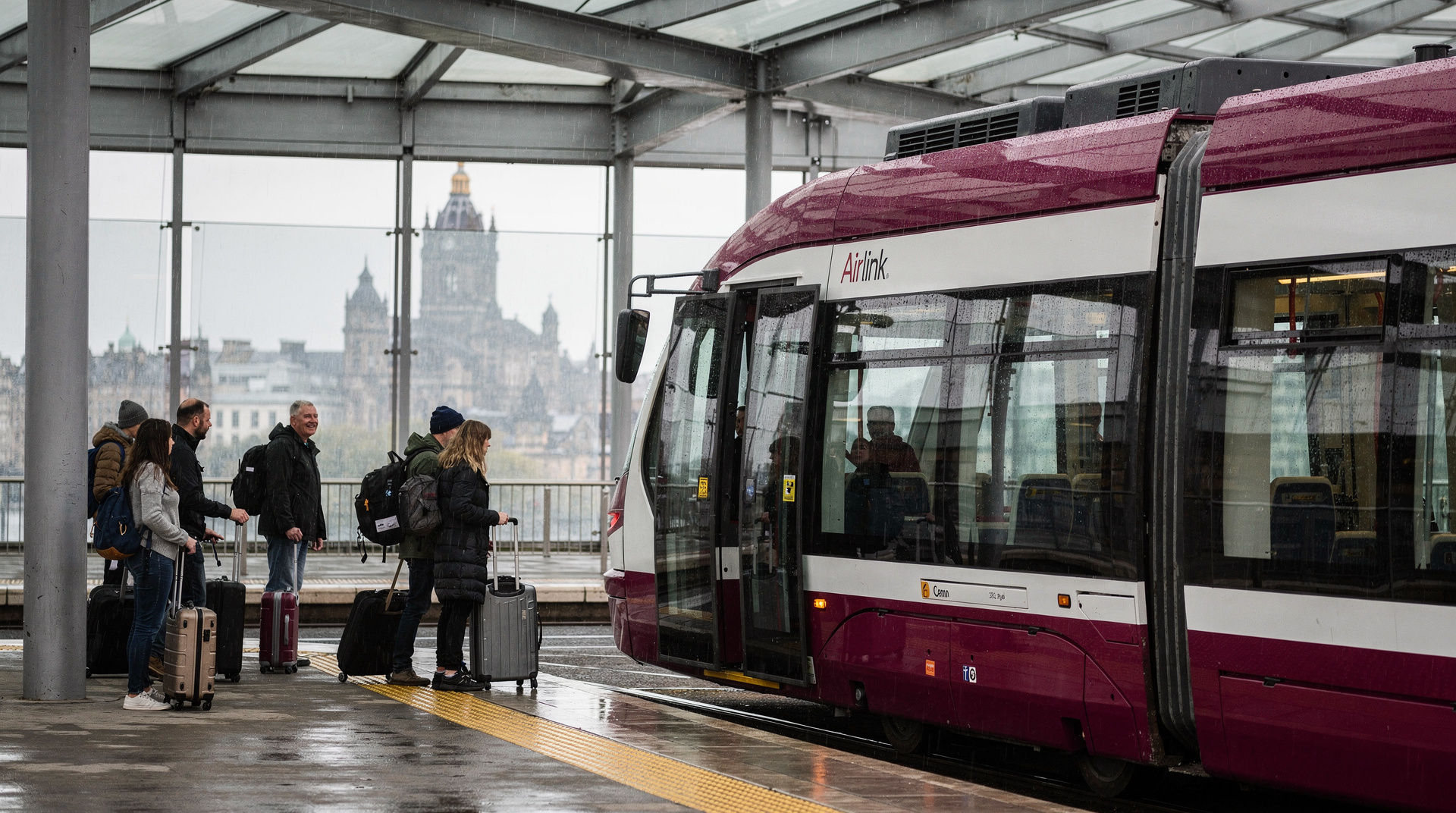
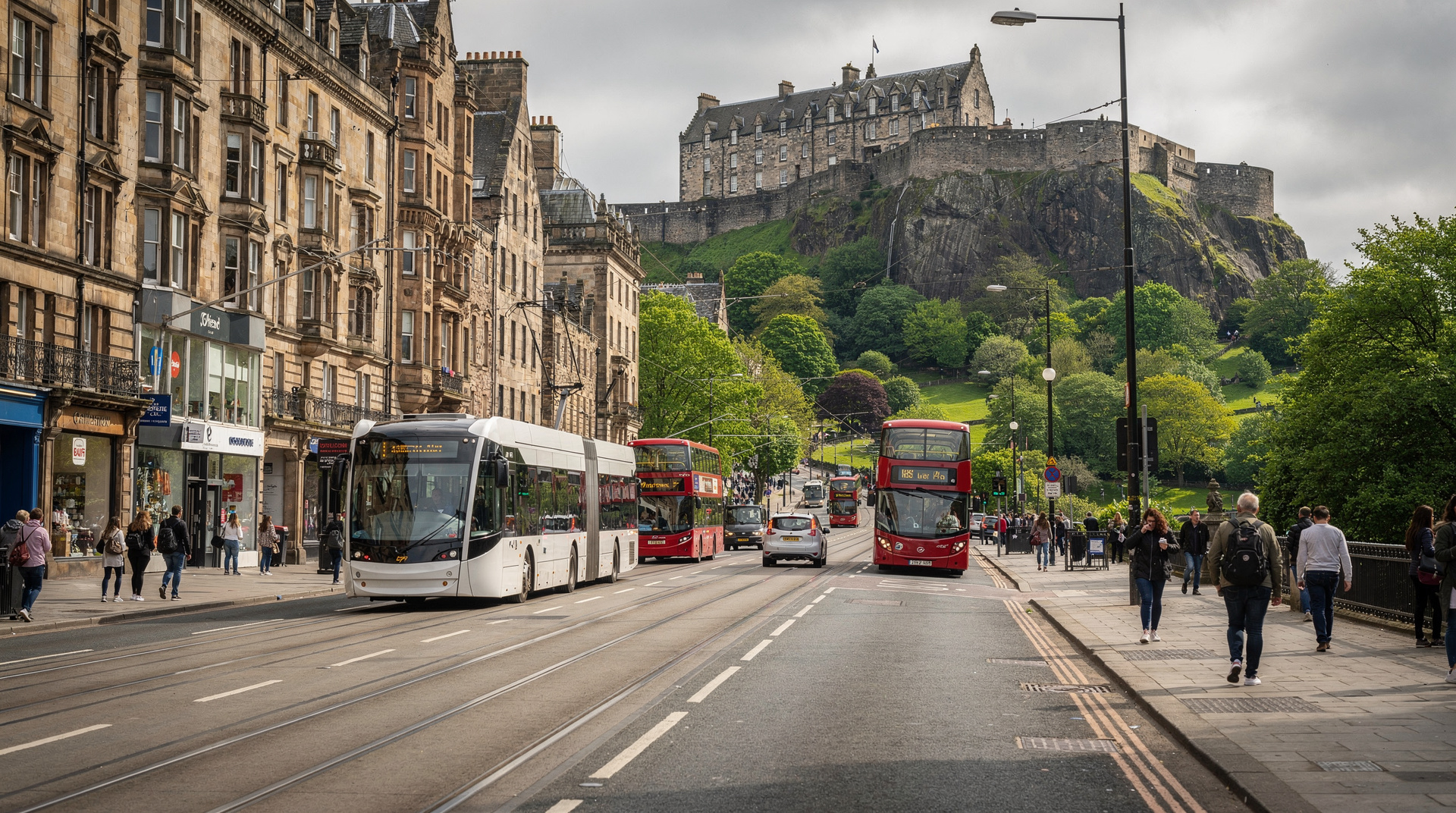
Taxis feel like the obvious choice for visitors unfamiliar with a new city, but in Edinburgh they are usually the most expensive and often not the fastest option, since central Edinburgh is compact and walkable and traffic can slow taxis in the Old Town. Lothian Buses and the tram cover the city efficiently and cheaply, and most attractions are within a 20-minute walk of each other. See the trams and buses guide and the getting around Edinburgh guide for the practical alternative.
Mistake 14: skipping Stirling because it’s “just a castle”
Stirling is often treated as a lesser add-on to a Highland day trip, or skipped entirely in favour of Edinburgh Castle alone. This undersells it: Stirling Castle is arguably as historically significant as Edinburgh Castle, with a better-preserved Renaissance palace interior, and the town itself — the Old Town, the Wallace Monument visible from the castle ramparts, the battlefield sites nearby — rewards more than the hour most itineraries allocate.
Stirling is also genuinely close to Edinburgh (under an hour by train or car), making it one of the easiest worthwhile day trips to add without a major schedule rework, and it pairs naturally with a wider Highland day if you are already heading that direction. See the Stirling guide for a proper half-day or full-day plan.
Mistake 15: not distinguishing between Old Town and New Town when booking accommodation
Visitors booking a hotel from a map alone often do not realise how different the Old Town and New Town feel to actually stay in. The Old Town (Royal Mile, Grassmarket, Cowgate) is atmospheric but genuinely noisy on weekend nights, particularly in August; the New Town is calmer, flatter, and often better value per square foot. Neither choice is wrong, but choosing without understanding the trade-off leads to avoidable disappointment — light sleepers in particular should think carefully before booking anything directly above a Cowgate bar.
The where to stay in Edinburgh guide and the Old Town vs New Town guide cover the practical differences in full. As a rule of thumb: choose the Old Town if convenience and atmosphere matter more than a quiet night’s sleep, and choose the New Town or Stockbridge if you value calm evenings and do not mind a short walk or bus ride to the main sights.
What a first-time Edinburgh trip should look like
A three-day visit structured to avoid the major mistakes:
Day 1: Edinburgh Castle (pre-booked, arrive at opening), Old Town walking tour (afternoon to understand the context), dinner in the Grassmarket or Cowgate.
Day 2: National Museum of Scotland in the morning (free, two hours minimum), Arthur’s Seat in the afternoon (weather dependent, free), Leith for dinner (20-minute bus, Edinburgh’s best restaurants).
Day 3: New Town walking or Dean Village walk in the morning, Scottish National Gallery, afternoon day trip to North Berwick or Rosslyn Chapel.
See the three-day Edinburgh itinerary for the full detailed version.
The systemic reason Edinburgh generates these mistakes
The tourist mistakes covered in this guide are not random. They follow from a specific dynamic: Edinburgh has an extremely well-developed tourist infrastructure — accommodation booking platforms, ghost tour operators, Royal Mile shops, restaurant guides — that is optimised to capture tourist spending efficiently. This infrastructure is very good at its job. The problem is that “capturing tourist spending” is not the same as “providing the best Edinburgh experience.”
The better Edinburgh experiences — Arthur’s Seat, the National Museum, the closes, Stockbridge, Leith’s restaurants — are not heavily marketed because they are free or not commercially bookable. Ghost tours and Royal Mile shops are heavily marketed because they generate revenue. This creates an information asymmetry where the things visitors see most are not the best things, and the best things are less visible.
This is not unique to Edinburgh — it is the standard pattern of heavily visited cities worldwide. The difference in Edinburgh is that the gap between the marketed experience and the genuine experience is particularly wide, partly because the genuine Edinburgh is unusually good and partly because the tourist overlay is unusually dense relative to the city’s size.
Mistakes specifically related to the Edinburgh Festival period
August in Edinburgh with the Fringe requires a different category of planning advice than the rest of the year:
Fringe ticket strategy: The Edinburgh Festival Fringe issues around 70,000 show listings across the month. Navigating this without a strategy produces either paralysis or disappointing choices made under time pressure. The practical approach: use the Fringe app or website to browse by genre and price before you arrive. Free shows (which have a bucket collection at the end rather than a ticket price) include some of the best Fringe comedy and theatre — the Edinburgh Comedy Awards typically include free shows in the finalist list each year. Booking the biggest names (sold-out shows, major comedians) at least two months in advance. Leaving 30-40% of your Fringe schedule unplanned allows for word-of-mouth recommendations once you arrive.
The Fringe timetable: Most Fringe shows run at 40-50 minute slots with turnovers on the hour or half-hour. The venues (which are church halls, pub back rooms, caves, comedy clubs, and purpose-built festival spaces) are clustered around the Old Town and Bristo Square area. Plan your day geographically — shows in the same venue cluster or the same part of the Old Town are more practical than shows scattered across the city. Allow 15-20 minutes between shows for travel and venue queuing.
The late night shows: The Fringe has a strong late-night comedy circuit that runs from 11pm. These shows are typically rawer, more experimental, and more surprising than the mainstream afternoon programme. They are also cheaper. If you are staying in Edinburgh during August, these late-night shows are worth at least one night of your visit.
See the August Edinburgh survival guide for the full Fringe planning approach.
UK ETA: the mistake of not checking entry requirements
From January 2025, UK ETA (Electronic Travel Authorisation) is required for citizens of many countries visiting the UK who previously entered without a visa — including most EU citizens, Australians, Canadians, Japanese, South Koreans, and many others. The ETA costs approximately £20 per person, is applied for online or via a smartphone app, and is valid for two years with multiple entries.
This is not something that can be sorted at the airport on arrival. It must be obtained before travel. Irish citizens and current UK visa holders are exempt. People with a British or Irish passport are exempt.
Visitors who arrive without the required ETA may be denied boarding or entry. This is not a bureaucratic technicality — it has affected travellers. See the UK ETA guide for the application process and who is affected.
Mistakes around Scottish terminology and culture
A few specifically Edinburgh misconceptions that create awkwardness:
“England” vs “Scotland”: Edinburgh is in Scotland, not England. This seems obvious but the number of visitors who refer to “England” when they mean the UK, or who assume that Scottish culture and history is a subset of English culture, generates friction. Scotland has a separate legal system, a separate education system, a separate currency-printing arrangement (Scottish banknotes — accepted everywhere in Scotland, sometimes refused in England — are legal tender), and a parliament with devolved powers. The relationship with England is complex and historically charged. Engaging with this complexity, rather than flattening it, produces much better conversations with Edinburgh locals.
Whisky not whiskey: Scotch whisky is spelled without an e. Irish and American whisky(ey) is typically spelled with an e. Spelling Scottish whisky as “whiskey” in Edinburgh is not a serious offence but it signals unfamiliarity.
The accent: Edinburgh’s accent is distinct from the Glaswegian accent and from rural Scottish accents. It is broadly intelligible to speakers of other English dialects but has specific vocabulary (wynd for a narrow alley, close for a passage through or between buildings, braw for good, nicht for night) and some vowel sounds that differ from Standard English. Asking for clarification when you do not understand something is always better than nodding and pretending — Edinburgh people are generally patient and pleased to explain.
Frequently asked questions about Edinburgh tourist mistakes
Is the Royal Mile really that bad for tourists?
The Royal Mile itself is a genuinely historic street worth walking. The shops and restaurants on it are, as a category, poor value. The closes, wynds, and historic buildings off and around it are excellent. The mistake is treating the Royal Mile as a destination rather than a route through the Old Town.
Is Edinburgh worth visiting in winter?
Yes. Winter (November-March) offers Edinburgh at its quietest, cheapest, and — on clear days — most dramatically lit. The castle and National Museum are open year-round. The ski slopes at Glencoe and Cairngorms are accessible by day trip. Hogmanay (29 December-1 January) is one of the world’s great winter festivals. The downsides are cold weather and shorter daylight hours. See the Edinburgh in winter guide.
How many days do you really need in Edinburgh?
Three days is the minimum for a substantive first visit. Two days covers the main sights but misses the neighbourhoods. Five to seven days allows genuine exploration of the city and surrounding areas. If you have ten days in Scotland, Edinburgh deserves three to four of them with the rest spent on day trips and the Highlands. See the how many days guide.
What is the single most avoidable mistake in Edinburgh?
Eating every meal on the Royal Mile. It is the single most consistent source of visitor disappointment, and the fix costs nothing — walking five to ten minutes to Stockbridge, Leith, or the Southside gets significantly better food at lower prices.
Do most Edinburgh tourist mistakes cost money or just time?
Both, but unevenly. Royal Mile dining, generic ghost tours, and Royal Mile souvenir shopping mostly cost money. Not booking Edinburgh Castle in advance, underestimating Loch Ness travel time, and skipping a first-day orientation tour mostly cost time and frustration rather than cash.
Top experiences
Bookable activities with verified prices and instant confirmation on GetYourGuide.