Edinburgh ghost tours: which are worth it (and which to skip)
Edinburgh: the original underground tour
Which Edinburgh ghost tour is actually worth doing?
The underground vaults (Mercat Tours or Auld Reekie) and Mary King's Close are the standout options — genuine historical depth plus atmosphere. Outdoor walking ghost tours vary widely in quality. Avoid tours that rely entirely on jump scares without historical content. This guide breaks down every main operator.
Top-rated tours to book
| Best historical depth | Original underground vaults tour, Mary King’s Close |
| Best pure entertainment | Terror tour, comedy horror ghost bus |
| Typical price | Varies by operator — check the official site |
| Minimum age (historical tours) | 10+ |
| Booking | Advance, especially summer weekends |
| Not suitable for | Severe claustrophobia, young children |
Why Edinburgh has so many ghost tours
Edinburgh is genuinely one of the most historically dark cities in Europe. The medieval period brought plague, famine, and the witch trials (hundreds of people were burned at Castlehill between the fifteenth and seventeenth centuries). The eighteenth century brought the anatomists’ need for corpses and the grave-robbing trade that culminated in Burke and Hare’s serial murders. The underground vaults beneath the South Bridge housed the destitute, the criminal, and — according to reports that have never been fully explained — more unusual things.
This genuine history has generated a ghost tour industry that ranges from world-class to appalling. Edinburgh has more ghost tour operators than almost any other UK city, and they operate across a wide spectrum of quality. Choosing the wrong one means spending £20 on a theatrical disappointment. Choosing the right one means spending an evening in one of the most atmospherically charged spaces in Britain with someone who genuinely knows what they are talking about.
This guide distinguishes between them.
The underground vaults: the genuine article
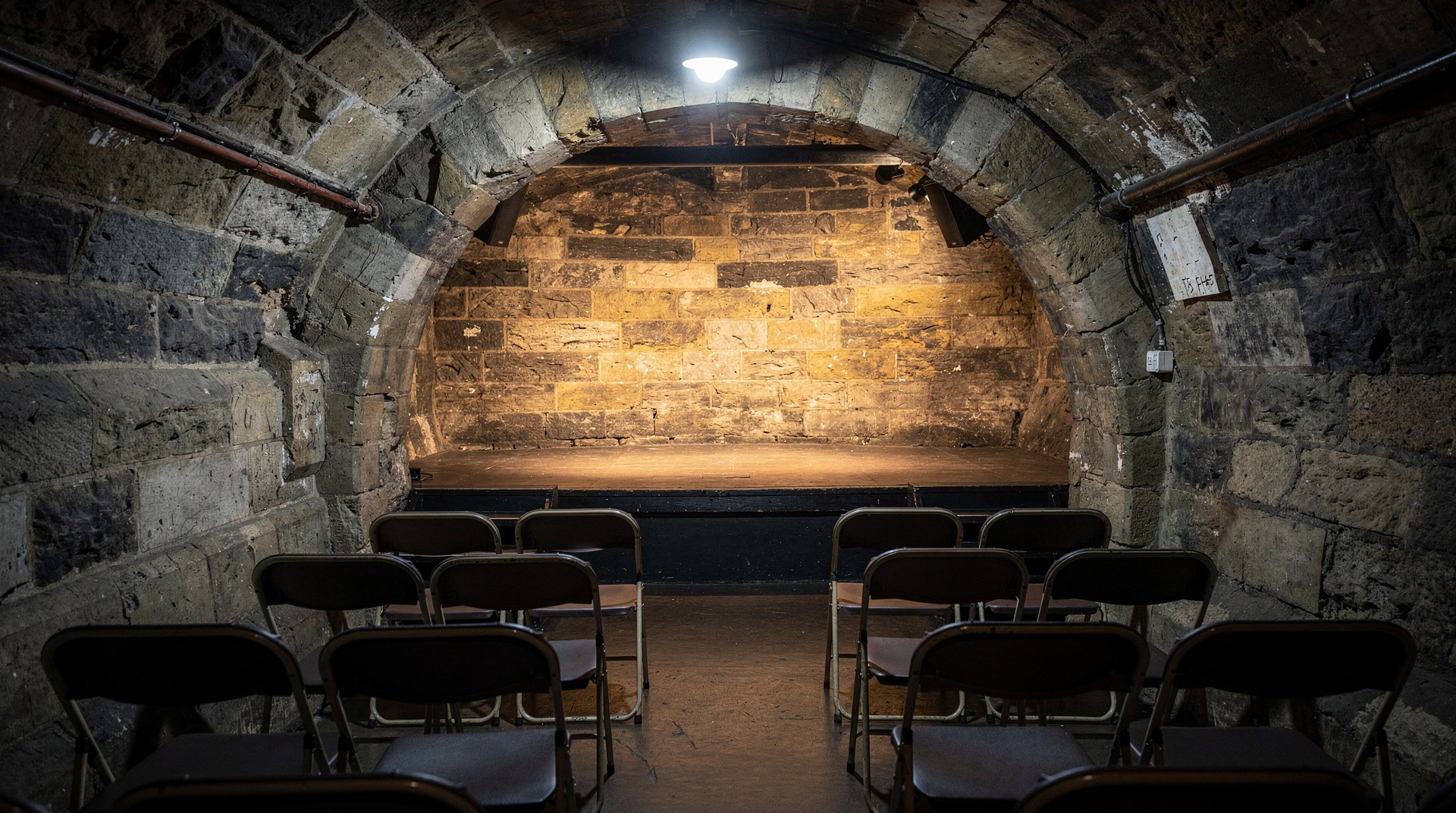
The underground vaults beneath the South Bridge (built 1785-1788) are a system of sealed chambers and passages that were originally intended as commercial spaces but became, within a few decades, the refuge of the city’s most desperate poor. They were sealed in the late nineteenth century and rediscovered in the 1980s. Several operators now run tours through them.
The vaults are real. The history is real. The atmosphere — cramped, low-ceilinged, lit only by candlelight or small torches, under centuries of stone and the busy street above — is genuinely unlike anything else in Edinburgh.
The original underground tour (Mercat Tours): The original underground tour is the most historically rigorous vault tour and the one recommended if you want depth rather than entertainment. Mercat Tours has been running since 1985 and their guides are among the best-informed in Edinburgh. The tour covers the genuine history of the vaults, the social conditions that produced them, and the archaeology of what has been found inside, alongside the ghost legend content. It runs about 75 minutes. This is the standard-setter.
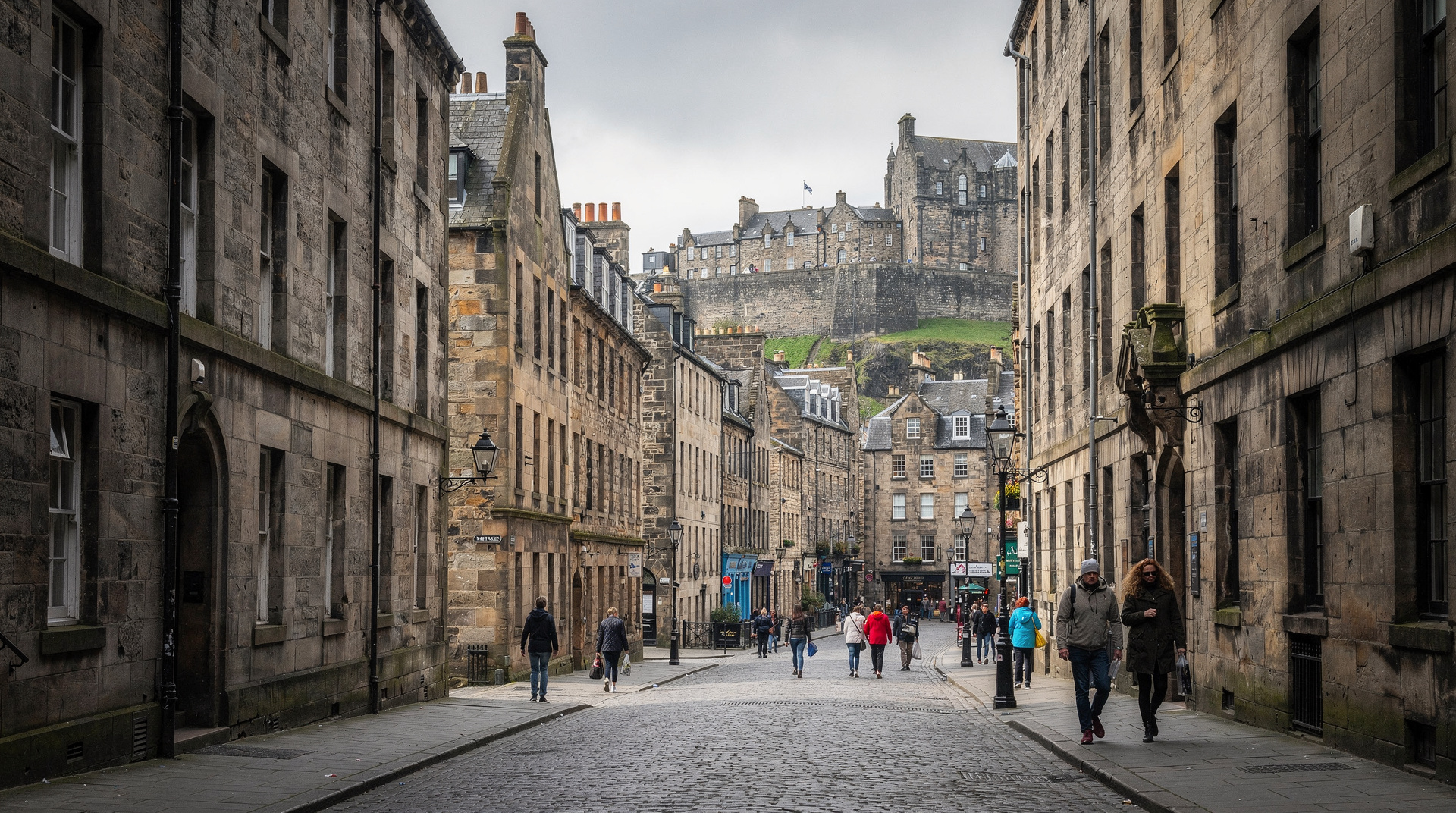
The terror tour (Auld Reekie): The late-night underground vaults terror tour is explicitly theatrical horror in the vaults. The actors are professional, the jump scares are genuine, and the tour prioritises the supernatural experience over the historical one. Not bad — but a different product. Best for groups who want entertainment rather than history.
The ghost and whisky tour: The underground vaults evening ghost tour with whisky adds a dram of Scotch to a vault tour and positions itself between the historical and theatrical markets. The combination works surprisingly well — the whisky adds warmth and social lubricant without dominating the experience.
The haunted graveyard combination: Some operators combine the vaults with the Greyfriars Kirkyard section — the haunted underground vaults and graveyard tour covers both spaces in one evening. This is a good option if you want to experience both the underground atmosphere and the open-air churchyard, which has its own distinct character at night.
Key advice: The vaults are not suitable for people who are severely claustrophobic — some sections are quite low and confined. They are also not suitable for young children. The historical tours are appropriate for ages ten and above; the terror tour variants should be treated as adult entertainment.
For the full breakdown of vault tour operators and options, see the Edinburgh underground vaults guide. If you want to combine a ghost tour with other Old Town dark-history sites, the Burke and Hare story guide gives the full account behind the era the vault tours reference most.
Mary King’s Close: the best overall Edinburgh underground experience
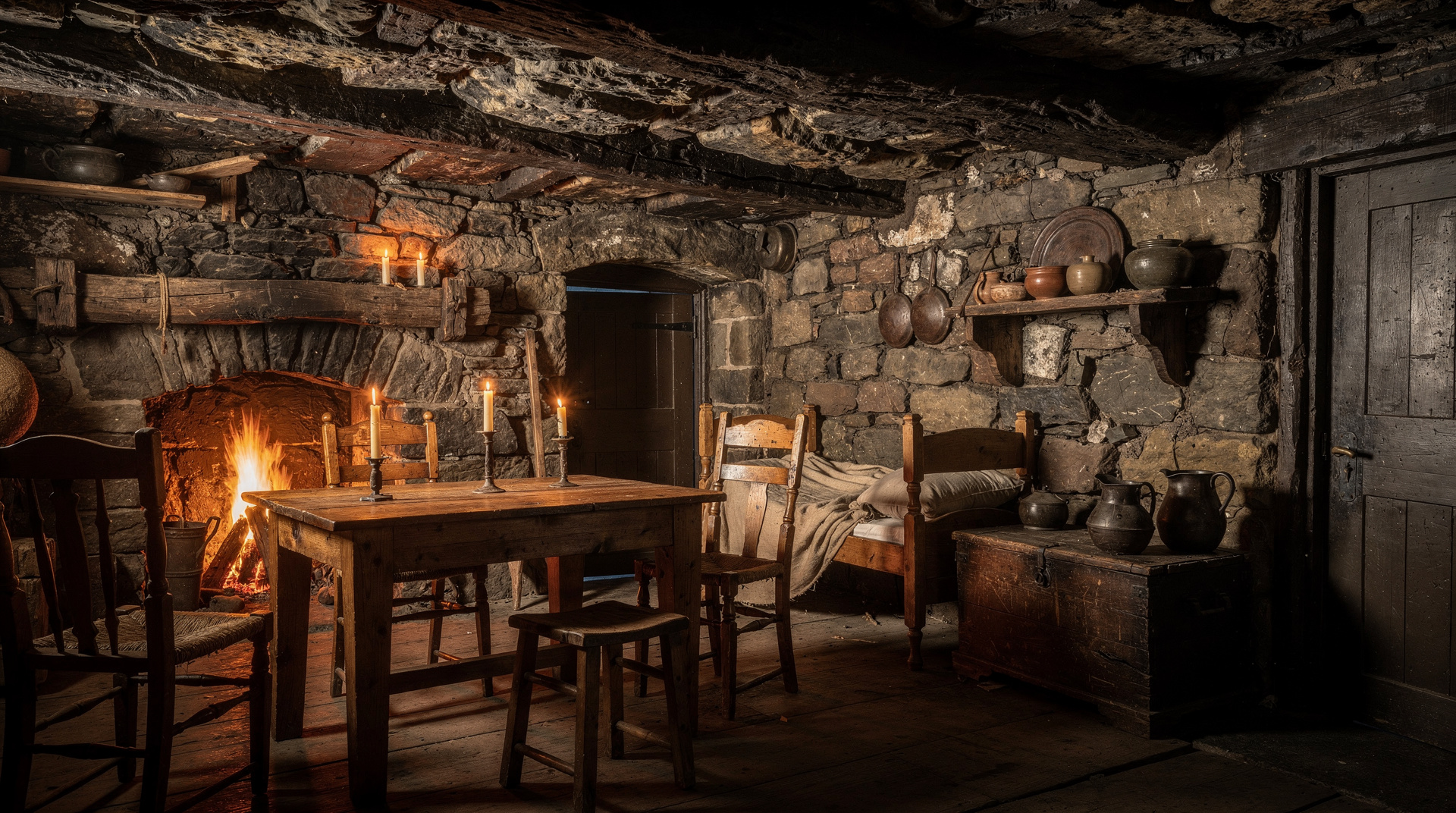
Mary King’s Close is a different type of underground Edinburgh from the vaults. It is a series of preserved streets and rooms sealed beneath the Royal Exchange (now the City Chambers) on the Royal Mile since the eighteenth century. The Real Mary King’s Close guided tour takes you through them with an actor-guide playing a historical character.
The experience combines genuine historical archaeology with theatrical presentation in a way that works better here than anywhere else in Edinburgh. The spaces are genuinely intact seventeenth and eighteenth-century rooms, and the guide — in character as a historical Edinburgh resident — gives the history in an accessible and engaging way without sacrificing accuracy.
This is the single most consistent Edinburgh underground experience for visitors who want something that is both historically substantive and entertaining. Not as atmospheric as the vaults (the spaces are lighter and more domestically scaled), but more narratively coherent.
Worth noting: Mary King’s Close is a ticketed attraction with specific departure times, not an on-the-day drop-in. Book in advance, particularly in summer. It runs year-round.
Outdoor walking ghost tours
The outdoor ghost tour market in Edinburgh is extremely crowded and quality varies dramatically. A good outdoor ghost tour gives you: knowledgeable commentary on Edinburgh’s dark history, access to spaces you might not find independently, and a guide who can make the material engaging without relying on cheap theatrics.
The honest assessment of the market: Many outdoor ghost tours on the Royal Mile are primarily entertainment products. They dress guides in period costume, use dramatic pauses and horror-story delivery, and rely heavily on recycled ghost stories that circulate in the same form between operators. Some of these tours are enjoyable in a theme park sense. They are not the same thing as a historically informed tour of Edinburgh’s dark history.
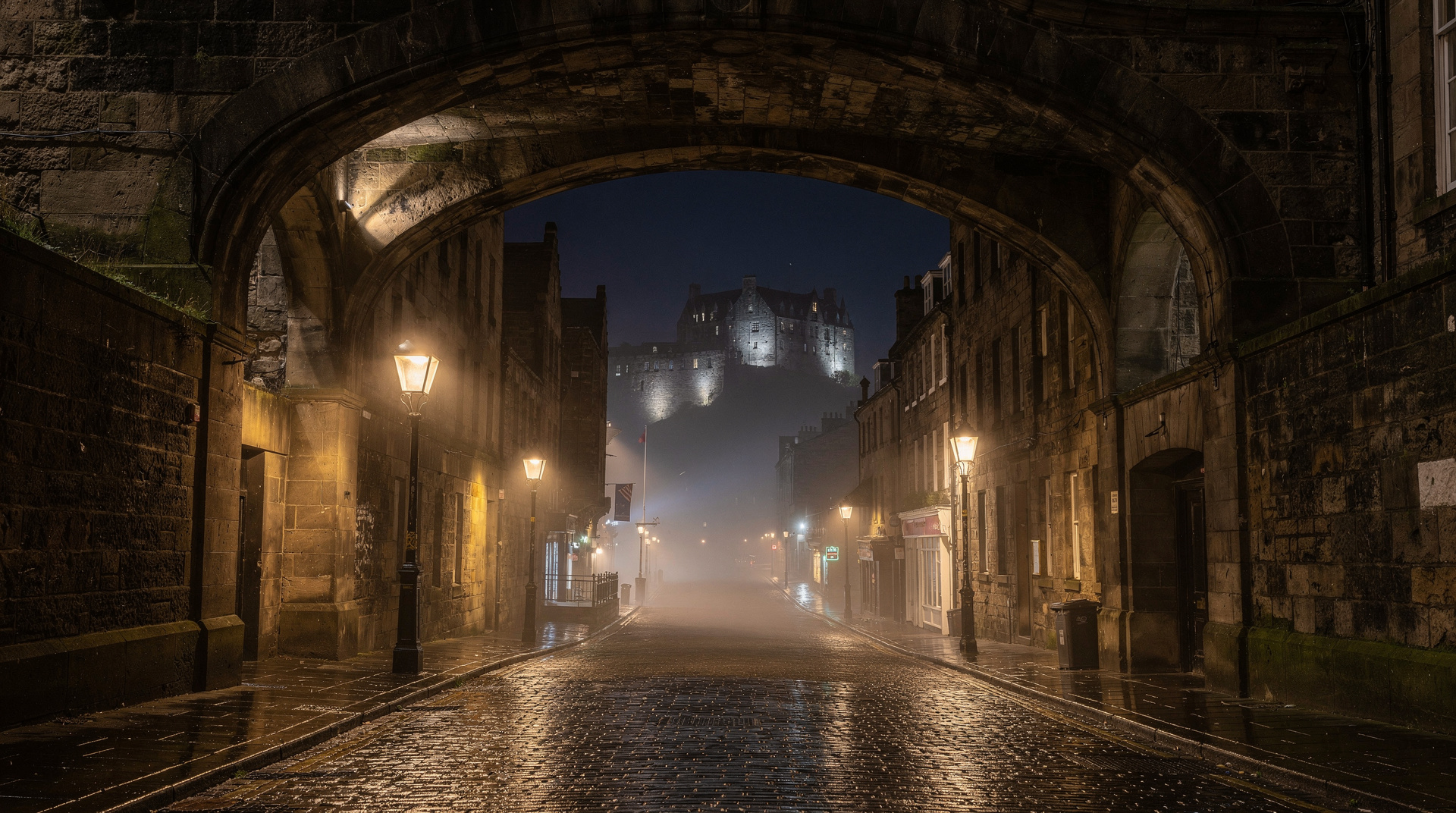
Worth taking: The mysteries, witchery and murders walking tour covers Edinburgh’s witch trials, murders, and historical darkness with genuine depth. It is not purely entertainment — the historical content is real and the guide’s knowledge is evident. Good for people who want context and history alongside atmosphere.
The comedy horror ghost bus: The comedy horror ghost bus tour is explicitly not a serious ghost tour — it is theatrical entertainment on a converted double-decker bus with actor performances. It is genuinely funny and well-produced if you approach it as such. Not good value if you want historical content.
What to avoid in outdoor ghost tours: Tours that are primarily sold on the theatrical horror angle without specifying historical content. Tours where the guide’s delivery is purely for dramatic effect without factual substance. Tours that charge premium prices (£20+) for what amounts to a 90-minute walk with a costumed actor making spooky noises.
The Greyfriars Kirkyard factor
Greyfriars Kirkyard — the seventeenth-century graveyard beside the Greyfriars Bobby statue — is incorporated into several ghost tours for good reason. It is one of Edinburgh’s most atmospheric spaces at night, and the Covenanters’ Prison section (where Covenanters were imprisoned in brutal conditions in 1679) has generated an unusually consistent set of reported paranormal experiences — enough to have been scientifically investigated, with unusual results that remain unexplained.
Several vault tour operators combine the kirkyard with their underground section (see the haunted graveyard option above). Purely kirkyard tours are also available and tend to be cheaper. See the Greyfriars Kirkyard guide for the history.
How to choose between the options
| Priority | Best pick | Duration |
|---|---|---|
| Historical depth | Original underground vaults tour, Mary King’s Close | 75-90 min / 45-60 min |
| Pure entertainment | Terror tour, comedy horror ghost bus | 75 min / 90 min |
| A bit of both | Ghost and whisky vaults tour, mysteries and murders walk | 75-90 min |
| Mixed-age groups | Mary King’s Close | 45-60 min |
| Short on time | Mary King’s Close | 45-60 min |
If you want the best historical depth: The original underground vaults tour (Mercat Tours) or Mary King’s Close.
If you want primarily entertainment and atmosphere: The terror tour (vaults) or the ghost bus (comedy horror).
If you want a bit of both: The ghost and whisky vaults tour, or the mysteries and murders walking tour.
If you have a group with varying ages (including older children): Mary King’s Close handles mixed groups well because the historical character format is accessible and the content is not excessively frightening. The haunted graveyard combination works for teenagers.
If you are squeezed for time: Mary King’s Close runs shorter tours (45-60 minutes) and fits into a tight schedule more easily than the vaults tours (75-90 minutes).
Price guidance: Prices vary by operator, group size and season, so check the operator’s official site for current prices and what is included. Be wary of any tour that is unusually cheap — guide quality and content are often thinner. For visitors building a full dark-history day, see the haunted Edinburgh map guide and the witches of Edinburgh guide for the fuller historical background behind these tours.
See the haunted Edinburgh map guide for a broader overview of Edinburgh’s dark history sites, and the dark Edinburgh two-day itinerary for a planned sequence.
The history behind Edinburgh’s dark tourism: why it is legitimate
Before choosing a ghost tour, it helps to understand why Edinburgh specifically has generated such a dense dark tourism industry. The city’s history is genuinely darker than most European equivalents in several concrete ways.
The plague burials: The plague of 1645 killed a significant proportion of Edinburgh’s population — estimates range from a third to half of the city. The bodies had to be buried quickly and in quantity. Mary King’s Close, the sealed underground street now open to visitors, was part of the area sealed or depopulated during this period. Several other parts of the Old Town were similarly affected, which is why the underground and graveyard landscape is so dense.
The witch trials: Edinburgh executed more people for witchcraft than almost anywhere in Europe. Between 1590 and 1722, hundreds of people (predominantly women) were burned at Castlehill — a figure that is not matched by comparable European cities. The Edinburgh witch trials were particularly associated with King James VI (later James I of England), who was obsessed with witchcraft and attended some of the trials. This historical reality gives the witch trial sections of Edinburgh ghost tours genuine historical substance.
Burke and Hare: The 1828 murders by William Burke and William Hare were committed specifically to supply fresh corpses to the Edinburgh anatomy school of Dr Robert Knox. Burke and Hare murdered sixteen people over a period of about ten months and sold the bodies for dissection. The murders were discovered when a lodger found a body under a pile of straw. Burke was executed in January 1829 in front of a crowd of 25,000 people. Hare gave evidence for the prosecution and was released, disappearing from history. Knox faced public censure but not prosecution. The case raised fundamental questions about medical ethics and led directly to the Anatomy Act of 1832 that changed the supply of bodies for dissection.
The Covenanters’ Prison: Between 1679 and 1680, around 1,200 Covenanters (Scottish Presbyterians who refused to accept the episcopacy forced on the Scottish church) were imprisoned in the outdoor section of Greyfriars Kirkyard, exposed to the elements, with inadequate food and water. Many died from exposure and starvation. The area, now called the Covenanters’ Prison, has been the focus of the kirkyard’s ghost legend specifically. Several people reported being knocked unconscious or otherwise physically affected in this section — which was investigated by parapsychologists in the early 2000s.
Understanding this background transforms the ghost tour from a theme park experience into an engagement with real historical suffering. The best tours use the ghost legend as a frame for genuine history. The worst tours use the superficial spooky elements without the substance underneath them.
The underground vaults in historical context
The South Bridge vaults are worth understanding before you visit. The South Bridge was built between 1785 and 1788 to span the Cowgate valley and link the South Side to the Old Town. The bridge was constructed over nineteen arches, and the arch spaces were initially rented as commercial premises — workshops, cobblers, vintners. Within a few decades, as the New Town drew prosperous residents away from the Old Town, the vaults became undesirable and their occupants changed character. By the 1820s-1830s, the vaults were largely occupied by the desperately poor — abandoned children, criminals, those with nowhere else to go.
The vaults were sealed in the mid-nineteenth century when the bridge was rebuilt. They were rediscovered during a renovation in 1985 by a rugby player who broke through a wall. The contents of the vaults — including intact artefacts from the nineteenth century — were found largely undisturbed.
Several things excavated in the vaults remain unexplained by conventional archaeology, which is the origin of the paranormal claims. These include the unusual concentration of coins from a specific period buried in one chamber (which has no obvious conventional explanation) and reports of unexplained physical sensations by multiple unconnected visitors. Whether these constitute evidence of the supernatural is a matter of personal interpretation — but they are recorded and documented rather than invented for tourism purposes.
The original underground tour gives the most straightforward account of the vaults’ history. The underground vaults guide provides the full historical and archaeological context.
Pairing a ghost tour with the rest of an Old Town evening
Most ghost tours depart in the early or mid evening, which leaves the question of how to fill the hours around them. A practical Old Town evening sequence: dinner in the Grassmarket or on Victoria Street before 6:30pm (to avoid the pre-tour rush most operators create in the same streets), the tour itself from around 7-9pm depending on operator, and a drink afterwards in one of the Old Town’s traditional pubs to decompress — the adrenaline from a genuinely good vault tour or terror tour experience benefits from a slower wind-down rather than heading straight to a hotel.
The best pubs in Edinburgh guide and the Royal Mile dining traps guide both help with this planning, since the streets around the main ghost tour departure points are also some of the most tourist-targeted for food and drink.
Evaluating ghost tour operators: specific questions to ask
Before booking a ghost tour, three questions cut through most of the marketing:
-
What historical content does the tour cover? If the answer is primarily about the supernatural experiences rather than the history behind them, the tour is primarily theatrical entertainment. If the answer specifies the Burke and Hare murders, the Covenanters, the witch trials, or specific buildings and their archaeological or documentary record — this is a tour that takes the history seriously.
-
Are the guides professionally trained or just actors? The best Edinburgh ghost tour operators (Mercat Tours, the Loch Ness Monster Centre) employ guides with genuine historical knowledge. The theatrical operators use performers who may know the tour script well but lack the depth to handle historical questions off-script.
-
What is the refund/cancellation policy? Tours that have a clear policy and easy cancellation tend to be better run overall than those with confusing terms.
A fourth practical question worth asking, particularly for visitors with mobility concerns: how much walking, stairs, and confined space does the tour involve? The underground vaults and the closes used by outdoor tours both involve uneven ground, low ceilings in places, and steps with no accessible alternative. Operators should be able to answer this directly if asked in advance.
Frequently asked questions about Edinburgh ghost tours
Are Edinburgh ghost tours actually scary?
The terror tour variants in the vaults use professional actors and jump scares that are genuinely frightening to most people. The outdoor walking tours and Mary King’s Close are atmospheric but rarely frightening in the classic horror sense. How scary any tour is depends on your sensitivity to dark historical content, confined spaces, and theatrical horror. Read the tour description carefully — operators that use words like “terror” and “haunted” are positioning explicitly for fear; those that emphasise “history” and “tales” are promising something different.
Which ghost tour is best for a group of adults?
For a group of adults who want a memorable experience with historical substance: the original underground vaults tour. For a group who want entertainment and a laugh: the comedy horror ghost bus. For a more intimate experience: Mary King’s Close or the ghost and whisky vaults tour. See the best ghost tours guide for additional comparison.
What is the minimum age for Edinburgh ghost tours?
The underground vaults tours typically recommend ages ten and above for the historical tours, and treat the terror tour variants as adult entertainment. Mary King’s Close is appropriate for children aged five and above in the standard tours, though the content should be assessed for each child individually. The ghost bus is aimed at adult and older teen audiences.
Do Edinburgh ghost tours run in daylight?
The underground vaults run day tours (historically focused) and evening tours (more atmospheric, some theatrical). Mary King’s Close runs throughout the day and evening. The outdoor walking tours run in both daylight and evening, though the evening versions are far more atmospheric in the Old Town’s closes and kirkyard.
Is it worth booking ghost tours in advance?
Yes, particularly for the more popular options (underground vaults original, Mary King’s Close) in summer. Both operate on timed entry and reach capacity, especially on weekend evenings in July and August. Book at least a week in advance in peak season, more for specific date and time preferences. See the Edinburgh crowds guide.
Should I combine a ghost tour with Greyfriars Kirkyard in the same evening?
If you have the stamina, yes — several operators already combine the two, and the kirkyard’s atmosphere at night complements an underground tour well. If you prefer to do them separately, visit Greyfriars in daylight for the Bobby story and history, then take an evening ghost tour on a different night for the atmosphere. See the Greyfriars Kirkyard guide for the daytime version.
Are Edinburgh ghost tours suitable for a solo traveller?
Yes — ghost tours are one of the easiest Edinburgh activities to do solo, since most groups are made up of strangers anyway and the guide-led format means you are never navigating alone in the dark closes. Evening tours are well-lit by torch or candlelight and run on populated routes.
Top experiences
Bookable activities with verified prices and instant confirmation on GetYourGuide.
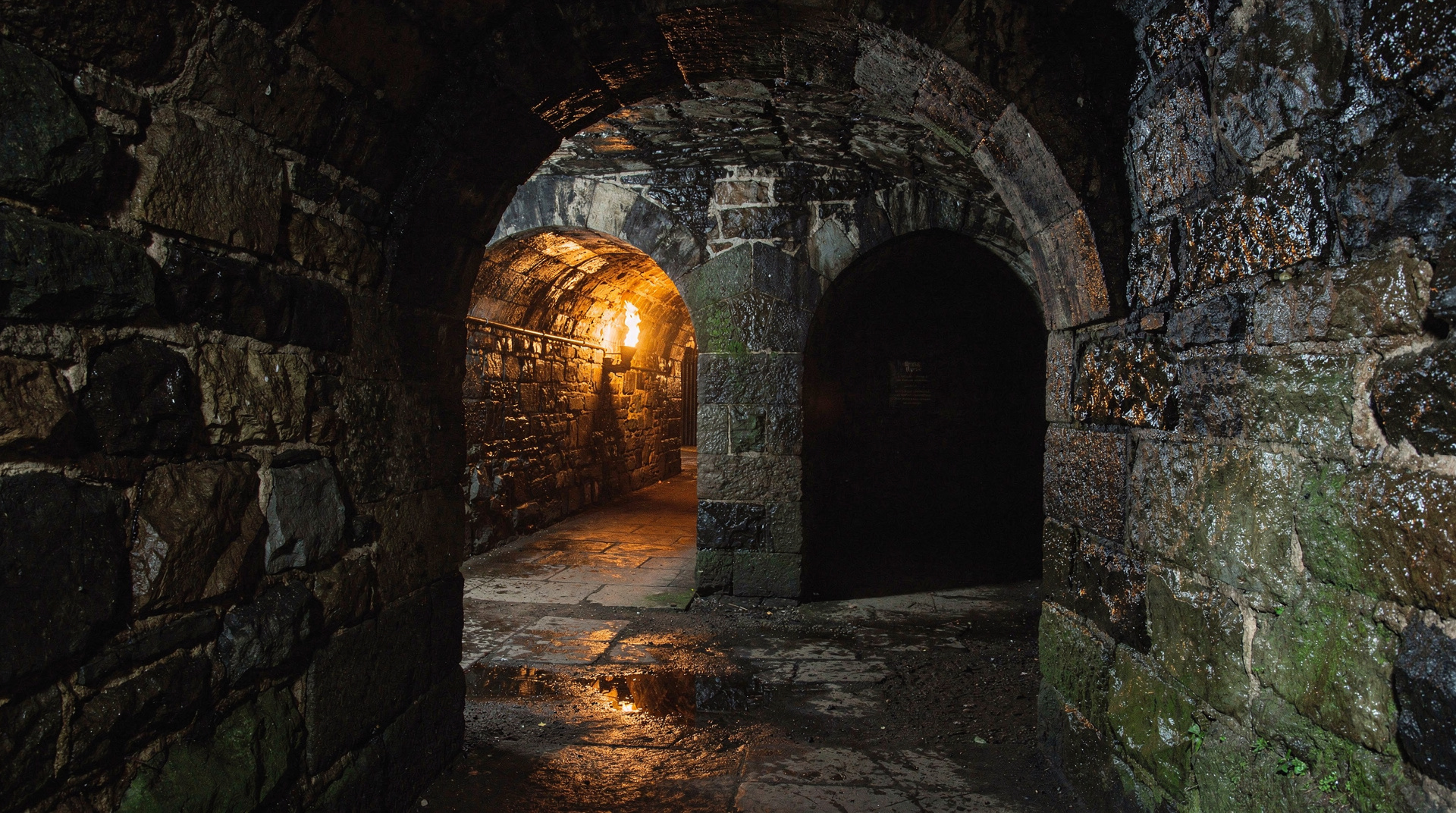
Edinburgh: the original underground tour
Edinburgh: late-night underground vaults terror tour

Edinburgh: underground vaults evening ghost tour with whisky
Edinburgh: the Real Mary King's Close guided tour
Edinburgh: mysteries, witchery and murders walking tour