Best time to avoid crowds in Edinburgh: the honest calendar
Edinburgh: all the highlights walking tour
When is the best time to visit Edinburgh to avoid crowds?
May, June, and September are Edinburgh's sweet spots — good weather, manageable crowds, and prices 20-35% lower than August peak. August is the most crowded month by far (Fringe + Tattoo). October and April offer quiet visits with fewer facilities. January-February are cheapest but coldest.
Top-rated tours to book
The honest Edinburgh crowd calendar
Edinburgh’s visitor numbers vary dramatically by month. The difference between the city in August and the same city in February is not just atmospheric — it is the difference between a destination that feels managed and one that feels overwhelmed. Understanding the patterns lets you choose a visit window that matches what you actually want from the trip.
This guide gives month-by-month honest assessments, specific advice on the peak events that matter most, and the concrete price and availability differences that come with different timing. If you are still deciding whether to come at all, the first-time visitor guide and the Edinburgh weather guide are good companions to this calendar.
| Quietest months | January, February, November |
| Sweet spot | May, June, September |
| Busiest month | August (Fringe + Tattoo) |
| Price swing | Up to 40-80% higher in August vs shoulder season |
| Booking lead time | 4-8 weeks shoulder season; 6-12 months for August/Hogmanay |
Crowd levels by month at a glance
| Month | Crowd level | Weather | Relative price |
|---|---|---|---|
| Jan-Feb | Very low | Cold, grey (3-8°C) | Lowest |
| Mar-Apr | Low-moderate | Cool, improving | Low |
| May-Jun | Moderate | Best of the year (12-20°C) | Moderate |
| Jul | Moderate-high, rising | Warm, variable | Moderate-high |
| Aug | Very high (Fringe/Tattoo) | Warm but changeable | Highest |
| Sep | Moderate, dropping fast | Often excellent | Moderate, falling |
| Oct | Low | Cool, autumn colour | Low-moderate |
| Nov | Very low | Cold, grey | Low |
| Dec (Hogmanay) | High (29 Dec-1 Jan only) | Cold | High around Hogmanay only |
August: spectacular but genuinely overwhelming
August is Edinburgh’s most famous month because of the Edinburgh Festival Fringe — the world’s largest arts festival, running the full month. The Royal Edinburgh Military Tattoo operates simultaneously on the castle esplanade. The Edinburgh International Festival, the Book Festival, and numerous other festivals run in parallel. The city becomes, effectively, a global performance venue.
What is great about August: The Fringe alone lists over 3,000 shows in a typical year. Comedy, theatre, dance, spoken word, experimental performance — everything is on offer at prices from free (free shows at the Fringe are genuinely good) to £25-30 for the biggest names. The atmosphere on the Royal Mile is extraordinary — performers flyering, pop-up shows in every available space, an energy level unlike any other time of the year.
The Military Tattoo is one of Scotland’s most spectacular set-piece events — military bands from around the world performing on the castle esplanade against the dramatic backdrop of the castle lit at night. Tickets need to be booked months in advance (see the official Royal Edinburgh Military Tattoo website for current prices) but are genuinely worth it for the spectacle.
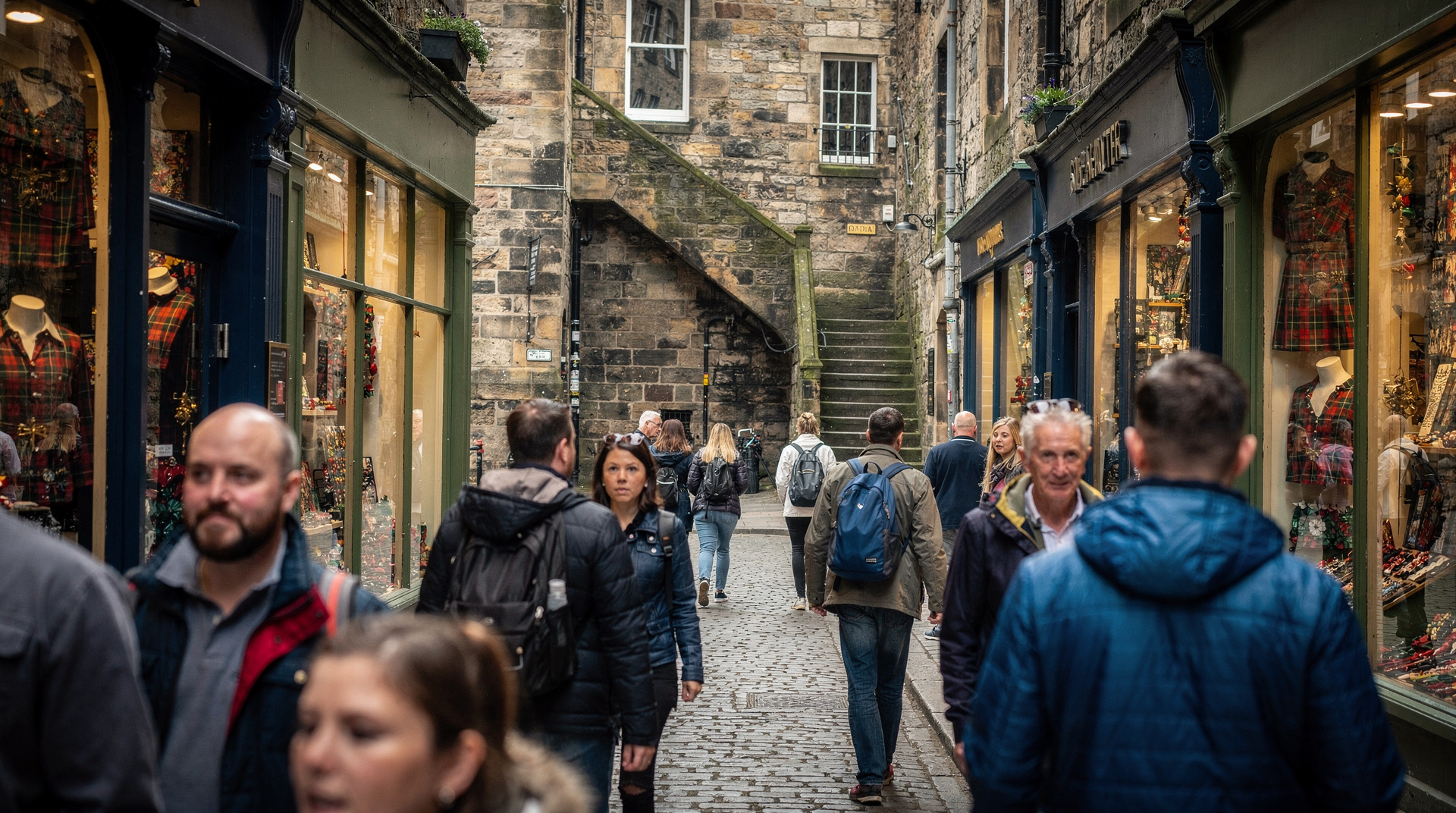
What is genuinely difficult about August: The Royal Mile becomes so crowded on busy afternoons that walking in a straight line is difficult. Accommodation prices double or triple — a hotel room that costs £100 in June costs £200-300 in August. Restaurants require reservations for dinner most nights. Edinburgh Castle and Camera Obscura are at their most crowded.
If August is where your dates fall, the Fringe guide, the Tattoo guide and the August survival guide cover the practical detail of getting through the month well.
The bottom line on August: Edinburgh in August is extraordinary if you have booked accommodation six to twelve months in advance, have a clear sense of which Fringe shows you want to see, and have made peace with the tourist density. It is a poor choice for a casual visit, for families with young children who need predictable schedules, or for visitors who want the Old Town to themselves.
May and June: the sweet spot
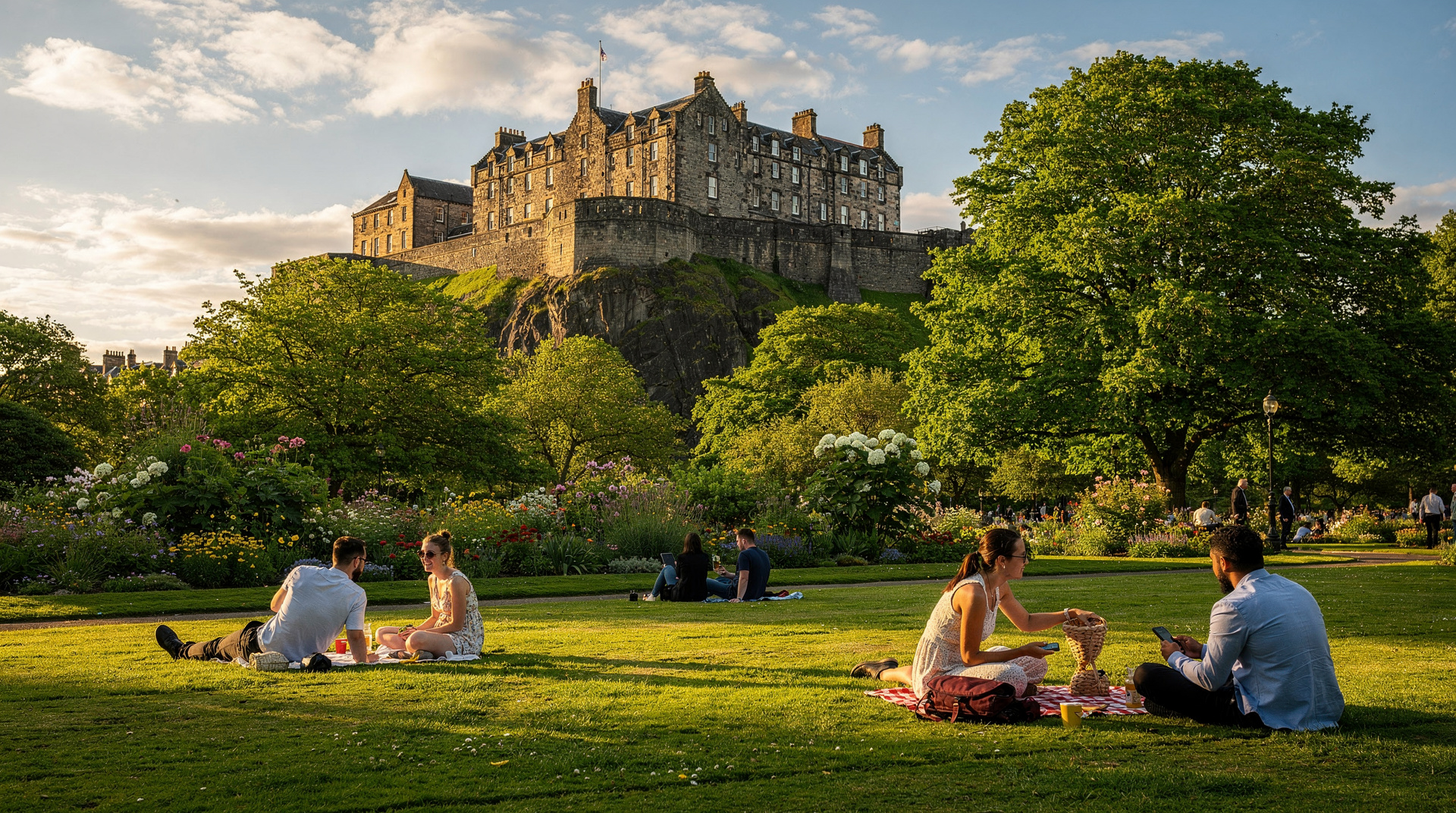
May and June represent Edinburgh’s best combination of weather, accessibility, and price. School holidays have not yet started. Accommodation is available without six months’ advance planning. Prices are 25-35% lower than August. The weather in May and June is frequently Edinburgh’s best — long daylight hours (sunset after 9:30pm at the summer solstice), regular periods of sunshine, and temperatures that regularly reach 16-20C.
The city is busy in May and June but manageable. The Royal Mile has tourists but you can walk it without fighting through a crowd. Edinburgh Castle has queues, but booking ahead resolves most of this. Restaurants are available for dinner with a day’s notice.
Practical specifics for May: The Beltane Fire Festival on Calton Hill happens on 30 April (running into 1 May) — a pagan fire festival that draws a large crowd but is worth seeing. The Edinburgh International Science Festival runs in April and extends into May.
Practical specifics for June: Long evenings allow a walk up Arthur’s Seat after dinner (sunset at 10pm means you can hike at 8pm in comfortable light). The Forth coastline — North Berwick, East Lothian — is at its best in June with the puffin season running to late summer.
The Arthur’s Seat hiking guide is worth reading before those long evenings, and the North Berwick day trip guide covers the coast. A one-day plan such as the Edinburgh in one day itinerary works especially well in this window.
For a first-time visit without specific event goals, May or June is the optimal choice. See the best time to visit guide.
September: often better than May or June
September has the useful quality of combining the tail of summer weather with the drop in tourist numbers that follows the end of August. Accommodation prices fall sharply from 1 September — often by 20-30% overnight — and the city recovers some of its quieter character within days of the Fringe ending (which is typically the first or second weekend of September).
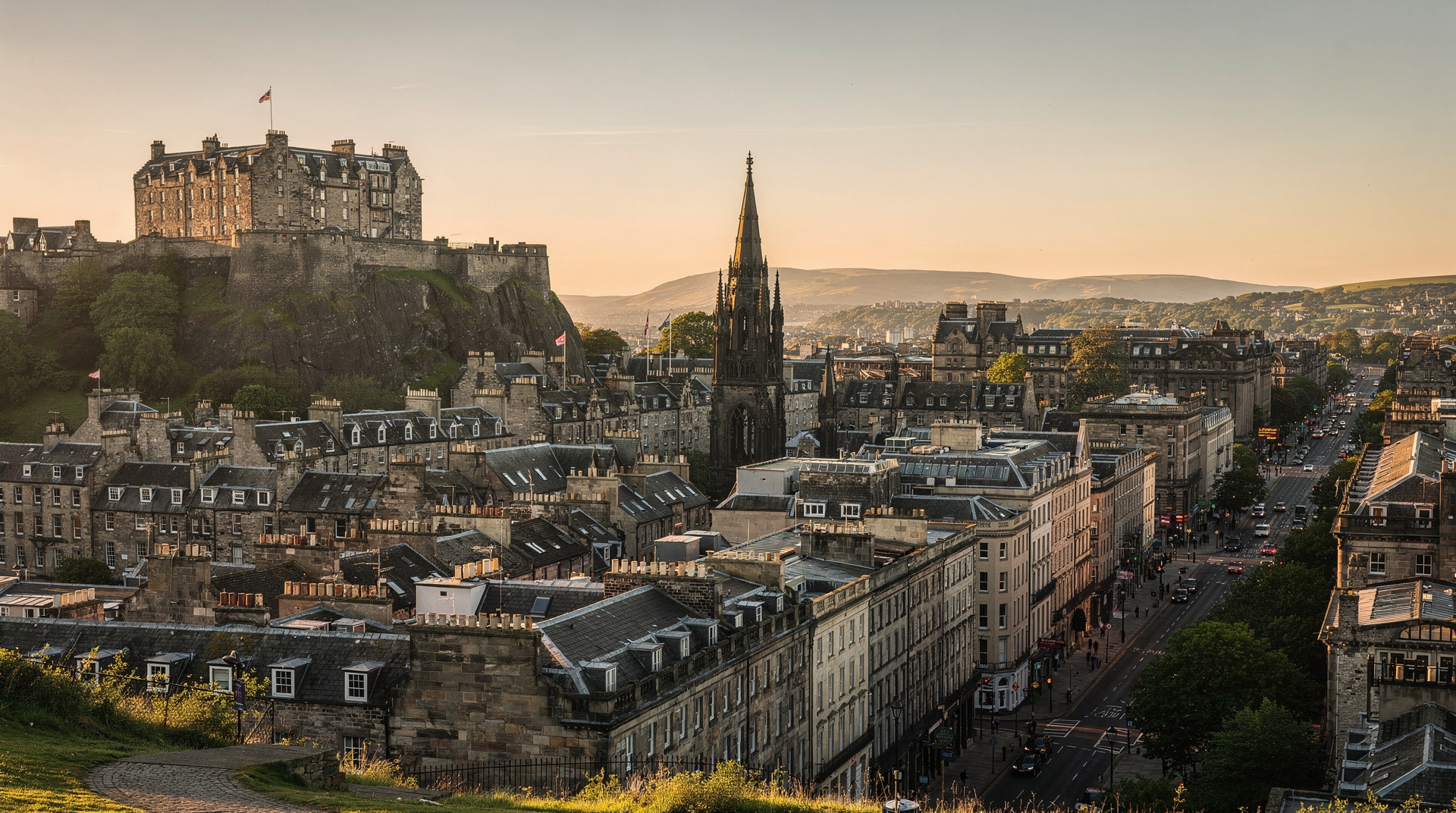
The weather in September is variable but can be excellent — warm, clear days occur regularly, and the city benefits from the lower sun angle that makes Edinburgh’s stone buildings glow in evening light. Autumn colour starts to appear in Holyrood Park and the Pentlands by late September.
Practical September note: The Edinburgh International Film Festival runs in late August and early September. Various other post-Fringe events fill the early part of the month. This is a plus for cultural visitors and only adds to the city’s offering without generating the Fringe-level crowd pressure.
October: quiet with caveats
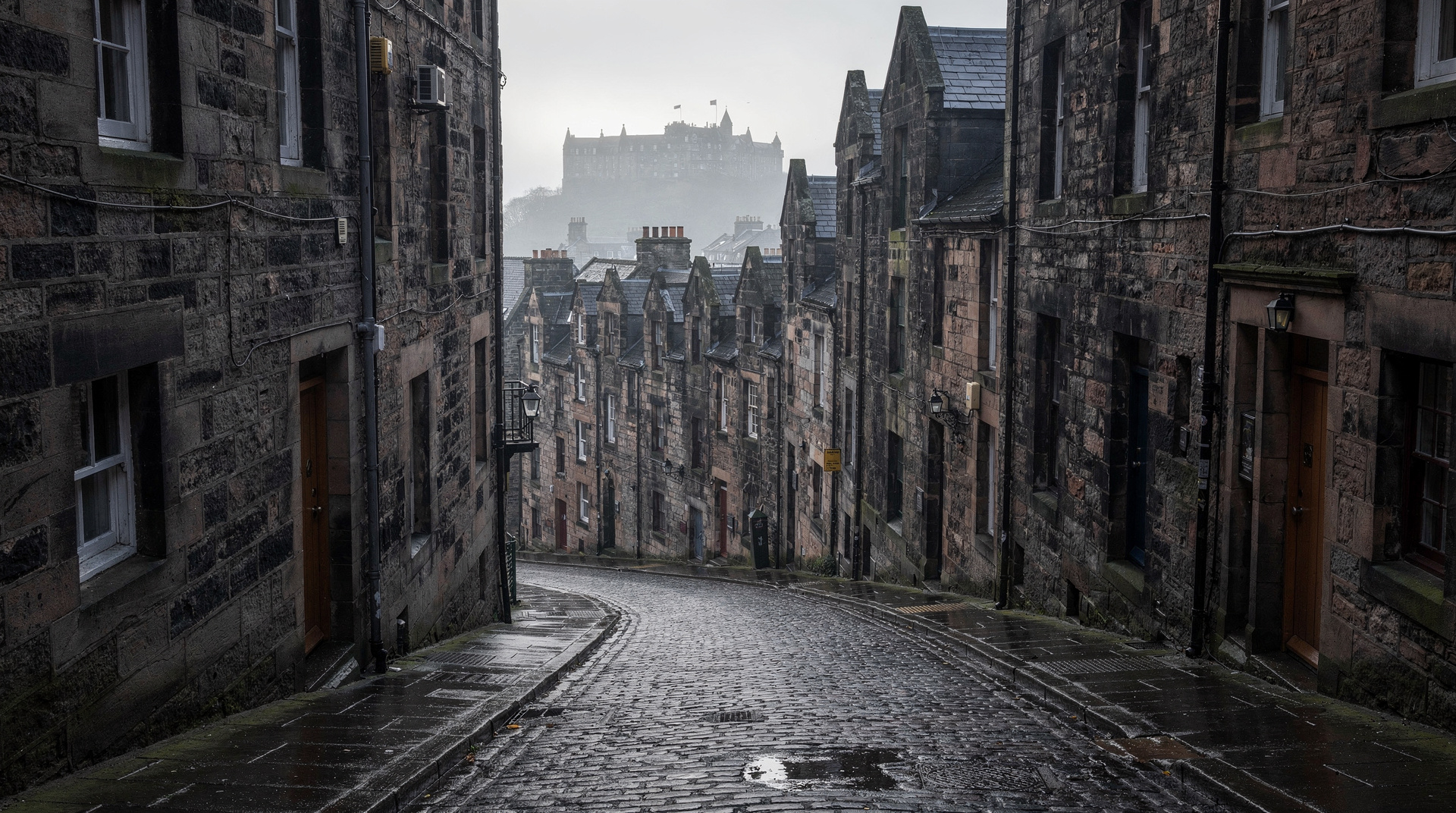
October is Edinburgh’s quietest pleasant month. The crowds are minimal — a Saturday morning on the Royal Mile in mid-October has more dog-walkers than tour groups. Accommodation prices are at shoulder rates. Daylight is shortening (sunset around 6pm by late October) and weather is more unpredictable, with regular rain, mist, and cool temperatures.
The combination of lower crowds, atmospheric autumn light, lower prices, and the beginning of proper cosy-pub Edinburgh weather makes October a genuinely good time for visitors who prioritise atmosphere over sunshine and do not mind planning around potentially grey days.
What works well in October: Ghost tours in the vaults and graveyard are particularly atmospheric — the best ghost tours guide and the underground vaults guide help you pick. The autumn colours in Holyrood Park and around the Water of Leith are excellent. The pubs and whisky bars come into their own. The Royal Mile minus the August crush is genuinely enjoyable.
What is less good: Shorter days reduce the outdoor hiking window. Some seasonal attractions reduce hours or close. The beach day trips to North Berwick and the East Lothian coast are less appealing in autumn.
November: approaching quiet season
November is one of Edinburgh’s quietest months and one of the best for budget visitors who want a minimal-crowd experience. Accommodation prices are at or near their lowest outside the Hogmanay period. Edinburgh’s Christmas celebrations open in mid-November (14 November in 2026), adding a specific reason to visit.
Edinburgh Christmas market: The free Christmas market in East Princes Street Gardens runs from mid-November to 3 January (14 November 2026 to 3 January 2027), with the funfair in West Princes Street Gardens and an undercover ice rink on George Street. It is a genuine market rather than a purely commercial event, with Scottish food and craft stalls alongside the usual German-style market offerings. The setting — in the gardens below the castle, illuminated — is genuinely beautiful. See the Edinburgh Christmas markets guide.
December and Hogmanay: the other peak
December builds toward Hogmanay (Edinburgh’s New Year celebration) which rivals August in terms of advance planning required. Hogmanay runs 29 December-1 January and includes:
- The Torchlight Procession on 30 December (tickets required, apply early)
- The Street Party on 31 December (tickets required for the main area)
- Fireworks from the castle at midnight
Hogmanay accommodation needs to be booked three to six months in advance. Prices for the peak days run close to August levels. The event is spectacular and worth planning for if New Year in Edinburgh appeals.
January and February: cheapest, quietest, coldest
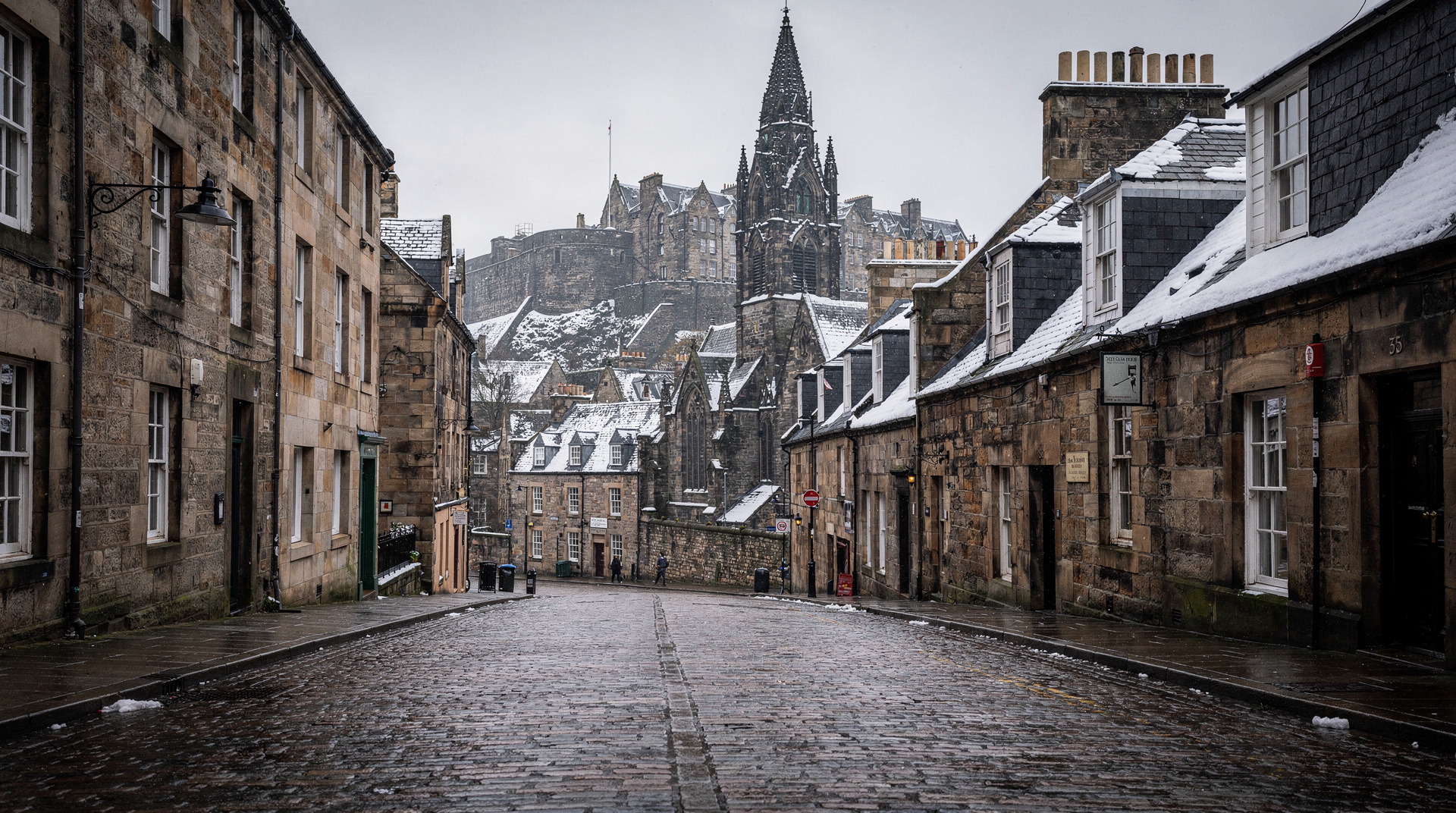
January and February offer Edinburgh at its most accessible for budget visitors. Accommodation prices are at their annual low — budget hostels for £20 per dorm bed, reasonable hotel rooms from £60-80 per night. The city is quiet enough that you can have the castle grounds or Holyrood Park almost to yourself on a weekday.
The honest downside: January and February are genuinely cold (3-8C average, wind chill can make it feel colder), frequently grey, and operate at reduced capacity. Some seasonal attractions have limited hours. The evenings are dark by 4:30pm in January.
For visitors who want to see Edinburgh’s architectural grandeur without the tourist overlay, and who can tolerate winter conditions, January and February are surprisingly rewarding. The Edinburgh in winter guide goes into what to wear, what stays open and how to make the short days work.
How crowd levels affect specific attractions
Edinburgh Castle: (see the Edinburgh Castle guide) Worst in August, particularly Saturday afternoons. Manageable with early opening arrival (9:30am) year-round. Pre-booking eliminates most queue issues.
Arthur’s Seat: Never truly crowded in the same way as the castle. Summer evenings have more hikers. October and November mornings can be misty and almost entirely empty.
The underground vaults: Year-round, but the most atmospheric in October-March when the longer dark evenings add to the experience.
The Royal Mile: (see the Royal Mile guide) Saturday afternoons in July and August are the worst. Early morning (pre-9am) throughout the year is the best. November-February mornings approach empty.
North Berwick and East Lothian: Summer day trips (June-September) for beach and puffin season. The bird colony is most active May-August.
Planning specifics for the key months
May-June (recommended): Book four to eight weeks in advance. Prices are reasonable. All attractions operating at full hours. Best daylight hours of the year.
September: Book two to four weeks in advance for dates after the first week. Prices drop sharply from 1 September. Good weather often persists.
October: Book one to two weeks in advance, or often later. Good prices. Atmospheric month.
August (only if you specifically want the Fringe/Tattoo): Book accommodation six to twelve months in advance. Budget for 40-80% higher costs than shoulder season.
The Edinburgh highlights walking tour and the Old Town walking tour run year-round and are good starting points regardless of when you visit. In the quieter months, you often get smaller groups and more guide attention.
How to manage crowds when you cannot avoid them
If your visit dates are fixed in peak season, the crowd management strategies that work are:
Timing within the day: Edinburgh Castle is most crowded between 11am and 3pm. Arriving at the 9:30am opening and being at the Crown Room before 10am significantly reduces wait times. Camera Obscura is most crowded on weekend afternoons — weekday mornings are noticeably quieter. The Royal Mile is most congested between 12pm and 4pm on summer weekends.
Using evenings: Edinburgh’s long summer evenings (sunset after 9:30pm in June) give you activity windows after the day visitors have gone. Arthur’s Seat at 7pm in June is quieter than at 10am. The Royal Mile at 9pm has character without the daytime crowd. The ghost tours operate in the late evenings when the crowds have thinned.
Booking versus queuing: Almost every Edinburgh attraction with a queue offers the option to book in advance and skip the ticket queue. This does not reduce the visitor numbers but it eliminates your specific waiting time. Pre-booking Edinburgh Castle, Camera Obscura, and the underground vaults is particularly valuable in August.
Alternative routes: The closes and wynds off the Royal Mile carry a fraction of the foot traffic of the main street. Walking the Royal Mile by alternating between the main street and the parallel closes gives the same geographical coverage with significantly less crowd pressure.
The practical impact of crowds on different types of visit
Not all visitors are equally affected by crowds, and it is worth being specific about your own priorities:
History and culture visits: Crowds are a genuine problem at Edinburgh Castle and the Royal Mile interpretive sites. The wait for the Crown Room in peak season can be 30-40 minutes. The National Museum and Scottish National Gallery are less affected because they are large enough to absorb visitor volumes. The best strategy for history-focused visitors is to book all timed entries in advance and visit the castle in the first 90 minutes of the day.
Outdoor and active visits: Arthur’s Seat and Holyrood Park are large enough that they rarely feel genuinely crowded, even in peak season. A weekday morning hike to Arthur’s Seat in August will have other visitors on the path but not at a level that diminishes the experience. The Pentland Hills (accessible by bus, 30 minutes from the centre) are significantly less visited than Holyrood Park even in August.
Food and drink visits: Restaurant capacity is the binding constraint. In August, dinner without a reservation at popular restaurants is difficult, even in Leith and Stockbridge. For food-focused visitors in peak season, reservations for dinner are essential — book two to three days in advance as a minimum, a week ahead for weekend evenings.
Shopping visits: The Royal Mile tourist shops are always crowded in peak season but crowding at these shops is not the visitor’s problem. Stockbridge and Bruntsfield are less affected; the Stockbridge page and the Edinburgh shopping guide point you to calmer streets.
Specific events that create unexpected crowds
Beyond August and Hogmanay, several events create localised crowd pressure worth knowing about:
Edinburgh Marathon (May): The marathon and associated running events in May generate significant crowd and road closure disruption in parts of the city. Some accommodation is affected by road closures. If you are visiting in May and are not running, avoid the marathon weekend specifically.
The Beltane Fire Festival (30 April): Held on Calton Hill, this annual fire festival draws a crowd of several thousand. Calton Hill is significantly busier than usual on the evening of 30 April. The festival itself is worth attending, but plan around it.
Rugby internationals at Murrayfield: Scotland’s home rugby internationals at Murrayfield Stadium (west of the city) generate significant crowd pressure on the city centre on match days — particularly the Six Nations matches in February-March. The combination of rugby supporters from multiple countries and Edinburgh’s compact pub scene produces very busy evenings. Train and bus services are strained. If you want a quiet Edinburgh evening, check the Murrayfield fixtures calendar.
The Fringe Build-Up: The Fringe officially starts in the first week of August but the build-up begins in the last week of July. Accommodation prices begin rising from late July and the tourist infrastructure starts filling. If you want the flavour of early Fringe without the full August price premium, late July (after the 20th) gives you the beginning of the Fringe atmosphere with somewhat lower prices.
New Year’s Eve everywhere: Every major New Year event in Edinburgh (Hogmanay, First Foot concerts) fills up months in advance. But the general city centre on 31 December is also extraordinarily crowded regardless of whether you have a Hogmanay ticket. Simply being in Edinburgh on New Year’s Eve, without a specific event booking, puts you in the middle of a large crowd. Plan accordingly.
How Edinburgh’s crowd pattern compares to other UK cities
Edinburgh’s crowd swing between August and the rest of the year is unusually extreme by UK standards. London, Bath, and York have busy periods but nothing that compares to the four-to-five-fold jump in visitor density Edinburgh sees during the Fringe. This matters practically: a visitor who is used to “busy but manageable” summer crowds in another UK city may be genuinely unprepared for how different Edinburgh in August feels compared to Edinburgh in June. Conversely, Edinburgh’s quiet months (January, February, November) are quieter than the equivalent off-season in cities with more consistent year-round tourism, which is part of why a winter visit can feel like having a major European capital largely to yourself.
This pattern also affects locals’ relationship with their own city. Many Edinburgh residents deliberately avoid the Old Town during August, decamping to the New Town, Stockbridge, or simply staying home in the evenings — which is worth knowing if part of your interest in visiting is seeing how Edinburgh people actually live, rather than the festival version of the city. September through to July gives a far more representative picture of daily Edinburgh life than the Fringe month does — worth factoring in if authenticity matters as much to you as the spectacle.
A one-week crowd-avoidance strategy
For visitors with flexible dates but a fixed week to travel, the honest ranking is: first choice, the first two weeks of September (post-Fringe calm, weather often still good); second choice, late May to mid-June (best weather, moderate crowds); third choice, mid-October (quiet, atmospheric, cooler); fourth choice, late January to mid-February for budget-focused visitors who can handle cold. If your dates are fixed and happen to fall in August, the crowd-management strategies above (early mornings, evening activities, advance booking) matter far more than they would in any other month — treat them as essential rather than optional for that specific week.
Day-of-week also matters more than most visitors expect. Within any month, Tuesday to Thursday consistently sees 15-25% fewer visitors at Edinburgh Castle and on the Royal Mile than Friday to Sunday, because weekend breaks from elsewhere in the UK cluster around Fridays and Saturdays. A Tuesday in July can be quieter than a Saturday in May. If your schedule allows choosing which days to spend at the busiest attractions, mid-week is the reliable lever.
Frequently asked questions about Edinburgh crowd timing
When is Edinburgh least crowded?
January and February are the quietest months. October and November come close while still having reasonable weather. Mid-week visits in any shoulder month (April, May, June, September, October) are noticeably quieter than weekends.
Is August worth visiting despite the crowds?
Yes, if you specifically want the Fringe and have booked accommodation in advance. No, if you simply want to see Edinburgh — the same city is available at a third of the crowd density and two-thirds of the price in May or June.
Does August weather justify the crowds?
Edinburgh’s August weather is not significantly better than May or June, and is frequently worse — cloud, rain, and mist are common in August. The Fringe is the reason to visit in August, not the weather. If you want the best Edinburgh weather, June is the most consistent month.
What about bank holidays and Scottish public holidays?
Scottish bank holidays fall on different dates from English ones. In particular, Scotland does not observe the August bank holiday that England observes (Scotland’s summer bank holiday is in early August but local businesses have different policies). For general crowd management, check for Scottish public school holidays (terms vary slightly from English terms) as these affect domestic tourism volumes.
Is Edinburgh more expensive than other UK cities for tourists?
During August: significantly more expensive than most UK cities (including London on a hotel-room basis). Outside August, comparable to Bristol or Manchester for mid-range accommodation, and cheaper than London. The accommodation price variation between August and the rest of the year is more extreme in Edinburgh than in any other UK city. See the Edinburgh budget guide for 2026 price guidance.
Top experiences
Bookable activities with verified prices and instant confirmation on GetYourGuide.