Loch Ness monster reality check: what the trip actually involves
Edinburgh: Loch Ness, Glencoe & the Scottish Highlands tour
Is Loch Ness worth the trip from Edinburgh?
Loch Ness is a 3.5-hour drive from Edinburgh — around 7 hours round-trip before you see anything. The loch is long and undramatic. The monster is folklore. If you want spectacular Highland scenery, Glencoe (2.5 hours from Edinburgh) is dramatically more rewarding per mile driven. This guide is honest about both.
What the Loch Ness monster actually is
The Loch Ness Monster is a folk legend. There is no evidence for the existence of a large aquatic creature in Loch Ness. The famous 1934 photograph known as the “Surgeon’s Photo” — the image most people have in mind when they think of Nessie — was a hoax involving a toy submarine with a sculpted head attached. This was publicly admitted by the person who created it in 1994. More comprehensive investigations using sonar, underwater cameras, and environmental DNA have found no evidence of anything beyond the fish species known to inhabit the loch.
This is not a controversial position — it is the conclusion of every serious scientific investigation of the loch. Bringing this up at the start of a Loch Ness guide feels necessary because every year hundreds of thousands of visitors travel several hours specifically to see “where the monster lives,” a framing that is commercially sustained rather than factually grounded.
Saying all this: Loch Ness is a real place, the Scottish Highlands are genuinely beautiful, and a well-organised day trip from Edinburgh to the area can be an excellent experience. It just needs to be approached with accurate expectations rather than the monster mythology.
| Is the monster real | No — folklore, sustained commercially |
| Distance from Edinburgh | around 265km / 3–3.5hrs each way |
| Better scenery per mile | Glencoe (2.5hrs), on the same route |
| Worth it if | combined with Glencoe or a multi-day Highlands stay |
| Best time | May, June or September for crowds and weather |
What Loch Ness actually looks like
Loch Ness is a long, narrow loch in the Great Glen fault line that runs diagonally across the Scottish Highlands from Inverness in the northeast to Fort William in the southwest. It is 37 kilometres long, up to 2.5 kilometres wide, and 230 metres deep at its deepest point.
The loch is impressive in scale but not, by Highland standards, particularly dramatic in scenery. The banks are relatively low and forested. The water is very dark (peat-coloured from the runoff) and opaque — you cannot see more than a metre or two into it. The main viewpoints are from the A82 road running along the western bank.
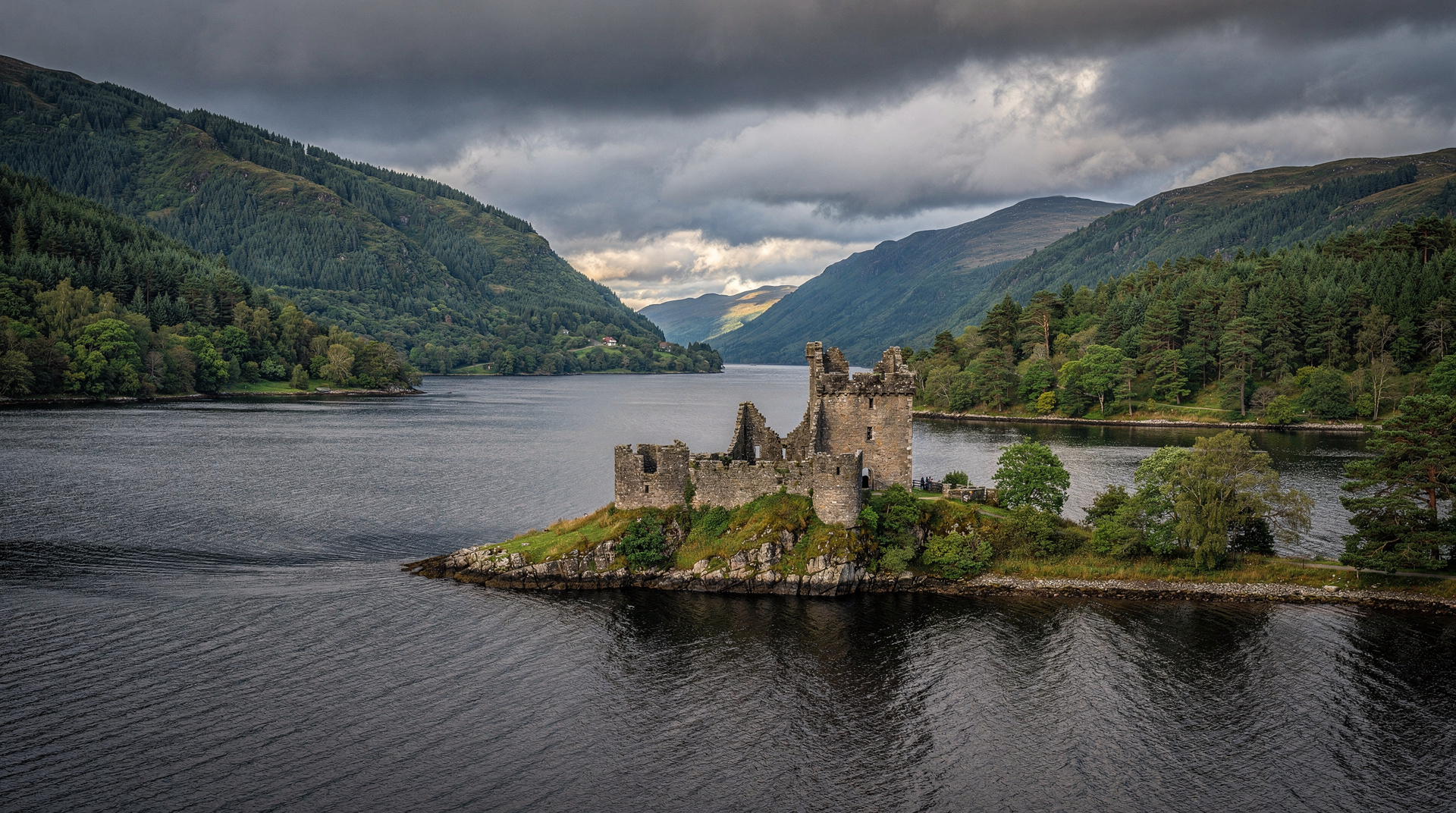
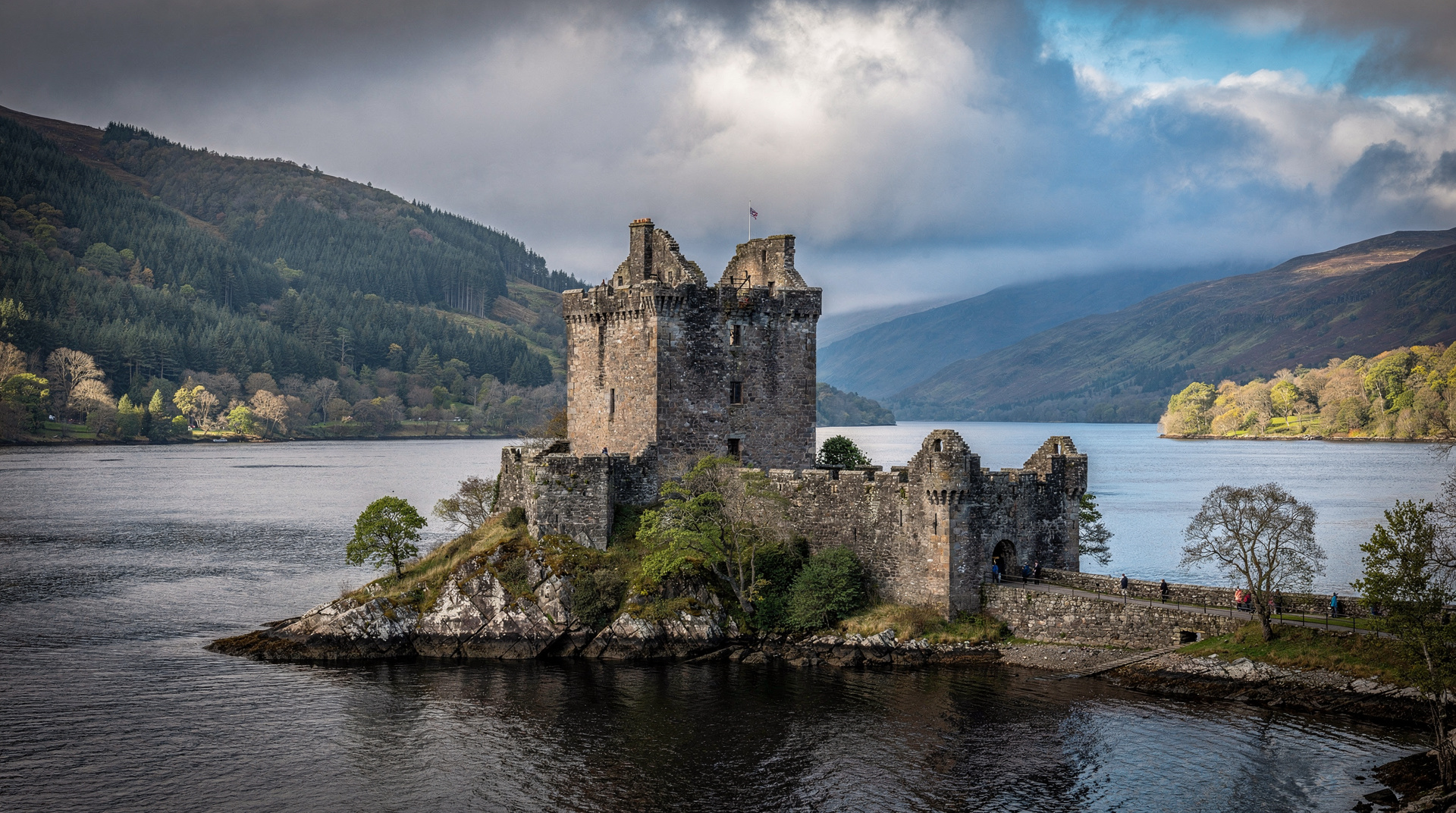
Urquhart Castle, a ruined medieval castle on the western bank about halfway down the loch, is the main point of visual interest and the site most associated with reported monster sightings. The castle is genuinely photogenic and historically interesting (it was one of the largest fortified strongholds in medieval Scotland). Entry costs £14 online (£16 at the gate). The Castle itself is worth visiting; the Loch Ness Centre museum opposite is the main commercial monster hub.
The Loch Ness Centre in Drumnadrochit was refurbished in 2023 and gives a balanced account of the monster legend alongside genuine natural history information about the loch. Check current ticket prices on the Loch Ness Centre official site. If you are visiting Loch Ness, this is worth an hour.
The journey from Edinburgh: honest numbers
Edinburgh to Loch Ness (Drumnadrochit, the main visitor area) is approximately 265 kilometres by road. The A9 route via Inverness is the most common. Under good conditions, this takes about 3 to 3.5 hours each way. In summer traffic, particularly around Inverness and on the A82 through Drumnadrochit, 4 hours each way is realistic.
A day trip from Edinburgh to Loch Ness therefore involves: 7-8 hours of driving or coach travel, and perhaps 3-4 hours at the loch. It is a long day. Young children and people who find long vehicle journeys uncomfortable should factor this in seriously.
Organised coach tours from Edinburgh to Loch Ness typically depart around 7-8am and return around 7-8pm. They include stops at viewpoints along the route. The Loch Ness, Glencoe and Scottish Highlands tour is one of the most popular — it combines the loch with Glencoe on the return journey, which is the smart way to structure the day (Glencoe is genuinely spectacular and on the route back). The Loch Ness and Highlands group day trip with cruise adds a boat cruise on the loch, which gives a different perspective and is enjoyable if the weather cooperates.
The better alternative: Glencoe
Glencoe is about 145 kilometres from Edinburgh — roughly 2.5 hours by road or coach. It is on the main A82 route from Edinburgh toward Fort William and the west Highlands, and can be visited as a there-and-back day trip or as a stop en route to Loch Ness.
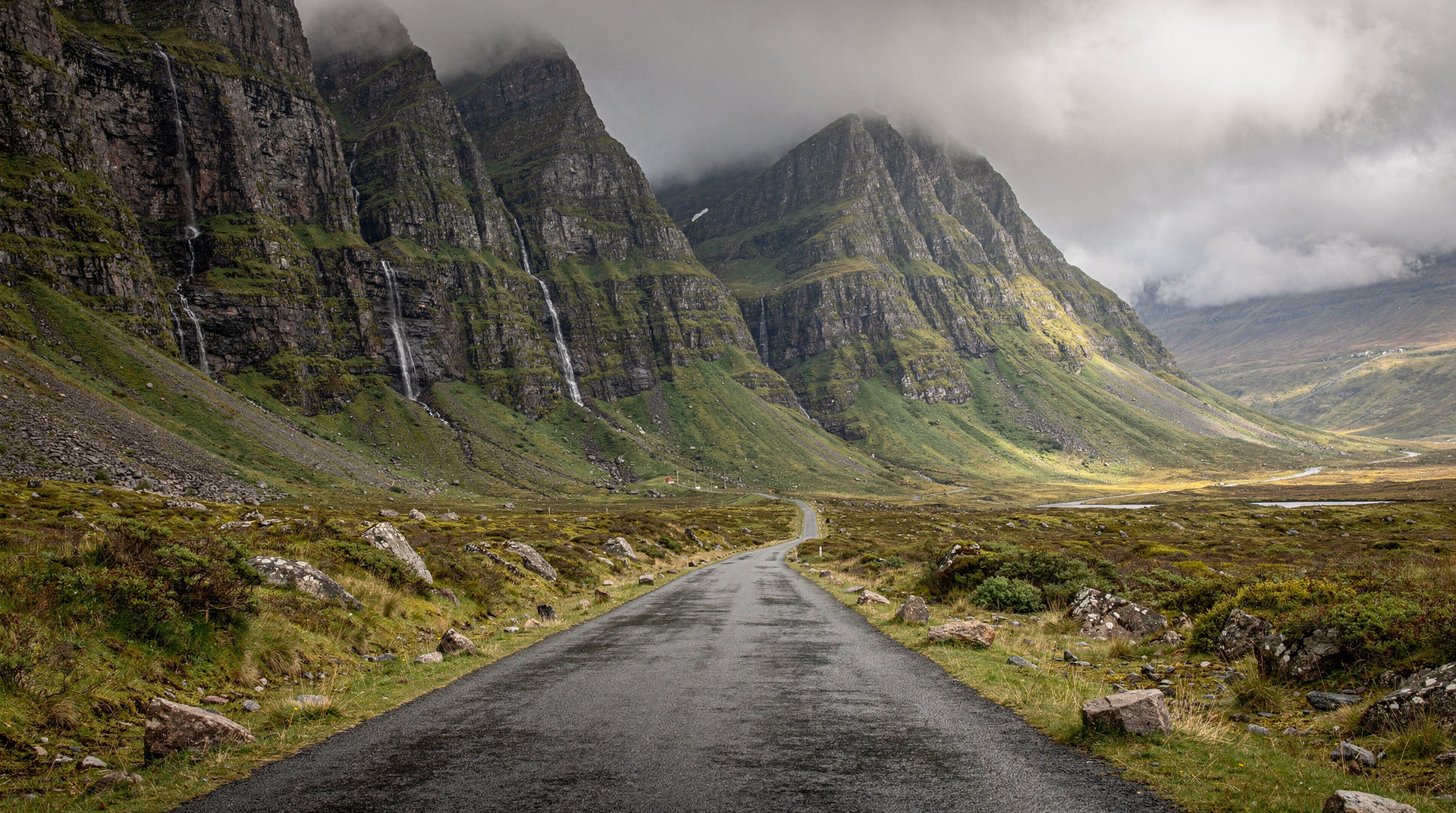
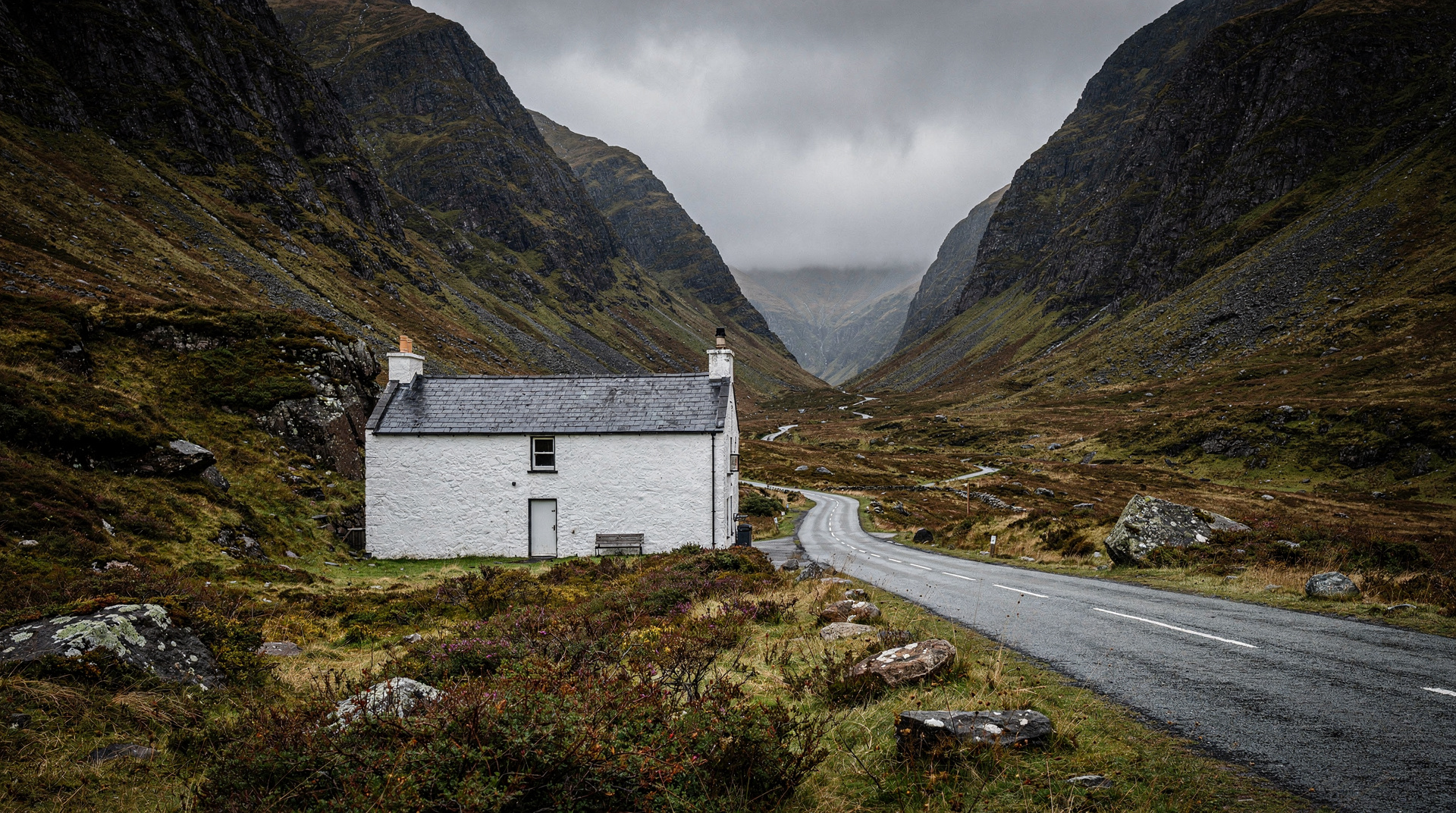
The honest comparison: Glencoe is dramatically more visually spectacular per kilometre of road than Loch Ness. The valley is a long glaciated trough flanked by mountains rising to over 1,000 metres on each side. The Three Sisters — three massive buttresses of the Bidean nam Bian massif — dominate the south side of the valley. The light at Glencoe in any weather is extraordinary; in atmospheric conditions of mist and low cloud, it is among the most dramatic landscapes in Europe.
Glencoe also has the Signal Rock (traditional rallying point of Clan MacDonald, site associated with the 1692 massacre), the Glencoe Visitor Centre, and several hill walking routes that can be combined with a stop.
The practical recommendation: If you have one day for the Highlands from Edinburgh, spend it at Glencoe rather than Loch Ness. If you want to see Loch Ness as well, a tour that combines both — heading north to Loch Ness and returning via Glencoe — uses the day well. The Loch Ness, scenic walk, Glencoe and whisky day tour does exactly this and is well-structured.
For the Glencoe-focused approach, see the Glencoe destination guide.
What you will actually see at Loch Ness
On arrival at Drumnadrochit (the main visitor village), you will find the Loch Ness Centre (the main monster museum), several souvenir shops, a few cafes, and Urquhart Castle a few kilometres down the road.
The loch itself is visible from various lay-bys on the A82. The famous viewpoints are from Urquhart Castle, from the viewpoint above Drumnadrochit, and from the car parks along the south shore.
Will you see the monster? No. What you may see: herons, red deer on the hillsides above the loch, osprey (if you are lucky), and the dark water itself. The loch in winter morning light, with mist on the surface, is genuinely beautiful. In summer at midday, the main attribute is its length.
Boat cruises: Several operators run boat cruises on Loch Ness from Drumnadrochit and Fort Augustus. The cruises use sonar equipment and give passengers a view of what lies beneath (mostly an empty column of dark water). They are enjoyable on a calm day as a lake cruise but should not be approached as a monster-hunting experience. See the Loch Ness day trip guide for specifics.
The overcrowding problem
Loch Ness is one of Scotland’s most visited tourist destinations and the main sites — Drumnadrochit, Urquhart Castle — are overwhelmed in July and August. The car park at Urquhart Castle fills by 10am in summer. The A82 through Drumnadrochit slows to a crawl. Coach tours queue to enter the visitor attractions.
If you must visit in peak season, arriving at Urquhart Castle before 9:30am (when it opens) or after 4pm gives you substantially thinner crowds. For general Highland timing, May-June and September are dramatically better. See the Edinburgh crowds guide.
When Loch Ness is worth it
Loch Ness is genuinely worth the trip if:
- You are spending multiple days in the Highlands (staying in Inverness, for example) rather than doing a day trip from Edinburgh
- You combine it with Glencoe and the A82 route, treating it as part of a Highlands drive rather than a specific destination
- You visit in May, June, September, or October when the crowds are manageable
- You are taking children who are passionate about the monster legend and will find the visit magical regardless of what the evidence says
It is a marginal choice if you are doing a one-day coach trip from Edinburgh specifically to see “where the monster lives.”
Two nights in Inverness: the better base
If the Highlands are the main draw, two nights in Inverness with day trips to Loch Ness (20 minutes from Inverness), Urquhart Castle, and Glencoe (with a night in Fort William or Glencoe village) is far more rewarding than a punishing day trip from Edinburgh. Inverness is 3.5 hours from Edinburgh by train (ScotRail, roughly £25-40 each way with advance booking). See the Edinburgh and Highlands five-day itinerary for a practical multi-day structure.
The Highland day trip landscape: honest comparison
If your goal is spectacular Highland scenery within a day trip from Edinburgh, here is an honest comparison of the main options:
Glencoe (2.5 hours from Edinburgh): The most visually dramatic Highland destination accessible as a day trip. The glaciated valley, the Three Sisters, and the Signal Rock provide consistent high-impact scenery regardless of cloud cover. The light at Glencoe in any weather is extraordinary. The historical significance (1692 massacre of the MacDonalds) adds narrative depth. Strong recommendation for first-time Highland day trippers.
Loch Ness / Inverness direction (3.5 hours from Edinburgh): A much longer day. The loch itself is long and dark. Urquhart Castle is genuinely photogenic. The Loch Ness Centre is now well-presented. Worth it if you have a specific interest in the legend or in the northern Highlands. Not the right choice purely for scenery — Glencoe delivers more per hour of driving.
Stirling and the Trossachs (1-2 hours from Edinburgh): Stirling Castle is an excellent half-day destination. The Trossachs via Loch Lomond offers Highland-fringe scenery (Ben Lomond, the loch, the Trossachs national park) within a much more manageable distance. The Kelpies (near Falkirk, en route) are a worthwhile addition. This is the best full-day Highland-flavour option for visitors who cannot handle a 12-hour coach day.
St Andrews and Fife (1.5 hours from Edinburgh): Not the Highlands, but a very different Scotland from Edinburgh — the east coast fishing villages, the ancient town of St Andrews, good beaches. For families, this is often a better choice than a Highland day trip because the distances are shorter and the beaches provide genuine child engagement.
Cairngorms National Park (2.5 hours from Edinburgh): A less-visited option that delivers extraordinary upland scenery. The Cairngorms plateau is genuinely wild — more so than the more accessible Glencoe valley. Aviemore as a base gives access to the Cairngorm Mountain Railway (highest railway in the UK) and good walking. For visitors who want genuinely remote Highland atmosphere, the Cairngorms are often better than the Loch Ness route. See the Edinburgh to Highlands guide.
The Loch Ness Centre: what the refurbishment delivered
The Loch Ness Centre in Drumnadrochit was substantially refurbished in 2023 at a cost of around £5 million. The updated exhibition gives a genuinely balanced account of the monster legend — acknowledging the folklore while presenting the scientific evidence clearly. The technology is modern, the content is well-researched, and the centre is now significantly better than the prior iteration.
Check current ticket prices on the Loch Ness Centre official site. It is worth visiting if you are at Loch Ness — it gives the story context that makes the loch itself more meaningful. But it does not transform Loch Ness from a long, flat-banked loch into a dramatic Highland landscape. The scenery is what it is.
The renovated centre also has better food and better merchandise than its predecessor. If you need to buy a Nessie toy, the gift shop now stocks items of somewhat higher quality than the generic tourist shops on the A82.
Getting to Glencoe and Loch Ness by public transport
Glencoe: The CityLink bus from Edinburgh Buchanan Street Station (Glasgow) passes through Glencoe village on its route to Fort William. The journey from Edinburgh takes about 2.5-3 hours. Services are regular (several per day). The bus stops at Glencoe village from where the main valley walk and the Glencoe Visitor Centre are accessible on foot. Return services run through the afternoon and evening.
Loch Ness: Direct coach services run from Edinburgh to Inverness (via the A9, about 3.5 hours, Citylink). Inverness is the closest city to Loch Ness — local buses run from Inverness to Drumnadrochit (30-40 minutes). Alternatively, organised tours from Edinburgh include transport. The CityLink bus does not run through Drumnadrochit directly, making independent public transport access to the loch itself awkward.
Organised tours: the sensible option for Highland day trips
For both Glencoe and Loch Ness, organised day tours from Edinburgh remove the driving burden, include commentary at key stops, and often add value through stops that self-drive visitors miss. The tour guide narration for Glencoe specifically — the geology of the valley, the massacre history, the mountain weather patterns — significantly improves the experience.
The Loch Ness, Glencoe and Scottish Highlands tour is the most popular single-day option that covers both. It is a long day (departure around 8am, return around 8pm) but the routing is efficient and the combination of Loch Ness in the morning and Glencoe on the return is the right sequence — you get the Loch Ness legend context in the morning and the dramatic Glencoe scenery as your last impression of the day.
For visitors who specifically want a Glencoe-focused day without the Loch Ness distance, see the Glencoe destination guide for options that prioritise the valley over the loch.
What locals actually think
Ask around in Drumnadrochit or Fort Augustus and you will find a fairly consistent local attitude: the monster is good for business, harmless fun, and not something anyone locally takes seriously as a literal claim. Tour guides on the Highland circuit typically present the legend with a wink — happy to tell the story well, quick to note the Surgeon’s Photograph hoax if asked directly, and generally more invested in the genuine history of the Great Glen fault and the Jacobite era than in monster hunting.
This is worth knowing before you go: the tone of a good Loch Ness visit is closer to visiting a well-told folk tale than investigating a mystery, and guides who understand that tend to deliver a more satisfying day than those who play it entirely straight.
Why the legend persists anyway
It is worth understanding why the Nessie story has proven so durable, because it explains the commercial landscape you will encounter at Drumnadrochit. The first modern sighting report appeared in the Inverness Courier in 1933, and the timing mattered: a new road (the A82) had just been built along the loch’s northern shore, giving far more people a clear sightline to the water than ever before. What followed was less a discovery than a feedback loop — press coverage generated more “sightings,” sightings generated more coverage, and the loch’s genuinely difficult-to-photograph conditions (dark peaty water, frequent mist, boat wakes) supplied a steady stream of ambiguous images that could not be definitively debunked one by one.
None of this makes the loch itself less real or the Highlands around it less beautiful. It just means the “monster hunt” framing that dominates the marketing is a twentieth-century commercial construction layered onto a genuinely old and genuinely striking landscape. Approaching the trip as a Highlands drive with an interesting folklore stop, rather than a monster-hunting expedition, sets the right expectations and avoids the letdown that drives a lot of the disappointed reviews you will find online.
If you’re deciding between Loch Ness and other honest-planner picks
This guide sits alongside a few other honest assessments on the site worth reading before you commit a full day to any single Highland destination. The overpriced Edinburgh attractions guide and the Edinburgh tourist mistakes guide apply the same warts-and-all approach to in-city choices, and the best time to avoid crowds guide is directly relevant if you do decide Loch Ness is worth it and want to time the visit well.
Frequently asked questions about Loch Ness
Is the Loch Ness Monster real?
No. The monster legend is folklore, sustained commercially by the tourism industry around Drumnadrochit. The most famous photograph was a hoax. Multiple scientific investigations have found no evidence of a large creature. The Loch Ness Centre in Drumnadrochit gives a reasonably balanced account of the legend’s history and the evidence against it.
How far is Loch Ness from Edinburgh?
About 265 kilometres by road via the A9 and A82, taking 3 to 3.5 hours under good conditions — potentially 4 hours in summer traffic. This means a day trip from Edinburgh involves roughly 7-8 hours in a vehicle. Organised coach tours from Edinburgh typically run 12-13 hours door to door.
Is Glencoe better than Loch Ness for scenery?
Yes, significantly, for most visitors. Glencoe’s dramatic mountain valley is more visually spectacular than Loch Ness’s long, relatively low-banked loch. The drive through Glencoe on the A82 is consistently ranked among Scotland’s most dramatic road journeys. Loch Ness is impressive in scale but subdued in scenery. If you can only visit one, Glencoe is the stronger recommendation for scenery alone.
Is there a good combined Loch Ness and Glencoe tour?
Yes. Several day tours from Edinburgh cover both, routing north to Loch Ness and returning via Glencoe. This is the smart structure for a day trip, as it uses the drive efficiently rather than simply going to Loch Ness and back. The Loch Ness, Glencoe and Highlands day tour is a popular option with good reviews.
What is the best time to visit Loch Ness?
May, June, and September for a good balance of weather and manageable crowds. July and August are peak season with high visitor numbers and limited parking at the main sites. October and November offer dramatic autumn colours and almost no crowds but reduced daylight and unpredictable weather. See the best time to visit guide.
Can you visit Loch Ness without a car?
Yes. Multiple tour operators run coach day trips from Edinburgh that include transport, a guide, and stop at Urquhart Castle and the Loch Ness Centre. This is actually more practical than driving yourself, as parking at the main sites is genuinely limited in summer. The tours also include stops at viewpoints and photo opportunities that self-drive visitors often miss. See the Loch Ness day trip guide for tour comparisons.
Why did the monster legend become so popular in the first place?
Timing and infrastructure more than anything else. The A82 road along the loch’s northern shore was completed shortly before the first widely reported modern sighting in 1933, suddenly giving far more people a clear view of the water. Press coverage of early sightings generated more reported sightings, and the loch’s murky, mist-prone conditions made ambiguous photographs easy to produce and hard to disprove one by one.
Should I skip Loch Ness entirely and just do Glencoe?
If scenery is your only priority and you have just one day, yes — Glencoe alone is a shorter, more visually rewarding day trip. Most visitors, however, combine both on the same route rather than choosing exclusively, since Loch Ness sits naturally on the way to or from Glencoe on the standard Highlands circuit. See the Loch Ness and Glencoe tour comparison for how the combined tours are structured.
Top experiences
Bookable activities with verified prices and instant confirmation on GetYourGuide.