Glencoe
Glencoe from Edinburgh: the valley, the 1692 massacre, Three Sisters viewpoint, best walks, and whether a guided tour or self-drive serves you better.
Edinburgh: Loch Ness, Glencoe, coos & the Highlands day tour
Quick facts
- Best time to visit
- May–October; winter is dramatic but weather is unpredictable
- Days needed
- 1 day
- Getting there from Edinburgh
- ~2.5 hours by car via A9/A82 or M8/A82
- Budget per day
- £40–£80; guided day tour from £35
The valley that defines the Scottish Highlands
If you need to choose one Highland destination as a day trip from Edinburgh, Glencoe is the answer. Not Loch Ness — where the appeal depends on successfully managing mythology against a large but unremarkable loch — and not Stirling, where the history is magnificent but the landscape is measured rather than vast. Glencoe is the place that delivers the visual shock of the Highland landscape: bare, dark mountain walls dropping straight to a valley floor, a sky that fills the entire frame, and a historical narrative — the 1692 massacre — that makes the scenery mean something.
It is also, at roughly 2.5 hours from Edinburgh, the minimum driving time for a genuine Highland experience. Everything closer is Central Scotland, which is beautiful in its own right but not the elemental landscape that defines Scotland in the imagination of most international visitors. Glencoe is where the geology becomes overwhelming and the history turns dark in the best possible way.
This guide covers the valley in detail: what to stop at, how to read the landscape, what the massacre actually involved, which walks are possible on a day trip, how to reach Glencoe efficiently, and whether the guided-tour or self-drive option serves you better.
Getting from Edinburgh to Glencoe
There are two main driving routes from Edinburgh to Glencoe, approximately the same distance and time:
Via Stirling and A82 (recommended for most visitors): M9 west to Stirling, then A84/A85 northwest through Callander and Crianlarich, then A82 southwest along Loch Lomond’s western shore and up through Tyndrum to the Glencoe valley. Total journey: approximately 115 miles, 2.5 hours. This route passes through more varied scenery and allows a Stirling stop if you depart early.
Via M8 Glasgow and A82: M8 west to Glasgow, then A82 north through Dumbarton along Loch Lomond’s western shore, then the same A82 through Tyndrum and Rannoch Moor to Glencoe. Similar distance, possibly slightly faster on the motorway section to Glasgow.
The A82 from Tyndrum onwards is one of the great drives in Britain. Passing through the empty, treeless expanse of Rannoch Moor — a vast, waterlogged plateau that was impassable bog until the road was built in the 1930s — before the mountains of Glencoe close in around the road is the sequence that produces the first genuine shock of Highland landscape for most visitors.
There is no direct bus or train service to Glencoe that makes a day trip from Edinburgh practical. Scottish Citylink buses run from Edinburgh to Fort William via Glencoe, but the journey takes over three hours and the timing is not ideal for day tripping. For visitors without cars, a guided day tour is the standard option.
The Loch Ness, Glencoe, Highland coos and Highlands day tour is the most popular Glencoe day-tour option from Edinburgh, combining the valley with Loch Ness in a single long day. For those whose primary interest is the Glencoe and Glenfinnan area without necessarily extending to Loch Ness, the Glenfinnan Viaduct, Glencoe and Highlands tour focuses more tightly on the western Highland corridor.
Glencoe is two hours from Glasgow against three and a half from Edinburgh, and that saving is enough to add a walk on the glen floor instead of a photo stop: a Glasgow Glencoe, scenic walk and Scottish Highlands tour spends the difference on foot.
The valley: what you will see
The A82 approach and the Three Sisters
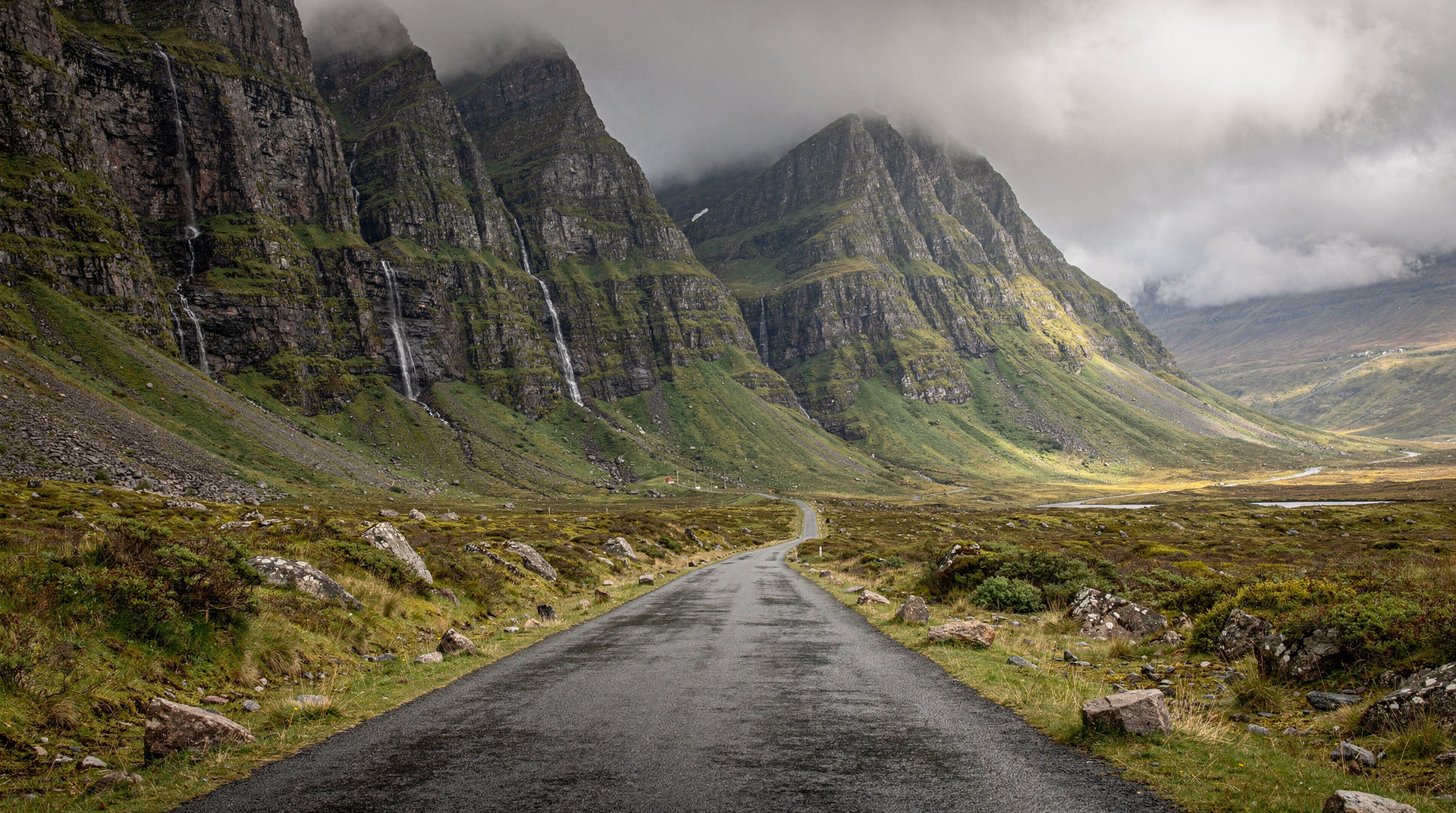
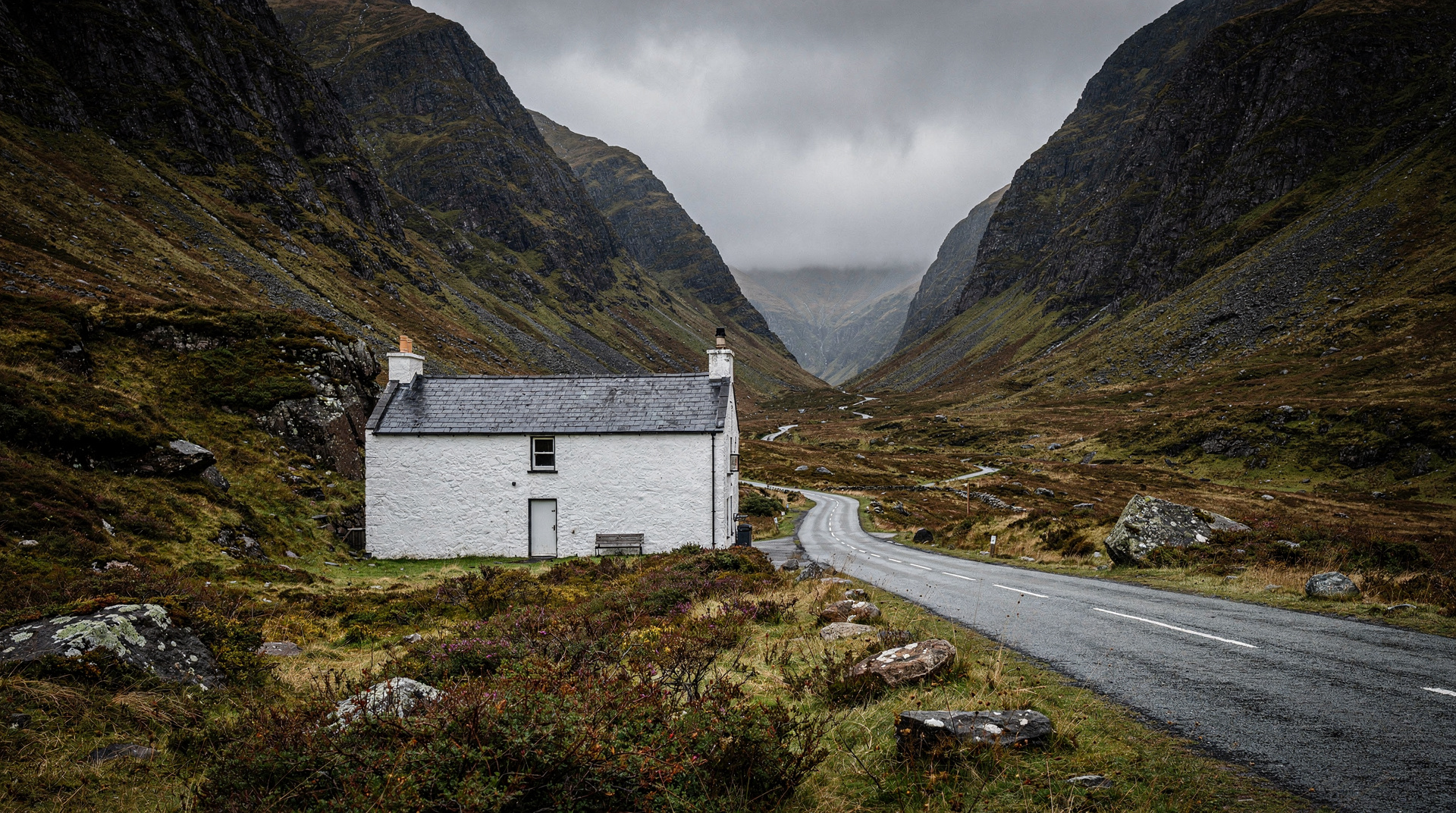
Approaching Glencoe from the east on the A82, the valley entrance is marked by the Pass of Glencoe — a narrowing of the road between dramatic rock faces where the valley cliffs close in above the river. The first major viewpoint is the layby opposite the Three Sisters: the three ridges of Beinn Fhada, Gearr Aonach, and Aonach Dubh that form the southern wall of the valley. These are the most photographed features in Glencoe and rightly so — on a clear day with cloud shadows moving across the faces, or on a winter morning with snow on the ridgelines, the view is among the finest in Scotland. The car park fills quickly in summer; arrive before 9.30am or after 4pm to avoid the worst.
The National Trust for Scotland Visitor Centre
The Glencoe Visitor Centre, run by the National Trust for Scotland, sits at the western end of the valley near the village of Glencoe. Entry to the centre is free (the car park costs £4), and it provides an excellent account of the valley’s geology, ecology, and the events of 13 February 1692. Allow 30–45 minutes. The context it provides for the massacre is worth absorbing before or after you walk in the valley — the geography makes more sense once you understand what happened and where.
The café here is one of the better options in the valley for lunch or a hot drink. The building itself is low and well-integrated into the landscape.
The 1692 Glencoe Massacre
The massacre is the event that gives Glencoe its particular weight among Scottish historical sites. On the night of 12–13 February 1692, soldiers of the Earl of Argyll’s Regiment, who had been quartered with the MacDonald clan in the valley for twelve days under the apparent laws of Highland hospitality, killed 38 MacDonalds — men, women, and children — on orders from the government of King William III. The order was for the extermination of the MacDonalds of Glencoe as punishment for their chief’s late submission of an oath of allegiance.
What makes the event remembered with particular bitterness is the breach of hospitality — the soldiers had eaten at the MacDonalds’ tables and slept in their houses. The phrase “murder under trust” captures the specific moral violation. Another 40 or so MacDonalds fled into the winter mountains and died of exposure. The political context was the Jacobite succession crisis and the British government’s attempt to suppress Highland clan power; the MacDonalds were chosen partly because they were small, isolated, and considered expendable.
The massacre is commemorated by a monument in the village of Glencoe. There is no formal memorial site in the valley itself, but the landscape — particularly the Signal Rock, from which the MacDonald chief is said to have sounded the alarm — is understood as historically significant by those who know the story.
Signal Rock and the woodland walk
Signal Rock, about a mile east of the visitor centre, is a large glacial boulder in birch woodland beside the River Coe. A short walk from the car park (free, about 30 minutes return) reaches it through pleasant mixed woodland. The walk is easy and suitable for most fitness levels. The rock itself is less dramatic than the valley above, but the woodland is beautiful in spring and autumn.
The valley walks
For those who want to walk in the valley rather than just view it from the car or layby, the options range from easy to serious:
The Lost Valley (Coire Gabhail) walk is the most rewarding accessible route: a 4.5-mile round trip that climbs from the roadside layby near the Study viewpoint, crosses the River Coe on stepping stones, and enters the hidden hanging valley where the MacDonalds are said to have sheltered their cattle. The path is clear but steep and rocky in places; good walking shoes required. Allow 3–4 hours. The valley is genuinely dramatic and the sense of discovery on reaching the flat floor of the hanging valley is one of the Highlands’ better experiences.
The ridge walks — including Bidean Nam Bian (Glencoe’s highest summit, 1,150m) and the Aonach Eagach ridge (a Grade 1 scramble on the northern valley wall, one of the finest ridge walks on the Scottish mainland) — require full hillwalking equipment, navigation skills, and a significant time investment not compatible with a day trip from Edinburgh. Do not attempt the Aonach Eagach without scrambling experience.
Self-drive vs guided tour
Glencoe is one of the destinations where the self-drive vs guided tour question has a less clear-cut answer than Loch Ness.
Guided tour arguments: No navigation on unfamiliar Highland roads, historical commentary that adds context to an otherwise abstract landscape, and the combination with other destinations (Loch Ness, Glenfinnan, Fort William) handled logistically. The Loch Ness and Glencoe tour comparison guide reviews the main options in detail.
Self-drive arguments: The A82 through Glencoe is one of the best driving roads in Scotland — the experience of driving through Rannoch Moor and descending into the valley has its own quality that is lost on a coach. You can stop at the Three Sisters layby at dawn before coach groups arrive, walk the Lost Valley without a schedule, and extend north to Fort William or east to the Cairngorms if conditions permit. The drive back via the eastern A9 route through Perthshire is entirely different in character and equally fine.
For self-drive planning details, see the Glencoe day trip guide. A third option worth knowing about: the Loch Ness, Glencoe and Scottish Highlands day tour runs a slightly different itinerary from the coos-focused tour above, with a longer stop at the Commando Memorial near Spean Bridge and more time built in at the Glencoe Visitor Centre — worth comparing departure times if the coos tour is sold out on your preferred date.
Cost comparison: guided tour vs self-drive for one day
| Guided coach tour | Self-drive (2 people sharing) | |
|---|---|---|
| Base cost | around £35–£55 per person | £0 fixed (car hire from ~£45/day if you don’t already have one) |
| Fuel | included | around £25–£35 for the round trip |
| Parking/tolls | included | free at most Glencoe laybys; NTS centre parking free for visitors |
| Flexibility | fixed stops, fixed timing | full control of stops and duration |
| Total for 2 people | roughly £70–£110 | roughly £70–£80 (car hire) or free if using your own car |
The maths favours self-drive once you already have a car, and favours the coach if you would otherwise need to hire one specifically for the day — the coach also removes the burden of navigating single-track sections and finding parking during busy periods.
Combining Glencoe with other Highland destinations
Glencoe and Loch Ness: This is the standard organised day-tour combination from Edinburgh — the route goes north from Glencoe through Fort William and along the Great Glen to the loch, or vice versa. It is a genuinely excellent day but a long one (11–13 hours including travel from Edinburgh).
Glencoe and Glenfinnan: Glenfinnan, 18 miles north of Glencoe on the A82/A830, adds the Glenfinnan Viaduct and Loch Shiel to the itinerary. See the Glenfinnan guide for details on the viaduct and the Jacobite history.
Glencoe and Fort William: Fort William, 18 miles north, is the main town of the western Highlands and the base for Ben Nevis. See the Fort William guide for what the town and surrounding area offers.
For a multi-day Highland extension from Edinburgh covering all these destinations, see the Edinburgh and Highlands five-day itinerary.
Where to eat in and around Glencoe
The valley has limited eating options, which is something to plan around on a day trip. The Clachaig Inn, at the western end of the valley near the NTS Visitor Centre, is the most important option: a traditional Highland pub and hotel that has been serving walkers and climbers since the nineteenth century. The bar food is good — local venison, haggis, and pub classics — and the ales are well-kept. There is usually a roaring fire in the grate. Expect to pay £12–£18 for a main course. Booking is recommended for weekends in summer.
The Glencoe Café in the village of Glencoe, about 2 miles from the valley entrance, does good breakfasts and lunches at lower prices. Good for a morning stop before heading into the valley.
Ballachulish, just south of the valley entrance where the A82 crosses Loch Leven at the Ballachulish Bridge, has a few additional options including the Ballachulish Hotel (a Victorian lochside hotel with a reasonable restaurant and great views across Loch Linnhe towards the Ardnamurchan peninsula).
For those on coach tours, the stop for lunch is usually prearranged by the operator — typically at the Clachaig or at one of the larger visitor facilities in the valley.
Glencoe in different seasons
Spring (April–May): One of the best times to visit. Snow is still on the high ridges, providing the most dramatic appearance for the Three Sisters and the surrounding summits. Fewer midges than summer. The lower valley is very green after winter rain. Weather unpredictable but can be brilliant.
Summer (June–August): Long days (sunset after 10pm in midsummer at this latitude), warmest temperatures, but midges at their worst in still conditions. Busiest crowds at the Three Sisters layby and the NTS Visitor Centre. Best for extended walks. Accommodation fills quickly; book well ahead.
Autumn (September–October): The best season for many regular visitors. The birch trees in the valley turn gold and russet. Light is lower and warmer. Midges largely gone by late September. Crowds noticeably thinner. The weather becomes more changeable — higher chance of dramatic storm cloud in the corries.
Winter (November–March): Glencoe at its most austere and most dramatically atmospheric. Snow on the ridges most of the time, often heavy enough to close the A82 temporarily. The Three Sisters in winter snow are extraordinary. The valley walks are not safe without winter hillwalking skills and equipment. Guided day tours from Edinburgh are less frequent in winter. For serious hillwalkers, winter Glencoe is the most rewarding season.
Photography and the best viewpoints
Glencoe is one of the most photographed valleys in Scotland, and the quality of the light matters more here than almost anywhere else in the Highlands. The Three Sisters layby is the obvious stop, but the view from slightly further west, near the Study viewpoint above the Lost Valley path, gives a wider composition that takes in the full run of ridges without the roadside clutter visible from the main layby. Early morning, particularly after overnight rain when mist is still clearing from the corries, produces the most dramatic images — arrive by 7am in summer to have the valley to yourself.
For those without a car, the Glenfinnan and Glencoe Highlands day tour builds in a proper photography stop at the Three Sisters rather than a rushed five-minute pause, which matters if capturing the scene well is a priority. Sunset can also be excellent, particularly in autumn when the low sun catches the birch woodland gold against the dark rock — though driving the A82 in fading light requires extra caution given the single-carriageway sections.
Glencoe with children and accessibility
Glencoe rewards families willing to keep expectations modest. The Three Sisters layby and the NTS Visitor Centre are both accessible without any walking beyond a car park, and the short walk to Signal Rock (about 30 minutes return on a good path) is manageable for most children aged five and up. The Lost Valley walk, by contrast, involves stepping stones across the River Coe and a steep, rocky final section — not recommended for young children or anyone with mobility concerns.
The NTS Visitor Centre has accessible toilets and a step-free café. Wheelchair users and those with limited mobility can experience the valley’s scale fully from the road and the main viewpoints without needing to walk any of the trails — the drive itself, particularly through Rannoch Moor and along the valley floor, delivers much of what makes Glencoe worth visiting. The Glencoe day trip guide has more detail on which stops suit which mobility levels.
Practical information for 2026
Weather: Glencoe receives significant rainfall — it is one of the wettest areas in the UK, receiving over 3,000mm annually in the upper glen. The mountains create their own local weather; a clear Edinburgh morning frequently arrives in Glencoe as low cloud and drizzle. Waterproof clothing is non-negotiable. The glen is also beautiful in rain — low cloud in the corries and the river running brown adds to the atmosphere.
Midges: Present May–September, particularly near the river and in the woodland. Worst on still, humid days. Bring repellent.
Driving: The A82 through the glen is a single carriageway with passing places in the narrowest sections. Patience with oncoming vehicles and campervans is required. Winter driving can involve ice and occasional road closures due to snow or rockfall.
UK ETA: See the UK ETA guide for visitors requiring authorisation to enter Britain. Currency: £ sterling; see the Edinburgh currency guide.
Frequently asked questions about Glencoe
How long does it take to drive from Edinburgh to Glencoe?
Approximately 2.5 hours in normal traffic, covering about 115 miles via the A9/A82 through Stirling and Tyndrum. The M8/A82 route via Glasgow takes roughly the same time. Add 30–45 minutes for a Stirling stop en route.
What is the best thing to see in Glencoe?
The Three Sisters viewpoint — the view of the valley’s three great southern ridges from the A82 — is the visual highlight. For historical depth, the National Trust for Scotland Visitor Centre explains the 1692 massacre well. For those with half a day to walk, the Lost Valley is the most rewarding route accessible without specialist equipment.
Is Glencoe better than Loch Ness as a day trip from Edinburgh?
They are very different experiences. Glencoe offers more dramatic, concentrated scenery in a smaller area and a more emotionally resonant historical narrative. Loch Ness covers more distance and adds the dramatic corridor of the Great Glen. Most guided day tours from Edinburgh combine both. If forced to choose, Glencoe alone gives the more powerful single experience; Loch Ness extends the day but dilutes the intensity somewhat.
Can I walk in Glencoe on a day trip from Edinburgh?
Yes — the Lost Valley walk is the most recommended: 4.5 miles round trip, allowing 3–4 hours, accessible from a roadside layby. If you are on a guided coach tour, stops are typically 45–60 minutes and do not allow the full valley walk. Self-driving gives the flexibility to extend your time in the glen.
What was the Glencoe Massacre and why is it remembered?
On the night of 13 February 1692, government soldiers who had been housed by the MacDonald clan as guests killed 38 MacDonalds under orders from the Crown. The betrayal of Highland hospitality rules — killing people you had lived with for twelve days — made the event notorious even by the standards of a violent era. Around 40 more MacDonalds died fleeing into the winter mountains. The political motive was the punishment of a clan that had been late in swearing allegiance to William III. The massacre is still marked by the MacDonalds as a defining grievance.
Is there a hotel or restaurant in the Glencoe valley itself?
The Clachaig Inn, at the western end of the valley near the visitor centre, is a well-established pub and hotel that serves solid food and good Scottish ales. It has been a walkers’ pub for generations — there is a long tradition of people arriving here after a day in the hills. The café at the NTS Visitor Centre is adequate for snacks. Beyond that, the valley has no restaurant infrastructure; eating options are in the village of Glencoe (a few minutes south) or in Ballachulish at the valley entrance.
Is Glencoe suitable for wheelchair users or families with young children?
The main viewpoints — the Three Sisters layby and the NTS Visitor Centre — are accessible without walking beyond the car park, and the centre has step-free access and accessible toilets. The Signal Rock woodland walk suits most children aged five and up. The Lost Valley walk, with its stepping-stone river crossing and steep rocky final section, is not suitable for wheelchairs or very young children. See the section above on families and accessibility for more detail.
How much does a Glencoe day trip cost compared to self-driving?
A guided coach tour typically costs £35–£55 per person including transport, roughly £70–£110 for two people. Self-driving costs are similar once car hire is factored in (around £70–£80 for two people including fuel), or effectively free if you already have a car. The coach removes the need to navigate single-track roads and find parking; self-drive gives more flexibility over timing and stops.
Top experiences
Bookable activities with verified prices and instant confirmation on GetYourGuide.