Glencoe day trip from Edinburgh: what to see and how to go
Edinburgh: Loch Ness, Glencoe, coos & the Highlands day tour
How do I do a Glencoe day trip from Edinburgh?
Drive 100 miles via the A82 (2.5 hours) or join a guided day tour that combines Glencoe with Loch Ness (11-13 hours total). Glencoe is the visual highlight of the standard Loch Ness tour — most tours enter the valley from the east, with the Three Sisters visible from the main road. No tour skips it.
| Distance | ~100 miles, 2.5hrs each way by car |
| Guided tour | 11-13hrs total, usually combined with Loch Ness |
| Best easy walk | River Coe path, flat, from visitor centre |
| Entry to visitor centre | Free (car park pay-and-display) |
| Best months | May-June, Sept-early Oct |
| Bring | Waterproofs regardless of forecast |
Glencoe: Scotland’s most emotionally charged landscape
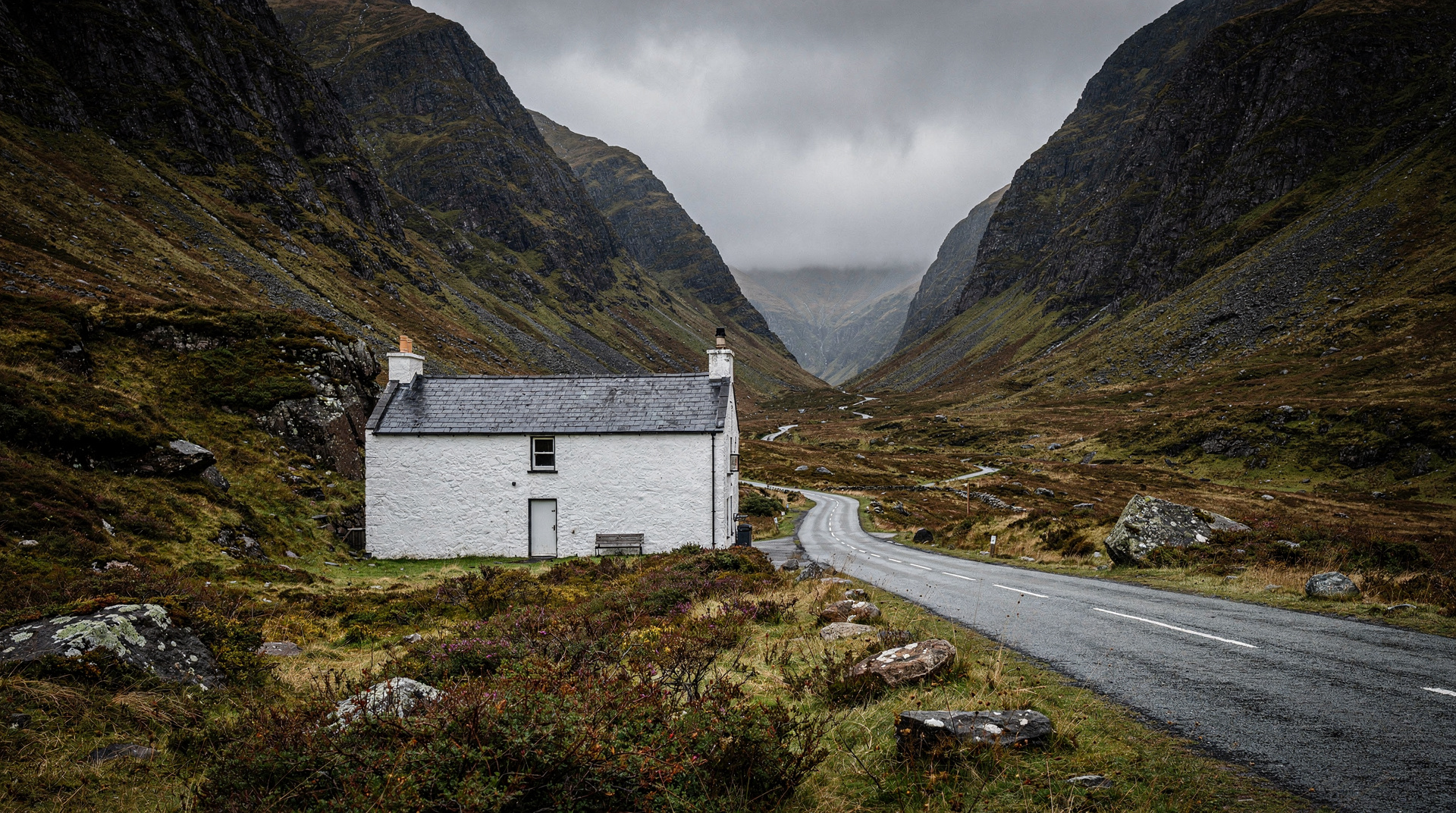
There is a reason that almost every guided day tour from Edinburgh includes Glencoe even when the marketed destination is Loch Ness. The valley is one of those landscapes that affects visitors viscerally — bare ridgelines of volcanic rock dropping nearly vertically to a flat valley floor, the River Coe running through the middle, and a sky that can turn from brilliant to ominous in minutes. It does not look like the managed countryside of England; it looks like something older and wilder.
The geological explanation is straightforward enough: the caldera formed when an ancient supervolcano collapsed roughly 420 million years ago, and the valley was then carved into its current U-shape by repeated glaciation during the last ice age. The result is that the valley walls are almost vertical and the floor is almost flat — an extreme profile that creates the drama.
What deepens the experience is the history. Glencoe is where, in February 1692, Campbell soldiers quartered by government order with the MacDonald clan carried out a pre-dawn massacre of 38 men, women, and children. The event became infamous not for the body count — other massacres of the period were larger — but for the betrayal of hospitality, the killing of those who had welcomed the soldiers into their homes. The phrase “murder under trust” entered Scottish law because of it. The valley carries that weight.
This guide covers the Glencoe day trip from Edinburgh in full: the drive, what to see, the best easy walks, and how Glencoe fits into the wider Highland day-trip options.
Getting from Edinburgh to Glencoe
By car
Edinburgh to the Glencoe valley floor (the A82 viewpoint at the foot of the descent from Rannoch Moor) is approximately 100 miles, taking 2.5 hours in normal traffic. The route goes west on the M8, then north on the A82 through the Trossachs and along Loch Lomond to Crianlarich, then northwest through Rannoch Moor and into the valley.
The final 15 kilometres before Glencoe village — through Rannoch Moor — is some of the most distinctive driving in Scotland: a vast, flat, boggy expanse of open moorland with no trees and the mountains rising at its edges. It is bleak in a fascinating way. After this, the descent into the valley is sudden and dramatic.
Parking: The main visitor car parks are at the National Trust for Scotland Glencoe Visitor Centre (A82, at the valley entrance, postcode PH49 4HX) and at the layby near the Three Sisters viewpoint on the valley floor (no charge, first-come). Parking fills quickly in July and August after 10am.
Fuel and facilities: Fuel stations are sparse west of Stirling on this route; fill up before Crianlarich if driving yourself. Public toilets are available at the NTS visitor centre; there are no facilities at the roadside viewpoints themselves.
By guided tour
Virtually every guided day tour marketed as “Loch Ness from Edinburgh” includes Glencoe as a major stop. The most popular is the Loch Ness, Glencoe and Scottish Highlands day tour, which spends roughly 1.5-2 hours in and near the valley before continuing north to Loch Ness. For visitors who want Glencoe and Highland scenery without committing to the full Loch Ness circuit, the Loch Ness, Glencoe, coos and Highlands day tour covers similar ground and includes the obligatory stop for Highland cattle — the long-horned, shaggy “coos” that have become one of Scotland’s most popular photographic subjects.
For those primarily interested in Glencoe and the westerly Highlands (Glenfinnan, Fort William area), the Glenfinnan Viaduct, Glencoe and Highlands tour prioritises the western circuit rather than the Loch Ness corridor.
Glencoe alone is a two-hour drive that leaves most of the day unaccounted for, which is why it is almost always sold as part of a longer northern loop: a Loch Ness, Glencoe and Scottish Highlands tour is the standard shape of that day.
What to see and do in Glencoe
The Three Sisters viewpoint
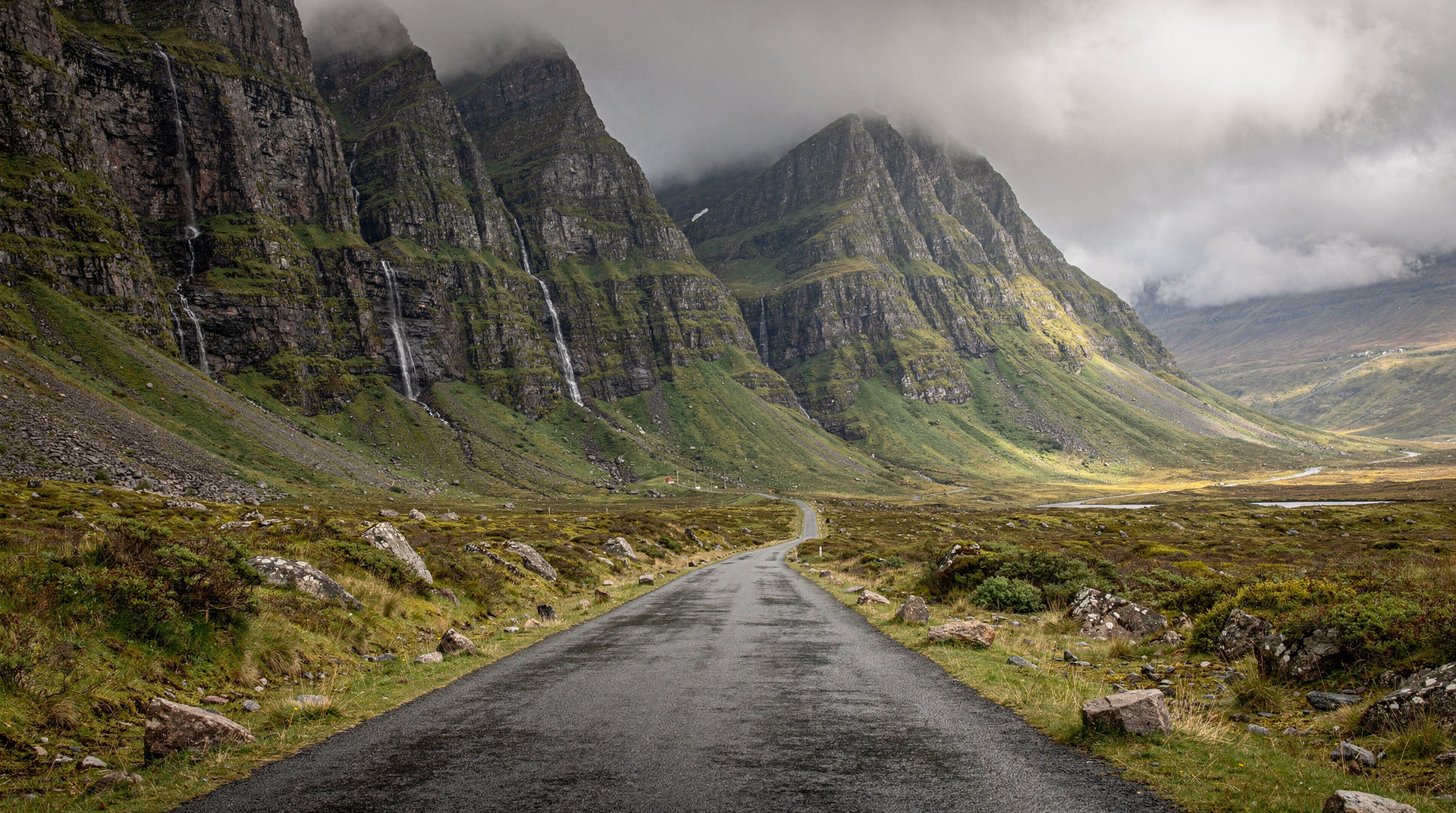
The first sight as you descend from Rannoch Moor into the valley is the Three Sisters — the three prominent spurs of the Bidean nam Bian massif, their ridges dropping at near-vertical angles to the valley floor. There is a layby on the A82 approximately 3 kilometres into the valley that gives the clearest view, with a small path leading to a promontory for photographs. This is the most photographed Highland viewpoint in Scotland; every tour coach stops here.
On a clear day with snow on the summits, the view is everything you have seen on Scottish tourism imagery. In cloud, the mountains vanish into grey and the valley takes on a moody, elemental quality that is equally compelling in its own way.
Glencoe Visitor Centre (National Trust for Scotland)
The NTS visitor centre at the valley entrance has excellent displays on the 1692 massacre, the geology, and the ecology of the Highlands, plus a well-stocked shop and a decent café. Entry to the centre itself is free; the car park charges (NTS members free).
The centre is the starting point for several valley walks, including the path along the River Coe to Signal Rock (where the signal was reportedly given for the massacre) and the easier paths through the valley floor. Allow 30-40 minutes for the displays and another hour if you want to walk to Signal Rock.
The Glencoe massacre memorial
The cairn and memorial plaque at the NTS visitor centre marks the historical event. There are also information panels at Signal Rock itself, set in a mixed woodland about 1.5 kilometres from the visitor centre. The walk to Signal Rock is flat, on a maintained path, and takes about 25 minutes each way — easily accessible for most visitors.
Easy walks in the valley
River Coe path: Flat, well-maintained path along the valley floor from the visitor centre. Suitable for all fitness levels; return as far as you like. The river views are excellent and the path gives close views of the valley walls.
Lost Valley (Coire Gabhail): For those wanting more of a walk, the Lost Valley is a hidden hanging valley between two of the Three Sisters where the MacDonalds reportedly hid their cattle before the massacre. The approach involves a steep, scrambly path over the valley floor boulders. Allow 2-3 hours return. Wear proper walking boots — the path is rough and wet.
Buachaille Etive Mor (the “Great Herdsman”): The distinctive pyramid peak at the eastern entrance to the valley is one of the most recognisable mountains in Scotland. The standard ascent is a challenging mountain route; day-trippers on a coach tour will see it from the road only. But even from the A82 layby, the profile is extraordinary — worth stopping for even from a car window.
Glencoe as part of a larger Highland circuit
Most day trips from Edinburgh treat Glencoe as one stop among several rather than the sole destination. The standard Loch Ness day tour allocates roughly 1.5-2 hours in the valley area. Self-drive visitors can spend longer — half a day is comfortable for the visitor centre, the Three Sisters viewpoint, and a valley walk.
Combining Glencoe with Loch Ness: The standard Highland day-trip circuit. See the Loch Ness day trip guide for the full routing.
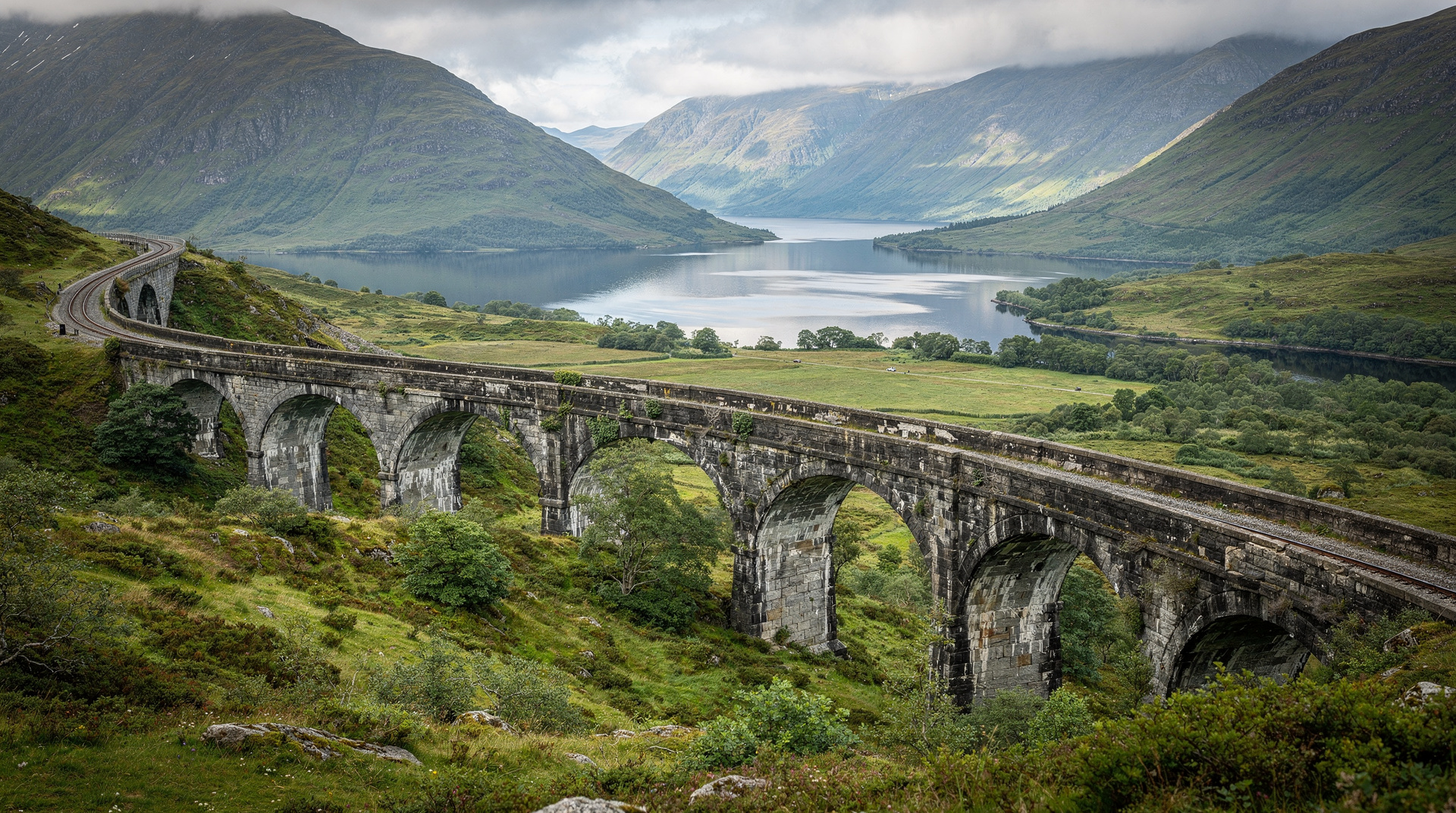
Combining Glencoe with Glenfinnan: The westerly alternative — drive from Glencoe north to Fort William and then west to Glenfinnan Viaduct and Loch Shiel. The viaduct and the Loch Shiel view from the Glenfinnan Monument are extraordinary. The Edinburgh to Highlands guide covers the westerly circuit in detail. For an honest side-by-side of the two most common circuits, see Loch Ness vs Glencoe tour compared.
Multi-day options: A single day in Glencoe gives you the headline view and a short walk. Two or three days in the area allows serious walking (the Buachaille routes, the Aonach Eagach ridge for experienced hillwalkers), ski touring in winter, and exploration of the surrounding lochs and glens. The multi-day Highlands tours guide covers the structured tour options.
The geology of Glencoe: what you are actually seeing
Understanding what shaped Glencoe gives an entirely different relationship with the landscape. Two processes are responsible for what you see from the A82:
The supervolcano: Approximately 420 million years ago, during the Devonian period, a volcano in this area underwent a catastrophic collapse as the magma chamber beneath it emptied. The overlying ground fell inward, creating a caldera — a roughly circular depression. The rocks you see in the valley walls and ridges are the remnants of the material that remained after this collapse: lavas, tuffs, and granite intrusions that rose into the collapsed zone.
The glaciation: During the last ice age (ending around 12,000 years ago), a massive glacier occupied the valley and scraped it into its current U-shape. The U-shaped cross-section — nearly vertical walls, nearly flat floor — is the signature of glacial erosion rather than river erosion (which would produce a V-shaped valley). The smoothed rock surfaces on the valley walls, visible at various points, were polished by the moving ice. The flat valley floor is partly filled with glacial debris (moraine) deposited by the retreating glacier.
The combination of the volcanic geology and the glacial shaping gives Glencoe its distinctive character: bare, angular ridges of dark volcanic rock (the lavas, which weather slowly) above a smooth green floor. The colour of the rocks — dark purplish-grey — comes from the andesite lava composition and is distinctive to Glencoe and the surrounding area.
The Glencoe massacre: a historical account
The massacre of February 1692 is one of the defining events in Highland history, remembered not because it was the largest or the most violent of the period’s conflicts, but because it violated the most fundamental Highland social code.
In the autumn of 1691, King William III (William of Orange) offered an amnesty to all Jacobite clans (those who had supported the deposed James II) on condition that each clan chief took an oath of allegiance before a magistrate by 1 January 1692. MacDonald of Glencoe left the oath late — he presented himself at Fort William after the deadline passed, then was redirected to Inveraray, arriving on 6 January. The delay, combined with political manoeuvring by Sir John Dalrymple (Master of Stair, the King’s Secretary of State for Scotland), was used to justify issuing orders for the “extirpation” of the MacDonalds of Glencoe.
In late January 1692, 120 Campbell soldiers under Captain Robert Campbell of Glenlyon were billeted with the MacDonalds of Glencoe, invoking the Highland tradition of hospitality. On the night of 12-13 February, on orders from above, the soldiers turned on their hosts and killed 38 men, women, and children. Another 40 escaped into the winter hills; several died from exposure.
The legal framing used was “murder under trust” — killing those who were your guests. This concept had an existing legal meaning in Scots law; the Glencoe massacre gave it a cultural weight that persisted for centuries. To be hospitable, to offer shelter and food to a traveller, and then to kill them is, in the Highland moral framework, the worst possible act. The Campbell soldiers and the government officials who ordered the massacre understood this and proceeded anyway.
The National Trust for Scotland visitor centre has a thoughtful and detailed account of these events. The Signal Rock walk passes through the woodland where some of the survivors escaped, and the atmosphere of the valley at dusk — when the light leaves the upper ridges and the valley floor falls into shadow — is as close as a modern visitor can come to understanding why this event acquired its particular emotional resonance.
Honest notes on the experience
The road through the valley is a main road: The A82 carries significant coach and campervan traffic in summer. The valley viewpoints are popular and you will not be alone. If solitude is important, arrive before 9am or after 4pm, and consider the quieter Signal Rock walk rather than the main Three Sisters layby.
Weather changes quickly: Highland weather is genuinely unpredictable. A clear morning in Edinburgh can become horizontal rain in Glencoe by midday. Waterproof jacket and trousers are essential. The mountains create their own cloud; the valley floor can be soaked while the sun shines 20 miles away.
Winter Glencoe: In December-February, the valley is subject to snow closures on the A82. The Glencoe Mountain ski resort (at the head of the valley near Buachaille Etive Beag) operates in good snow years but conditions vary widely. Check road conditions on the Traffic Scotland website before winter travel.
Photography: The Three Sisters viewpoint and the Rannoch Moor approach are the two most photographed sections. For fewer other photographers in frame, arrive close to opening time at the visitor centre, before the day’s coach tours reach the valley (typically mid-morning onward).
Highland cattle: The photogenic “coos” with their long horns and shaggy coats are a Highland fixture and appear at various points on the A82. They are not dangerous but are large and unpredictable — do not approach closely or feed them.
Practical information
Glencoe Visitor Centre: Open daily 9am-5:30pm (April to October), 9am-4pm (November to March). Car park pay-and-display (NTS members free). Café open during visitor centre hours.
Urquhart Castle (if combining with Loch Ness): Entry £14 adults online (£16 at the gate) (2026). Buy tickets online to avoid queuing.
Food: The NTS visitor centre café at Glencoe is serviceable. The Clachaig Inn, 2 miles into the valley from the visitor centre, is a walkers’ pub with excellent food and a Highland atmosphere — genuinely one of the better lunch options on any Highland day trip. Worth the detour if you are self-driving.
See the Glencoe destination guide for a more comprehensive overview of the valley and surrounding area, and the Fort William guide if you plan to continue north or stay overnight rather than returning to Edinburgh the same day.
Planning around the weather and the season
Highland conditions shape the whole day, so it helps to read the Edinburgh weather guide before you fix a date, and the best time to visit Edinburgh guide if your dates are still flexible. A clear forecast in the capital says little about the valley, which is why the waterproofs advice appears more than once on this page. If the forecast looks poor, a guided tour takes the driving off your hands and the guide can adjust the order of stops; the which Edinburgh tour to book guide helps you compare formats.
Deciding whether to drive yourself
Self-driving gives you the freedom to linger at the viewpoints and walk at your own pace, but it also means a long day behind the wheel on a busy main road. The do you need a car in Edinburgh guide explains where a car helps and where it is a burden, and the Glencoe trip is firmly one of the cases where it helps. If you would rather not drive but still want more time in the landscape, consider a multi-day itinerary such as Edinburgh and the Highlands in five days, which lets you stay near the valley instead of racing back the same evening.
Pairing the valley with the history behind it
The massacre sits within the larger story of the Jacobite risings, and visitors who enjoy the history will find more context in the Jacobites and Edinburgh guide. Reading it before you travel makes the visitor centre displays and the walk to Signal Rock more meaningful. If you continue west afterwards, the Glenfinnan and Loch Ness destination pages show what else lies within reach of the same route, and the Isle of Skye from Edinburgh guide covers the longer trip for those who want to push further into the Highlands.
Glencoe versus other Highland day trips from Edinburgh
Glencoe is not the only Highland option from Edinburgh, and it is worth understanding how it compares before booking. Glencoe itself is the most dramatic single valley view reachable in a day, but it offers less to actually do on the ground than a longer circuit. Visitors who want more walking and less driving sometimes prefer the Loch Lomond day trip, which is closer to Edinburgh (under 2 hours) and has more lochside villages to explore.
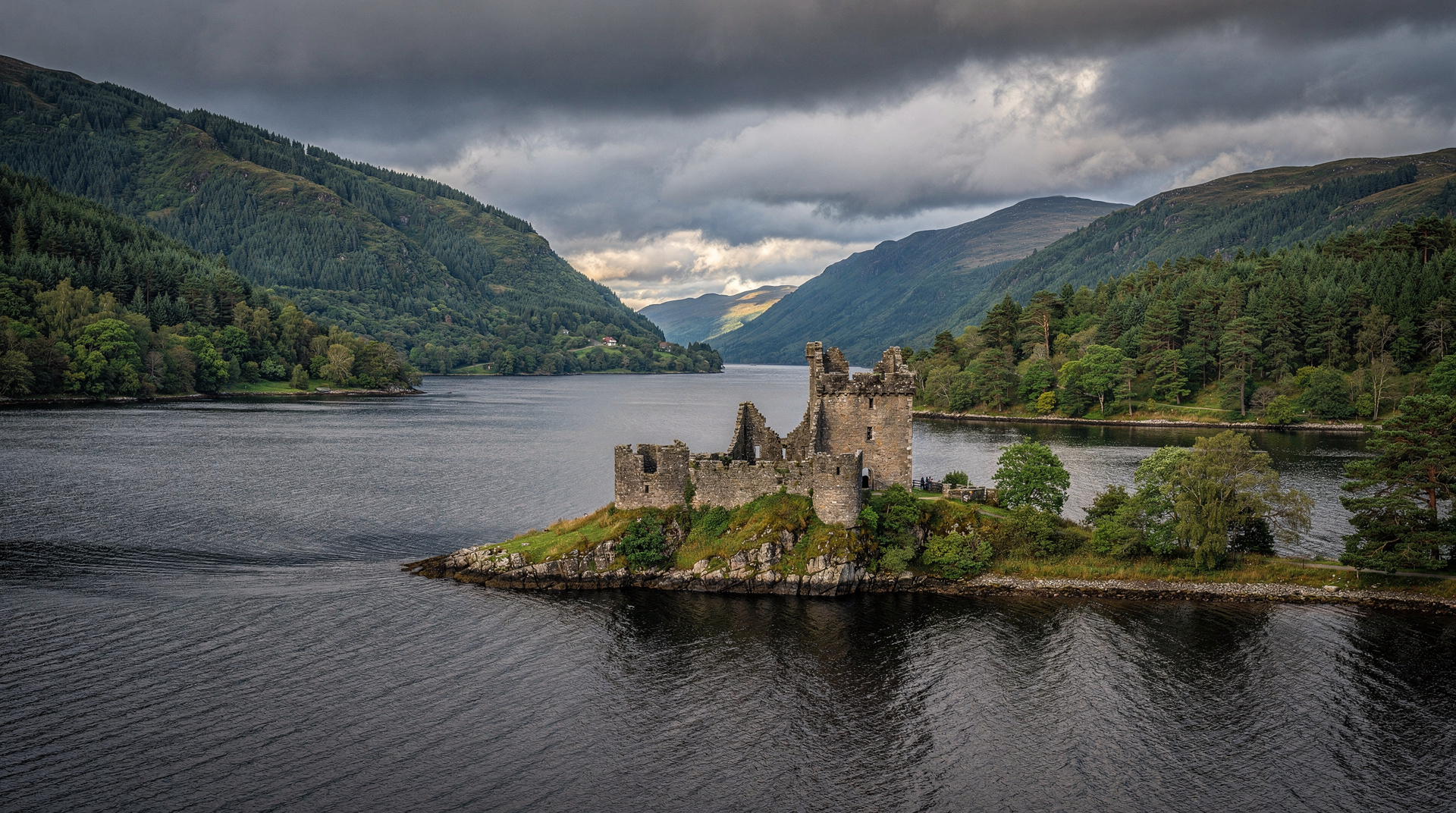
Visitors who want the complete Highland experience in one day — loch, castle ruin, and a monster legend alongside the mountain scenery — typically choose the combined Loch Ness day trip, which includes Glencoe as a stop along the way rather than requiring a separate booking.
Frequently asked questions about the Glencoe day trip
Is Glencoe included in Edinburgh’s Loch Ness day tours?
Yes — virtually all day tours marketed as Loch Ness tours from Edinburgh include Glencoe as a major stop. The two destinations are on the same natural circuit (A82 north via Glencoe, then along the Great Glen to the loch, return via A9). Not visiting Glencoe on this route would be like driving through the Lake District without stopping.
How long is the drive from Edinburgh to Glencoe?
Approximately 2.5 hours covering 100 miles via the A82. The route goes west through the Trossachs and along Loch Lomond before turning northwest through Rannoch Moor. In summer, allow extra time for coach and campervan traffic on the single-track sections of the A82.
What is the best easy walk in Glencoe?
For visitors on a day trip without walking experience, the path along the River Coe from the NTS Visitor Centre is flat, well-maintained, and gives excellent valley views. Allow an hour return for a comfortable out-and-back. For something slightly more adventurous, the Signal Rock path through mixed woodland takes about 50 minutes return and is suitable for ordinary footwear in dry conditions.
Is Glencoe safe for inexperienced walkers?
The valley floor paths are safe and accessible for ordinary fitness levels. The mountain routes (Lost Valley, Aonach Eagach, the Buachaille peaks) are serious hillwalking terrain requiring experience, navigation skills, and appropriate equipment. Do not attempt the mountain routes on a casual day trip without hillwalking experience and a map.
Can I see Highland cattle at Glencoe?
Possibly — Highland cattle (the shaggy, long-horned “coos”) are common in the area and often visible from the A82. They are not guaranteed at any specific location but appear frequently at roadside fields throughout the Highlands. Many guided tours make a dedicated stop when cattle are spotted.
What month is best for Glencoe?
May and June offer a good combination of reliable snow-free roads, manageable crowds, and long daylight hours. September and early October give spectacular autumn colours with fewer visitors. July and August are the most popular but also the busiest. Winter (December-February) can be dramatic with snow but requires caution on the roads.
Should I choose a Glencoe-only tour or a Loch Ness and Glencoe combined tour?
Almost all tours from Edinburgh combine the two, and this is the sensible default for most visitors — Glencoe alone does not fill a full guided-tour day, and the driving distances make it efficient to see both on the same circuit. A Glencoe-only day only makes sense for self-drivers who want extended walking time in the valley rather than a fixed stop of an hour or two.
Can I do Glencoe without a car and without a guided tour?
It is difficult. There is no direct train to Glencoe, and public bus connections from Edinburgh involve multiple changes and a full day of travel with limited time in the valley itself. For visitors without a car, a guided day tour is by far the most practical way to see Glencoe.
Top experiences
Bookable activities with verified prices and instant confirmation on GetYourGuide.