Loch Ness day trip from Edinburgh: the complete guide
Edinburgh: Loch Ness, Glencoe & the Scottish Highlands tour
How do I do a Loch Ness day trip from Edinburgh?
By guided tour (11-13 hours, departs 7-8am, ~£45-75) or self-drive (~360 miles round trip via Glencoe, 12+ hours). Most tours include Urquhart Castle and Glencoe. The loch is impressive; Glencoe is the visual highlight. Book tours 4-6 weeks ahead for summer.
What this day trip actually involves — and what to expect
A Loch Ness day trip from Edinburgh is one of the longest and most rewarding day excursions you can make in Scotland. It is also one of the most frequently misunderstood. The mythology around Nessie draws visitors expecting a dramatic revelation; the loch itself is impressive in scale — 37 kilometres long, up to 230 metres deep — but the dark, peaty water and tree-lined shores mean it does not match the cinematic Highland vista many visitors picture.
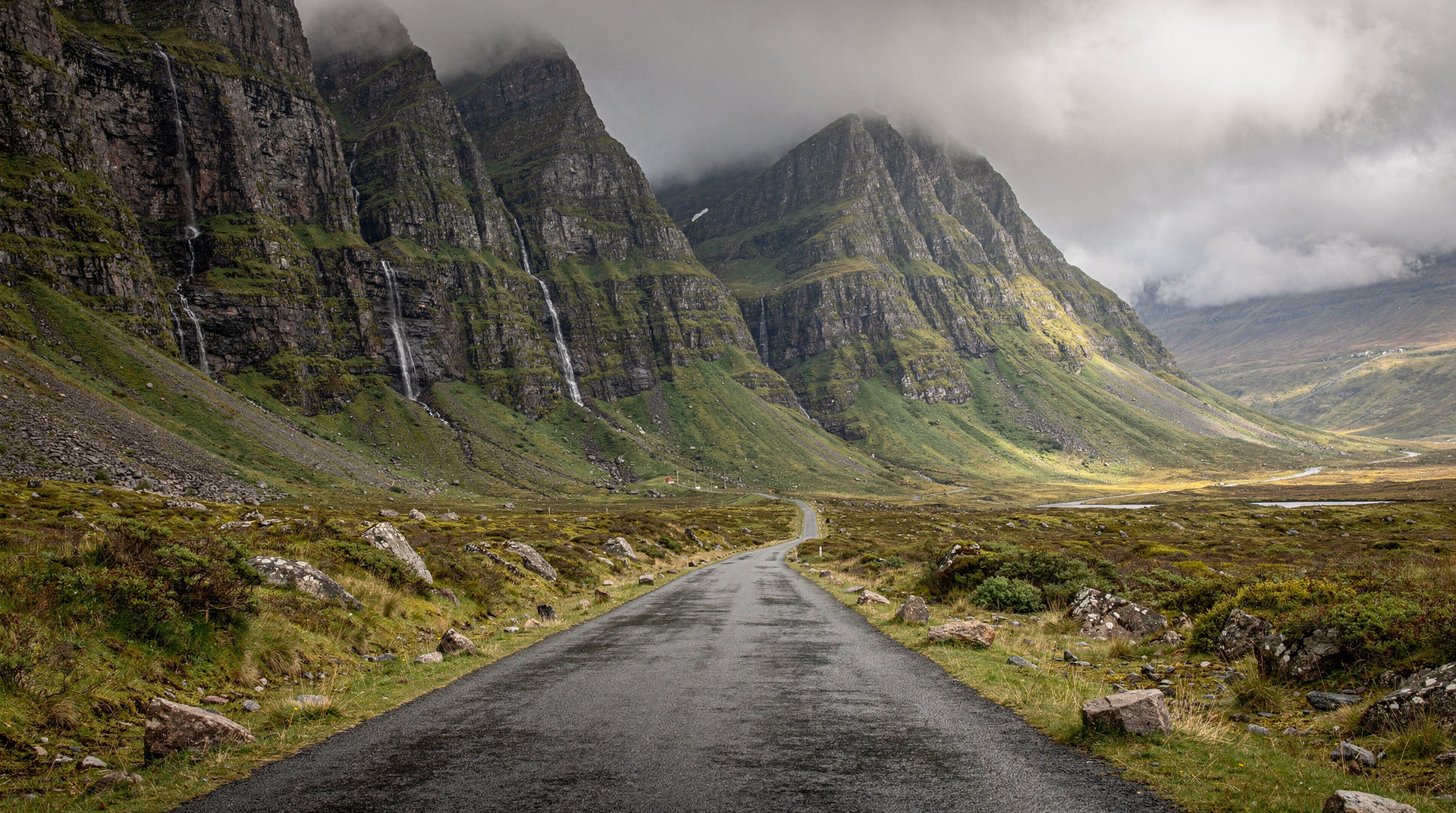
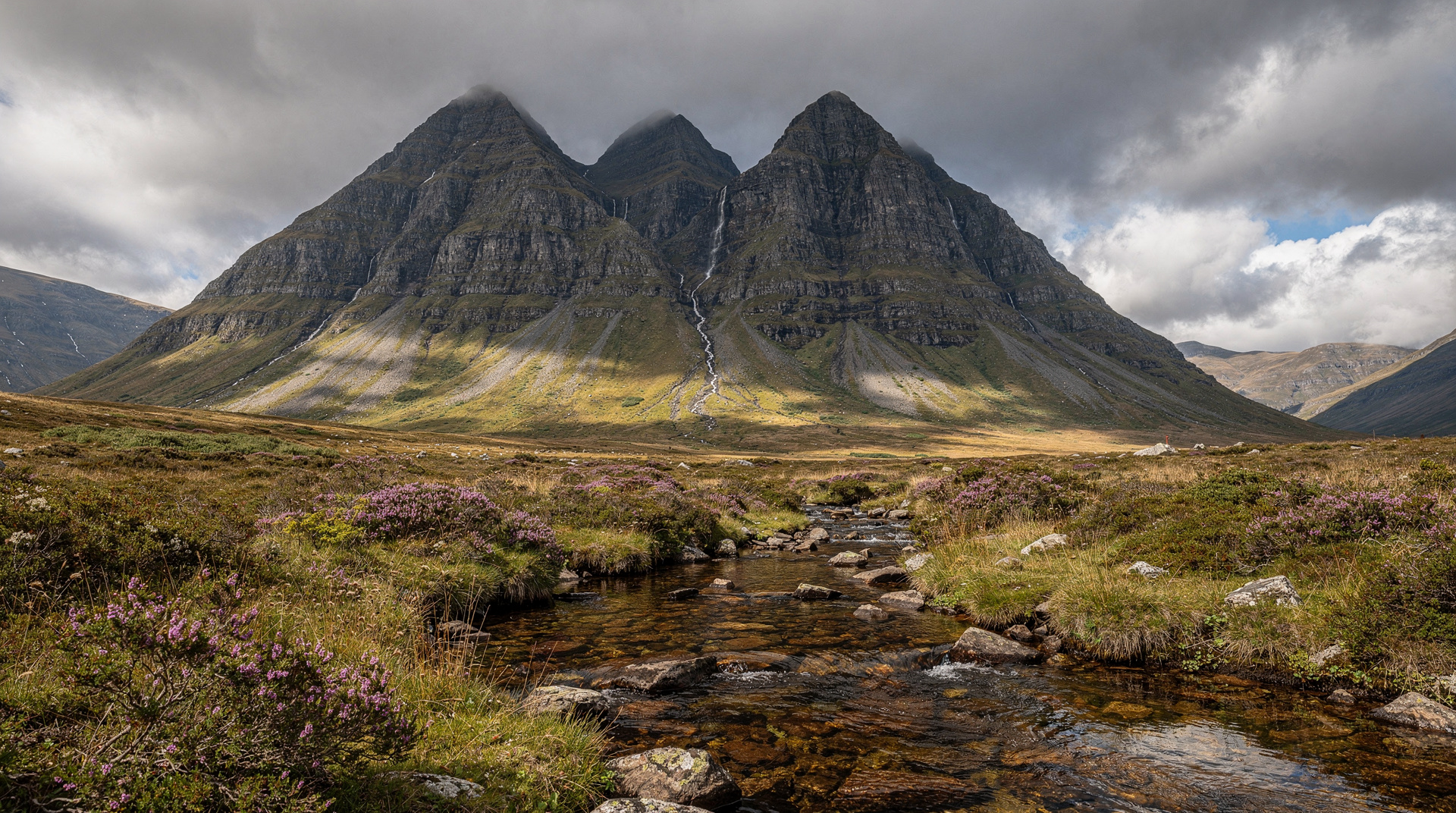
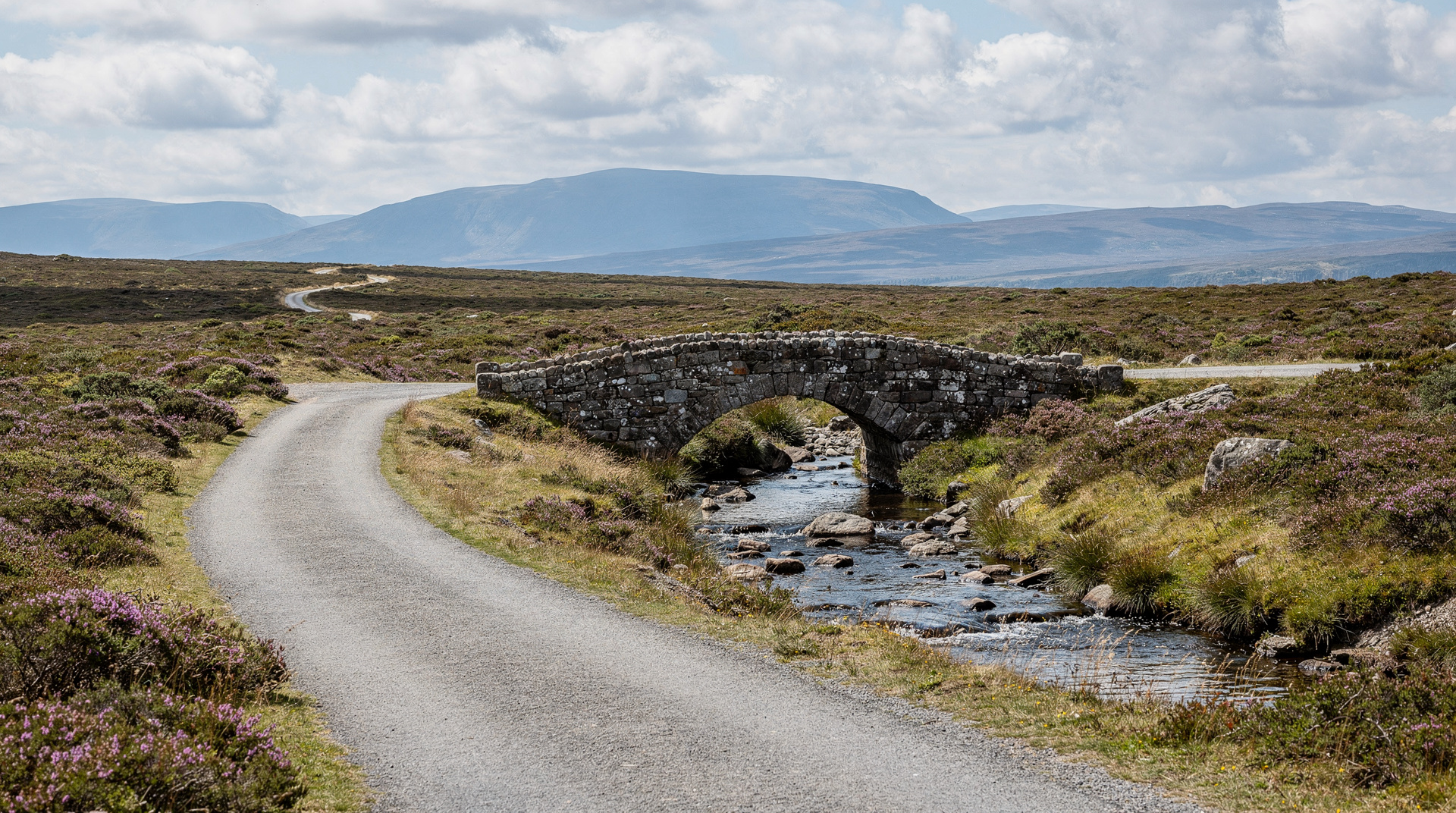
What genuinely delivers is the journey there and back. The route north through Perthshire, the Highland passes beyond Pitlochry, and above all the descent into Glencoe are among the finest scenic drives in Britain. The day trip earns its reputation not through the loch but through the surrounding landscape.
This guide covers everything you need to plan this day independently or decide which guided tour to book: the self-drive route stop by stop, the guided tour options compared, what to see at the loch, and how to handle Glencoe properly rather than just passing through it.
| Where | Fort Augustus / Urquhart Castle, around 175–180 miles from Edinburgh |
| Cost | Guided tour around £45–£75pp; self-drive fuel + £14 castle entry |
| Time needed | Full day, 11–13hrs door to door |
| Getting there | Guided coach tour, or self-drive via Glencoe (A82) or the A9 |
| Best time | May, June or September for weather odds and lighter crowds |
Distances and drive times from Edinburgh
| Destination | Distance | Drive time |
|---|---|---|
| Stirling (en route) | 35 miles | 55 minutes |
| Glencoe (westerly route) | 100 miles | 2.5 hours |
| Fort William | 130 miles | 2.75 hours |
| Fort Augustus (south end of loch) | 175 miles | 3.25 hours |
| Urquhart Castle | 180 miles | 3.5 hours |
| Inverness (north end) | 195 miles | 3.75 hours |
The full round trip covering Glencoe, Loch Ness (Urquhart Castle), and return to Edinburgh via the A9 is approximately 360-380 miles. In summer with stops, allow 12-13 hours for the complete circuit.
The self-drive route in detail
Option 1: West-first (Glencoe then Loch Ness) — recommended
This is the most logical route for a self-drive day and is used by most tour operators. Head west out of Edinburgh on the M8/A82, then northwest through the Trossachs and along Loch Lomond to Crianlarich. Turn northwest again on the A82 through Rannoch Moor into Glencoe. From Glencoe, continue north on the A82 through Fort William and the Great Glen to Fort Augustus and then northeast along the loch to Urquhart Castle and Drumnadrochit. Return to Edinburgh via the A9 through Inverness, Aviemore, and Perth.
Key stops on this route:
Loch Lomond viewpoints (A82, between Luss and Ardlui): The first hour of the westward drive puts you alongside Loch Lomond — Scotland’s largest loch by surface area and, on a clear morning, genuinely beautiful. The A82 hugs the western shore; the layby at Ardlui gives good views north toward the mountains.
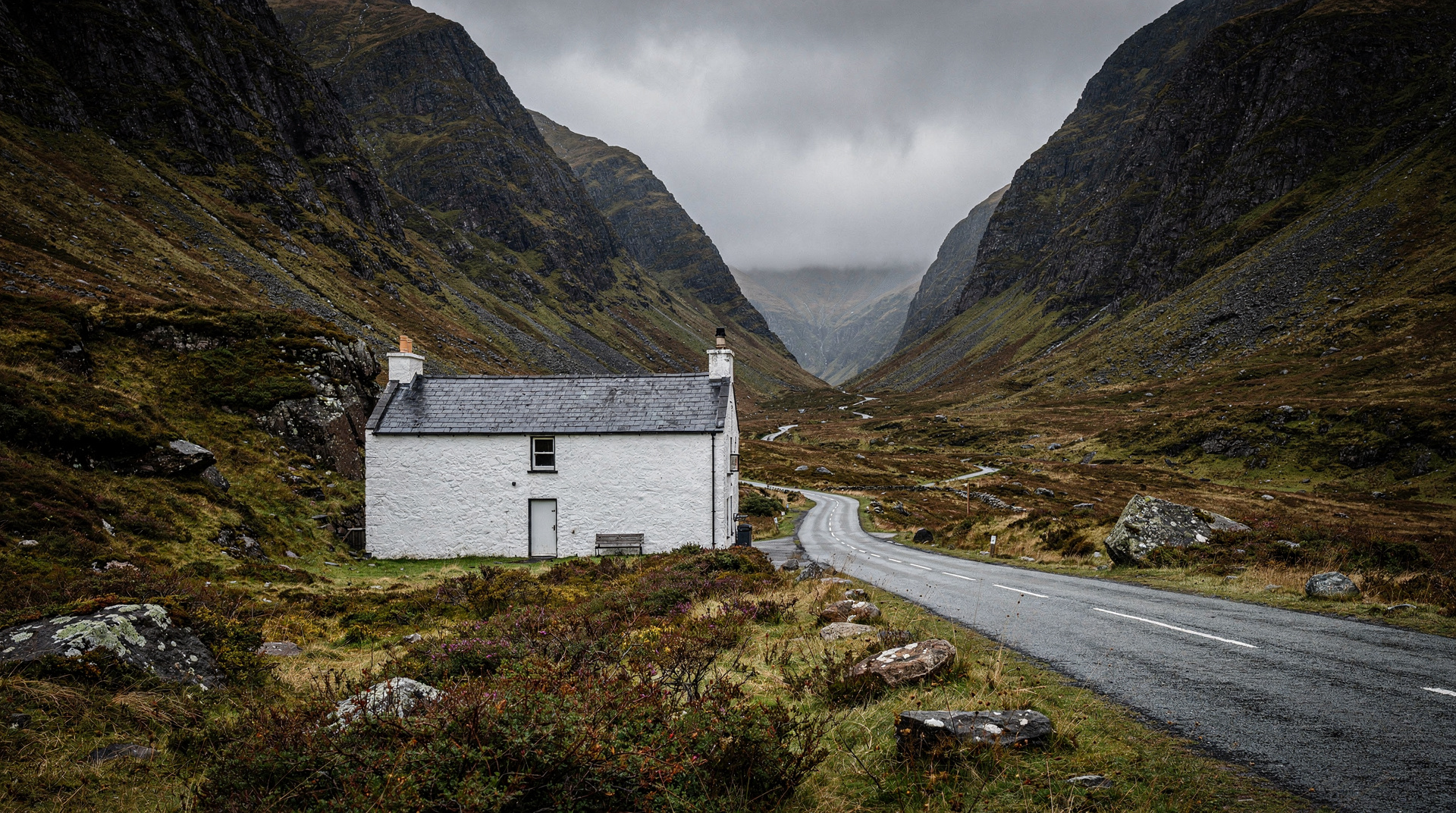
Glencoe valley (A82, at the foot of the descent): As the A82 descends from Rannoch Moor into the valley, the Three Sisters ridgeline comes into view. There is a layby on the right with a direct sightline to the most photographed section of the valley — the layby near the Glencoe Visitor Centre (National Trust for Scotland) is worth 30-40 minutes. For the full story of the 1692 massacre and the geology of the valley, the visitor centre has excellent displays. See the Glencoe day trip guide for detail on what to do in the valley itself.
Fort Augustus (southern end of Loch Ness): The first Loch Ness stop. Fort Augustus sits where the Caledonian Canal enters the loch; the working lock system is surprisingly engaging to watch. Decent cafés and a whisky bar. Allow 30-45 minutes here.
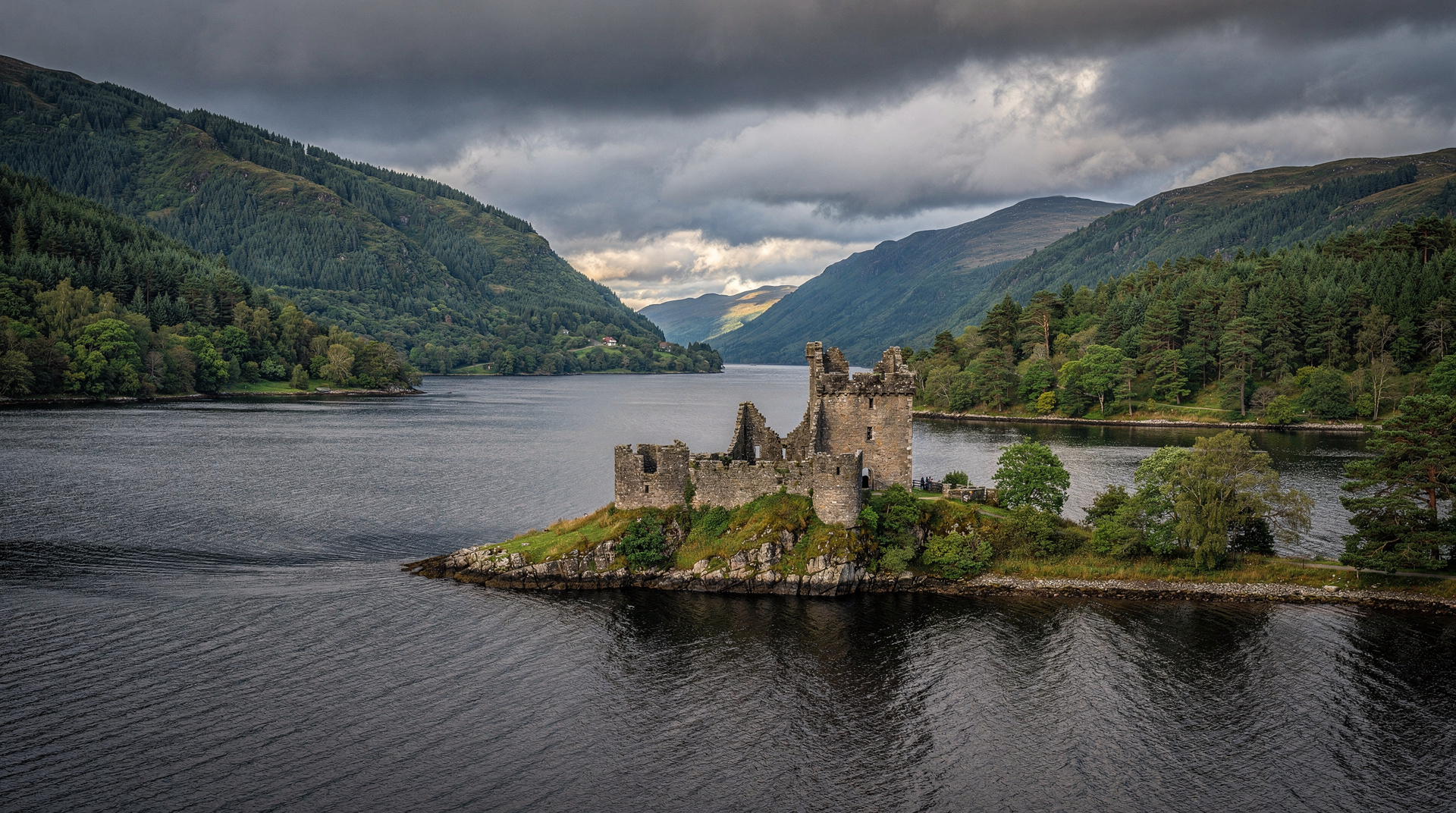
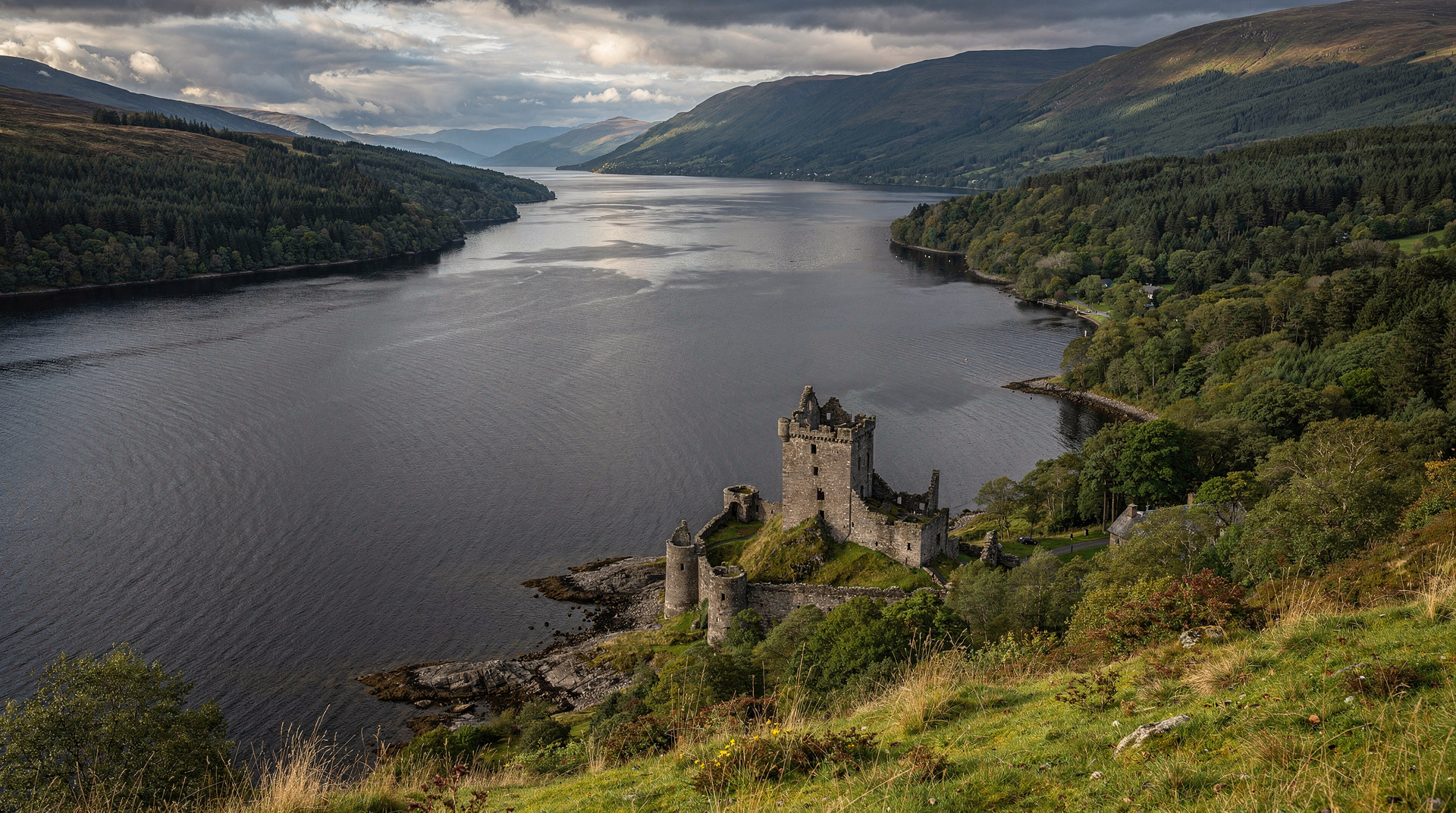
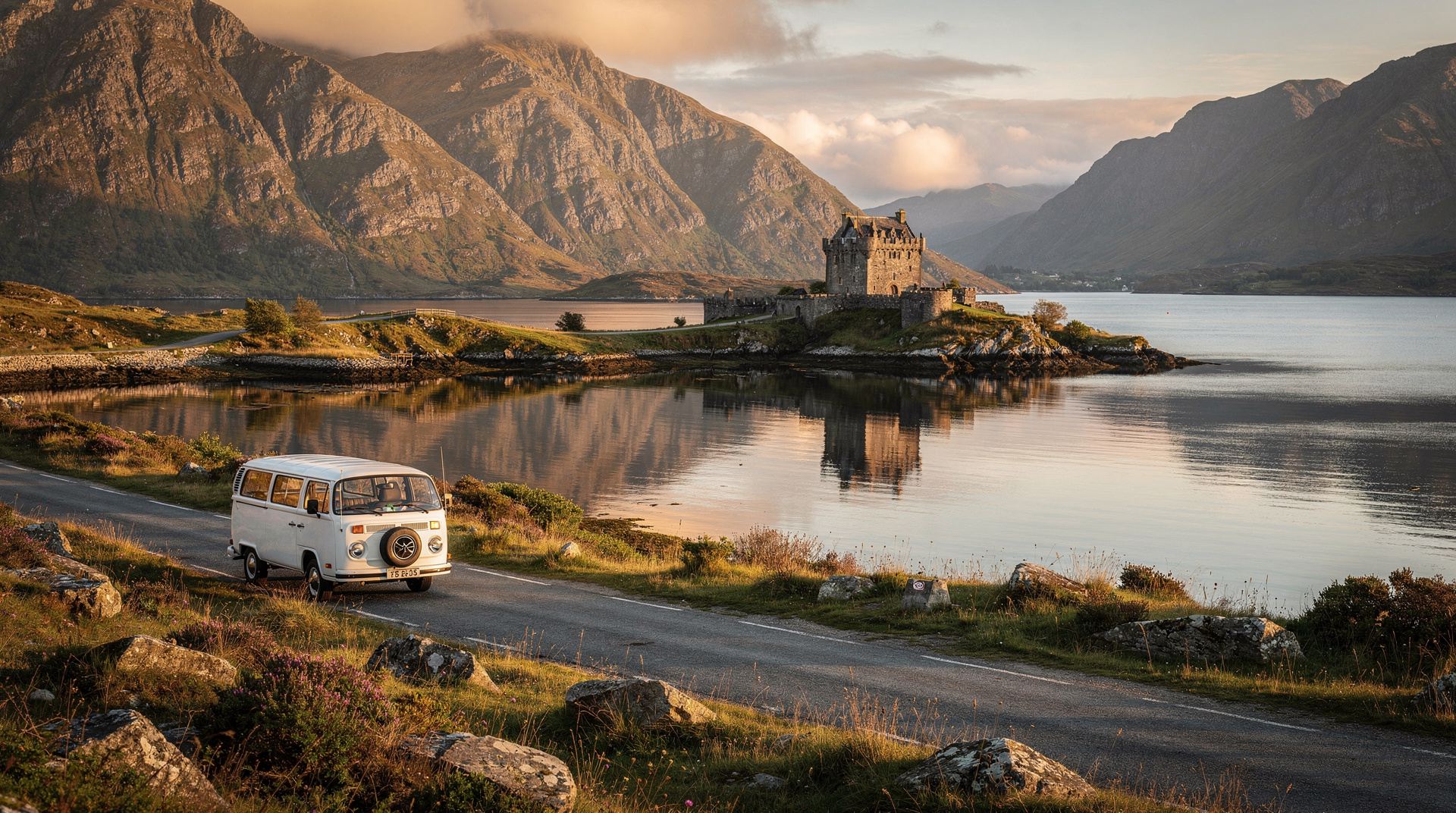
Urquhart Castle (western shore, ~15 miles north of Fort Augustus): The headline stop. Ruins on a promontory above the loch with the most iconic Loch Ness view. Entry: £14 per adult online, £16 at the gate (Historic Environment Scotland, 2026). Allow 45-60 minutes. Arrive before 10am or after 3pm in summer to avoid peak crowds at the car park.
Drumnadrochit (1 mile from Urquhart): The village has the Loch Ness Centre (the refurbished Nessie visitor attraction) and several restaurants. If you have children who are invested in the monster mythology, the Centre is worth an hour. Otherwise, Urquhart is sufficient.
Option 2: East-first (A9 north, Loch Ness, then Glencoe south)
Drive north from Edinburgh on the A9 through Perth, Pitlochry, and the Cairngorm fringes to Inverness. Then south along the A82 on the western shore of Loch Ness to Fort Augustus, and then south through Glencoe, returning via the A82 back to Edinburgh.
This works well if you prefer to do the long straight motorway driving first and have Glencoe as the final scenic experience before returning. It slightly reduces pressure on the Glencoe section. The disadvantage is that you are driving into Inverness (a city, not a scenic highlight) during the middle of the day.
A less-visited eastern shore alternative (B862/B852): If you are self-driving, the eastern shore of Loch Ness is much quieter than the A82 and offers a more atmospheric experience. The road passes through Foyers, where a waterfall drops directly into the loch, and gives periodic views across the water to the castle. It is slower but significantly less crowded — worth considering if you are comfortable with single-track roads.
Guided tour options: what they cover and how they differ
Standard day tours (most popular)
The Loch Ness, Glencoe and Scottish Highlands day tour is the flagship option — the most booked Highlands day trip from Edinburgh and for good reason. It covers Glencoe, the Highland passes, and Urquhart Castle in a well-sequenced 11-13 hour loop, departing around 7-8am from central Edinburgh. Group sizes vary by operator; Rabbie’s and Timberbush tend to run smaller groups (max 16) while larger coach operators run 40-50 seat vehicles.
The Loch Ness, Glencoe and Highlands day tour (alternate routing) covers essentially the same circuit with slight differences in stop emphasis. Worth checking if the flagship tour is sold out on your dates — they cover comparable ground.
Loch Ness is three and a half hours each way, so a day trip is really seven hours of driving wrapped around ninety minutes at the water, and what fills the coach time decides whether the day works: a Loch Ness and legends one-day tour builds the folklore into the journey rather than saving it for the shore.
With a loch cruise
The Loch Ness and Highlands group day trip with cruise adds a boat trip on the loch itself as part of the tour. The cruise offers the best angle on Urquhart Castle from the water — the classic postcard view. On a clear day this is genuinely worthwhile; on a grey day with choppy water, less so. Add roughly one hour to the day’s length.
Whisky-focused tours
The Loch Ness, scenic walk, Glencoe and whisky day tour combines the Highland circuit with a scenic walk element and a whisky tasting stop. This variant suits visitors who want something more active than a coach-and-stop tour and who appreciate whisky as part of the Highland experience. The scenic walk section is accessible — no hiking experience required.
Private tours
The tour comparison guide covers private tour options if you want a dedicated vehicle and guide, which makes sense for families or groups of four or more where the per-person cost becomes competitive with a hire car.
What to actually see at Loch Ness
Urquhart Castle
The single best stop on the loch. The castle ruins occupy a promontory on the western shore with views across the dark water in both directions. History here goes back to at least the thirteenth century — the castle was captured and recaptured repeatedly during Scotland’s Wars of Independence and the later clan conflicts. The standing Grant Tower gives the high viewpoint. Allow 45-60 minutes and bring a waterproof; there is no shelter in the main ruins.
The loch at ground level
Stand by the water at Fort Augustus or the loch shore car parks and notice the colour — dark brown-black from peat content, not from depth. You cannot see your hand below the surface from about 30 centimetres down. The surface temperature stays below 10 degrees Celsius year-round. It is 37 kilometres long and deep enough to hold the water of every freshwater lake in England and Wales combined. The sheer scale of it is genuinely impressive even without a monster.
What to skip
The souvenir shops in Drumnadrochit sell Nessie merchandise of limited interest. The competing “Nessie” attraction (separate from the main Loch Ness Centre) is essentially a shop with a small display — not worth paying for. If you are limited on time, prioritise Urquhart Castle and the Glencoe stops over the visitor centre.
Combining Loch Ness with other destinations
Glencoe is on the same route as Loch Ness for any circular trip from Edinburgh and should not be skipped. See the Glencoe destination page for what to prioritise in the valley.
Stirling Castle sits on the A9 return route and can be added to a self-drive day if you budget an extra 1.5-2 hours. It is one of the most historically significant sites in Scotland. See the Stirling destination guide for context.
Multi-day extensions: A single day genuinely does not do justice to the Highlands. If you can extend to two or three days, the multi-day Highland tours guide reviews structured options that add Inverness, Glenfinnan, and Isle of Skye to the circuit.
The history of the Nessie mythology
The creature mythology deserves an honest treatment because it is part of why visitors come, and understanding it makes the loch more interesting rather than less.
The earliest reference to a creature in the Loch Ness area is from Adomnan’s Life of St Columba, written around 565 AD, which describes Columba commanding a “water beast” back into the water near the River Ness. Whether this reflects a genuine local belief in loch creatures, a literary topos, or a confused account of an actual encounter with a large animal (pike can reach significant sizes) is unanswerable. The modern mythology, however, is of much more recent origin.
The first modern newspaper report of the monster appeared in the Inverness Courier in May 1933, describing a sighting by hotel managers John and Aldie Mackay of “an enormous animal rolling and plunging” on the surface. This report generated enormous international interest and sparked a rash of subsequent sightings. The famous “Surgeon’s Photograph” (1934) — a grainy image of what appeared to be a long-necked creature — became the iconic image of Nessie and was published worldwide. It was revealed in 1994 to be a hoax constructed from a toy submarine with a sculpted head.
Multiple sonar surveys of the loch have been conducted since the 1970s, the most comprehensive in 2016, when a detailed sonar mapping revealed no evidence of a large living creature. The loch does contain fish — pike, Atlantic salmon, Arctic char, brown trout, eels — and large eels occasionally produce ambiguous sonar returns. The scientific consensus is that there is no large unknown vertebrate in Loch Ness, but the lack of a definitive negative result (in 230 metres of peat-black water) keeps the question technically open.
The mythology is now a major economic driver for the area. The Loch Ness Centre at Drumnadrochit, whatever its current incarnation, exists to serve visitors who want the Nessie experience. The castle and the landscape would be here without it; the visitor infrastructure around Drumnadrochit owes its existence almost entirely to the monster story.
What a good guide adds to this day trip
The difference between a competent and an excellent guide on a Loch Ness day trip is the difference between seeing impressive landscapes and understanding them. Several layers of knowledge add genuine value:
Geology of the Great Glen: The Great Glen (running from Fort William to Inverness along which both Loch Ness and the Caledonian Canal lie) is a fault line — the Great Glen Fault, one of the major geological fractures in Scotland, active in the Devonian period around 400 million years ago. The loch fills the fault valley; the extraordinary straightness of Loch Ness reflects the fault’s linear geometry. This is not obscure geology — it is immediately visible and transforms how you see the loch.
The Jacobite rising and its aftermath: The A9 route north passes through landscapes directly connected to the 1745 Jacobite rising of Bonnie Prince Charlie — the last attempt to restore the Stuart monarchy. Culloden Battlefield (near Inverness, 5 miles east of the A9) is where the rising ended in April 1746 with a 60-minute battle that resulted in 1,500 Jacobite dead and the destruction of the Highland clan system in its aftermath. A good guide connects the landscape to this history throughout the day.
The Caledonian Canal: The canal running along the Great Glen from Inverness to Fort William (completed 1822, designed by Thomas Telford) is a major engineering achievement — 22 sea locks, 29 river locks, and the navigation of Loch Ness, Loch Oich, and Loch Lochy within a connected waterway. Fort Augustus, the main stop on a Loch Ness day trip, has a working canal lock and is the most accessible point to watch the engineering in operation.
Practical details for 2026
What to wear: Waterproof jacket (non-negotiable), layers, and walking shoes with grip. Even on a coach tour, the Glencoe and Urquhart Castle stops involve outdoor walking on potentially wet ground. The Highlands are reliably 5-10 degrees colder than Edinburgh.
Midges: Highland midges are active May to September, worst in still, humid conditions near water. DEET repellent is recommended for the Glencoe valley and loch shore stops. Coach tour passengers are less affected because stops are relatively brief.
Car parking: Urquhart Castle car park fills quickly in July and August. Aim to arrive before 10am. Fort Augustus has a public car park near the canal; it is usually manageable.
Food and drink: Bring snacks and water for a self-drive day. Restaurants at Fort Augustus and Drumnadrochit are serviceable; quality is average and prices are tourist-market. Guided tours typically include a designated lunch stop.
UK ETA: Many visitors now need a UK Electronic Travel Authorisation to enter Great Britain. See the UK ETA guide for which nationalities are affected and how to apply.
Budget: Guided day tour: £45-£75 per person. Self-drive: car hire £40-£70/day plus fuel (~£55-70 for the full circuit). Urquhart Castle entry: £14 per adult online (£16 at the gate).
What to do if the weather turns
Highland weather changes quickly and a wet forecast should not be a reason to cancel — it changes the day rather than ruining it. Glencoe in mist and rain has a genuinely atmospheric quality that clear-day photographs don’t capture, and low cloud on the Rannoch Moor descent can be as memorable as sunshine, if colder. Urquhart Castle has no indoor shelter, so a proper waterproof (not just an umbrella, which is useless in Highland wind) matters more than sunshine. Guided tours run rain or shine; only genuinely severe weather (snow, high winds affecting the A82 through Glencoe) leads to rerouting, and operators will notify you in advance if that happens.
Self-drivers should check Traffic Scotland for A82 closures before setting out between November and March, when the Glencoe pass occasionally closes for snow clearing. In that scenario, the A9 route via Perth and Inverness is the fallback, though it misses Glencoe entirely — worth knowing before you commit to a winter self-drive day.
Loch Ness with kids: is the long day worth it?
The 11-13 hour length is the honest sticking point for families. Younger children (under about 6) can find a day this long genuinely difficult, whatever the scenery outside the window. If you are travelling with young kids, consider the Loch Lomond and Stirling day trip instead — see the Loch Lomond day trip guide — which covers similar ground at roughly half the driving time.
For families who do commit to the full Loch Ness day, older children (8+) generally do well, particularly if the Nessie mythology has captured their imagination beforehand — the Loch Ness Monster reality check guide is a good pre-trip read that sets expectations honestly without spoiling the fun.
Break up the drive with the Glencoe Visitor Centre stop, which has enough space to let children move around, and budget for the Loch Ness Centre at Drumnadrochit if the monster theme matters to them — it is the one “skip” recommendation above that is worth reconsidering for a family with invested kids. Pack snacks and entertainment for the motorway sections; the scenic stretches largely take care of themselves.
Alternatives if one day isn’t enough
A single day trip genuinely compresses what is, for most visitors, the highlight of a Scotland trip into a long and tiring circuit. If your schedule allows, splitting the same route across two or three days changes the experience considerably — an overnight near Fort William or Inverness turns a rushed 13-hour loop into unhurried time at Glencoe, Urquhart Castle, and the Great Glen. The multi-day Highland tours guide reviews the structured options, several of which add Glenfinnan and the Isle of Skye to the same general route — see also the Isle of Skye from Edinburgh guide for how Skye extends naturally from a Loch Ness itinerary.
If you are undecided between Loch Ness and other single-day options, the best day trips from Edinburgh guide sets this circuit alongside Loch Lomond, St Andrews, and the Borders so you can weigh driving time against what each destination actually delivers.
Frequently asked questions about the Loch Ness day trip
How long is the drive from Edinburgh to Loch Ness?
The drive from Edinburgh to Fort Augustus at the southern end of Loch Ness takes 3 to 3.25 hours in normal traffic, covering approximately 175 miles via either the A9/A82 or the westerly A82 route through Glencoe. To Urquhart Castle on the western shore, add another 15-20 minutes. The full circuit covering Glencoe and Loch Ness from Edinburgh is approximately 360 miles and takes 12-13 hours with stops.
Is it worth doing Loch Ness as a day trip from Edinburgh?
Yes, but primarily for the Highland scenery rather than the loch itself. Glencoe on the route is genuinely extraordinary. Urquhart Castle is an excellent historic site. The loch is impressive in scale. The day is long — most guided tours run 11-13 hours — but the scenery throughout the route justifies it. Set realistic expectations about Nessie and you will not be disappointed.
What is the difference between the various guided tours?
The main variables are group size (small-group tours of up to 16 give a better experience than 50-seat coaches), guide quality (which varies by operator), and whether a boat cruise is included. The route and main stops are largely the same across operators. See the tour comparison guide for a head-to-head.
Can I visit Loch Ness and Glencoe in the same day?
Yes — this is the standard format of virtually all Edinburgh day tours to the Highlands, and the route is designed to cover both. Allow 11-13 hours for the full circuit from Edinburgh. Self-driving the same route takes similar time once you factor in stops and parking.
Should I self-drive or take a guided tour?
For solo travellers and couples, guided tours offer better per-person value and remove navigation and parking stress. For groups of four or more, a self-drive hire car becomes cost-competitive and offers full flexibility over timing and stops. Self-drive also allows use of the quieter eastern shore of Loch Ness and the option to linger in Glencoe longer than a tour schedule allows.
What is the best time of year for a Loch Ness day trip?
May, June, and September offer the best combination of good weather odds, manageable crowds, and long daylight. July and August are the most popular months (and the most crowded). Winter is possible but the A82 through Glencoe can be icy or closed in severe weather, and daylight is short (~7 hours in December).
Do I need to book in advance?
For summer travel (June-August), yes — popular tours book out weeks ahead. Book 4-6 weeks in advance for July and August visits. Shoulder season (May, September, October) can usually be booked 1-2 weeks ahead. Self-driving requires no advance booking for the route, but Urquhart Castle entry tickets can be bought online to avoid queuing.
Is the Loch Ness day trip suitable for young children?
It can be, but the 11-13 hour length is genuinely demanding for anyone under about 6. If you are travelling with young children, the Loch Lomond day trip covers comparable Highland-adjacent scenery in roughly half the time and is the easier choice. Older children, especially those interested in the Nessie mythology, generally handle the full day well.
What’s the honest verdict on the Nessie mythology — is it worth the detour to Drumnadrochit?
For adults travelling without children, Urquhart Castle alone is normally sufficient and the separate Nessie-themed attractions in Drumnadrochit are skippable. For families with children invested in the monster story, the Loch Ness Centre is a worthwhile hour that adds genuine enjoyment to the day — see the Loch Ness Monster reality check guide for the fuller history behind the legend.
Top experiences
Bookable activities with verified prices and instant confirmation on GetYourGuide.