Edinburgh to the Highlands: the complete planning guide
Edinburgh: Loch Ness, Glencoe & the Scottish Highlands tour
How do you get from Edinburgh to the Scottish Highlands?
Drive north on the A9 (Inverness 3hrs, Aviemore 2hrs) or west on the A82 (Glencoe 2.5hrs, Loch Ness 3.5hrs). Guided day tours cover Loch Ness and Glencoe in one long day. For Skye and the far north, two or more nights are needed. No single Highland day trip covers everything — plan your priorities first.
Understanding what “the Highlands” actually means for Edinburgh visitors
“The Scottish Highlands” is a convenient label for a vast and varied region — roughly half the land area of Scotland — that stretches from Stirling in the south to Cape Wrath in the far north, and from the eastern Cairngorms to the Atlantic coast of the Western Isles. Saying you want to visit “the Highlands” from Edinburgh is like saying you want to visit “the countryside” — it requires more specificity before planning becomes useful.
For Edinburgh visitors, the Highlands divide naturally into three planning zones:
The accessible Highlands (day-trip range): Glencoe, Loch Ness, the Cairngorms, and the southern Grampians. These destinations are 2.5-3.5 hours from Edinburgh and workable as one-day excursions, though long ones.
The mid-Highlands (2-3 night range): Isle of Skye, Glenfinnan, Fort William, Inverness, the eastern Highlands around Speyside. These require at least one overnight stay to do justice to.
The far north (5-7 nights recommended): Torridon, Assynt, Cape Wrath, Orkney, Sutherland — the route marketed as the North Coast 500. These are week-long trips from Edinburgh, not extensions of a city break.
This guide covers the planning framework for all three zones. Individual destinations have their own detailed guides.
| Day-trip range | Glencoe, Loch Ness, Cairngorms, Stirling |
| Overnight needed | Isle of Skye, Fort William, Inverness |
| Cost (guided day tour) | £45-75 per person |
| Best time | May-June, September for weather and fewer campervans |
| Getting there | Self-drive, guided tour, or train to Inverness |
Key driving distances and times from Edinburgh
| Destination | Distance | Drive time | Day trip? |
|---|---|---|---|
| Stirling | 35 miles | 55 min | Easy half-day |
| Loch Lomond (Luss) | 75 miles | 1h30 | Yes |
| Glencoe | 100 miles | 2h30 | Long day |
| Aviemore (Cairngorms) | 90 miles | 2h | Yes |
| Fort William | 130 miles | 2h45 | Long day |
| Loch Ness (Fort Augustus) | 175 miles | 3h15 | Long day |
| Inverness | 195 miles | 3h45 | Possible, not ideal |
| Glenfinnan | 150 miles | 3h00 | Long day |
| Isle of Skye (Portree) | 200 miles | 4h45 | Overnight required |
| Oban | 95 miles | 2h30 | Long day |
| Orkney (by ferry from Scrabster) | 330+ miles | 6h+ drive | Multi-day |
| Cape Wrath | 320 miles | 6h | Multi-day |
All times assume normal traffic and no stops. Summer tourist traffic on the A82 and A9 can add 30-60 minutes to Highland routes.
The main routes north from Edinburgh
Route 1: The A9 corridor (east Highlands)
The A9 is the main Highland artery, running north from Edinburgh through Perth, Pitlochry, Dalwhinnie, Aviemore, and on to Inverness. It is mostly dual carriageway or good single carriageway; the stretch between Perth and Inverness (about 120 miles) passes through some of the most varied Highland landscapes in Scotland — the Cairngorm plateau visible to the east, the River Spey valley, Drumochter Pass (the highest main road pass in Britain at 457 metres).
Key stops on the A9 route: Stirling (turn off at J10 of the M9), Dunkeld (cathedral ruins, excellent town on the River Tay), Pitlochry (Victorian spa town, whisky distilleries), the Cairngorms (Aviemore is the base), and Inverness (gateway to the far north and to Loch Ness via the A82).
Route 2: The A82 (west Highlands — Glencoe and Loch Ness)
The A82 runs northwest from Glasgow along Loch Lomond, through Crianlarich and Tyndrum to Glen Coe, then north through Fort William and along the Great Glen to Inverness. This is the classic Highland touring route and the standard path for day trips to Glencoe and Loch Ness.
From Edinburgh, most tours and self-drivers take the A82 out of Glasgow (west on the M8), then north. The route is spectacular — Rannoch Moor is one of the most desolate and beautiful landscapes in Scotland — but slower than the A9, particularly in summer when the single-carriageway sections of the A82 attract campervans and can slow to frustrating speeds.
Route 3: The westerly route to Skye (A87)
For Skye and the western Highlands, the route turns west at Invergarry on the A87, following Glen Shiel under the Five Sisters of Kintail, and arrives at the Skye Bridge at Kyle of Lochalsh. This is among the finest driving roads in Scotland; the mountains flanking Glen Shiel are dramatic at any time of year. From Edinburgh, the Skye Bridge is approximately 190 miles and 4.5 hours.
Day trips vs multi-day: honest advice
Day trips work well for:
- Loch Ness and Glencoe (standard guided tour circuit, 11-13 hours)
- Glencoe alone (self-drive, more time in the valley, 10 hours round trip)
- Cairngorms/Aviemore (2 hours drive, good for walking or wildlife)
- Stirling and Loch Lomond (comfortable circuit, 8-9 hours)
Day trips don’t work for:
- Isle of Skye (5 hours drive each way — barely time to arrive)
- Torridon and the far northwest (6+ hours drive one way)
- Orkney (ferry required; impossible as a day trip)
- Serious walking in any Highland area (you need accommodation nearby)
The honest case for multi-day
The Highlands are large and the drives are slow. A day trip to Loch Ness is rewarding but leaves you wishing you had stayed. Two or three nights in a Highland base (Fort William, Inverness, or on Skye) allows the landscape to work on you properly — early mornings and evenings when the light is best, time to detour on minor roads, and the option to wait out bad weather and try again.
The multi-day Highland tours guide covers the structured tour options that make this accessible without a hire car.
Guided tours vs self-drive: the detailed comparison
Why guided tours work particularly well in the Highlands
Navigation: Highland roads are complex in a way that city maps underestimate. The A82 has stretches of single-track with passing places; minor roads to viewpoints are unsigned; parking at popular sites fills quickly. A driver who has done the route hundreds of times handles these decisions automatically.
Commentary: The landscape becomes dramatically more interesting with context. The geological explanation for Glencoe’s profile, the story of the 1692 massacre, the history of Bonnie Prince Charlie’s 1745 rising (visible at Glenfinnan), the significance of the Great Glen as a geological fault — all of this is available from a good guide and absent from a hire car.
Economics: Guided group tours typically cost £45-75 per person for a day trip. A hire car for a couple costs £40-70 for the car plus £55-70 in fuel for the Loch Ness circuit. For solo travellers, guided tours are significantly cheaper. For groups of four or more, self-drive usually wins on cost.
Commitment level: Tours depart at a fixed time, follow a fixed route, and arrive back by a predictable time. Self-drive gives complete flexibility but requires genuine route planning.
Best guided day tours from Edinburgh
The Loch Ness, Glencoe and Scottish Highlands day tour is the benchmark: covers both headline destinations in a well-structured circuit that maximises scenic driving while allowing adequate time at the main stops.
For those wanting the western Highlands without Loch Ness specifically, the full-day Highland lochs, glens and whisky small-group tour focuses on the western circuit with a whisky tasting component.
The best of Scotland small-group day tour is an ambitious circuit covering more ground than most single-day tours — recommended for visitors on tight schedules who want maximum coverage.
The boat on Loch Ness is the one part of the day a coach schedule cannot flex around, because the sailings run to their own timetable and a full bus rarely catches the quiet one: a private Highlands tour with a Loch Ness cruise books the water first and fits the road around it.
The Cairngorms: the accessible Highland alternative
The Cairngorm National Park — Britain’s largest national park — is 90 miles from Edinburgh and 2 hours by car (or 2 hours by train to Aviemore on the Inverness line). It has a completely different character from the western Highlands: a high plateau rather than jagged peaks, ancient Caledonian pine forest, and wildlife that includes red squirrels, red kites, ospreys, and mountain hares in their white winter coats.
The Cairngorms work particularly well for visitors who want Highland scenery without committing to the full Loch Ness and Glencoe circuit. Aviemore is a functional if somewhat touristy base; better to stay in Kingussie or Grantown-on-Spey. The Edinburgh Cairngorms National Park day trip gives a structured introduction.
What to expect on Highland roads
Many first-time Highland visitors are surprised by the road conditions — not because they are dangerous, but because they are different from roads in England or urban Scotland:
Single-track roads: Large sections of the Highland road network — including parts of the A82 alongside Loch Ness and Glencoe, much of the A87 to Skye, and most minor roads — are single-track: wide enough for one vehicle, with passing places marked by white posts or diamond-shaped signs. The etiquette is straightforward: the vehicle closest to a passing place pulls in or just past it to allow the other to pass. If the passing place is on your right, you wait opposite it (not in it). This is not a tourist convention — it is the standard operating procedure for Highland roads and locals expect visitors to know it.
Average speeds: Even on A-class roads, average driving speeds in the Highlands rarely exceed 35-40 mph once you account for single-track sections, slow vehicles (campervans, lorries, agricultural equipment), and the occasional slow tourist who stops in the middle of the road for photographs. Edinburgh to Inverness by the A9 is 195 miles; allow 3.75-4 hours including normal traffic. Edinburgh to Glencoe by the A82 is 100 miles; allow 2.5-3 hours.
Campervans: The NC500 and the Glencoe/Loch Ness routes have become extremely popular with campervan travellers. A fully-loaded campervan on a single-track road limits the flow to whatever the campervan can achieve, which is typically 20-25 mph. In July and August, a convoy of campervans can add 30-45 minutes to a Glencoe or Loch Ness journey. Factor this into planning and leave early.
Mobile phone signal: Coverage is patchy outside towns and main roads. Download offline maps (Google Maps offline or maps.me) before leaving Edinburgh. Navigation entirely dependent on a live data connection will fail at exactly the wrong moment on a remote Highland road.
Highland walking: what it actually requires
Many visitors to the Highlands on day trips see the mountains and want to climb them. This is entirely understandable and often entirely feasible — but requires an honest assessment of what Highland hillwalking involves:
A Munro (any summit over 914m/3000 feet): There are 282 Munros in Scotland. The classic first Munro for Edinburgh-based walkers is Ben Lomond (974m, 3-4 hours return from Rowardennan). Requires map and compass navigation skills (do not rely entirely on phone GPS), appropriate layered clothing and waterproofs, hiking boots with ankle support, and the ability to read weather changes. The Ben Lomond path is well-maintained; the conditions can change to cloud and strong wind quickly.
The Glencoe peaks (Buachaille Etive Mor, the Three Sisters ridges, Aonach Eagach): These are serious mountain objectives. Aonach Eagach in particular — the ridge above the north side of Glencoe — is a Grade 3 scramble (technical handholds and footwork, exposure on both sides) and should not be attempted without hillwalking experience and ideally a rope. Deaths occur on Aonach Eagach each year from parties underestimating it.
What day-trippers can do: The Signal Rock walk in Glencoe (flat, 30 minutes), the Glencoe floor path (flat), the Ben Lomond path from Rowardennan (well-marked, 3-4 hours), Stac Pollaidh in Assynt (moderate, 2-3 hours with some scrambling near the top), and the Quiraing circuit on Skye (moderate, 3-4 hours) are all accessible to fit walkers with decent footwear. None require specialist equipment beyond waterproofs and walking shoes with grip.
Mountain Rescue call-outs in Scotland are free but are a serious operation staffed by volunteers. If you have any doubt about your ability to complete a walk and descend safely, go only as far as you feel comfortable and turn back early rather than late.
Scotland’s weather: a practical guide
Scottish weather is famously variable, and the Highlands have their own microclimate distinct from both Edinburgh and from the rest of Britain. Key points:
Temperature: The Highlands are typically 5-10 degrees cooler than Edinburgh. A sunny 18-degree Edinburgh morning can mean a 10-degree windy Glencoe afternoon. Always carry a warm mid-layer (fleece or equivalent).
Rain: The western Highlands (Glencoe, Skye) receive 3-4 times the rainfall of Edinburgh. Rain is frequent but often short-lived. The eastern Highlands (Cairngorms, around Aviemore) are noticeably drier. Waterproofs are necessary at all times of year regardless of the forecast.
Cloud on the mountains: Highland mountains frequently pull cloud down from otherwise clear skies. The summit and upper ridges may be in cloud even when the valley is sunny. This is not a safety concern for valley walks but significantly affects views from any elevated position.
The forecast: The Met Office Mountain Weather Information Service (MWIS) provides Highland-specific forecasts that are more useful than standard weather apps for any Highland walk. Worth checking the evening before any outdoor day in the Highlands.
Wildlife and photography in the Highlands
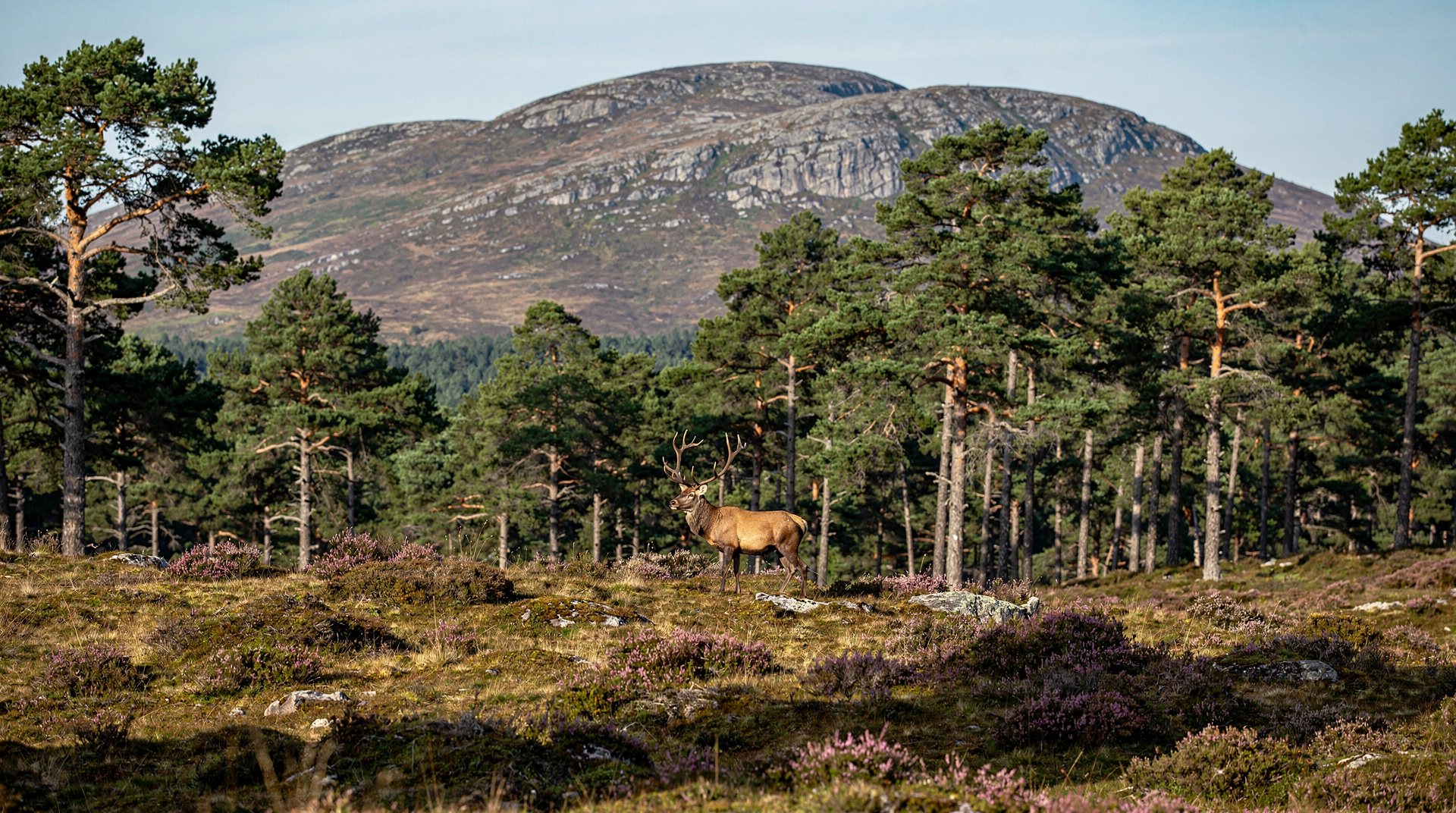
The Highlands offer some of the best wildlife-watching in Britain, and knowing what to expect improves both the day trip and the photography. Red deer are commonly seen from the road, particularly around Glencoe and Rannoch Moor at dawn and dusk; golden eagles and other birds of prey are present but genuinely difficult to spot without local knowledge or a specialist wildlife tour. Highland cattle (“hairy coos”) are a near-guaranteed sighting on farmland along most Highland routes and are a reliable photo opportunity, though visitors should keep a respectful distance rather than approaching for a closer shot.
For photography specifically, early morning and the hour before sunset give the best light on Highland lochs and mountains, which is one reason multi-day trips consistently produce better photographs than rushed day trips through the middle of the day.
Loch Ness and Glencoe both have well-known viewpoints — Glencoe’s Buachaille Etive Mor from the roadside layby near Kingshouse, and Loch Ness from the Fort Augustus end — that are worth building a few extra minutes into your schedule for, since the standard tour stop is not always the best vantage point. Guided tours generally know the best photo stops along the route and build short pauses in, which is a genuine advantage over a rushed self-drive itinerary trying to cover the same ground in a single long day.
Practical advice for the drive
Driving on single-track roads: The A82 and many Highland roads have sections of single-track with passing places marked by white posts. When meeting oncoming traffic, pull into or just past the nearest passing place. If the passing place is on your right, wait opposite it to allow the other vehicle to use it. Do not use passing places as parking spots (a common tourist mistake that angers locals).
Fuel: Petrol stations become sparse north of Fort William. Fill up at Fort Augustus, Drumnadrochit, or Invermoriston on the Loch Ness circuit rather than assuming you can refuel when needed.
Daylight and timing: Scottish summer days are very long — sunset after 10pm in June. Winter days are short (7 hours of daylight in December). Winter Highland driving can be challenging; the A82 through Glencoe is occasionally closed by snow.
Highland weather: The mountains create their own weather systems. A forecast of “mostly sunny” in Edinburgh can mean low cloud, rain, and 10-degree temperatures in Glencoe by noon. Always carry waterproofs, regardless of the morning forecast.
For UK ETA requirements for those visiting from abroad, see the UK ETA guide. Currency information and exchange advice is at the Edinburgh currency guide.
What to pack for a Highland day trip
Highland conditions differ enough from Edinburgh that a dedicated packing check is worth doing before you leave, even for a single day. A warm mid-layer, waterproofs (jacket and ideally trousers), sturdy shoes with grip, and a hat and gloves outside summer months cover the basics for anyone not planning serious hillwalking. Sunglasses are worth packing even in changeable weather — low winter sun on Highland lochs can be genuinely dazzling. If you are self-driving, download offline maps before leaving Edinburgh, since mobile signal disappears for long stretches on the A82 and A87. A car charger or spare battery is sensible if you rely on your phone for photos and navigation across a long day.
Highland accommodation for multi-day trips
For visitors extending into a multi-day Highland trip, Fort William and Inverness are the two practical bases with the widest choice of accommodation and easy access to onward routes. Fort William suits the western circuit (Glencoe, Glenfinnan, Skye), while Inverness suits the Loch Ness and eastern Highland routes, plus rail connections back to Edinburgh.
Booking ahead matters more here than in Edinburgh itself — Highland towns have far fewer rooms overall, and July-August fills up months in advance. The multi-day Highland tours guide covers structured options that include accommodation if you would rather not arrange it separately, and the Edinburgh and Highlands five-day itinerary gives a concrete base-by-base plan.
Where to start planning
For specific destinations:
- Loch Ness day trip guide — detailed self-drive route and tour comparison
- Glencoe day trip guide — what to see in the valley and how long to allow
- Isle of Skye from Edinburgh guide — multi-day planning
- Multi-day Highland tours — guided tour options for 2-7 nights
- North Coast 500 from Edinburgh — the full NC500 circuit
For itinerary templates, the Edinburgh and Highlands five-day itinerary combines Edinburgh city with a three-day Highland circuit.
Frequently asked questions about Edinburgh to the Highlands
What is the best Highland day trip from Edinburgh?
The Loch Ness, Glencoe and Scottish Highlands circuit is the most rewarding single-day Highland experience from Edinburgh, primarily for the Glencoe valley scenery. It is a long day (11-13 hours) but covers the two most famous Highland landscapes in a single circuit. See the Loch Ness day trip guide for detail.
Can I drive to the Scottish Highlands from Edinburgh?
Yes — the A9 north and the A82 west are the main routes. Allow 2.5 hours minimum for Glencoe, 3.5 hours for Loch Ness, and 4.75 hours for the Isle of Skye. The roads are good but often slow in summer due to tourist traffic and single-track sections. A full round-trip to Loch Ness and Glencoe is approximately 360 miles.
Do I need a car to visit the Highlands from Edinburgh?
No. Guided day tours from Edinburgh cover Glencoe and Loch Ness without a car, departing from central Edinburgh. Multi-day Highland tours include accommodation and transport throughout. For Skye and the far north, guided tours are the most practical car-free option. Inverness is also reachable by train from Edinburgh (3h45 on ScotRail).
How many days do I need for the Scottish Highlands?
For a Loch Ness and Glencoe experience: one very long day. For the Isle of Skye: minimum two nights (three is better). For the North Coast 500 circuit: five to seven days minimum. For a comprehensive Highland experience covering Skye, the far northwest, and Orkney: ten or more days. Most Edinburgh visitors on a standard trip do one Highland day trip and consider a separate dedicated Scotland holiday for more.
Is it worth hiring a car to explore the Highlands?
For a week-long Highland circuit, yes — a hire car gives the freedom to take minor roads, stop at viewpoints, and visit places that guided tours skip. For a single day trip to Loch Ness and Glencoe, a guided tour is more economical and less stressful for most visitors. See the self-drive vs guided tour comparison earlier in this guide.
Can I see the Highlands without staying overnight anywhere?
Yes, for the accessible zone specifically — Glencoe, Loch Ness, the Cairngorms, and Stirling are all workable as long single days from Edinburgh. Skye, Fort William, and anything further north require at least one night away to be worthwhile rather than mostly spent in a vehicle.
What is the most scenic Highland route from Edinburgh?
The A82 through Glencoe and along Loch Lomond is generally considered the most dramatic drivable route within day-trip range, particularly Rannoch Moor and the Glencoe valley itself. For those with more time, the A87 to Skye via Glen Shiel and the Five Sisters of Kintail is arguably even more spectacular but requires an overnight stay.
Top experiences
Bookable activities with verified prices and instant confirmation on GetYourGuide.