North Coast 500 from Edinburgh: how to plan the NC500
Edinburgh: North Coast 500 G.O.A.T 4-day tour
How do I do the North Coast 500 from Edinburgh?
Drive north to Inverness (3.75hrs), then the NC500 circuit loops 500 miles around the northern Highlands coastline. Allow 5-7 days minimum for the full circuit. Clockwise (east first) is recommended. Guided 4-5 day NC500 tours start from ~£350 per person; self-drive requires a car hire plus accommodation booking.
What the North Coast 500 actually is — and what it requires
The North Coast 500 is a 516-mile scenic driving route around the northern coast of Scotland, starting and ending in Inverness. It was launched as a tourism route in 2015 by the North Highland Initiative and has since become one of Europe’s most marketed road trips. The “500” in the name is approximate; the actual distance of the full circuit from Inverness and back is closer to 516 miles.
From Edinburgh, the starting point (Inverness) is 195 miles and nearly 4 hours by car. The NC500 circuit itself adds another 500+ miles. The total driving commitment for an Edinburgh-based NC500 trip is therefore approximately 1,000 miles, making it a significant undertaking that is best treated as a dedicated Scotland road trip rather than an add-on to an Edinburgh city break.
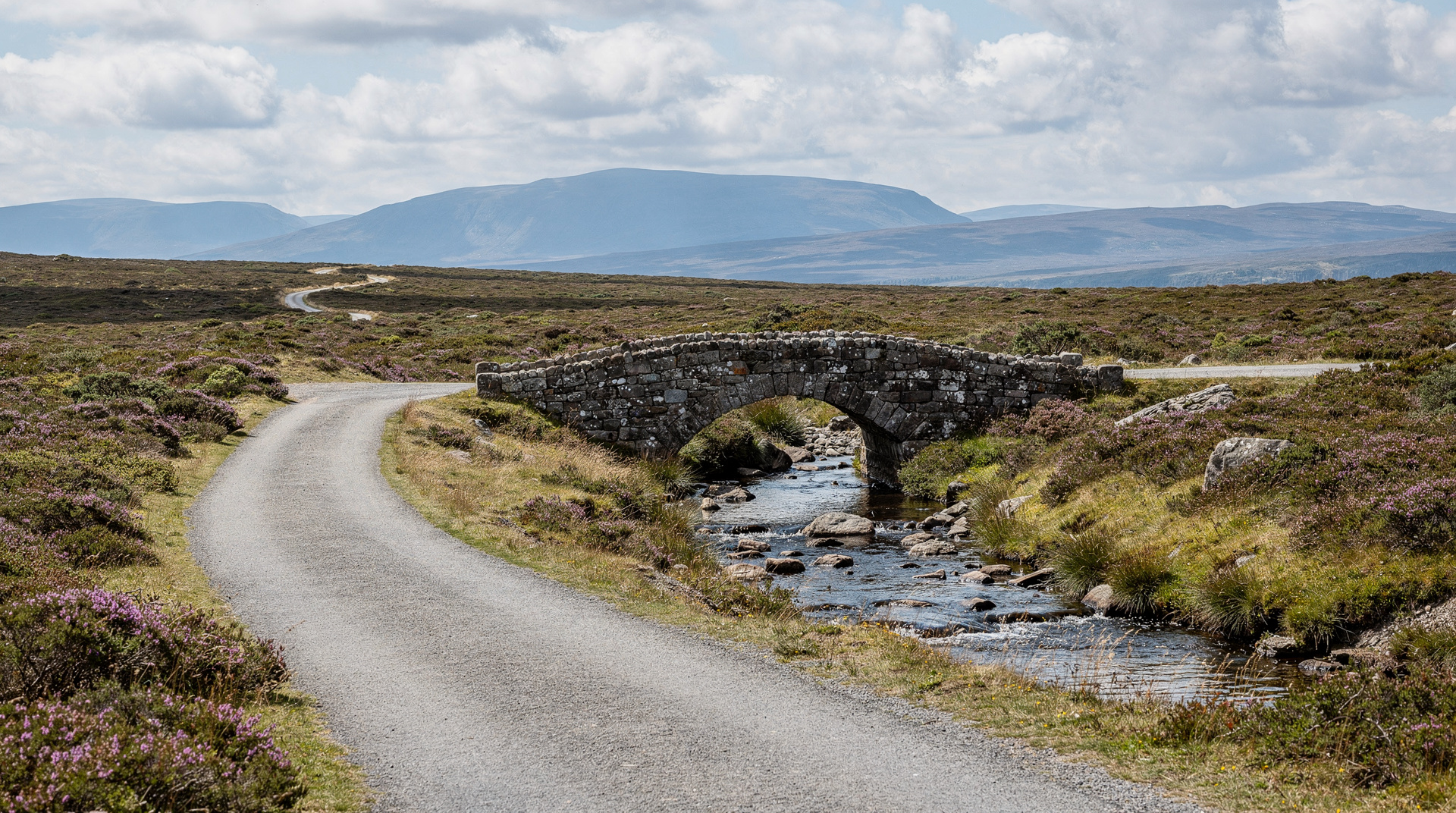
That said, it is among the finest road trips in Europe. The far northwest — Torridon, Assynt, Sutherland — is genuinely remote, geologically ancient, and visually extraordinary in a way that differs fundamentally from the more-visited Loch Ness and Glencoe corridor. The coastline from Durness to Thurso passes sea stacks, empty beaches, and cliff scenery that has few equivalents in the British Isles.
| Where | Circular route from Inverness, around 516 miles |
| Cost | Guided 4-day tours from around £350pp; self-drive: car hire + accommodation |
| Time needed | 5 days minimum; 7-10 days recommended |
| Getting there | Edinburgh to Inverness first, around 195 miles / 3.75hrs |
| Best time | May–September for accessible roads and open cafés/accommodation |
The route: what it covers
The NC500 circuit from Inverness divides into five rough sections:
1. Inverness to Torridon (via the A9 north and then west): The eastern section of the route leaves Inverness north to the Black Isle, then cuts west toward Torridon. The Red and Grey Cuillins of Torridon — older and more worn than Skye’s Black Cuillin — rise dramatically from Loch Torridon. Beinn Eighe National Nature Reserve has the oldest rock in Britain (around 750 million years old) and excellent walking.
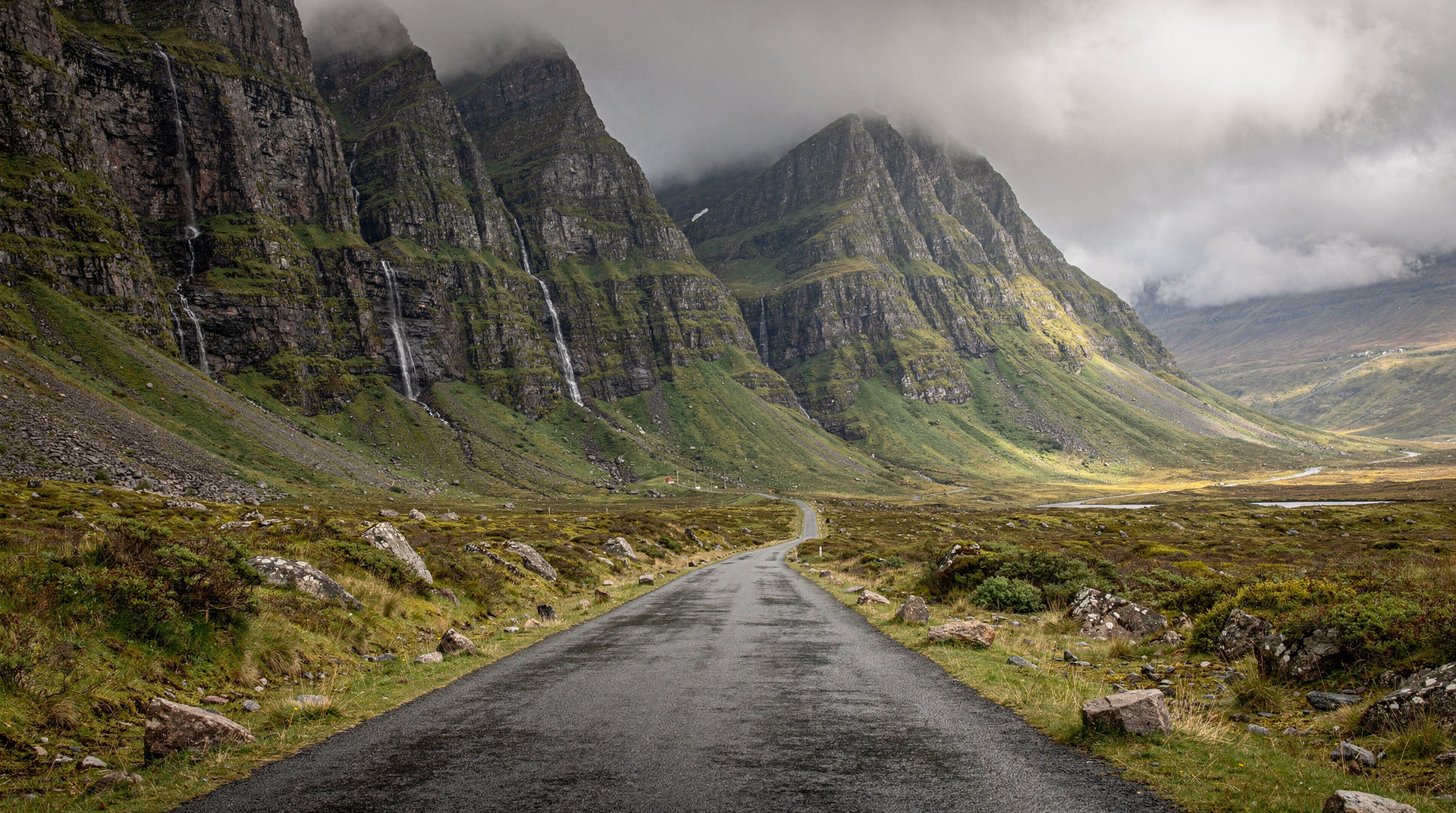
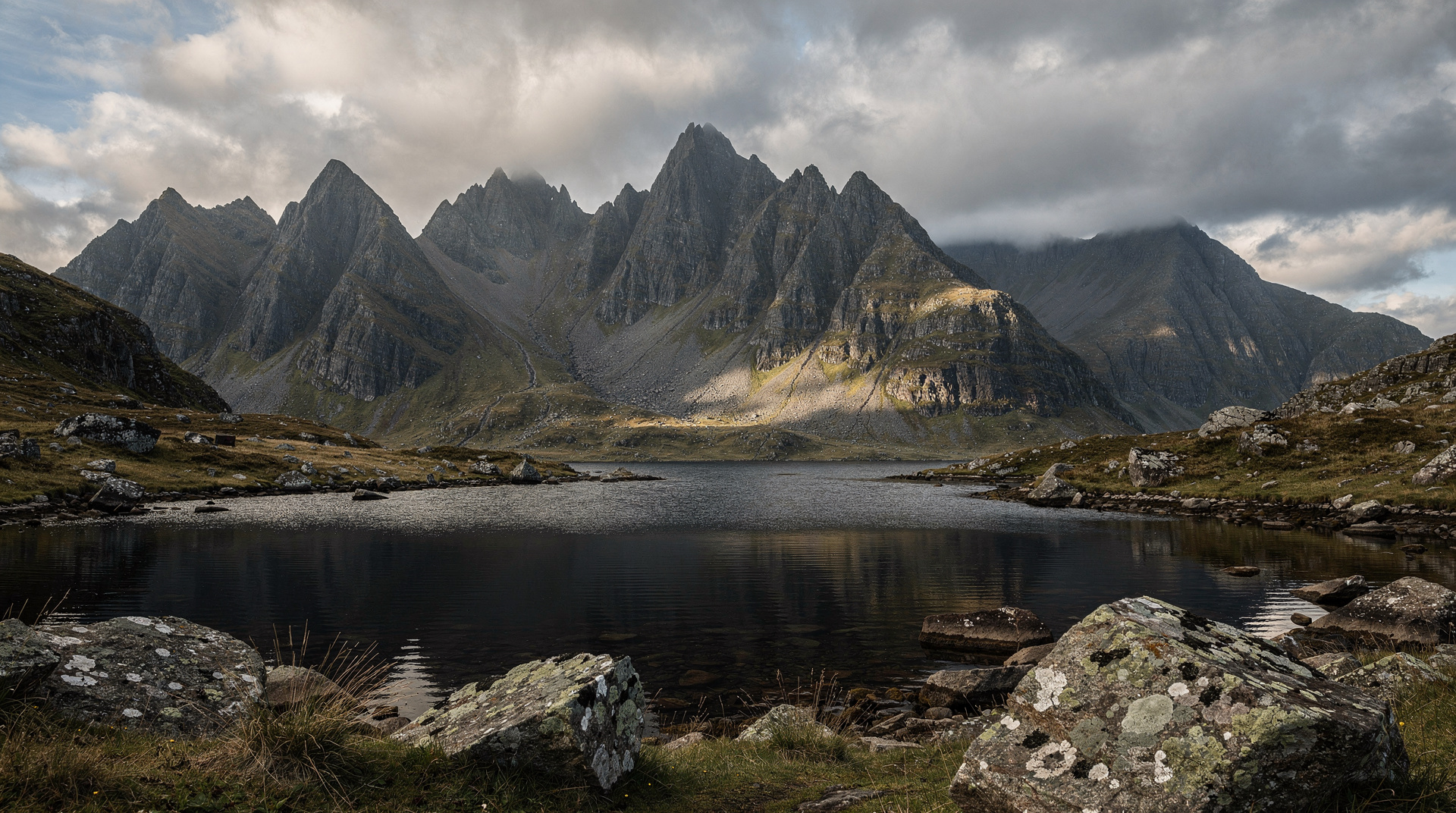
2. Torridon to Durness (the northwest coast): The most spectacular section of the route, following single-track roads through Assynt. Sulven, Stac Pollaidh, and Quinag are isolated quartzite mountains that rise improbably from a flat, boggy landscape — some of the strangest mountains in Britain. The sea inlets (lochs) cut deep into this coastline. Inverpolly and the route around Coigach are outstanding. Durness, at the northwest corner, is near Cape Wrath (accessible only by ferry and minibus) — the most remote accessible point on the UK mainland.
3. Durness to Thurso (the north coast): The A838 follows the north coast east from Durness through Tongue and Bettyhill to Thurso. The beaches here — Balnakeil, Smoo Cave (a sea cave), Rispond — are extraordinary: white sand, turquoise water, and often completely empty. This is not a Mediterranean simulation; it is genuinely cold and often windy. But on a clear day it is one of the most beautiful coastlines in Europe.
4. Thurso to Inverness (east coast): The east coast section is less dramatic than the west but includes John O’Groats (the northeasternmost point of mainland Britain), the Duncansby Head sea stacks, and Dunrobin Castle — an extraordinary French chateau-style Victorian castle perched above the sea on the Sutherland coast.
5. Optional: Orkney connection: From Thurso or John O’Groats, ferries cross to Orkney — making Orkney a natural addition to a full NC500 circuit. See the Orkney guide for details.
Planning the NC500 from Edinburgh: realistic timelines
Minimum time for a satisfying NC500: Five days (including travel from and back to Edinburgh). This is genuinely tight and involves long driving days (200+ miles on some days). Most experienced travellers recommend seven days for the full circuit.
Recommended time: Seven to ten days. This allows stopping properly at Torridon, walking in Assynt, and spending time at the north coast beaches without feeling rushed. A week-long NC500 from Edinburgh is one of the most rewarding one-week road trips available in Europe.
The extended circuit with Orkney and Skye: Ten to fourteen days allows the full NC500 plus Orkney (add two nights minimum) and a return via Skye. This is effectively a Scotland-wide driving holiday rather than just the NC500.
Guided NC500 tours from Edinburgh
The NC500 G.O.A.T. 4-day tour
The North Coast 500 G.O.A.T. 4-day tour from Edinburgh is one of the few structured guided options that specifically markets the NC500 route. It covers a selected portion of the circuit (not the full 500 miles) in four days, focusing on the most spectacular western and northern sections. The format is guided minibus with accommodation included.
Honest assessment: Four days is not sufficient for the full NC500 — the route covers a genuinely vast region. This tour selects highlights rather than completing the circuit, which is the right approach for a structured tour format. Good value for those who want the NC500 experience without the self-drive planning commitment.
The 8-day Skye, Orkney and NC500 circuit
The Edinburgh 8-day Skye, Orkney and North Coast 500 tour is the most ambitious guided option from Edinburgh — a comprehensive circuit covering Skye, the NC500, and Orkney in eight days. This combines three distinct Highland regions (western Highlands/Skye, the far north NC500 corridor, and Orkney) in a single extended tour.
At eight days, this starts to approach a genuinely full NC500 experience. The addition of Orkney is a significant bonus — see the Orkney from Edinburgh guide for why Orkney rewards a visit.
The highlights section by section
Torridon: the oldest landscape in Scotland
The Torridon area is geologically extraordinary — Torridonian sandstone, laid down 750-800 million years ago, forms the base of mountains like Liathach and Beinn Eighe. These are among the oldest sedimentary rocks on Earth, and the landscape has a pre-human quality that the younger volcanic Highland peaks do not. Beinn Eighe National Nature Reserve, the first national nature reserve in Britain (designated 1951), has excellent walking trails including the Mountain Trail, which climbs to a quartzite ridge with views over the Torridonian mountains and out to Skye.
The village of Torridon, on the southern shore of Upper Loch Torridon, is tiny but has accommodation (the Torridon Hotel is exceptional, prices to match) and a youth hostel. The deer museum run by the National Trust for Scotland has good displays on Highland wildlife.
Ullapool and the Summer Isles
Ullapool is the largest settlement on the northwest coast — a planned fishing village from 1788 with a proper working harbour, a good restaurant scene (the Ceilidh Place is the best-known, a combined hotel, bar, and arts venue), and ferry connections to the Outer Hebrides. From Ullapool, boat trips to the Summer Isles (a cluster of uninhabited islands in Loch Broom) give seal, dolphin, and seabird sightings in season.
North of Ullapool, the A835 passes through the Assynt landscape — some of the most alien terrain in Britain. Stac Pollaidh (613m), visible from the road as an isolated quartzite pinnacle, is accessible by a 2-3 hour walk that gives extraordinary views. The lochs in this area (Loch Assynt, Loch Sionascaig) reflect the mountain silhouettes with extraordinary clarity on calm days.
Durness and Cape Wrath
Durness, at the northwest corner of mainland Scotland, has a craft village and the Smoo Cave — a sea cave and waterfall accessible by short walk from the village car park. The beaches around Durness (Balnakeil beach, Ceannabeinne beach) are among the finest in Britain: white sand, turquoise water, complete absence of development.
Cape Wrath itself requires a ferry across the Kyle of Durness estuary followed by a minibus journey on a private road (no private vehicles admitted) — the combination is weather-dependent and sometimes unavailable. The cape headland has dramatic sea stack scenery and the Clo Mor cliffs (the highest sea cliffs on mainland Britain). Allow at least half a day for the Cape Wrath excursion if conditions allow.
The north coast
Between Durness and Thurso, the A838 runs along the north coast through some of the least-visited territory in mainland Britain. Kinlochbervie (a deep-water fishing harbour on Loch Inchard, southwest of Durness) is a detour that gives a view of working fishing at industrial scale. Bettyhill, near the River Naver, is a good base for exploring the Flow Country — vast peatlands that are internationally significant as a carbon store and bird habitat.
Dunnet Head (northeast of Thurso) is the most northerly point of mainland Britain — more northerly than John O’Groats, which is the most northeasterly. The lighthouse and cliffs at Dunnet Head are accessible and excellent for seabirds.
Self-drive planning: the practical details
Direction: clockwise vs anticlockwise
The conventional recommendation for the NC500 is clockwise — leaving Inverness north on the A9, then turning east and south along the north coast and then the east coast back to Inverness. The primary reason is road width: the west coast roads (Torridon to Assynt) are narrower than the east coast, and driving them with oncoming traffic from organised coach tours is easier anticlockwise (you are facing the cliff rather than the drop). Additionally, the single-track roads on the west coast benefit from lighter traffic earlier in the morning — starting east (wider roads) means you arrive at the west’s narrow sections having already adjusted to Highland driving.
Anticlockwise works equally well and some itineraries prefer it for landscape reasons — ending at Torridon gives a dramatic finale. The practical driving argument favours clockwise.
Accommodation
NC500 accommodation is limited along the route, particularly on the far northwest coast. Book everything before departure for July and August; even in June, good properties in Torridon, Ullapool, and Durness sell out months ahead. Options range from Airbnb to small hotels; camping is popular and well-supported along the route.
Vehicle choice
A standard hire car is fine for the NC500 — you do not need a four-wheel drive. The single-track roads are passable in any road car. What matters is confidence on single-track roads (the passing place system) and the ability to reverse on occasion. Larger SUVs and campervans create challenges on the narrowest sections.
Fuel
Petrol stations are sparse between Ullapool and Tongue on the northwest coast, and between Tongue and Thurso on the north coast. Fill up at every opportunity once past Ullapool. Do not count on finding fuel between Kinlochbervie and Durness (about 50 miles with no stations). Many travellers carry a 5-litre emergency can.
Accommodation strategy for the NC500
Unlike most touring routes in Britain, the NC500 runs through a region where accommodation options are genuinely limited outside Inverness, Ullapool, and Thurso. Planning accommodation before departure is not optional for July and August — it is essential.
Key accommodation nodes:
- Inverness: starting/ending point, full hotel range
- Torridon: Torridon Hotel (expensive, excellent) + youth hostel
- Ullapool: range of B&Bs, Ceilidh Place hotel, self-catering
- Durness: limited — book well ahead for July/August
- Thurso: town with full accommodation range; good base for the north coast
- Dornoch: elegant small town on the east coast, golf courses, excellent for overnight
Camping: Extremely popular on the NC500. Many of the finest viewpoints have informal camping areas (no facilities, no charge). The wild camping tradition in Scotland (enshrined in the Land Reform Act 2003) means that respectful camping almost anywhere on open land is legal. Formal campsites with facilities are at Kinlochewe (near Torridon), Ullapool, Durness, and Thurso.
Booking timing: For July and August, book all accommodation at least 3-4 months ahead. For May, June, and September, 6-8 weeks is usually sufficient, but specific popular properties (particularly in Torridon and Durness) still require early booking. The NC500’s marketing success has substantially increased demand since 2018.
Wildlife on the NC500
The far northwest of Scotland has wildlife that is unavailable anywhere else in Britain:
White-tailed eagles: Reintroduced to Scotland, white-tailed eagles (wingspan up to 2.5 metres — the largest bird of prey in Britain) are now reasonably common in the northwest Highlands. Loch Maree between Kinlochewe and Gairloch is a known location.
Bottlenose dolphins and other cetaceans: The north coast and east coast around the Black Isle have significant dolphin populations. The Moray Firth has a resident population of bottlenose dolphins (the most northerly in the world); viewpoints near Chanonry Point on the Black Isle give reliable close-range sightings year-round.
Red deer: Present throughout the Highlands; most visible on the open moorland sections of the NC500 route, particularly in early morning and evening. Rutting season (October-November) brings stags to lowland positions.
Golden eagles: Scotland has most of Britain’s golden eagle population. Sightings are not guaranteed but the open moorland of Sutherland and Caithness gives the best chance of observation. Patient scanning of ridgelines from viewpoints is the recommended approach.
The best sections for a partial NC500
If the full circuit is not feasible in your available time, the western coast from Torridon to Ullapool and Assynt gives the most extraordinary scenery per mile on the entire route. This section can be driven as an extension of a Skye trip or as a detour from Inverness. Combined with a night at Ullapool (a working fishing port with excellent seafood), it gives a genuine NC500 experience without the full circuit.
See also the Edinburgh to Highlands guide for the broader planning framework and how the NC500 fits into different trip lengths.
Photography on the NC500
The far northwest rewards photographers more than any other region reachable from Edinburgh, and the light quality genuinely differs from the more southerly Highlands. Early morning and evening light in Assynt, when the low sun catches the isolated quartzite peaks of Stac Pollaidh and Suilven against the flat surrounding moorland, produces some of the most striking landscape images in Britain. The north coast beaches around Durness photograph best with an incoming or outgoing tide, when the wet sand reflects the sky. Because the route runs so far north, summer solstice light lasts into the late evening (sunset after 10pm in June), giving photographers a genuinely long golden hour window that does not exist at Edinburgh’s latitude.
Wildlife photography is a separate consideration: the bottlenose dolphins at Chanonry Point on the Black Isle are best photographed from the shore around the turn of the tide, when feeding activity peaks, and require patience rather than technical gear. A long lens helps for golden eagles and white-tailed eagles, both of which are more often spotted than approached closely.
NC500 vs the standard Skye/Loch Ness Highland trip
Many Edinburgh visitors weighing a Highlands trip end up choosing between the NC500 and the more conventional Skye and Loch Ness circuit covered in the multi-day Highland tours guide. They are not really substitutes for each other.
| NC500 | Skye / Loch Ness circuit | |
|---|---|---|
| Minimum time | 5 days (7+ from Edinburgh) | 2-3 days |
| Remoteness | Genuinely remote, sparse services | More developed, better tourist infrastructure |
| Driving | Extensive single-track roads | Mostly two-lane roads |
| Best for | Repeat Highland visitors, dedicated road-trippers | First-time visitors, shorter trips |
| Iconic sights | Assynt, Torridon, Durness beaches | Old Man of Storr, Glencoe, Urquhart Castle |
If this is your first trip to the Scottish Highlands and you have less than a week total in Scotland, the Skye and Loch Ness circuit delivers more per day and requires far less logistics. The NC500 rewards travellers with more time, a genuine appetite for driving, and often a prior Highlands visit already under their belt.
If you are still deciding how far north to go, the Isle of Skye from Edinburgh guide and the Loch Ness day trip guide show what the more southerly Highlands offer, and the Glencoe day trip guide covers one of the finest single landscapes on that side. For a shorter taste of the region with someone else driving, a three-day guided trip around Skye and the Highlands is the lighter alternative to the full circuit.
Weather, daylight and the car question
Conditions on the far northwest change quickly, and a clear morning can turn to rain and low cloud by afternoon. The Edinburgh weather guide is a useful starting point for packing, but expect the north to be cooler and windier than the capital, and carry waterproofs whatever the forecast says. If you are unsure whether to hire a car at all, the guide on whether you need a car in Edinburgh explains why the answer is usually no in the city and usually yes once you head north.
Stops on the way north
Most travellers pass through Inverness on the way to the start of the circuit, and the Inverness destination page is a good place to plan a night before or after the loop. Loch Ness sits right beside the city if you want an easy first stop, and the Isle of Skye destination page is worth reading if you plan to extend the trip westward. Anyone adding the islands to the end of the circuit should also look at the Orkney destination page. Travellers who prefer a fixed plan to a flexible one can compare this guide with the Edinburgh to the Highlands in 5 days itinerary, which keeps the driving shorter.
Combining the NC500 with an Edinburgh stay
Because the NC500 is such a substantial undertaking on its own, most Edinburgh-based travellers treat it as a separate, dedicated leg of a longer Scotland trip rather than a side excursion. A common structure: 2-3 days in Edinburgh first (see the Edinburgh to Highlands guide for how the city connects to Highland travel), then a rental car pickup and the NC500 circuit itself, returning the car in Inverness before a final train back to Edinburgh. This avoids driving the car through Edinburgh’s city centre at either end of the trip, which most visitors find adds stress without benefit.
Frequently asked questions about the North Coast 500 from Edinburgh
How long does it take to drive the North Coast 500?
The circuit itself (Inverness to Inverness) is approximately 516 miles. Driving time without stops is about 12-14 hours on roads that average 35-40 mph due to single-track sections. With any reasonable stops, allow five to seven days for the full circuit. Adding Edinburgh travel time (4 hours each way), the minimum Edinburgh NC500 return trip is seven days.
Can I do the NC500 without a hire car?
With difficulty. Public bus services in the far northwest are minimal — one bus per week on some routes. Guided tours (see above) are the practical alternative to a hire car, but they cover selected highlights rather than the full circuit. For a genuine full NC500 experience, a hire car is strongly recommended.
When is the best time to drive the NC500?
May to September for accessible roads, active cafés and accommodation, and reasonable weather odds. June and July have the most daylight (sunset after 10pm in the far north near the summer solstice). August is the most popular and most crowded. September and October give dramatic autumn light and fewer people. Winter NC500 driving is possible but challenging — some minor roads may be impassable, and daylight is extremely short.
Is the North Coast 500 overrated?
It has certainly been heavily marketed since 2015. The route itself is genuinely extraordinary — the landscapes of Assynt, Sutherland, and Torridon are among the finest in Europe and deserve the attention. What is sometimes overrated is the expectation that it is always empty and untouched; it now attracts significant tourist traffic in summer, and the most popular spots (Smoo Cave, Balnakeil, Stac Pollaidh) can be busy. The remote stretches of the west coast remain quiet. Come in May or September for the best balance.
What is the difference between the NC500 and a regular Highlands road trip?
The NC500 is a marketing construct (a branded circular route) applied to roads that have existed for decades. It has successfully focused attention on the far northwest, which was undervisited before the branding. A “regular Highlands road trip” focused on Glencoe, Loch Ness, and Skye covers a different and more southerly section of the Highlands. The NC500 genuinely is a different experience — more remote, more varied in landscape type (particularly the Torridon geology and the Sutherland coastline), and further from the Edinburgh day-trip zone.
Should a first-time Highlands visitor do the NC500 or the Skye/Loch Ness circuit?
The Skye and Loch Ness circuit, covered in the multi-day Highland tours guide, is the better choice for most first-time visitors — it needs only 2-3 days, has better tourist infrastructure, and covers Scotland’s most iconic single sights (Old Man of Storr, Glencoe, Urquhart Castle). Save the NC500 for a subsequent trip or for travellers with a week or more and a genuine appetite for remote driving.
Do I need to rent the car in Edinburgh or can I start in Inverness?
Either works, but picking up the hire car in Inverness rather than Edinburgh avoids driving through Edinburgh’s city centre and the initial 195-mile transfer, which adds no scenic value. Many travellers take the train from Edinburgh to Inverness (about 3.5 hours) and pick up the rental car there, returning it in Inverness at the end of the circuit before training back to Edinburgh.
Top experiences
Bookable activities with verified prices and instant confirmation on GetYourGuide.