Glenfinnan
Glenfinnan from Edinburgh: the viaduct, Loch Shiel, the Jacobite steam train, and the 1745 Jacobite standard — a layered western Highlands day trip.
Edinburgh: Glenfinnan Viaduct, Glencoe & Highlands tour
Quick facts
- Best time to visit
- May–October; Jacobite steam train runs 1 June to 23 October in 2026 (morning service)
- Days needed
- 1 day
- Getting there from Edinburgh
- ~4 hours by car via A9/A82; guided tour recommended
- Budget per day
- £60–£120; guided day tour from £45
Two reasons to travel four hours from Edinburgh — and why they are both worth it
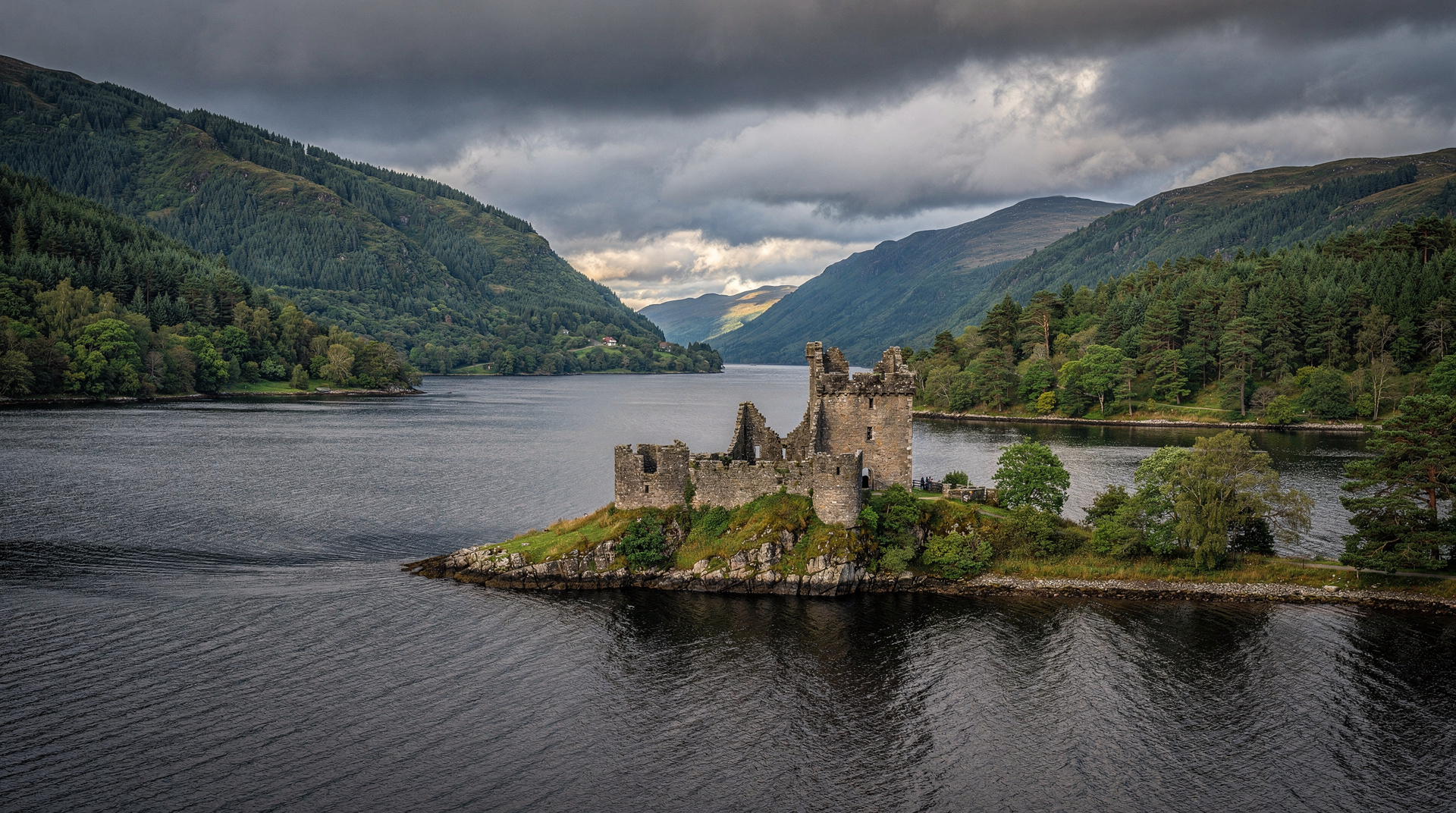
Glenfinnan is a small settlement at the head of Loch Shiel in the western Highlands, about 20 miles west of Fort William. It is not, by any conventional measure, a major destination: there is a visitor centre, a monument, a hotel, and the railway viaduct. Yet Glenfinnan receives a disproportionate amount of visitor attention — and justifiably, because the two things that happen here intersect history, landscape, and popular culture in a way that is genuinely rare.
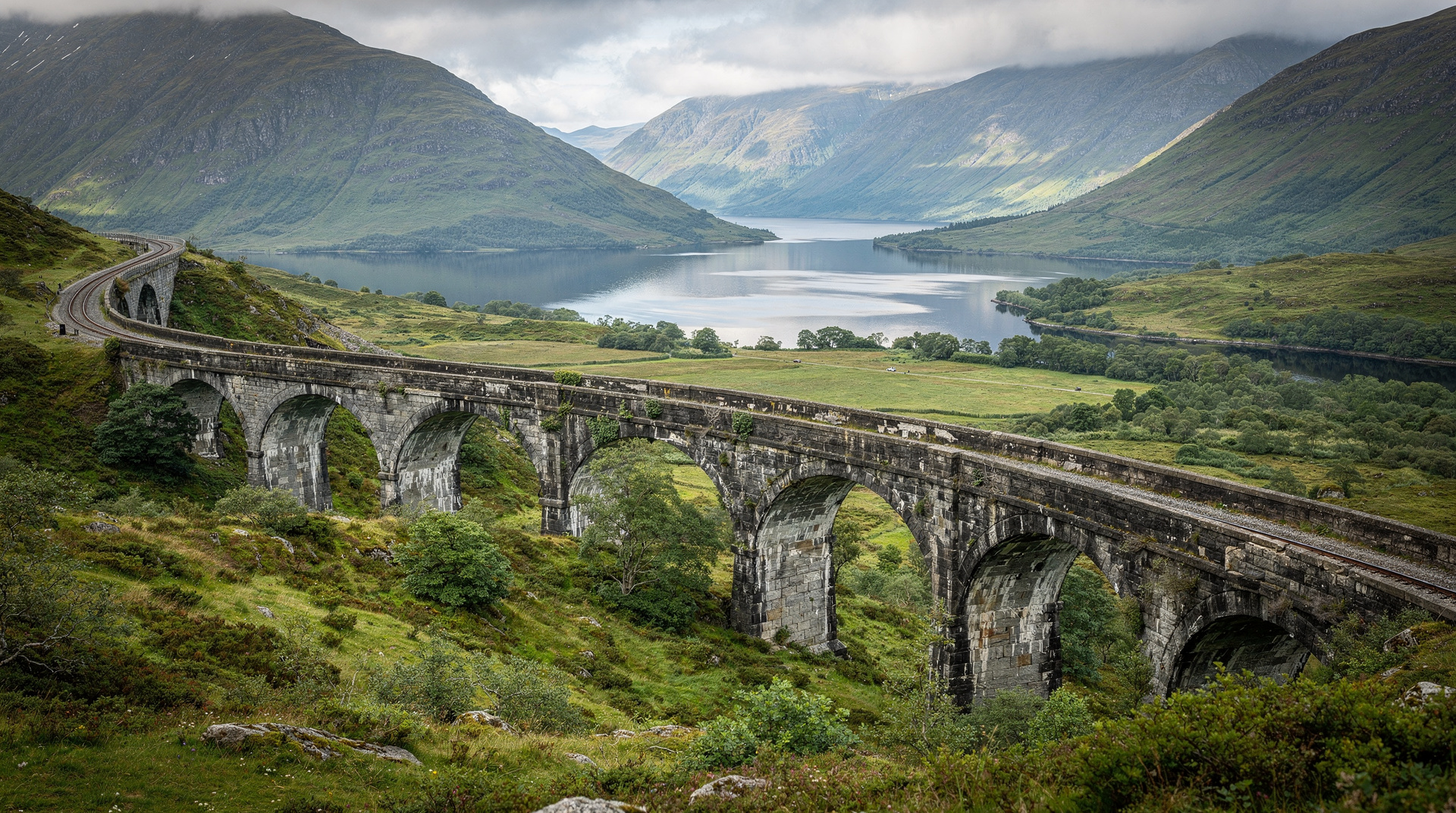
The first is the Glenfinnan Viaduct. Built in 1897–1901 as part of the West Highland Line — the railway that connected Fort William to Mallaig through some of the most remote terrain in the UK — it curves across a deep glen in 21 concrete spans, 30 metres above the valley floor. It was one of the first major uses of mass concrete in railway construction in Britain. Its fame beyond railway enthusiasts dates from 2001, when the Hogwarts Express scenes in the Harry Potter films were shot crossing it, giving the structure a second life as a pilgrimage site for fans who identify it with the Hogwarts Express.
The second is the Glenfinnan Monument, at the head of the loch. On 19 August 1745, Bonnie Prince Charlie (Prince Charles Edward Stuart) raised his standard here to begin the Jacobite Rising that would end at Culloden in 1746. The monument — a tower with a kilted Highlander on top — marks the starting point of the last major attempt to reclaim the British throne for the Stuart dynasty and the last pitched battle on British soil. The loch, the mountains, and the monument form one of the most atmospheric historical compositions in Scotland.
From Edinburgh, Glenfinnan is approximately four hours by car — too long for a casual day trip but completely achievable if you plan properly and depart early. This guide explains how.
Getting from Edinburgh to Glenfinnan
By car, the route runs northwest from Edinburgh on the A9 through Perthshire, then west on the A9/A84 through Stirling, Callander, and the Trossachs, then north through Crianlarich to Fort William (about 3.5 hours from Edinburgh), and finally west on the A830 to Glenfinnan (another 20 minutes). Alternatively, via Glasgow on the M8 and then north on the A82 through Loch Lomond and the western Highlands — approximately the same time.
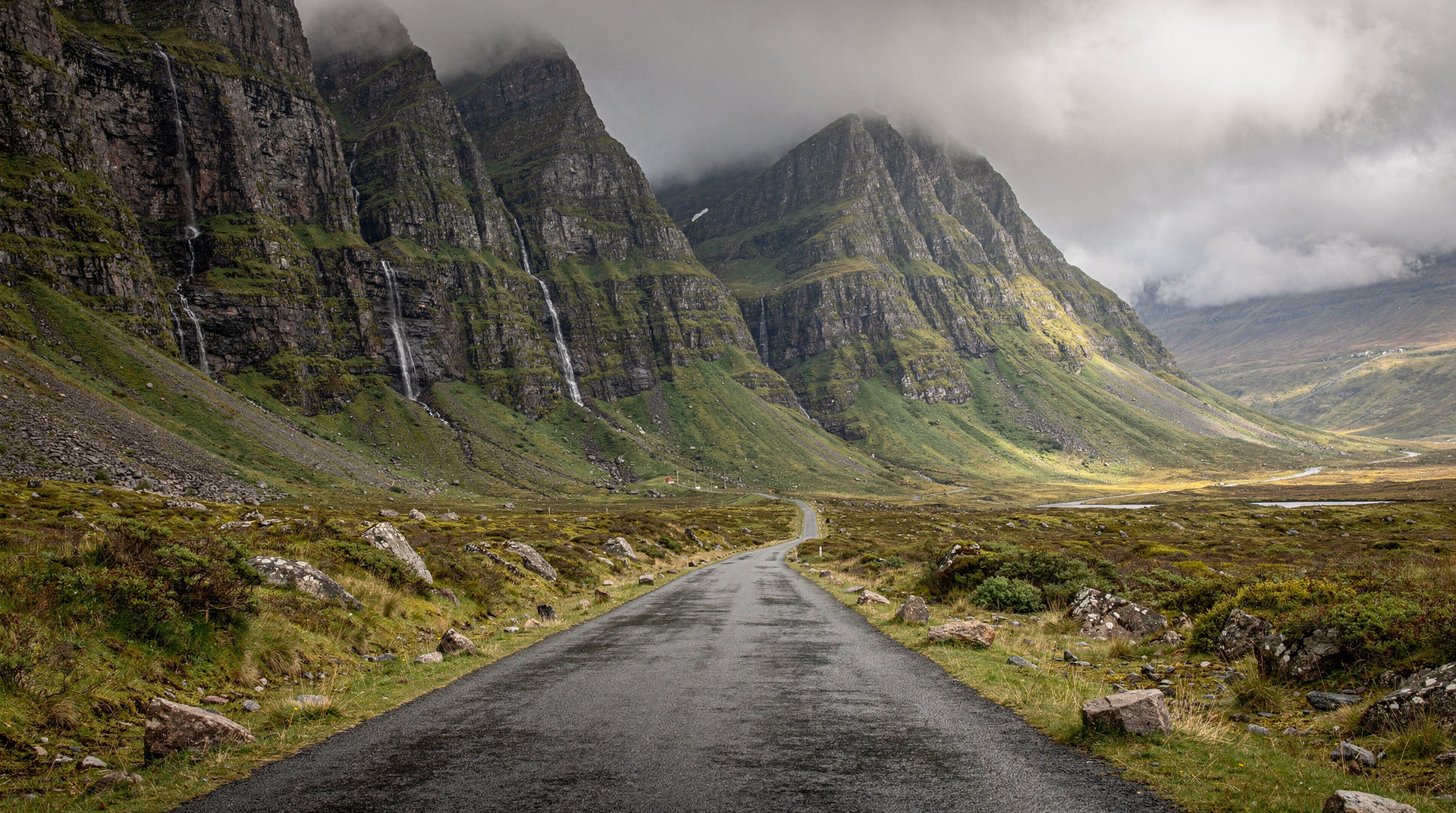
The drive itself is part of the experience: the A82 from Crianlarich to Fort William passes through Rannoch Moor and the Glencoe valley, which is among the finest Highland driving in Scotland.
There is no practical way to reach Glenfinnan by public transport as a day trip from Edinburgh. The West Highland Line train from Glasgow to Fort William (and then the extension to Mallaig, which passes through Glenfinnan) takes approximately 3.5 hours from Glasgow — feasible with an early start but requiring a full-day commitment to a single destination.
The more practical option for visitors without cars is a guided day tour from Edinburgh that combines Glenfinnan with Glencoe. The Glenfinnan Viaduct, Glencoe and Highlands tour covers both in a single structured day, departing Edinburgh around 7am-8am and returning by early evening. The Glenfinnan, Glencoe and Loch Shiel day tour emphasises the loch and the Jacobite history alongside the viaduct.
The viaduct: where to see it properly
The famous viewpoint for the Glenfinnan Viaduct is from the hill above and to the northeast — looking back along the curve of the viaduct with the mountains behind. This is the view in the Harry Potter films. Reaching it requires a short but steep walk of about 20–25 minutes up a path from the car park near the visitor centre. The path is clear and well-worn but muddy when wet; wear footwear with grip.
The walk is entirely worth it. At the top, the viewpoint is typically busy in summer — arrive early or stay late for fewer people in your photographs. The best light is in the morning.
You can also see the viaduct from the road below, but the full curve and the mountain backdrop are only apparent from the elevated viewpoint. The National Trust for Scotland has a small visitor centre at the road level with information about the viaduct’s construction.
The Jacobite steam train
The Jacobite is a heritage steam locomotive that runs the West Highland Line from Fort William to Mallaig (and back) (in 2026, the morning service runs from 1 June to 23 October and the afternoon service from mid-June to the end of September). The train crosses the Glenfinnan Viaduct on this route and is the attraction that made the viaduct famous to a generation of visitors. For fares, see the official West Coast Railways website; the full journey takes about two hours each way, passing through some of the most spectacular coastal Highland scenery in Scotland.
The honest assessment: if you are on a day trip from Edinburgh, building in a Jacobite train journey adds three to four hours to an already long day and is not compatible with also visiting the viewpoint and the monument thoroughly. You either visit the viaduct from above to watch the train cross — which requires timing your visit around the train schedule (the Jacobite crosses approximately at 10.30am on the westbound run from Fort William) — or you travel on the train from Fort William, which requires getting to Fort William first.
The best approach for a day trip visitor who wants to see the Jacobite: check the current timetable (WestHighlandLine.co.uk), aim to be at the viewpoint for the 10.30am westbound crossing, and allow that to be your train experience rather than purchasing a ticket. The sight and sound of a working steam locomotive crossing a 30-metre viaduct is genuinely thrilling even from outside the train.
For those specifically wanting to ride the Jacobite as the primary experience, a Fort William overnight stay makes more sense — see the Fort William guide for the full logistics.
The Glenfinnan Monument and Loch Shiel
The monument at the head of Loch Shiel, about half a mile from the viaduct viewpoint, marks the spot where Bonnie Prince Charlie raised his standard on 19 August 1745. The 18-metre tower is topped by a kilted Highlander rather than a statue of the Prince — the Highlanders who rallied here are the subject of the memorial, not Charlie himself. The NTS visitor centre explains the 1745 Rising in context: why it happened, what support it drew (and notably, what support it failed to draw), and why its failure at Culloden mattered for the future of the Highlands.
Entry to the monument interior costs approximately £5 (NTS members free). The tower can be climbed for views down Loch Shiel — worth doing, particularly on a clear day.
Loch Shiel itself, stretching 28 kilometres south from the monument, is one of the most austere and atmospheric lochs in the Highlands. Unlike Loch Ness (wide, hemmed in by forest) or Loch Lomond (wide, surrounded by varied landscape), Loch Shiel is narrow, deep, and framed by bare mountains on both sides in a way that feels genuinely remote. If you are self-driving, the road continues along the northern shore — the views from the first few miles south of the monument are extraordinary.
Because Loch Shiel is so quiet, it makes a good counterweight to the busier stops on a Highland day. If you have already seen the bigger lochs, the Loch Ness day trip guide and the Loch Lomond and Trossachs page help you judge how each one differs in mood, crowds, and facilities.
Combining Glenfinnan with Glencoe
The natural pairing for a Glenfinnan day trip is Glencoe: the two destinations are about 40 miles apart (45–60 minutes), and the A82/A830 route between them passes through some of the best Highland scenery in Scotland. A logical day sequence from Edinburgh:
- Depart Edinburgh 6.30am–7am
- 9.30am–11am: Glencoe — Three Sisters viewpoint, NTS visitor centre
- 11.30am–12.30pm: Continue via Fort William (possible lunch stop)
- 1pm–3pm: Glenfinnan viaduct viewpoint, monument, Loch Shiel
- 3pm–3.30pm: Depart Glenfinnan for Edinburgh
- Arrive Edinburgh: approximately 7.30pm
This is a full, demanding day. The Glenfinnan, Fort William and Glencoe day tour from Edinburgh covers a similar sequence with a guide, saving the navigation decisions. For visitors who want the western Highland corridor with a Highland-cattle stop built in, the Glenfinnan and Glencoe Highlands day tour is a good alternative to compare against.
Cost comparison: guided day tour vs self-drive
| Guided day tour | Self-drive (2 people sharing) | |
|---|---|---|
| Base cost | around £45–£70 per person | £0 fixed (car hire from ~£45/day if needed) |
| Fuel (round trip) | included | around £45–£55 given the distance |
| Parking (viaduct/monument) | usually included | around £3–£5 |
| Total for 2 people | roughly £90–£140 | roughly £95–£110 (car hire) or fuel-only if using your own car |
Given the four-hour drive each way, most visitors without a car find the guided tour better value once the time saved on navigation and the inclusion of Glencoe are factored in — self-drive only pulls ahead clearly if you already own or have a car for the trip anyway.
For the broader context of what lies along this west Highland corridor, see the Glencoe guide and the Fort William guide. For a multi-day itinerary that takes in all the western Highland destinations, see the Edinburgh and Highlands five-day itinerary.
Photographing the viaduct and the loch
The hillside viewpoint above the viaduct is the classic shot, but arriving for the 10.30am Jacobite crossing means sharing the spot with dozens of other photographers jostling for the same angle. For a quieter composition, the lower viewpoint near the road gives a different perspective — less dramatic but often uncrowded even in peak season. Early morning light (before 9am) on the viaduct itself, without the train, produces some of the cleanest images: soft light on the concrete spans and the mist frequently still sitting on Loch Shiel behind. The path up to the main viewpoint is steep in its final section — allow extra time if carrying camera equipment, and note that the surface is often muddy.
For those wanting the loch rather than the viaduct as the subject, the road along the northern shore south of the monument gives several pull-offs with unobstructed views down Loch Shiel — quieter than the viaduct area and arguably more atmospheric, particularly in overcast conditions that suit the loch’s austere character.
Accessibility and visiting with children
The monument and the NTS visitor centre at road level are both accessible without any significant walking, and the visitor centre has accessible toilets. The main viaduct viewpoint, however, requires a 20–25 minute uphill walk on a rough, sometimes muddy path — not suitable for wheelchairs and challenging for very young children or anyone with limited mobility. Families with children under about seven should expect to view the viaduct from road level rather than attempting the hillside path, particularly if visiting after rain. The Glenfinnan Monument tower itself involves a narrow spiral stair and is not accessible for those with mobility restrictions, though the ground floor exhibition is.
Practical information for 2026
Glenfinnan rewards preparation more than most Highland stops, because there is little in the way of shops or services once you arrive. The notes below are the ones that matter on the day. If you are still deciding whether the western Highlands are the right day out, the best day trips from Edinburgh guide compares the alternatives, and the Edinburgh to the Highlands guide explains how the longer routes fit together.
The Jacobite Rising of 1745: what happened and why it matters
The events that started at Glenfinnan in August 1745 are not just Scottish history — they are the last significant attempt to undo the constitutional settlement of 1688 that shapes British governance today. Bonnie Prince Charlie (Charles Edward Stuart) was the grandson of James VII of Scotland (James II of England), who was deposed in the Glorious Revolution. The Stuarts had been in exile in France and Rome since 1688, and the 1745 Rising was the third major Jacobite attempt (after 1689 and 1715) to reclaim the throne.
What made the 1745 Rising particularly dramatic was how far it came to succeeding. The Jacobite army marched south from Glenfinnan, took Edinburgh, won the Battle of Prestonpans (the only major engagement in Scotland), and reached as far south as Derby — 130 miles from London — before turning back. The British government was genuinely alarmed. The king (George II) was reportedly ready to flee to Hanover. The retreat from Derby, forced by the Highland chiefs rather than by military defeat, proved fatal to the Rising’s momentum.
The decisive defeat came at Culloden in April 1746, where the Jacobite army — exhausted, underfed, and facing artillery — was destroyed in under an hour. Prince Charles spent five months as a fugitive in the Highlands and islands before escaping to France, never to return. The British government’s pacification of the Highlands that followed — systematic, harsh, and deliberate — was designed to ensure no similar Rising could happen again.
Glenfinnan, standing at the head of Loch Shiel with the mountains behind, is the place where this story began. The combination of the monument, the loch, and the remote Highland setting gives it a quality of historical atmosphere that few places in Scotland can match.
If the story catches your interest, it continues in Edinburgh itself. The Jacobites and Edinburgh guide traces how the Rising played out in the capital, and a visit to Edinburgh Castle or the Palace of Holyroodhouse puts the Stuart dynasty into a very different setting from the empty glen where the standard was raised. Visitors who enjoy the screen connection can also pair this trip with the Outlander locations near Edinburgh, since the Jacobite period is the backdrop to both.
The wider West Highland Line route
The Glenfinnan Viaduct is one of many extraordinary structures on the West Highland Line, which runs from Glasgow to Mallaig via Fort William — completed in stages between 1894 and 1901. The whole route is considered one of the great scenic railways in Britain, with the section from Fort William to Mallaig (the Mallaig Extension) particularly dramatic: it crosses the Glenfinnan Viaduct, follows the coast of Loch Eilt, crosses tidal flats at Loch nan Uamh (where Bonnie Prince Charlie landed in 1745 and departed in 1746), and reaches Mallaig on the Sound of Sleat with views to Skye.
For visitors wanting to explore more of this line beyond a day trip, the Jacobite steam train experience from Fort William to Mallaig is the premium option. The Caledonian Sleeper from London Euston to Fort William overnight is another approach — arriving rested at Fort William for a full day in the western Highlands. See the multi-day Highland tours guide for the full range of options.
Timing around the Jacobite: The westbound Jacobite departs Fort William at approximately 10.15am, reaching Glenfinnan around 10.30am–10.40am. The eastbound return passes Glenfinnan in the afternoon (approximately 3pm–3.30pm). Exact times change seasonally — check current schedule before planning.
Parking: The Glenfinnan visitor centre car park charges approximately £3. Arrive early in summer — by 10am it can be full.
Weather: The western Highlands receive very high rainfall. Pack waterproofs regardless of the forecast.
Mobile coverage: Limited or absent in much of the Glenfinnan area. Download maps and information offline.
UK ETA: See the UK ETA guide for entry requirements. Currency: £ sterling; see the Edinburgh currency guide.
Frequently asked questions about Glenfinnan
How long does it take to drive from Edinburgh to Glenfinnan?
Approximately 4 hours in normal traffic, covering about 165 miles via the A9, A82 through Glencoe, and A830 west from Fort William. This is a long day-trip drive; plan for an early departure (no later than 7am) to allow meaningful time at the destination.
Is the Glenfinnan Viaduct from Harry Potter?
Yes. The viaduct crosses the West Highland Line railway and appeared prominently in the Harry Potter films as the route the Hogwarts Express takes from London to Hogwarts. The steam locomotive used in the films is based on the Jacobite, which still runs this route seasonally. The viewpoint from the hillside above the viaduct is the filming angle used in the movies.
What is the Glenfinnan Monument about?
The monument marks the spot where Prince Charles Edward Stuart (Bonnie Prince Charlie) raised the Jacobite standard on 19 August 1745, beginning the Rising that aimed to reclaim the British throne for the Stuart dynasty. The Rising ended in defeat at the Battle of Culloden in April 1746. The monument’s tower is topped by a Highland soldier, commemorating the Highlanders who rallied here, and can be climbed for views over Loch Shiel.
Can I ride the Jacobite steam train as part of a day trip from Edinburgh?
It is possible but logistically tight. A self-drive from Edinburgh, arriving at Fort William by around 9am, allows you to catch the morning westbound Jacobite to Mallaig (passing Glenfinnan en route) and return. The full round trip on the train takes about four hours. Combined with the drive to and from Edinburgh, this makes for a very long day. Most visitors on day tours from Edinburgh view the viaduct from the hillside viewpoint rather than riding the train.
What is Loch Shiel like compared to Loch Ness and Loch Lomond?
Loch Shiel is narrower and more dramatically enclosed by mountains than either Loch Ness or Loch Lomond. It is less visited than both and has a more isolated, austere quality — there are no significant tourist facilities along its shores, and the road along the northern bank becomes remote quickly. For landscape photography or a sense of genuine Highland remoteness, Loch Shiel is excellent. For visitor infrastructure (boat trips, cafes, walking centres), Loch Lomond and Loch Ness are better equipped.
Is Glenfinnan worth the long drive from Edinburgh?
If you are combining it with Glencoe — which most structured day tours do — yes, absolutely. The combination gives you the full western Highland corridor: dramatic valley scenery at Glencoe, the historic town of Fort William, and the layered history and landscape of Glenfinnan. As a standalone destination, the four-hour drive from Edinburgh makes for a very long day for what is essentially two to three hours on the ground. A multi-day Highland trip making Glenfinnan a stop rather than the sole destination is the more rewarding approach.
Is Glenfinnan accessible for wheelchair users or young children?
The monument and NTS visitor centre at road level are accessible without significant walking. The classic hillside viewpoint above the viaduct requires a steep 20–25 minute uphill walk on an often-muddy path and is not suitable for wheelchairs. Families with young children should plan to view the viaduct from road level rather than the hillside path, particularly in wet conditions.
How much does a Glenfinnan and Glencoe day trip cost?
A guided coach tour from Edinburgh typically costs £45–£70 per person, around £90–£140 for two people. Self-driving costs a similar amount once car hire and fuel for the roughly 330-mile round trip are factored in, and only becomes clearly cheaper if you already have your own car. See the cost comparison table earlier in this guide for the full breakdown.
Top experiences
Bookable activities with verified prices and instant confirmation on GetYourGuide.