Rosslyn Chapel: visitor guide and what the carvings actually mean
Edinburgh: Rosslyn Chapel and the Scottish Borders small-group tour
Is Rosslyn Chapel worth visiting and how do I get there?
Yes — the fifteenth-century stone carvings are extraordinary and unlike anything else in Scotland. It is 7 miles south of Edinburgh, about 30 minutes by bus or 20 minutes by car. Allow 90 minutes for a thorough visit. Pre-booking is strongly recommended in summer.
A medieval building unlike anything else in Scotland
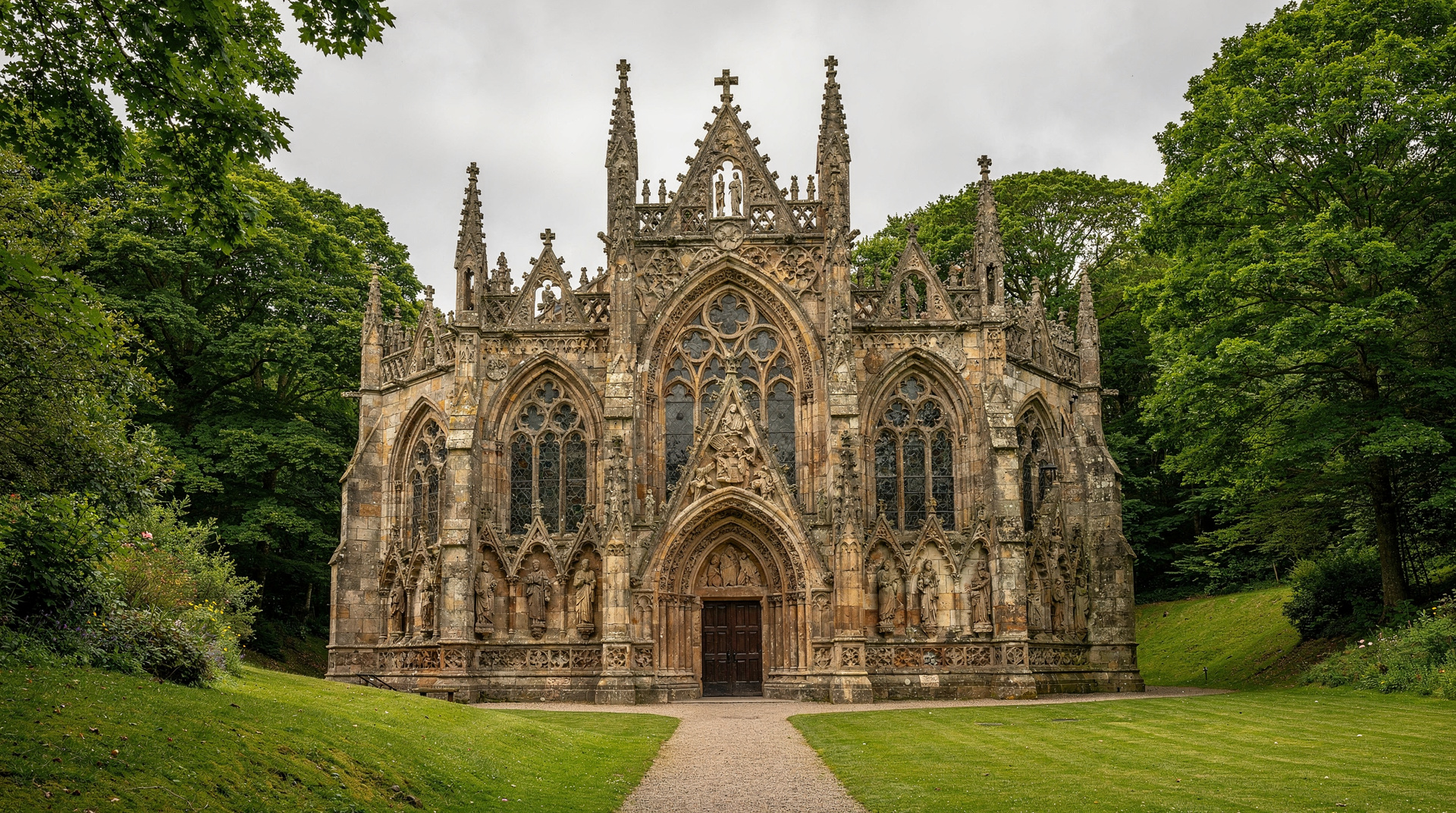
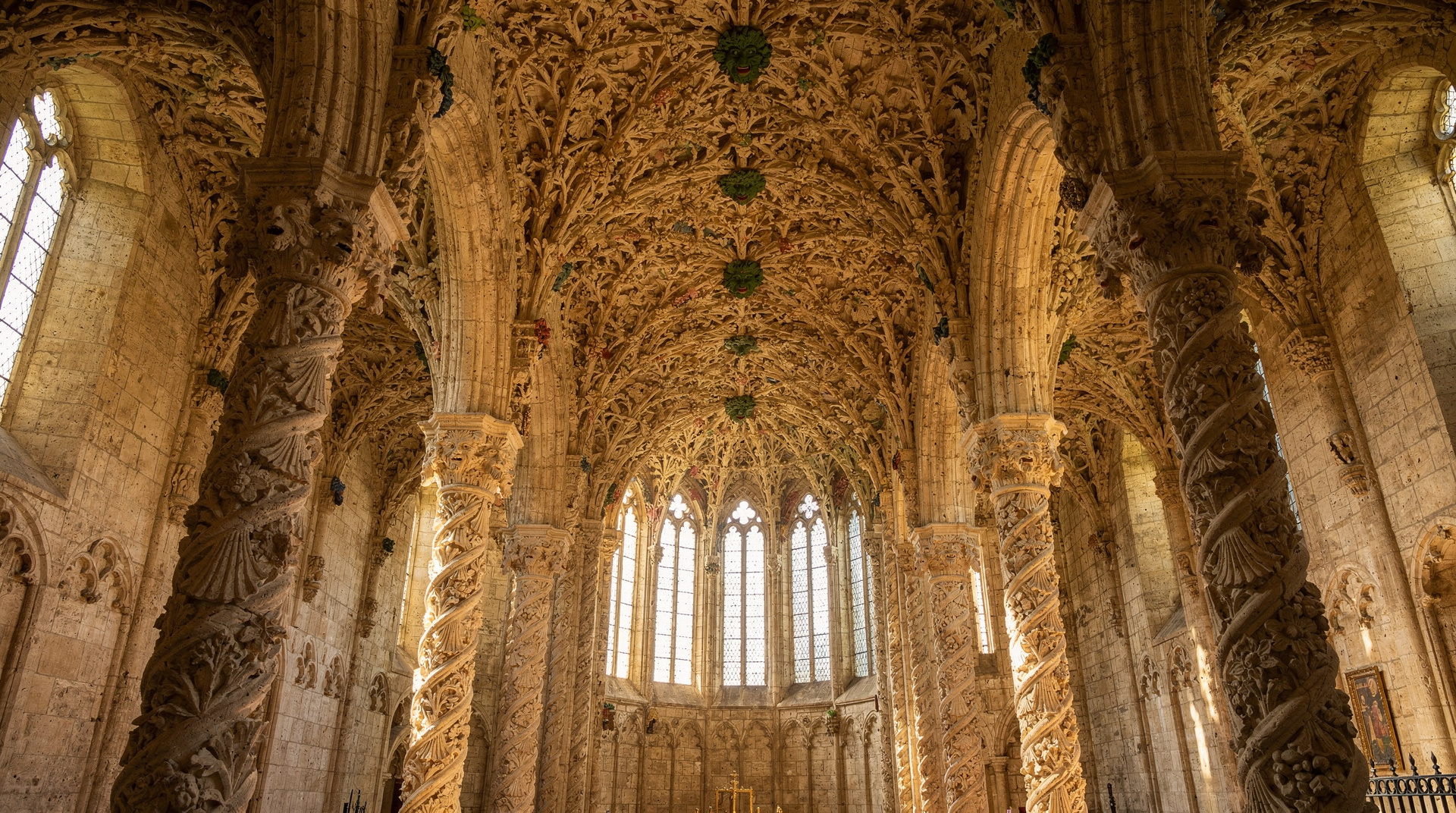
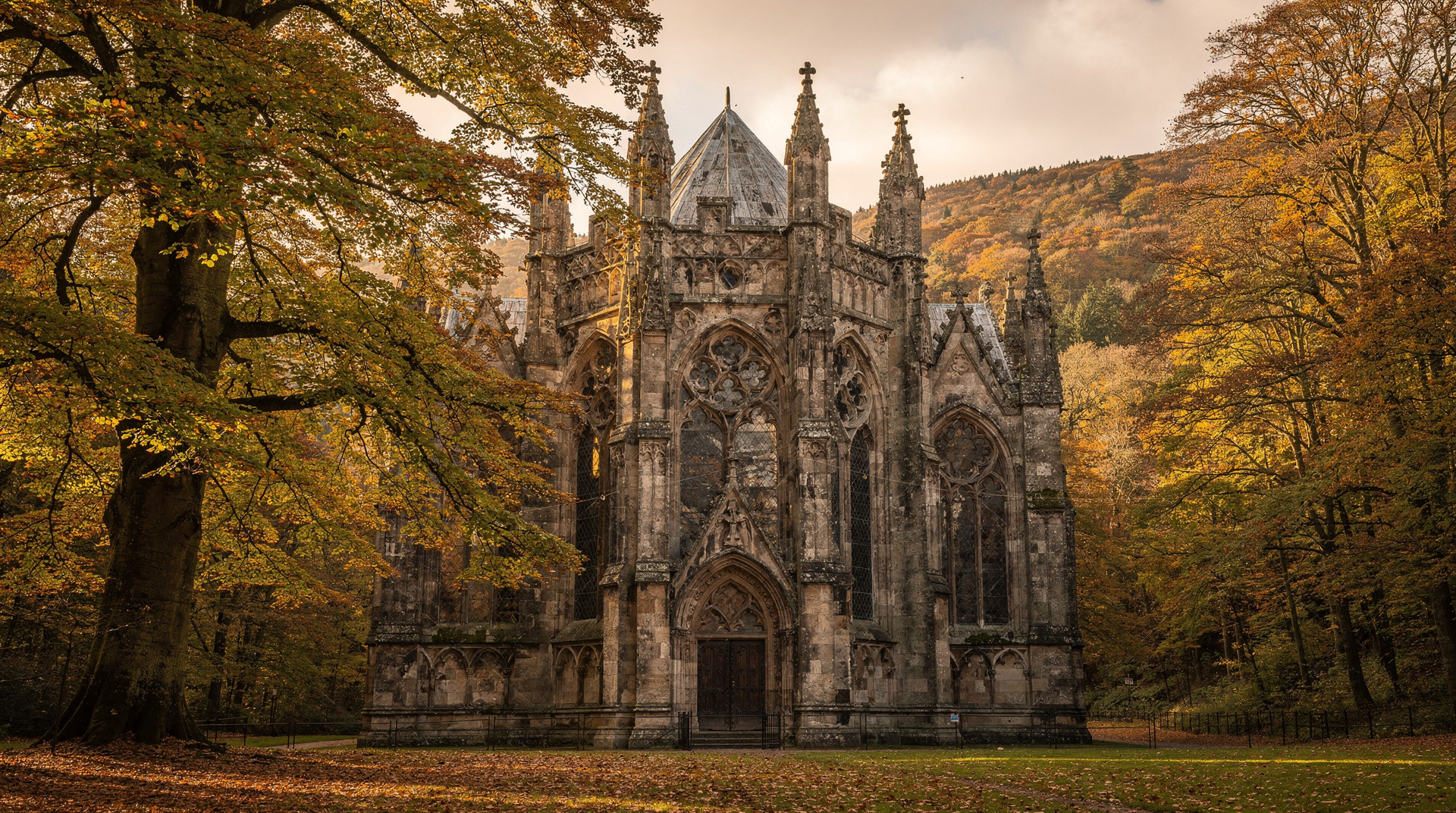
Rosslyn Chapel — formally the Collegiate Church of St Matthew — was built between 1446 and 1484 by William Sinclair, Earl of Orkney. It was never completed; the intended nave was begun but the walls were never raised, and what exists today is only the choir and retro-choir of what was planned as a much larger collegiate church. What does exist is one of the most densely decorated medieval buildings in the world: every surface of the interior is carved in stone, with figures, foliage, geometric patterns, and narrative scenes covering the pillars, arches, and ceilings in a sculptural programme of extraordinary complexity.
The chapel became internationally famous after Dan Brown’s The Da Vinci Code (2003), which ends with a scene set here and attributes various secret codes and Templar connections to the carvings. The book’s claims are historically unfounded, but the explosion of interest brought hundreds of thousands of additional visitors and funded a major restoration programme completed in 2011. Whatever you think of the Da Vinci Code theories, the result is that the chapel is now in better condition than it has been for centuries.
| Where | Roslin village, about 7 miles south of Edinburgh |
| Cost | £12 adults, £10 concessions, under-17s free |
| Time needed | 60-90 minutes |
| Getting there | Lothian Buses 37, or around 20 minutes by car |
| Best time | Weekday mornings, outside summer school holidays |
Getting to Rosslyn Chapel
Rosslyn Chapel is in the village of Roslin, about 7 miles south of Edinburgh city centre. The easiest way to get there without a car is the Lothian Buses service 37 from the Princes Street / South Bridge area, which runs to Roslin village. The journey takes about 30-40 minutes and costs around £2 each way. A taxi from the centre of Edinburgh costs approximately £20 each way.
A guided day tour is the most popular option for visitors combining Rosslyn with other Borders or Lothian attractions. The Rosslyn Chapel and Scottish Borders small-group tour covers the chapel plus the Scottish Borders — a combination that works geographically since the Borders lie south of Roslin.
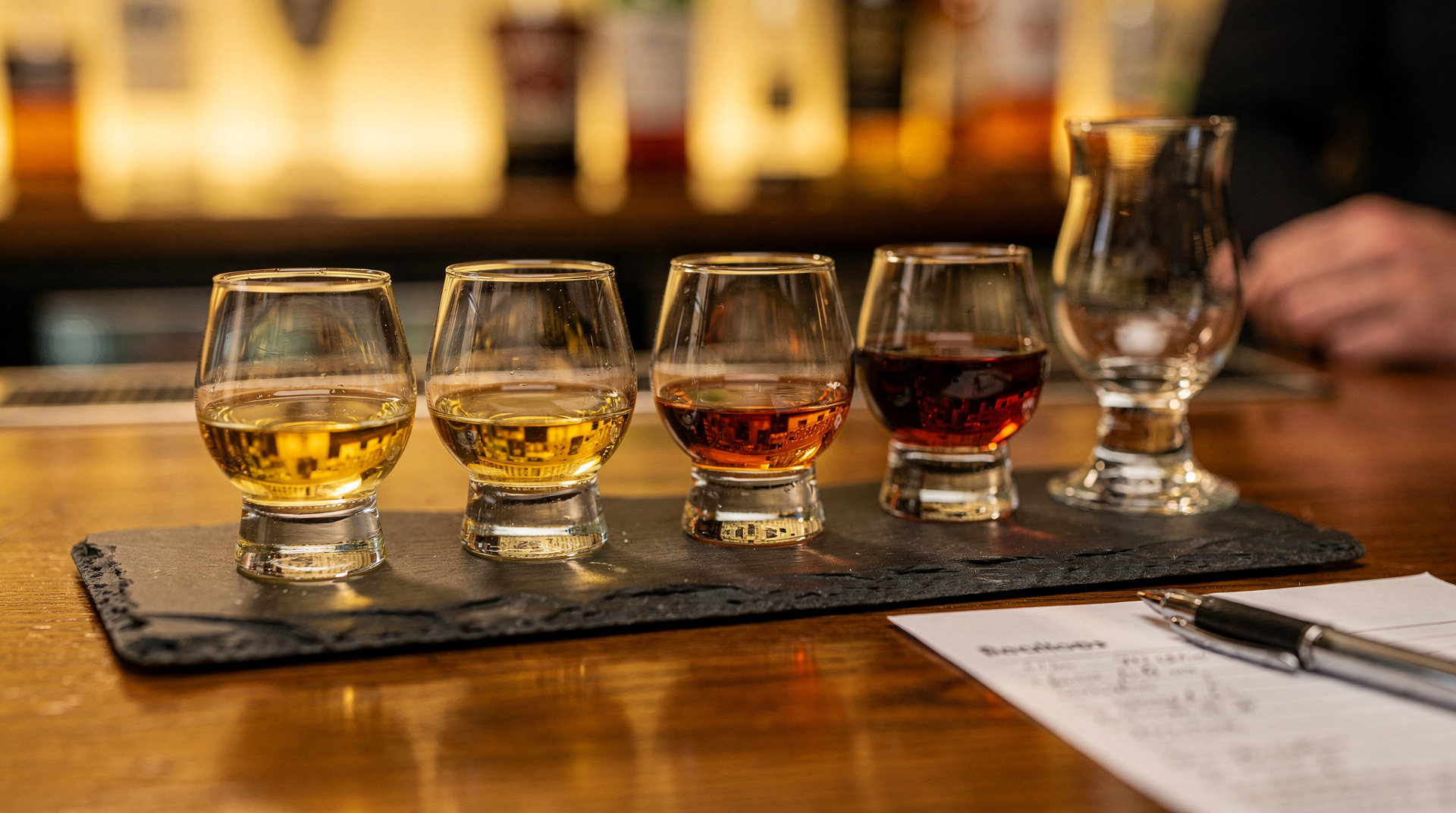
The Rosslyn Chapel, Borders and Glenkinchie distillery tour adds Scotland’s most southerly working whisky distillery to the itinerary. For visitors who come specifically because of the Da Vinci Code, the Codebreakers’ Choice tour addresses the chapel’s cryptographic reputation directly.
If you want only the entry ticket without a guided tour, an advance Rosslyn Chapel entry ticket is available to book online. This skips any queue at the door and is recommended on busy summer weekends.
What to look for inside the chapel
The Apprentice Pillar
The most famous single feature of the interior is the Apprentice Pillar — a decorated column in the southeast corner whose carved stone spirals are a technical and artistic achievement that seems almost impossible in stone. According to tradition (with no reliable historical source), the master mason left for Rome to study the design and on his return found that his apprentice had completed the pillar without instructions. The enraged master killed the apprentice with a mallet; the apprentice’s face is said to be carved above the pillar in the roof.
The story is almost certainly invented — similar tales are told about other medieval buildings — but the pillar is extraordinary regardless of its origin. The four dragons at the base from which the spirals emerge, and the foliage that wraps around the column in continuous bands, repay close examination.
The Green Men and the foliage carvings
Over a hundred carved figures known as Green Men appear throughout the chapel — faces with foliage emerging from their mouths, eyes, nostrils, or ears. The Green Man is a widespread motif in medieval churches across Europe, with no agreed interpretation but possible connections to nature symbolism, Celtic mythology, or simply the virtuosity of individual carvers.
The quality of the foliage carving throughout the chapel is remarkable. Among the plants depicted are maize and aloe plants — species native to the Americas and unknown in Europe in 1446, which has prompted speculation about pre-Columbian contact. More sober historians suggest the carvings represent European plants stylised beyond recognition, or that the earl’s ship-building connections gave him access to contact with explorers.
The roof carvings
The nave roof is divided into five bays, each filled with different patterns — stars, lilies, roses, daisies, and crosses. The sheer density of the carving, which covers every available surface, is easier to appreciate if you bring something to sit on while looking up — the chapel provides foam kneelers for this purpose.
The crypt and the Sinclair connection
The lower level of the chapel, accessed by stairs from the north side, contains a crypt that is thought to be the burial site of several generations of the Sinclair family, including possibly William Sinclair himself. The crypt is accessed during standard visiting hours.
Best time to visit Rosslyn Chapel
The chapel is small — a single choir and retro-choir, not a cathedral-scale building — so it fills up quickly once a coach party or two arrives. Weekday mornings, shortly after the 9am opening, are the quietest window, giving you space to actually look up at the roof carvings without a crowd shuffling past. Weekends year-round and any day during the Edinburgh Festival Fringe in August bring the heaviest footfall, partly from day-tripping Fringe visitors squeezing in a half-day out.
Winter afternoons are noticeably calmer than summer, though the shorter daylight hours mean the interior lighting (rather than sun through the windows) does more of the work; either way, photography inside does not depend on natural light. If your Edinburgh trip allows flexibility, pairing a weekday Rosslyn visit with a quieter stretch of your itinerary — see the Edinburgh weather guide for what to expect month by month — makes for a far more contemplative visit than a rushed weekend one.
Rosslyn Chapel compared with Edinburgh’s castles
Visitors often ask how a half-hour drive to a single medieval chapel compares with a morning at Edinburgh Castle or a full day trip to Stirling Castle. The comparison is not really fair — Rosslyn is a single, densely carved room rather than a sprawling fortress complex — but it is a useful way to think about pacing a trip.
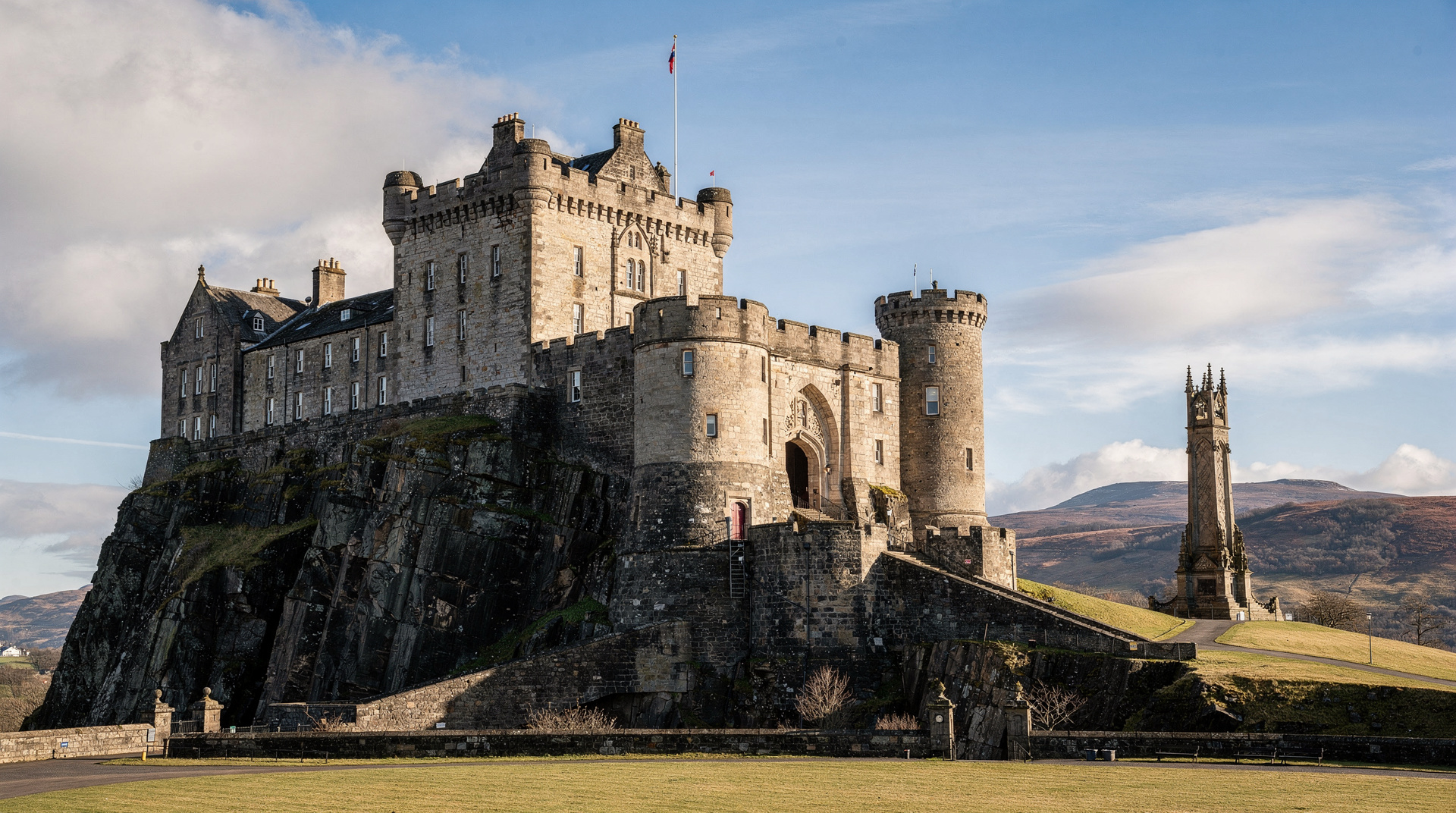
Edinburgh Castle delivers scale, views over the city, and centuries of royal and military history in one visit; Stirling Castle offers a similar scale outside the city with fewer crowds; Rosslyn offers depth rather than breadth, rewarding visitors who like to slow down and study detail rather than cover ground. Many visitors do both a castle and Rosslyn in the same trip, since they satisfy different appetites rather than competing for the same time slot. If your interest runs more broadly to Scotland’s fortified history, the Scottish castles near Edinburgh guide rounds up the other options within day-trip range.
The wider Sinclair and Lothian history
The Sinclair (or St Clair) family who built the chapel were one of medieval Scotland’s most powerful noble houses, holding the Earldom of Orkney and estates across the Lothians. Their nearby seat, Rosslyn Castle, sits just below the chapel on the edge of Roslin Glen and is now partly ruined, though a restored wing operates as holiday accommodation.
The family’s wealth and international connections — through trade, shipping and their Norse-derived Orkney title — help explain how a relatively small Lothian village came to host a building of such ambition. For visitors keen on the broader sweep of Scotland’s medieval and early-modern history, the Old Town history guide covers how Edinburgh itself developed alongside families like the Sinclairs.
The Da Vinci Code claims: what is true and what is not
Dan Brown’s novel and the 2006 film starring Tom Hanks portrayed Rosslyn Chapel as a repository for the Holy Grail, Templar secrets, and encoded cryptographic messages. None of this is supported by historical evidence.
The Sinclair family did have connections to the Knights Templar, but the Templars were dissolved across Europe in 1312 — well before the chapel was built. There are no credible records of any Templar treasure being concealed here. The claim that the carvings encode specific messages has been promoted by various authors but has not been accepted by any mainstream art historians.
What is true is that the carvings are densely layered with symbolism — biblical narrative, classical mythology, and possibly more esoteric content — and that the full intended meaning of the sculptural programme is not understood. The chapel was built for a Collegiate Church that would have required a highly educated clergy, and some of the imagery may reflect theological debates and interests specific to that context. But this is different from secret codes or hidden treasure.
The chapel’s own visitor materials address the Da Vinci Code directly and honestly, and the guides are knowledgeable about the historical reality versus the fictional overlay.
Going deeper before or after your visit
If the Da Vinci Code is what brought you here, the dedicated Da Vinci Code and Rosslyn guide goes through the novel’s claims one by one and sets them against what the evidence supports. It is a good read on the bus out, because the carvings make far more sense once you know which stories are folklore and which are documented.
The village and its surroundings have their own page in the Rosslyn Chapel destination guide, which is useful if you want to plan the glen walk and a meal around your visit. Anyone drawn to the hills on this side of the city can pair the chapel with the Pentland Hills guide, and whisky fans will find the nearby options laid out in the distilleries near Edinburgh guide.
Rosslyn also slots neatly into a longer stay. If you are still deciding how to spread your sights, the two-day Edinburgh itinerary and the three-day Edinburgh itinerary show where a half-day outside the centre fits without crowding out the Old Town.
Practical information
Entry prices (2026): Adults £12; concessions £10; children under 17 free. Tickets can be pre-booked online and this is strongly recommended for summer weekends.
Opening times: 9am to 5pm Monday to Saturday, noon to 5pm Sunday, in 90-minute timeslots. The chapel is closed on Christmas Eve, Christmas Day and New Year’s Day; check the official website before visiting.
Photography: Photography is permitted inside the chapel without flash. The lighting is generally adequate for photography; a wide-angle lens helps with the interior.
Duration: Allow 60-90 minutes for a thorough visit including the introductory video shown in the visitor centre.
After Rosslyn: the Pentland Hills and the Borders
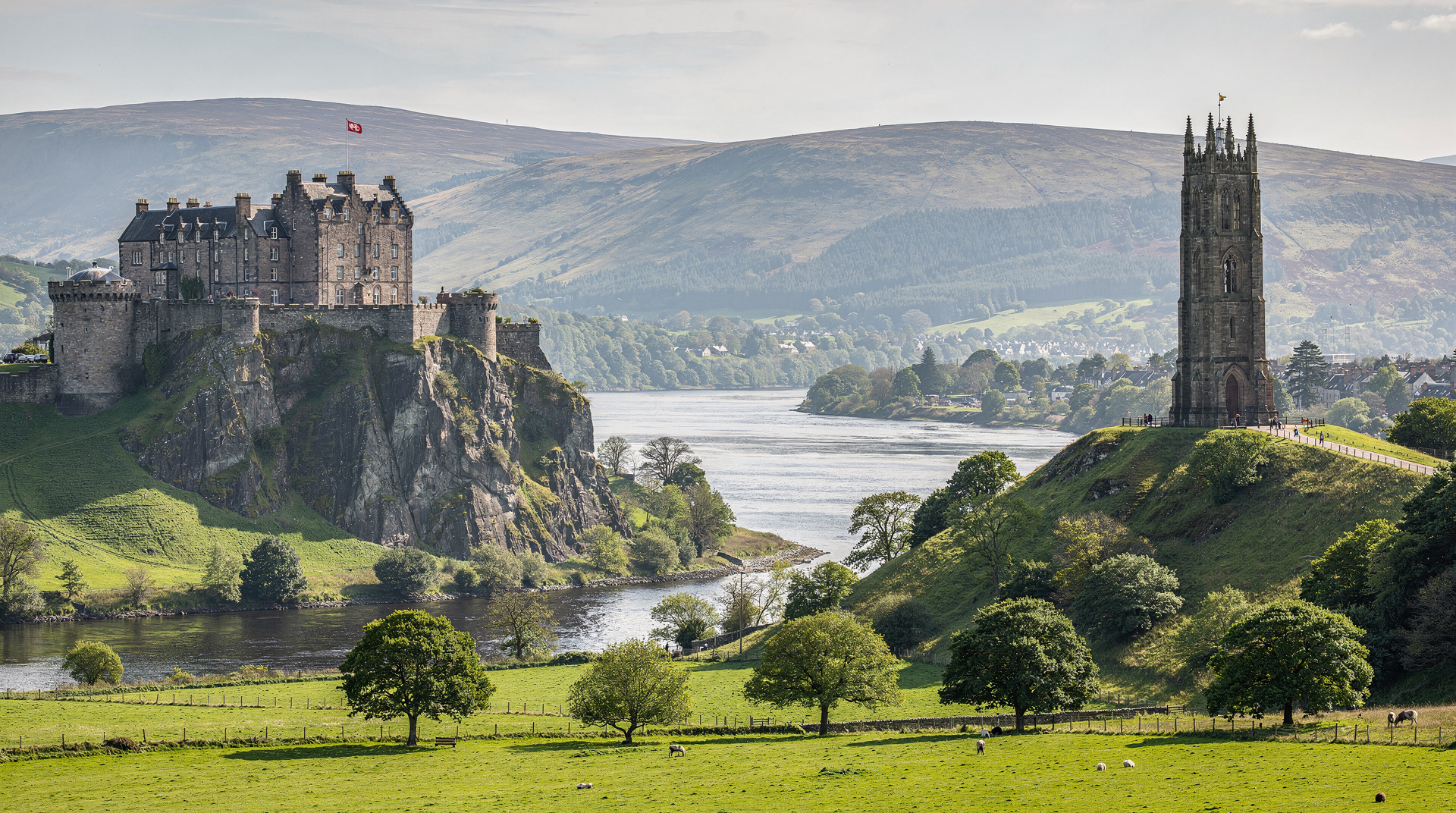
Roslin Glen, immediately below the chapel, is a short woodland walk with a ruined castle on a promontory above the river. The walk from the chapel to the glen and back takes about 45 minutes and is free. It gives the visit a more complete character and the setting — a medieval chapel on a cliff above a wooded valley — is genuinely picturesque.
The Scottish Borders lie twenty minutes further south by car or bus, and a combined Rosslyn-Borders day makes good geographic sense. The Scottish Borders guide covers the main sights. The Rosslyn Chapel day trip guide provides a full practical itinerary.
Frequently asked questions about Rosslyn Chapel
How far is Rosslyn Chapel from Edinburgh?
About 7 miles south of the city centre. By public bus (Lothian Buses 37), the journey takes 30-40 minutes. By car, about 20 minutes. By guided tour from Edinburgh, most operators include Rosslyn as part of a full-day or half-day itinerary.
Do I need to book in advance?
Pre-booking is strongly recommended on summer weekends and during school holidays. At other times, turn-up tickets are usually available. The advance entry ticket guarantees admission and skips any door queue.
Is the Da Vinci Code ending filmed here?
Yes. Several scenes in the 2006 film adaptation of The Da Vinci Code were filmed at Rosslyn Chapel, though some interior scenes used a studio set. The chapel’s connection to the film has made it internationally recognisable.
What is the best way to combine Rosslyn with other attractions?
Geographically, Rosslyn combines well with the Scottish Borders (heading further south) or with a loop back through the Pentland Hills. From Edinburgh, a guided tour that includes Rosslyn and the Borders is the most efficient option. If you also want a distillery, the Glenkinchie tour adds Scotland’s closest Scotch whisky distillery to the same itinerary.
Can I visit Rosslyn Chapel without a car?
Yes. Lothian Buses service 37 runs from central Edinburgh to Roslin village in about 30-40 minutes for around £2 each way, or a guided day tour handles transport for you along with commentary on the carvings and history.
Is Rosslyn Chapel worth it compared to Edinburgh Castle?
They are not really substitutes for each other. Edinburgh Castle is a large fortress with centuries of royal history and city views; Rosslyn is one intensely decorated small building best appreciated slowly. Visitors with time for both usually find them complementary rather than competing priorities.
Top experiences
Bookable activities with verified prices and instant confirmation on GetYourGuide.
Edinburgh: Rosslyn Chapel and the Scottish Borders small-group tour
Edinburgh: Rosslyn Chapel entry ticket
Edinburgh: Rosslyn Chapel, Borders & Glenkinchie distillery
Edinburgh: Codebreakers' Choice — Rosslyn Chapel & Pentlands