Surviving the Fringe: an honest first-timer's guide
Three weeks, 3,000 shows, and no obvious way in
The Edinburgh Festival Fringe runs for three weeks in August and is, by most measures, the world’s largest arts festival. In 2019 there were over 3,800 shows across 323 venues, covering comedy, theatre, dance, circus, cabaret, and things that resist classification. The programme guide is around 400 pages long. Almost every experience of the Fringe involves making peace with the fact that you will miss 99.9% of it, and that this is fine.
First-timers arrive expecting a festival they can “do.” What they discover is a city-wide event with no single centre, no obvious hierarchy, and a democratic unpredictability that makes it both frustrating and exhilarating.
This is the guide we wish we’d had for our first Fringe.
| When | Three weeks in August (roughly late July-August) |
| Cost | Free street shows to £5-50 per ticketed show |
| Book accommodation by | June at the latest — ideally March |
| Where | Old Town venues, plus Pleasance, Assembly, Gilded Balloon |
| Best strategy | 2 days Fringe, 2 days sightseeing if combining a trip |
What the Fringe actually is
The Fringe started in 1947 when eight groups turned up uninvited to perform alongside the International Festival (the curated, prestige programme happening at the same time). The principle was that any act could perform as long as they could find a venue — and that principle has never changed. Unlike the International Festival, there is no selection process. The result is an enormous range of quality from world-class to genuinely unwatchable, which is precisely the point.
The major international names — comedians filming TV specials, headline theatre companies — represent perhaps 2% of the programme. The rest is amateurs, students, aspiring professionals, genuinely experimental work, and people doing something they have wanted to do for years in front of whoever turns up.
How to find shows worth seeing
The Fringe App is essential. Download it before you arrive and use the calendar and filtering tools to build a shortlist. Add far more shows than you will actually see; you will drop some and add others as you get recommendations.
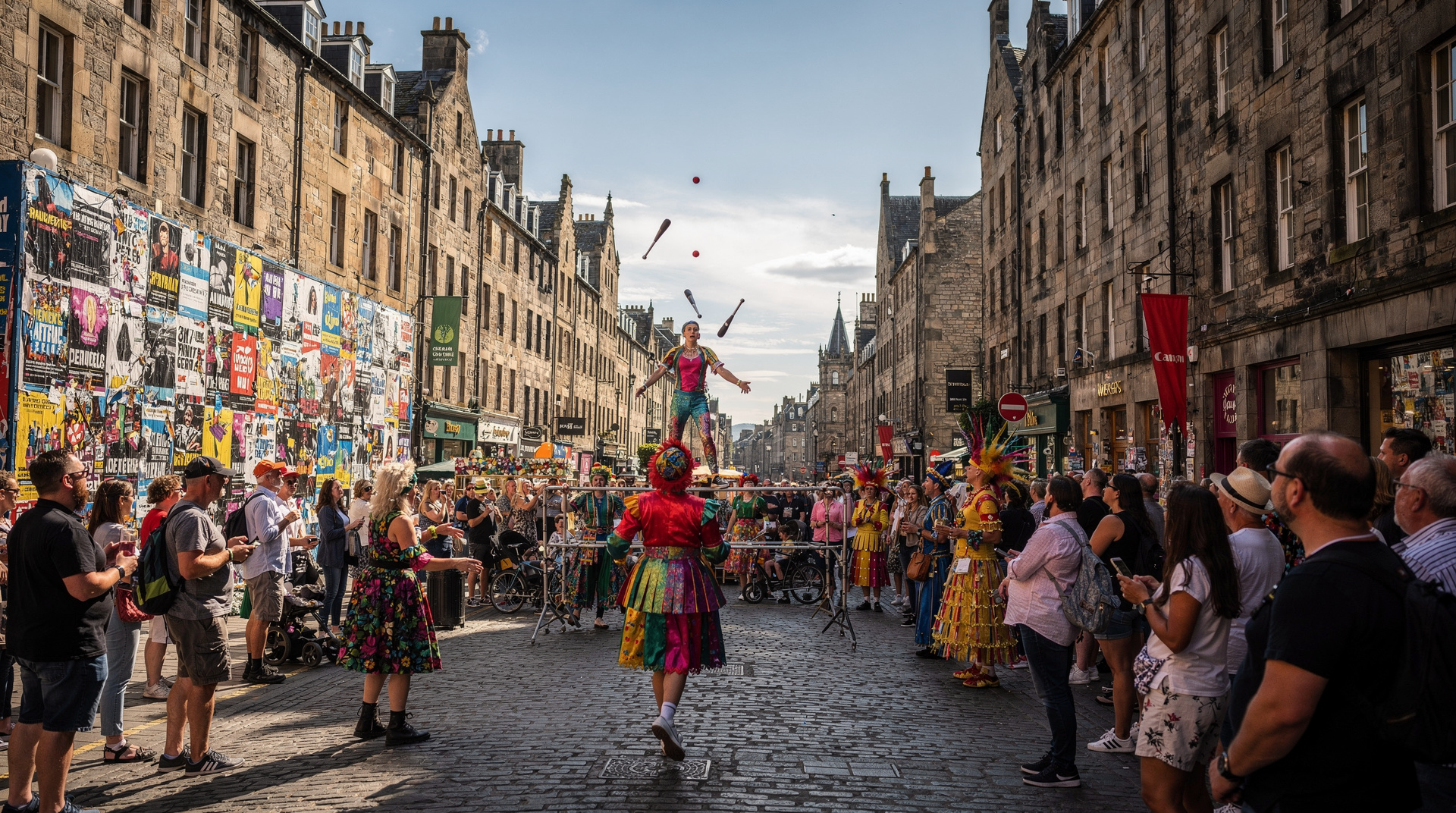
Free shows on the High Street run from roughly 10am to 10pm throughout August — buskers, tasters, and established performers doing shortened outdoor versions of their shows. These are a legitimate entertainment in their own right and often the best way to discover acts you then pay to see in full.
Word of mouth is the most reliable recommendation system. Ask at your accommodation, at the pub, in the queue at the café. People who have just seen something good are usually happy to share it. This informal network drives Fringe audiences more effectively than reviews.
Reviewers: The Scotsman, The Guardian, Chortle (for comedy), and various dedicated Fringe publications give three- and four-star shows during the run. A five-star review in the first week can sell out a show for the rest of the run by the second week. Go early for shows you specifically want to see.
The comedy circuit
For first-timers, comedy is often the entry point to the Fringe — the shows are short (usually 60 minutes), the venues are usually small and atmospheric (converted church halls, basement bars, pub back rooms), and the feedback loop between performer and audience is immediate and clear.
The best comedy venues include the Pleasance Courtyard, the Assembly Rooms on George Street, the Stand Comedy Club on York Place (which runs year-round and is worth visiting even outside Fringe), and the Gilded Balloon. Late-night shows (starting at 10pm or later) are where the most experimental and sometimes the best work happens.
Seeing a stand-up comedy show in Edinburgh is also very easy outside the Fringe season — the Stand and the Monkey Barrel Comedy Club run regular year-round programmes. See the comedy guide for the permanent scene.
Practical survival
Book accommodation first. Not last-minute. Not a few weeks in advance. Edinburgh Fringe accommodation starts selling out in March for the August run. If you have not booked by June, your options will be severely limited and expensive. Mid-range hotels in August run £200-350 per room per night; premium hotels can reach £500+. Hostels are cheaper but also book out. Leith, Bruntsfield, Dalry, and Morningside offer better value than the Old Town.
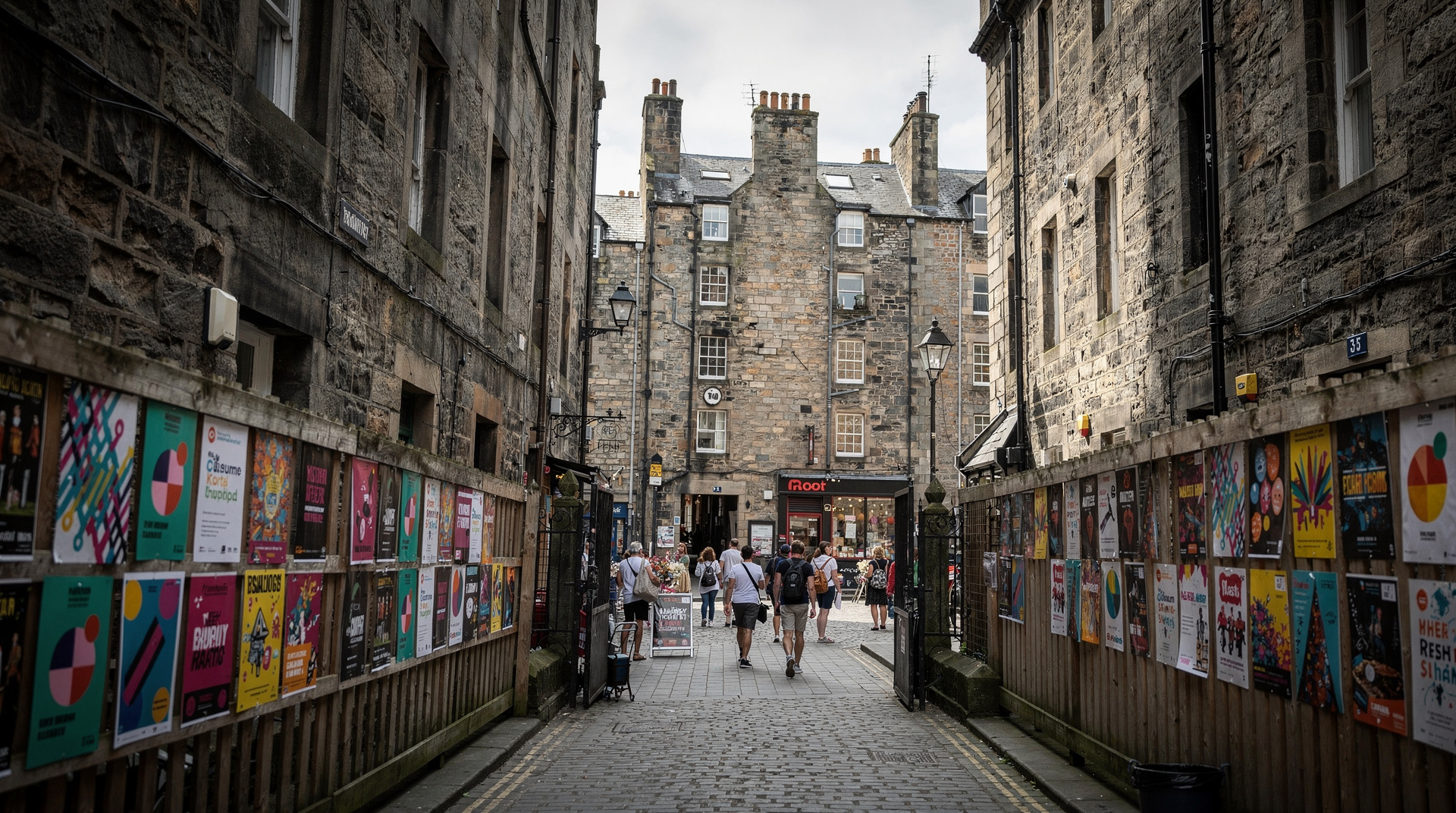
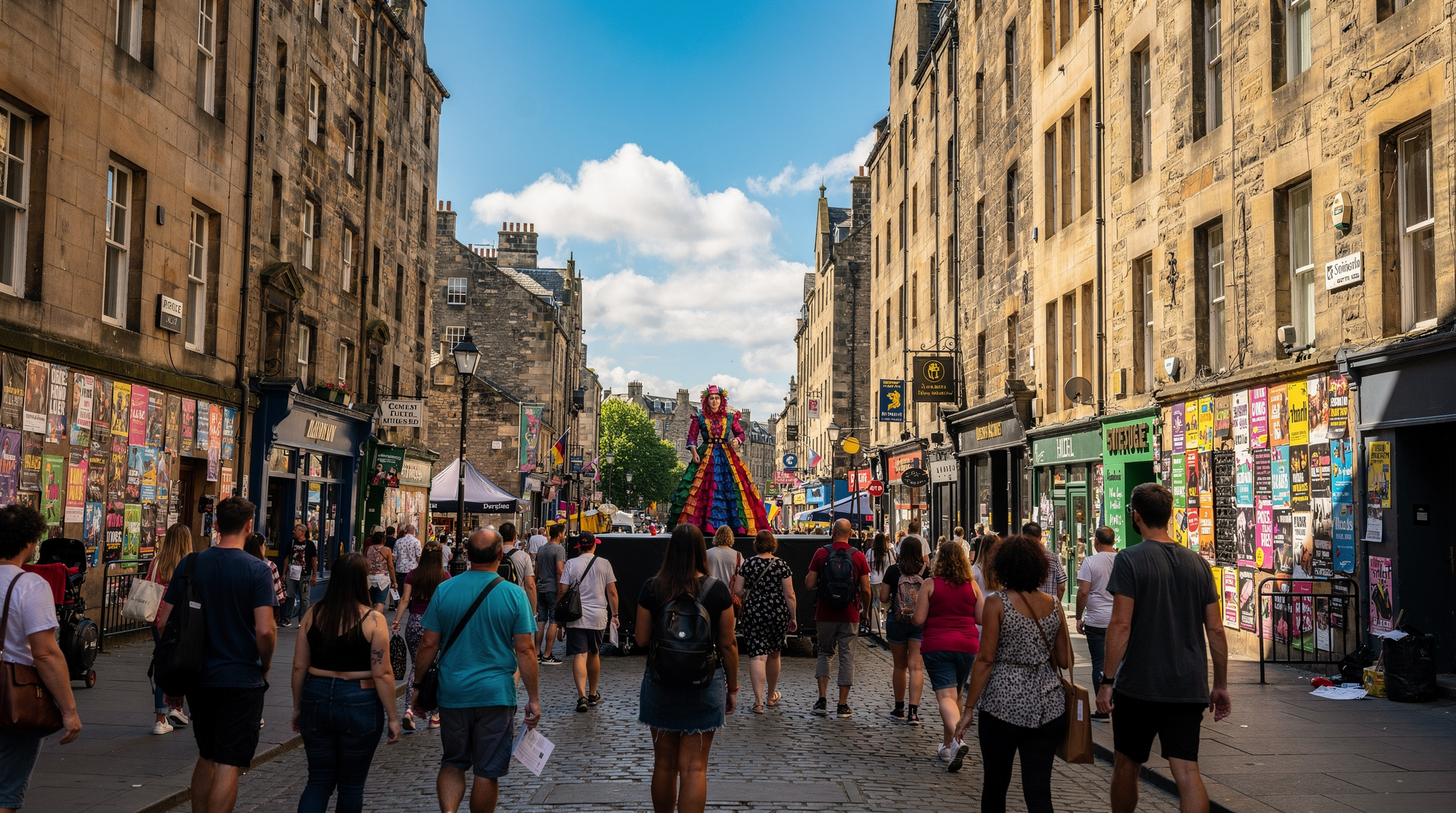
The Royal Mile in August is barely navigable between 11am and 8pm. This is not a slight exaggeration — the combination of flyering performers, tourist crowds, festival audiences, and street acts makes the Royal Mile a genuinely difficult space to walk through in a hurry. Accept this and use the parallel streets (Cowgate, George IV Bridge, the closes) when you need to travel efficiently.
Eat early or late. Restaurants in central Edinburgh are full from 6pm to 9pm during August. Eating at 5:30pm or 9:30pm saves both time and money. Most shows run at 7pm or later, so the early dinner slot is perfectly practical.
Get a show programme and mark it up. The physical programme guide, available free from Fringe venues, is still the most reliable way to browse the full programme. Mark it up, fold pages, treat it as an operating document.
What the Fringe costs
Free shows: Many Fringe shows are free, particularly the outdoor street programme and some venue shows. These tend to be shorter and less structured than paid shows.
Cheap shows: £5-12 covers most early-run or first-time performances. Student shows are typically £5-8.
Premium shows: Established comedians filming TV specials charge £25-35. International theatre companies can be £35-50 for evening performances.
The unofficial Fringe tax: Everything in central Edinburgh costs more in August — restaurants, bars, tourist attractions, taxis. Budget 20-30% above normal Edinburgh prices for the Fringe period.
A realistic Fringe budget for four days (excluding accommodation): £150-250 for shows, food, and drink at moderate Edinburgh prices.
Combining the Fringe with Edinburgh sightseeing
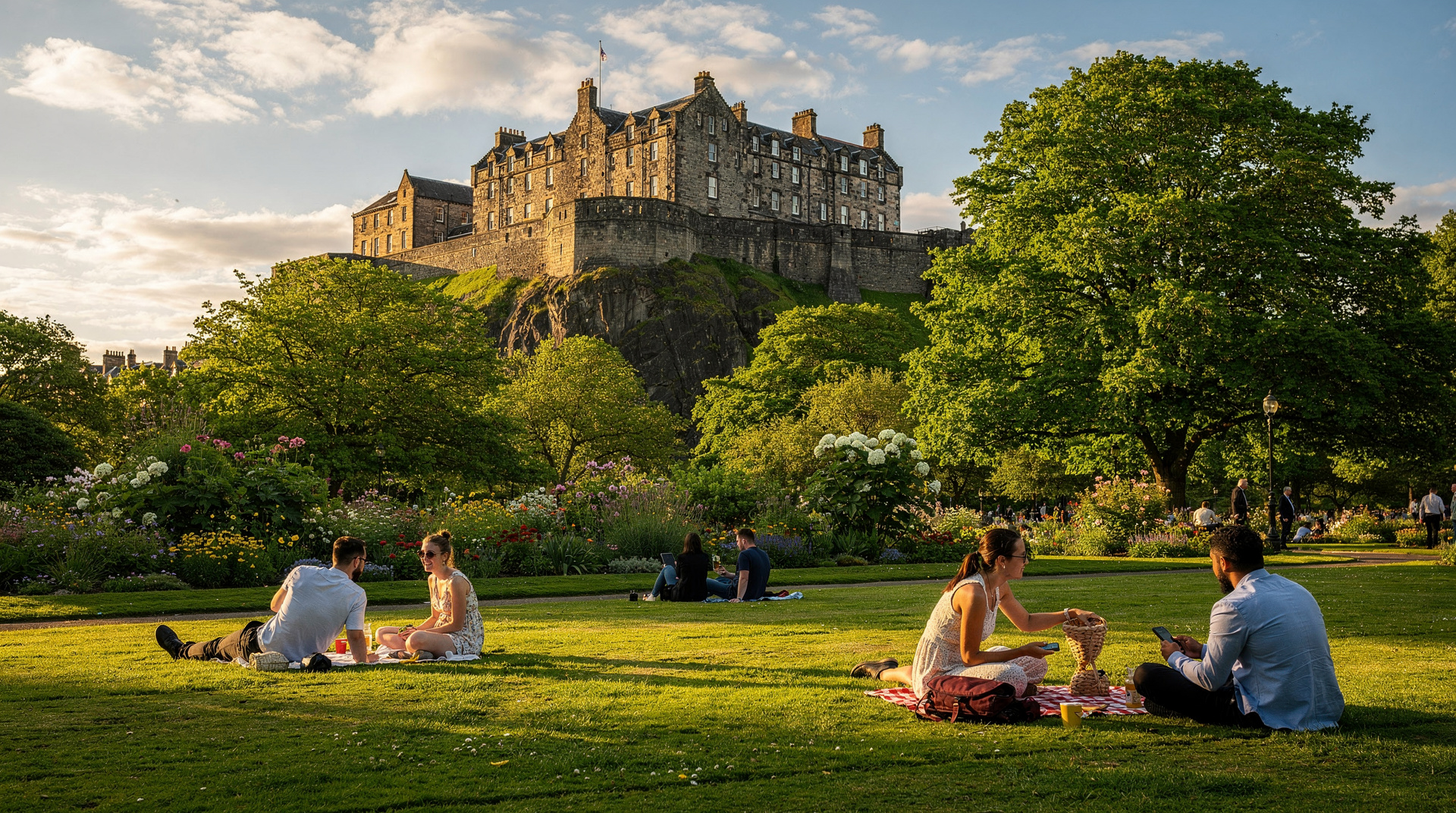
First-time visitors to Edinburgh sometimes come for the Fringe and arrive expecting to also see the main sights comfortably. This is ambitious. The festival absorbs enormous amounts of time and energy and the city is at peak busyness. Our advice: if you have four days, dedicate two to the Fringe and two to the city. Get to Edinburgh Castle and the National Museum before 10am, when they are quieter. Walk the Royal Mile at 8am. See the Calton Hill at dusk.
The Edinburgh Fringe four-day itinerary builds this balance into a realistic schedule.
Where to stay during the Fringe
Location matters more in August than any other month. Old Town accommodation puts you closest to the venues but at the steepest prices and the worst crowd congestion outside your door. Leith and Stockbridge trade a short bus or walk for meaningfully lower prices and a break from the festival crush when you want quiet. The where to stay guide and budget accommodation guide both flag which neighbourhoods hold up best in August specifically.
Comedy beyond the big names
If big-name comedy shows are sold out or outside budget, the Fringe’s real strength is depth rather than headliners. The best ghost tours and haunted Edinburgh map are good alternative evening options on nights when the comedy queues aren’t worth it, and pair naturally with the festival’s after-dark energy.
A live comedy show at Hoots or a year-round stand-up comedy show booking are both reliable ways to guarantee a seat at a good show without gambling on the walk-up Fringe queue system.
Frequently asked questions about the Fringe
Do you need tickets in advance?
For the most popular shows (large-venue comedy specials, specific acts you want to see) — yes, book early. For general Fringe browsing, buying tickets on the day or the day before is fine and sometimes gets you cheaper last-minute prices.
Is the Fringe suitable for children?
Yes, with curation. The Fringe explicitly programmes children’s shows, and many family-friendly theatre and circus acts perform throughout August. The adult late-night comedy shows are not appropriate for children, but the daytime programme has a lot to offer families. See the Edinburgh with kids guide for Fringe family tips.
What is the difference between the Fringe and the International Festival?
The Edinburgh International Festival is a curated programme of world-class orchestras, opera, dance, and theatre — ticketed, prestigious, and considerably more expensive than Fringe shows. The Fringe is open to any performer who can find a venue. Both run simultaneously in August. See the International Festival guide for the curated programme.
How many shows can I realistically see in a day?
Three is a comfortable daily maximum once travel time between venues, queueing, and meals are accounted for. Ambitious Fringe veterans push to four, but the quality of attention drops noticeably by the fourth show. Better to see three shows properly than rush through five.