Portobello
Portobello: Edinburgh's seaside neighbourhood with a Victorian promenade, sandy beach, independent high street, and the best swimming in the city.
Edinburgh: cycle tour to the coast (family friendly)
Quick facts
- Best time to visit
- May to September for the beach; year-round otherwise
- Days needed
- Half day
- Getting there
- 30-min bus from city centre; 45-min cycle via coast path
- Budget per day
- Free to visit; cafes £5–£15, activities variable
Edinburgh’s seaside — three miles from the castle
Portobello is Edinburgh’s beach suburb, a sandy stretch of the Firth of Forth three miles east of the city centre where Edinburgh residents have been coming to swim, walk, and eat chips since the Victorian era. It has a Victorian promenade, a sandy beach wide enough to have space on reasonable days, and an independent high street that has resisted the homogenisation that has affected most British seaside towns.
It is not Cornwall, and it is not pretending to be. The water is cold by any standard — even in August the Firth of Forth rarely exceeds 17°C — and the sky is frequently grey. But on a clear summer day, with the sweep of the beach visible and the Bass Rock and Berwick Law on the horizon, Portobello has a genuine seaside quality that is unusual for a city neighbourhood. It is one of Edinburgh’s better surprises for visitors who think they know what the city offers.
| At a glance | |
|---|---|
| Where | 3 miles east of the city centre, on the Firth of Forth |
| Time needed | Half a day |
| Getting there | 30-min bus from the centre, or 45-min cycle via the coast path |
| Typical cost | Free to visit; cafés £5–£15 |
| Best time | May–September for the beach; year-round for the high street and market |
| Do not skip | A walk along the promenade, with a sea swim if you are hardy |
The beach and promenade
The beach at Portobello stretches for about 1.5 kilometres of sand, backed by a Victorian promenade that is wide enough for walking, cycling, and the usual seaside activities. The sand is reasonably clean and the beach is patrolled by lifeguards in summer. On warm Bank Holiday weekends it fills up with Edinburgh residents in a way that gives it a genuine beach-resort atmosphere that the more famous east-coast beaches of Scotland rarely achieve simply because they are harder to reach.
The promenade itself has several cafes and ice-cream parlours, most of which are functional rather than memorable but adequate for the seaside experience. The views from the promenade along the coast toward Musselburgh and East Lothian, with the Bass Rock visible on clear days and Arthur’s Seat rising above the city to the west, are better than most visitors expect.
Swimming in the sea at Portobello has become significantly more popular in recent years, particularly since the pandemic increased interest in outdoor and wild swimming. The water is cold, but not dangerously so for healthy adults, and the beach is one of the more accessible sea-swimming spots near a major Scottish city.
Swimming pool in Portobello
Portobello’s Art Deco open-air pool opened in 1936 but closed after the 1979 season and was demolished in 1988, so there is no outdoor pool today. The current pool is the Portobello Swim Centre, an indoor Victorian pool that opened in 1901 and is run by Edinburgh Leisure. Check the official Edinburgh Leisure website for opening times and prices.
The high street and Sunday market
Portobello High Street runs parallel to the promenade and is one of Edinburgh’s better independent high streets — a survival that most similar seaside towns have lost to retail chains and charity shops. There are independent butchers, bakers, delis, bookshops, and a good selection of cafes and restaurants that serve residents rather than passing trade.
On Sundays, an antique and vintage market sets up in the lanes around the high street — smaller and more specialist than the Stockbridge Market but with good browsing for vintage clothing, furniture, and unusual objects. The market draws dealers and collectors from across Edinburgh and is worth combining with a promenade walk if you are visiting on a Sunday.
Cycling to Portobello
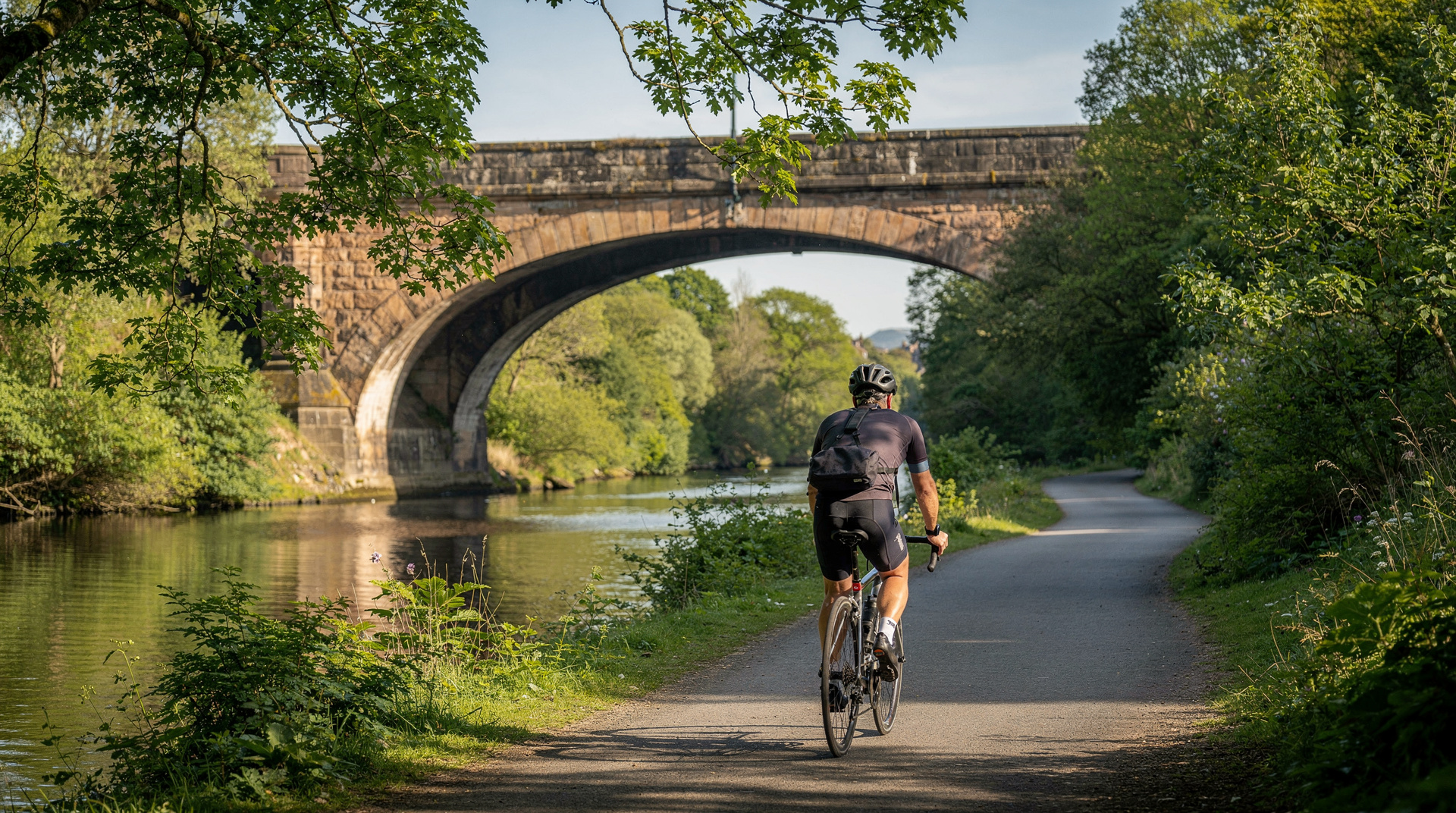
The most enjoyable way to reach Portobello is by bicycle along the Innocent Railway path — which starts near the Southside — and the coastal cycle route. The Innocent Railway, which follows the route of one of Edinburgh’s early railways through a wooded cutting from the Southside, leads east to Duddingston and connects to the coastal path at Craigentinny. The full cycle from the city centre to Portobello takes around 45 minutes at a leisurely pace and is almost entirely traffic-free.
The Edinburgh cycle tour to the coast (family friendly) follows this route from the city centre to Portobello and back, with a guide who knows the route and can manage the group safely. It is genuinely appropriate for families with children who can ride confidently. The Edinburgh three-hour bike tour through city centre, Holyrood Park, and Portobello covers more ground and includes Holyrood Park as well, making it a more comprehensive cycling day out.
Portobello’s history as an entertainment district
Victorian Portobello was the primary seaside entertainment resort for Edinburgh and the surrounding area. Before the development of cheap long-distance travel, the beach at Portobello was where Edinburgh families came for their summer holiday — a day trip by horse tram and later electric tram, with bathing machines on the beach, a funfair, concert halls, and the kind of seaside commercial entertainment that characterised British beach resorts of the period.
The indoor swimming pool opened in 1901 and was one of the largest in Scotland. The open-air pool followed in 1936, closed after the 1979 season and was demolished in 1988. The fairground and entertainments gradually declined through the twentieth century, and by the 1970s Portobello had the somewhat threadbare character of a British resort past its peak. The regeneration since the 1990s has been mostly organic — the independent high street developing its own character rather than being directed — and the result is a neighbourhood that has recovered its appeal without the self-conscious branding that afflicts many revived British seaside towns.
Joppa Salt Pans
At the eastern end of the Portobello beach, the remains of the Joppa Salt Pans are a reminder of the industrial history that predates the resort era. Salt was produced here from at least the seventeenth century, using coal from the nearby collieries to evaporate seawater in large shallow pans. The salt works closed in the nineteenth century, but the geological interest of the shoreline — Carboniferous rock platforms with good fossil exposures at low tide — continues the industrial heritage of the area in geological form.
The rock platforms at Joppa are accessible at low tide and provide good fossil hunting for those who know what to look for: trace fossils, bivalve impressions, and occasionally fish scales in the black shale layers. No special equipment is needed beyond appropriate footwear for walking on wet rock.
Getting there by bus
The most practical public transport option from the city centre is a direct bus from Princes Street or Waverley. Services 26, 45, and others reach Portobello in around 30 minutes. The tram does not serve Portobello; the bus is the only direct public transport option.
The walk from the city centre along the coast road is around 3.5 miles — pleasant but long. Most visitors combine bus or cycle for the outward journey and cycle or walk along the promenade for the Portobello section.
Combining Portobello with Leith
Portobello and Leith are natural companions for a coastal half-day, given that they sit at either end of the Edinburgh seafront. From Leith, walk or cycle east along the coastal path through Seafield and Joppa to reach Portobello — about 45 minutes on foot or 15 minutes by bike. The coastal path is flat and almost entirely traffic-free.
Starting with the Royal Yacht Britannia at Ocean Terminal in Leith and ending at Portobello beach gives a satisfying east-to-east coastal day that is entirely different from anything in the city centre. See the three-day Edinburgh itinerary for how this coastal day fits into a longer visit.
The Portobello community and local character
Portobello has a strong community identity — it has its own community council, its own newspaper, and its own summer festival (Porty Book Festival, held in August). The area’s history as an independent town (it was only incorporated into Edinburgh in 1896) has left a legacy of local pride that distinguishes it from more anonymous suburban areas.
The high street reflects this — genuinely independent, with businesses that have been there for years and that know their customers. The fish and chip shops are the oldest type of Portobello institution; Porty Chippie is a classic example, with queues on fine evenings that demonstrate the demand. For sit-down eating, the restaurants on Bath Street and the cafes along the promenade offer reasonable options without the premium prices of the city centre.
Portobello in Edinburgh’s calendar
August transforms Portobello. The Edinburgh Festival Fringe does not extend this far east, but the Portobello Book Festival and various community events during August make the area particularly lively. The beach fills with Edinburgh residents escaping the overcrowded Old Town, and the high street has a summer-town atmosphere that is one of the most pleasant in the city.
Outside August, Portobello is quieter but consistently enjoyable. The promenade is used year-round by dog walkers and sea swimmers; the high street functions normally regardless of weather. Winter visits to Portobello, with the beach nearly empty and the Firth of Forth steel-grey under winter clouds, have their own particular quality — the scale of the estuary and the distant hills across the water are more visible when the summer haze has cleared.
Edinburgh’s coastal approach
The Portobello coastline is part of a longer sweep of Edinburgh’s coastal edge that extends from Granton and Newhaven in the west (near Leith) through Joppa and Portobello and continues eastward to Musselburgh. The coastal path that links these areas — used by walkers, cyclists, and joggers — gives a linear experience of Edinburgh’s relationship to the sea that is invisible from the city centre.
Cycling the coastal path from Leith to Portobello and beyond to Musselburgh gives a full half-day of varied coastal scenery. The path passes through Seafield (industrial, not scenic), improves at Joppa, and reaches Portobello at its best. Beyond Portobello, the path continues past the Lagoons — former industrial ponds now managed as nature reserves — toward Musselburgh Racecourse.
Joppa and the eastern continuation
Immediately east of Portobello, the neighbourhood of Joppa merges seamlessly into the main beach area. Joppa has a slightly more residential character than central Portobello and fewer tourist facilities, but the rock pools at the eastern end of the beach at low tide are popular with children and interesting for anyone who enjoys coastal natural history.
The geology of the shore at Joppa includes well-exposed rock strata of Carboniferous age — the same coal-bearing sequence that underlies much of the Edinburgh area. At low tide, the rock platforms are accessible and provide good fossil-hunting opportunities for those who know what to look for. No facilities at Joppa specifically; continue to Portobello or Musselburgh for food and services.
A practical note on Edinburgh weather and the beach
See the best time to visit Edinburgh guide for the full seasonal picture including beach weather expectations at Portobello. And the Edinburgh on a budget guide rates Portobello as one of the city’s best free activities — the beach, promenade, and cycling to reach it require no entrance fees.
Portobello beach in summer is pleasant when the weather cooperates, which in Edinburgh is less predictable than in most British coastal cities. The city sits in a rain shadow from the Pentland Hills to the south and benefits from lower rainfall than Glasgow or the west coast, but it is still Scotland, and a fine forecast can produce cloud and light rain with considerable speed.
The most reliable months for beach weather at Portobello are June and September — May can be cold and July and August unpredictable. On a good day, however, the long light of Scottish summer evenings means that the beach remains viable until well past 9pm, and the combination of low sun on the water and the silhouette of Arthur’s Seat to the west makes Portobello in good light one of Edinburgh’s more beautiful spots.
Planning a Portobello visit
Portobello works best as part of an Edinburgh day that also takes in other areas. The natural combination is a morning in the Old Town or New Town, then an afternoon at Portobello. Alternatively, cycle from Holyrood Park via the Innocent Railway path to reach Portobello from the south, making the journey itself part of the experience.
For families visiting Edinburgh, Portobello is one of the best options — the flat beach and the promenade are all easy for children of various ages, and the Edinburgh with kids guide rates Portobello as one of the top recommendations for a family afternoon.
Portobello through the seasons
| Season | Beach | Atmosphere |
|---|---|---|
| Winter (Dec–Feb) | Nearly empty, bracing walks, steel-grey water | Quiet; dog walkers and year-round sea swimmers only |
| Spring (Mar–Apr) | Improving, still cold | Fewer visitors, good for the high street and market |
| Summer (May–Aug) | Busiest, best swimming conditions, Bank Holiday crowds | Liveliest period, especially August with local festival events |
| Autumn (Sep–Oct) | Warmest sea of the year lingers into September | One of the better windows — settled weather without peak crowds |
The most reliable months for a genuine beach day are June and September; July and August are warmer on paper but less predictable in practice.
Getting the most from a Portobello half-day
The recommended sequence: arrive by bus in the morning, walk the promenade, have coffee on the high street, spend time on the beach, have lunch at one of the high-street restaurants, browse the Sunday market if visiting on a Sunday, then cycle or walk back toward Leith along the coastal path. This gives a varied half-day that combines the beach with the neighbourhood character and the coastal landscape.
If cycling, the Edinburgh three-hour bike tour through city centre, Holyrood Park, and Portobello provides the cycle for the outward journey and covers the route with a guide. Independent cycling along the Innocent Railway path is straightforward for confident adult cyclists.
Frequently asked questions about Portobello
Is Portobello beach worth visiting?
Yes, if you have time on your Edinburgh trip and want something genuinely different from the city-centre experience. It is not a world-class beach, but it is a good Scottish urban beach — sandy, accessible, with a pleasant promenade and an independent high street that makes the surrounding area enjoyable. Allow half a day and combine it with cycling or a coastal walk for the best experience.
How cold is the sea at Portobello?
Cold by most visitors’ standards. Summer sea temperatures in the Firth of Forth range from around 12°C in May and June to 16-17°C in August and September. This is comfortable for short swims but not for extended bathing without wetsuit protection. Locals who swim regularly here have adapted, and a community of year-round sea swimmers uses Portobello beach at all seasons.
Is Portobello suitable for families with children?
Yes, and it is one of Edinburgh’s better family options when the weather cooperates. The wide, flat beach is safe for paddling and sandcastle building. The promenade is entirely flat and accessible for pushchairs. The cycle tour option is suitable for older children who can ride independently. See the Edinburgh with kids guide for the full family planning picture, including how Portobello fits alongside the Holyrood Park and the Old Town family options.
Is there a swimming pool in Portobello?
The old open-air pool of 1936 was demolished in 1988, so there is no outdoor pool today. The current pool is the indoor Portobello Swim Centre, run by Edinburgh Leisure; see the official Edinburgh Leisure website for details.
How do I get from central Edinburgh to Portobello?
By bus: services 26, 45, and others from Princes Street or Waverley, taking around 30 minutes. By bike: the Innocent Railway path and coastal route, approximately 45 minutes. By taxi or rideshare: 15 to 20 minutes depending on traffic. There is no tram service to Portobello.
What else is near Portobello?
To the west along the coast, Leith and Ocean Terminal are around 45 minutes on foot or 15 minutes by bike. To the east, Musselburgh racecourse and the East Lothian coast are accessible by continuing along the coastal path or by bus. The Holyrood Park entrance at Duddingston is about 20 minutes on foot from the western end of the promenade, linking Portobello back into the main Edinburgh sightseeing area. See the three-day Edinburgh itinerary for how a Portobello half-day fits into a longer visit alongside the Old Town and New Town.
Top experiences
Bookable activities with verified prices and instant confirmation on GetYourGuide.