Edinburgh Castle vs Stirling Castle: which should you visit?
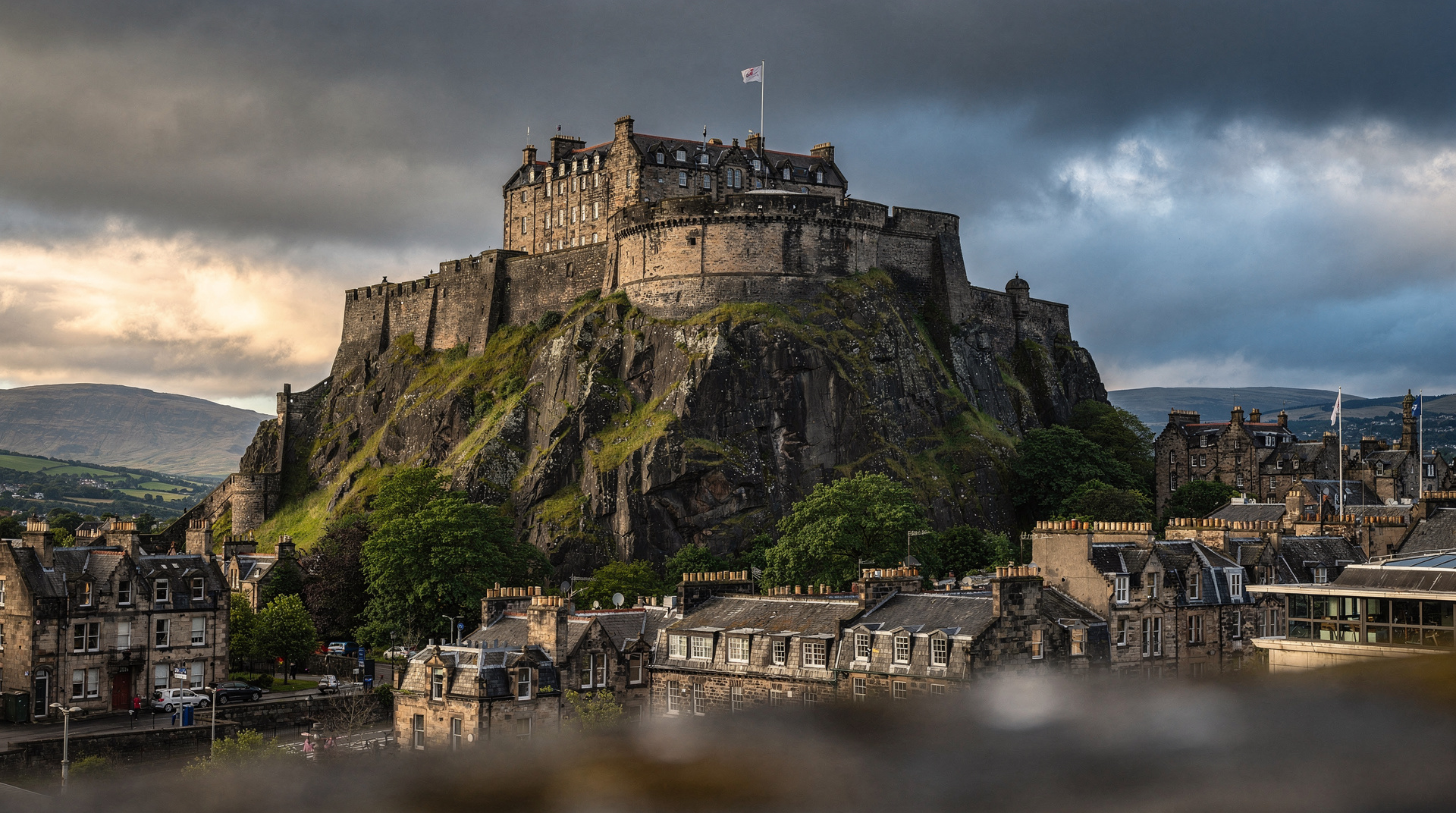
Edinburgh Castle: guided walking tour with entry ticket
Is Edinburgh Castle or Stirling Castle better to visit?
Edinburgh Castle has the Crown Jewels, more dramatic setting, and is easier to reach. Stirling Castle has better-preserved royal apartments, richer Renaissance interiors, and far fewer crowds. If you can only visit one, Edinburgh is the obvious choice for first-timers. If you can visit both, do — they are an hour apart and genuinely complementary.
Two castles, one trip: how to choose — or whether to choose at all
Edinburgh Castle and Stirling Castle are the two most significant royal fortresses in Scotland — historically intertwined, architecturally different, and both genuinely worth visiting. They are also an hour apart by train, which means the question of which to visit is often really the question of whether you have time to visit both.
This guide compares them honestly across the dimensions that actually matter for a visitor: what you get to see, the practical experience, the crowds, the cost, and the specific strengths of each. At the end, it tells you which to choose if you genuinely can only do one — and makes the case for doing both. For the full standalone visitor details on each, see the Edinburgh Castle guide and the Stirling Castle day trip guide.
| Where | Edinburgh Castle: top of the Royal Mile. Stirling Castle: 55-60 min by train from Edinburgh |
| Cost | Around £23.50 (Edinburgh) vs around £18.50 (Stirling), 2026 prices |
| Time needed | 2-3 hours (Edinburgh); 3-4 hours (Stirling, incl. old town walk) |
| Getting there | Edinburgh: 10-min walk from Waverley. Stirling: train + 20-min uphill walk |
| Best time | Edinburgh: weekday mornings. Stirling: any time — crowds rarely a problem |
Edinburgh Castle vs Stirling Castle: side-by-side
| Edinburgh Castle | Stirling Castle | |
|---|---|---|
| Signature feature | Crown Jewels, Stone of Destiny | Restored Royal Palace, Renaissance interiors |
| Annual visitors | Over 2 million | Around 400,000 |
| Setting | Volcanic plug in the city centre | Volcanic crag above the Forth valley |
| Interior condition | Many rooms relatively bare | Meticulously restored, period furnishings |
| Best for | First-time visitors, iconic experience | Second-timers, Renaissance history, fewer crowds |
| Entry price (2026) | Around £23.50 adult | Around £18.50 adult |
| Getting there from Edinburgh | On foot from the Royal Mile | Train, 55-60 minutes |
The setting and first impression
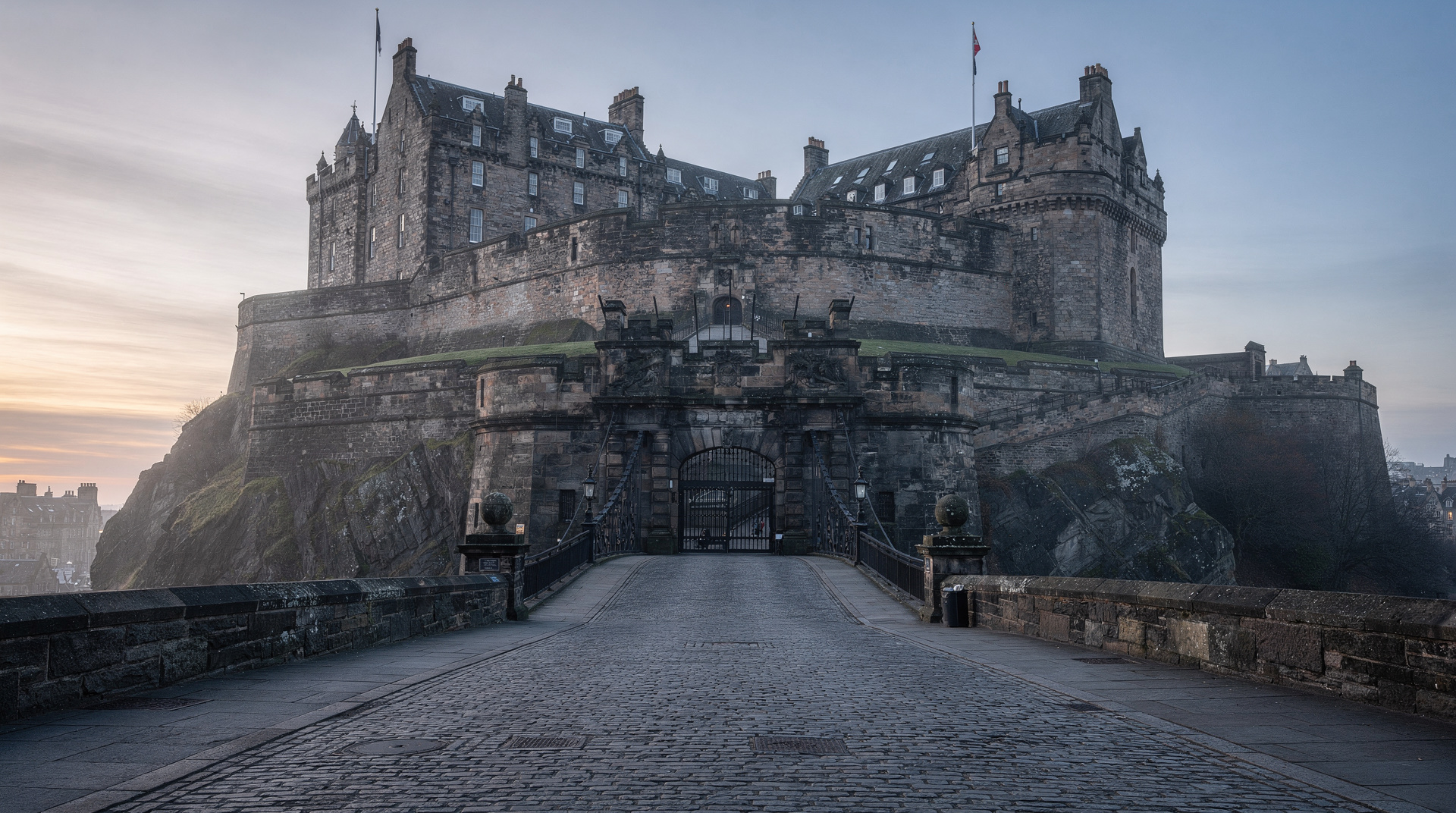
Edinburgh Castle sits on a volcanic plug of basalt in the centre of the city, visible from miles in every direction and forming one of the most recognisable castle silhouettes in the world. The approach along the Royal Mile toward the esplanade, with the castle growing above you as you walk uphill, is one of the great approaches to any building in Scotland. The view from the upper battlements — over the Georgian New Town, the Firth of Forth, and the hills beyond — is exceptional.
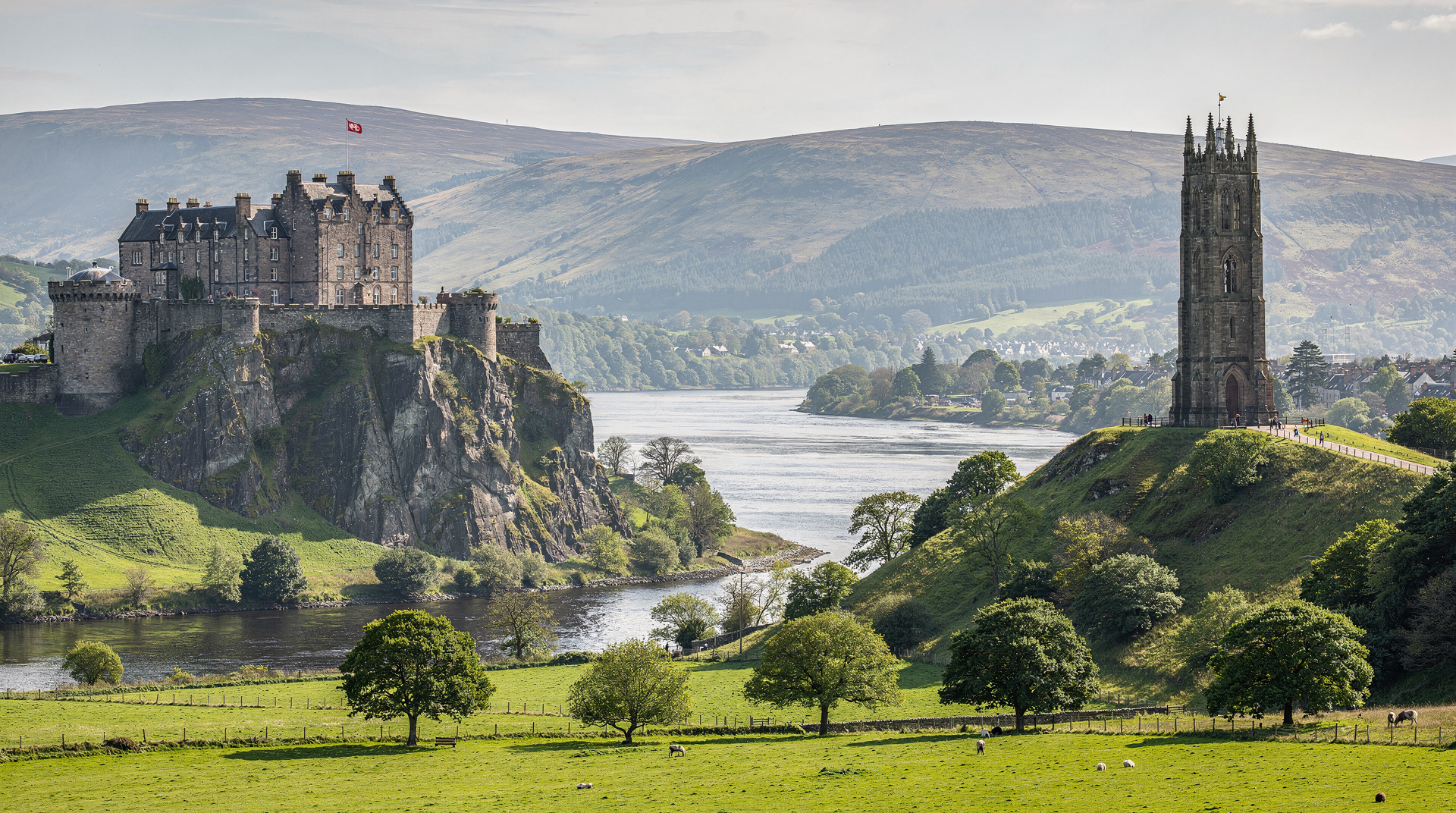
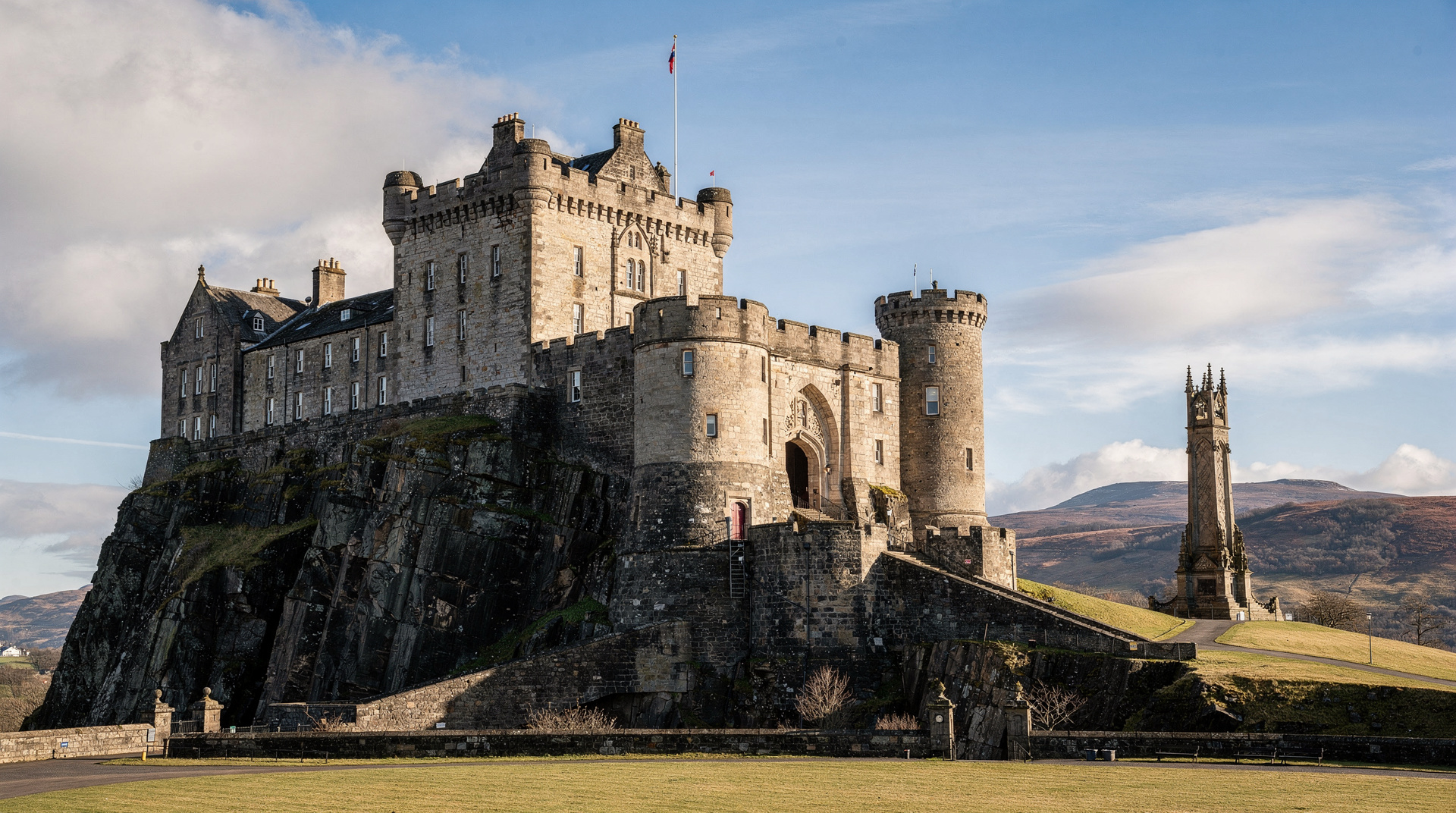
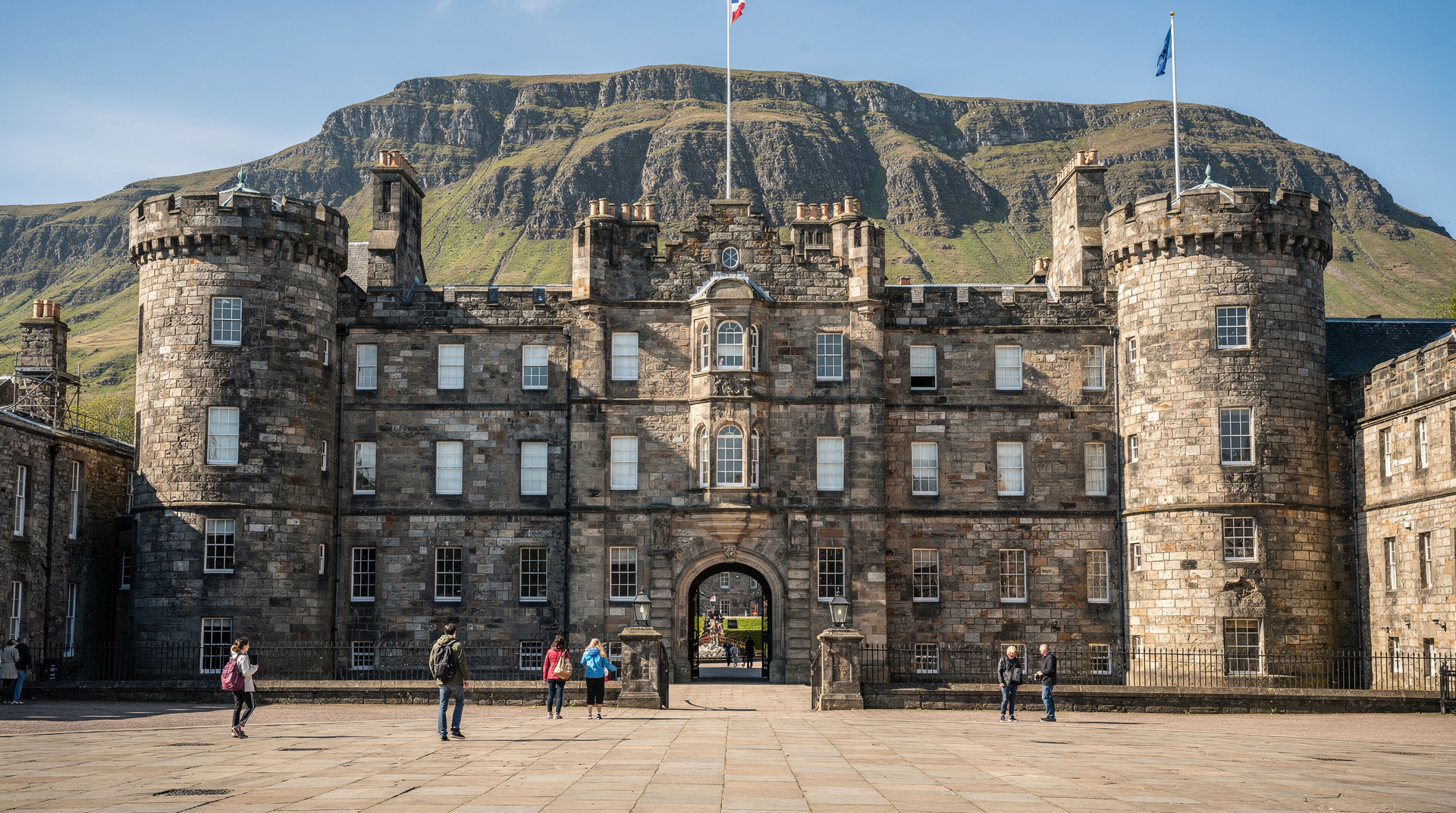
Stirling Castle also sits on a volcanic crag, above the flat plain of the Forth valley. The crag at Stirling is arguably more dramatic in geological terms — the castle appears to float above the surrounding landscape in a way that Edinburgh, embedded in a city, cannot quite match. The approach from the old town below, looking up at the walls rising from the rock, is impressive. The views from the castle encompass the Trossachs to the northwest, the Ochil Hills to the northeast, and the whole of the Forth plain below.
On setting alone, it is essentially a draw — different in character but comparable in impact.
If the setting is what draws you, spend a little time on the ground around each fortress as well as inside it. For Edinburgh, the Edinburgh Castle destination page and the Royal Mile destination page show how the rock, the esplanade and the street below fit together, which helps you decide how much of your day to give the approach itself.
What you actually see inside
Edinburgh Castle
The key things at Edinburgh Castle:
- The Crown Room: the Honours of Scotland (the oldest surviving crown jewels in the British Isles) and the Stone of Destiny. This is irreplaceable — there is nothing comparable at any other Scottish castle.
- The Scottish National War Memorial: one of the finest memorial buildings in Britain, housing the roll of honour for over 150,000 Scottish war dead.
- St Margaret’s Chapel: the oldest surviving building in Edinburgh (c.1130).
- The Great Hall (c.1511): a hammer-beam timber ceiling, mostly original.
- The One O’Clock Gun: a daily cannon firing tradition from 1861.
- The National War Museum: 400 years of Scottish military history.
The castle is large, spread across multiple levels connected by steep cobblestone paths. It can feel congested at peak times.
Stirling Castle
The key things at Stirling Castle:
-
The Royal Palace: James V’s Renaissance palace from the 1530s-1540s, recently restored with meticulous period-appropriate furnishings, tapestries, and painted ceilings. Widely considered the most significant piece of Scottish Renaissance architecture.
-
The Great Hall (c.1503): the largest secular medieval building in Scotland, with a restored interior including reproductions of the famous Stirling Heads (carved oak roundels).
-
The Great Kitchens: a theatrical interactive installation showing preparations for a medieval royal banquet — much better for families than it sounds.
-
The Chapel Royal (1594): where Mary Queen of Scots was crowned in 1543.
-
The outer defences and viewpoints: panoramic views over Central Scotland.
Stirling Castle is smaller than Edinburgh and less confusing to navigate. The recent restoration programme has left the interiors in much better condition than at Edinburgh, where many rooms are relatively bare.
The crowds: a significant practical difference
Edinburgh Castle receives over two million visitors a year — Scotland’s most visited paid attraction. On a summer weekend in July or August, the queues for the Crown Room can be 45 minutes, the esplanade is crowded, and the experience of moving between areas is genuinely uncomfortable. The castle is designed to handle large numbers but the crowds are real. Arriving at opening time (9:30am) and going directly to the Crown Room is the most important tactical decision.
Stirling Castle receives around 400,000 visitors a year — about one-fifth of Edinburgh’s numbers. On the same summer weekend that has Edinburgh Castle overwhelmed, Stirling will be busy but not overwhelming. The difference in atmosphere is noticeable: at Stirling, you can stop in the centre of the courtyard and look at the buildings in peace. At Edinburgh’s Crown Room, you are in a moving queue.
If crowds significantly affect your enjoyment — and many visitors find that they do — Stirling Castle is substantially better to visit in summer.
Entry prices (2026)
- Edinburgh Castle: £23.50 adults, £11.50 children (7-15), under-7s free.
- Stirling Castle: £18.50 adults, £9 children (7-15), under-7s free.
- Historic Environment Scotland membership: £72 per adult, covers both castles plus 70+ other HES sites. Pays for itself after two-three castle visits.
A guided tour at Edinburgh Castle (which adds context that the audio guide does not match) typically costs £28-£36 per adult including entry. A guided Edinburgh Castle walking tour with entry is the recommended way to visit Edinburgh Castle on a first trip. If your time at Edinburgh Castle is limited, the Edinburgh Castle highlights tour with fast-track entry covers the Crown Room and key viewpoints efficiently. Stirling Castle’s audio guide, included in the entry price, is reasonably thorough; a guided tour is less critical here than at Edinburgh.
Both castles are read from the outside as much as the inside, and the Forth gives the only vantage point that shows Edinburgh’s rock the way its builders intended: a Firth of Forth sightseeing cruise with cream tea supplies that angle.
Combining both castles
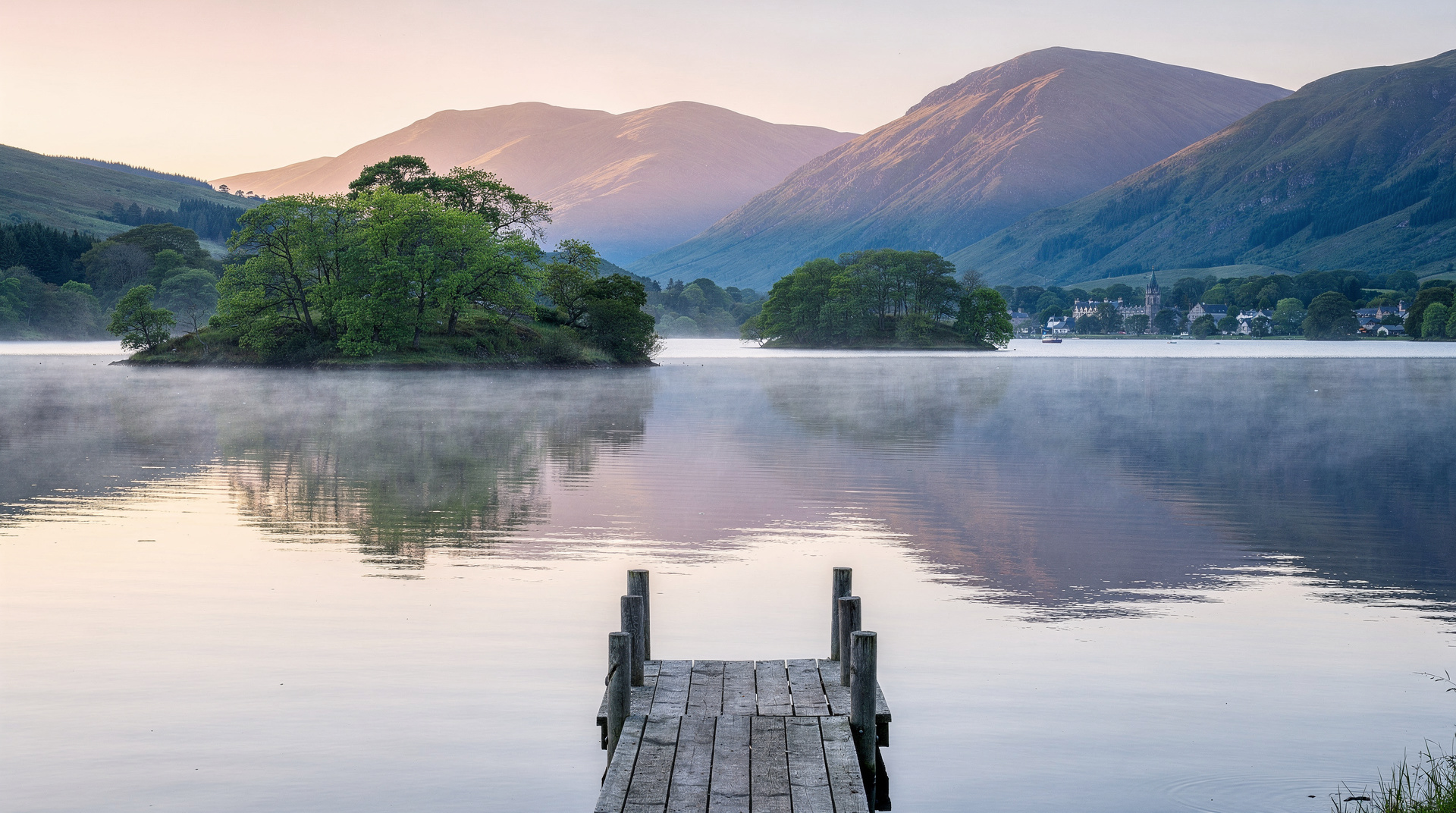
The most practical way to visit both on a single day trip from Edinburgh is a guided tour that includes Stirling Castle and Loch Lomond — which covers Stirling and allows a full day away from Edinburgh. Visiting both castles independently on the same day is possible (Edinburgh in the morning, train to Stirling in the afternoon) but leaves limited time at each. A better approach is to dedicate a full day to Stirling and combine it with Loch Lomond or Bannockburn.
The Scotland medieval history tour combines Stirling Castle with Rosslyn Chapel and Dunfermline Abbey — a good option for visitors focused specifically on Scottish medieval history.
A Stirling Castle, Loch Lomond and the Kelpies day tour is a further option that adds the Falkirk Kelpies sculptures to the Stirling and Loch Lomond combination — worth considering if you want a broader single-day sweep of Central Scotland alongside the castle. For the full range of Stirling-area sights beyond the castle itself, see the Scottish castles near Edinburgh guide and the Stirling destination page.
Which to choose if you can only visit one
Visit Edinburgh Castle if:
- This is your first visit to Scotland and you want the most iconic experience.
- You want to see the Crown Jewels and the Stone of Destiny.
- You are staying in Edinburgh and want to minimise travel.
- You are visiting in November to March when Stirling’s shorter day-trip logistics are less attractive.
Visit Stirling Castle if:
- You are visiting Edinburgh for the second time and have already done the castle.
- You are particularly interested in Renaissance architecture and royal history.
- You want to combine the castle with Loch Lomond in a single day.
- You are visiting in July or August and want to avoid Edinburgh’s peak crowds.
- You have an HES membership already or are buying one for the trip.
Visit both if:
- You have four or more days in Edinburgh.
- History and castles are your main interest in Scotland.
- You are prepared to spend a full day on a Stirling day trip.
How the palace grounds compare more broadly
If royal architecture rather than castles specifically is your interest, it’s worth bringing the Palace of Holyroodhouse into the comparison too — Edinburgh’s other royal residence, at the opposite end of the Royal Mile from the castle, still in active use by the monarchy today.
Where Edinburgh and Stirling Castles are primarily fortress-and-history experiences, Holyroodhouse is a working palace with formal state apartments, giving a genuinely different flavour to a royal-Scotland day. Visitors building a full Old Town day sometimes combine the castle and Holyroodhouse at either end of the Royal Mile — the Edinburgh Old Town history guide covers what lies between them.
The honest verdict
Edinburgh Castle is more famous, more conveniently situated, and has the irreplaceable Crown Jewels. Stirling Castle has better-preserved interiors, a quieter atmosphere, and a stronger case for being the more historically significant fortress in Scotland — it was the preferred residence of the Stuart monarchs for most of the fifteenth and sixteenth centuries, and the battles that secured or threatened Scottish independence were fought below its walls.
Most visitors to Scotland end up concluding that both are worth the time. The question is whether you have that time. If you do — even just a single full day to travel to Stirling and back — do it. If you are genuinely choosing one: Edinburgh first time, Stirling for history enthusiasts and second visits.
Once you have decided, the next step is fitting the castle into the rest of your trip. The two-day Edinburgh itinerary shows where an Edinburgh Castle visit sits comfortably in a short stay, while the best day trips from Edinburgh guide helps you weigh a Stirling day against the other excursions competing for your time. If you are still undecided about the wider trip, the how many days in Edinburgh guide is a useful companion.
Frequently asked questions about Edinburgh Castle versus Stirling Castle
Which castle is more historically significant?
Stirling Castle has the stronger claim to primary historical significance — it was the capital fortress of medieval Scotland, the residence of successive Stuart monarchs, and was directly associated with Bannockburn, Flodden, and major battles of Scottish independence. Edinburgh Castle was primarily a military garrison with royal connections that intensified later. However, the distinction matters mainly to historians; both are genuinely important.
Which is better for families with young children?
Both are good with children. Edinburgh Castle’s One O’Clock Gun is reliably exciting for younger children. Stirling Castle’s Great Kitchens interactive area is better-designed for family engagement. On balance, Stirling may slightly edge Edinburgh for families specifically because it is less crowded and easier to move around in.
Do I need a car to visit Stirling Castle?
No. Trains run from Edinburgh Waverley every 30 minutes, taking 55-60 minutes. The station is a 20-minute uphill walk from the castle. A guided day tour includes transport. A car is useful for combining Stirling with Bannockburn and the Wallace Monument in a single day but is not essential.
How much time should I allow at each castle?
Allow two to three hours for Edinburgh Castle (more if you want to explore the National War Museum thoroughly). Allow three to four hours for Stirling Castle, including the old town walk from the station. Combining both in a single day requires an early start and leaves limited time at each.
Is Stirling Castle worth it if I’ve already seen several other Scottish castles?
Yes — the restored Royal Palace interiors are distinctive enough (meticulous Renaissance furnishings and painted ceilings) that Stirling stands apart from most other Scottish castles, which tend to be preserved as ruins or bare shells. If you’ve mainly seen ruined castles elsewhere, Stirling’s fully furnished rooms will feel like a genuinely different type of visit.
Which castle has better views?
Both are exceptional but different. Edinburgh Castle’s views take in the New Town, the Firth of Forth, and the city itself — an urban panorama. Stirling Castle’s views are more rural and dramatic in scale, taking in the Trossachs, the Ochil Hills, and the flat expanse of the Forth valley below. If wide, uninterrupted landscape views are the priority, Stirling has the edge.
Top experiences
Bookable activities with verified prices and instant confirmation on GetYourGuide.
Edinburgh Castle: guided walking tour with entry ticket
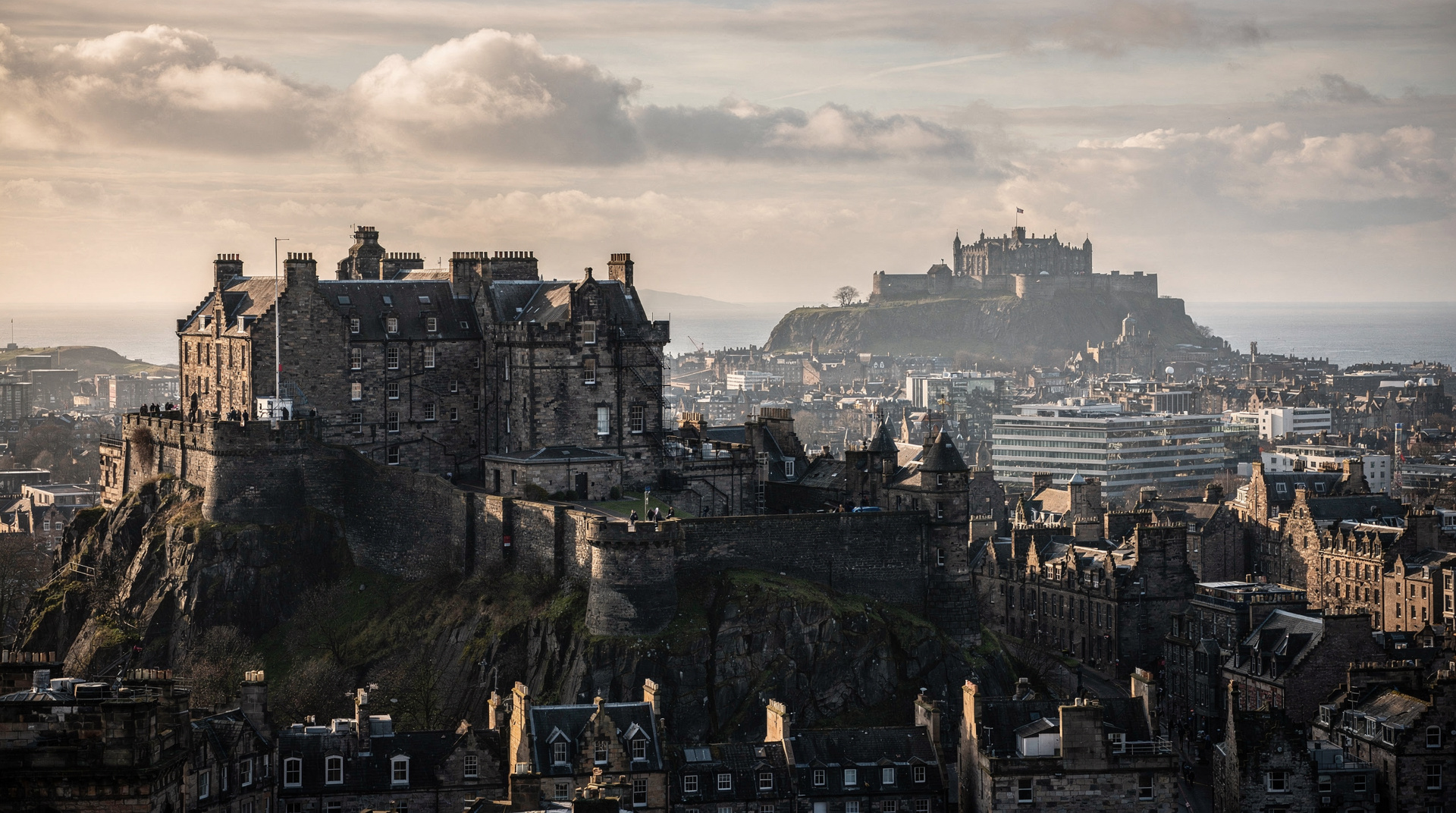
Edinburgh Castle: highlights tour with fast-track entry

Edinburgh: Stirling Castle, Loch Lomond & whisky tour
Edinburgh: Loch Lomond, Trossachs NP & Stirling Castle