Understanding Scotch whisky regions: a practical guide
Edinburgh: small-group history of whisky tour with tasting
What are the five Scotch whisky regions and what do they taste like?
Speyside is fruity and sweet; Highlands are varied but often heathery; Islay is heavily peated and smoky; Lowlands are light and grassy; Campbeltown is salty and coastal. Region is a rough guide — production methods and cask type matter more than geography.
Why regions matter (and their limits)
Scotch whisky regulations define five legal production regions: Speyside, Highland, Islay, Lowland, and Campbeltown. The Scotch Whisky Association uses these classifications; bottles are labelled by region; tours are structured around regional differences; the tasting rooms at the Scotch Whisky Experience are literally arranged by region.
And yet: within any given region, the variation between individual distilleries is enormous. A Glenlivet (Speyside) and a Mortlach (also Speyside) taste nothing like each other. A Glengoyne (technically Highland) resembles a Lowland malt more than it resembles a Dalmore (also Highland). The regions capture broad tendencies, not rules.
What the regional framework usefully provides is a starting vocabulary. When someone says “I prefer Islay whiskies,” they are communicating something meaningful — a preference for peated, smoky, medicinal flavours over the fruit-and-flowers profile of Speyside. Understanding what each region typically produces gives you the vocabulary to express preferences and makes tasting comparisons across a flight of drams much more revealing.
| Regions | Speyside, Highland, Islay, Lowland, Campbeltown |
| Where to taste all five in Edinburgh | Scotch Whisky Experience regional tasting, or a flight at the Bow Bar |
| Cost | Regional tasting experiences from around £20-35; a bar flight £25-45 |
| Time needed | 60-90 minutes for a guided regional tasting |
| Best for beginners | Speyside — the most approachable, least polarising style |
Regional flavour comparison at a glance
| Region | Typical style | Try first |
|---|---|---|
| Speyside | Sweet, fruity, floral | Glenlivet 12 |
| Highland | Varied, often fuller-bodied with heather notes | Glenmorangie Lasanta |
| Islay | Heavily peated, smoky, coastal | Ardbeg 10 |
| Lowland | Light, grassy, delicate | Glenkinchie 12 |
| Campbeltown | Maritime, slightly peaty, complex | Springbank |
Speyside
What it tastes like: The characteristic Speyside profile is sweet, fruity, and floral — green apple, pear, honey, vanilla from bourbon cask maturation, dried fruit and Christmas spice from sherry casks. The lightest Speysides (Glenlivet 12, Cardhu) are extremely approachable; the richer ones (Macallan, Glenfarclas, Aberlour) develop complexity from extended sherry cask ageing.
Why it dominates the market: Speyside whisky is the most popular Scotch regionally precisely because its flavour profile is most accessible to drinkers new to single malt. The sweetness and the absence of heavy peat means Speyside drams rarely challenge or unsettle. This is both an asset for the category and a limitation — there is a ceiling to the complexity available without peat or extended age.
Key distilleries: Glenfiddich, Macallan, Glenlivet, Balvenie, Aberlour, Glenfarclas, BenRiach, Mortlach.
Best for Edinburgh visitors: The Scotch Whisky Experience covers Speyside in its regional tasting. Visiting the actual distilleries requires the trip described in the Speyside whisky trail guide.
Highlands
What it tastes like: The Highlands region is enormous and encompasses the most stylistic diversity of any region. There is no single Highland profile. The northern Highlands (Balblair, Glenmorangie, Dalmore) tend toward coastal and floral notes with good weight. Central Highlands (Blair Athol, Dalwhinnie) run cooler and produce honey and heather character. Western Highlands (Ben Nevis, Oban) take in coastal brine. Eastern Highlands (Glen Garioch, Glendronach) tend toward sherry richness.
The one generalisation that holds is that Highland whiskies tend to be fuller-bodied and more robust than Lowland or lighter Speyside expressions, with a characteristic hint of heather honey.
Key distilleries: Glenmorangie, Dalmore, Blair Athol, Dalwhinnie, Oban, Ben Nevis, Glendronach.
Best for Edinburgh visitors: Blair Athol in Pitlochry is the most accessible Highland distillery by train from Edinburgh — 90 minutes from Waverley. The distilleries near Edinburgh guide covers the logistics.
Islay
What it tastes like: Islay is the most dramatically distinctive Scotch region. The island’s distilleries — Ardbeg, Laphroaig, Lagavulin, Bowmore, Bruichladdich, Kilchoman — produce whiskies that range from heavily peated and medicinal to coastal and saline to rich and complex. The common thread is peat: phenolic smoke, iodine, seaweed, and sometimes a distinctive rubber or antiseptic note that experienced drinkers find compelling and first-timers often find alarming.
Islay whisky divides opinion sharply and intentionally. There is no subtlety to a glass of Ardbeg or Laphroaig; they announce themselves immediately and demand a reaction. This is precisely what many people love about them.
Key distilleries: Ardbeg, Laphroaig, Lagavulin, Bowmore, Bruichladdich (also un-peated), Kilchoman, Caol Ila.
Best for Edinburgh visitors: The Islay drams are well represented at the Bow Bar and Cadenhead’s in Edinburgh. Visiting the island requires a ferry from the mainland (a two or three-day trip from Edinburgh minimum). The Scotch Whisky Experience nosing session lets you experience the Islay style without travelling.
Lowlands
What it tastes like: Lowland whisky is the gentlest of the regional styles: light-bodied, typically unpeated, often with floral and grassy notes, sometimes delicate vanilla and citrus from triple distillation (a traditional Lowland technique that strips out heavier flavour compounds). The regional character can feel thin to palates accustomed to Highland weight, but at its best — Auchentoshan, Glenkinchie — the delicacy is its own kind of elegance.
The Lowlands is experiencing something of a revival: new distilleries including the Borders Distillery and the Port of Leith Distillery are producing interesting variations on the regional style, and the established distilleries have been investing in their premium expressions.
Key distilleries: Auchentoshan (Glasgow), Glenkinchie (East Lothian), Bladnoch (Galloway), Borders Distillery (Hawick), Port of Leith (Edinburgh).
Best for Edinburgh visitors: Glenkinchie is 25 minutes from Edinburgh. Port of Leith is in Edinburgh itself. See the distilleries near Edinburgh guide.
Campbeltown
What it tastes like: Campbeltown, a small peninsula on the Kintyre coast, was once Scotland’s whisky capital — thirty distilleries operated here in the late nineteenth century. Today three survive: Springbank, Glen Scotia, and Glengyle (Kilkerran). Campbeltown whisky tends toward the maritime and slightly peaty, with a complexity that reflects the town’s varied distilling history. Springbank is one of the most respected and individual distilleries in Scotland.
Best for Edinburgh visitors: Campbeltown is not a practical day trip from Edinburgh (it is 3.5 hours by road). Springbank’s expressions are available at Cadenhead’s and the Bow Bar. See a Campbeltown dram in Edinburgh rather than making the journey unless you have a specific reason to go.
How to taste the regional differences in Edinburgh
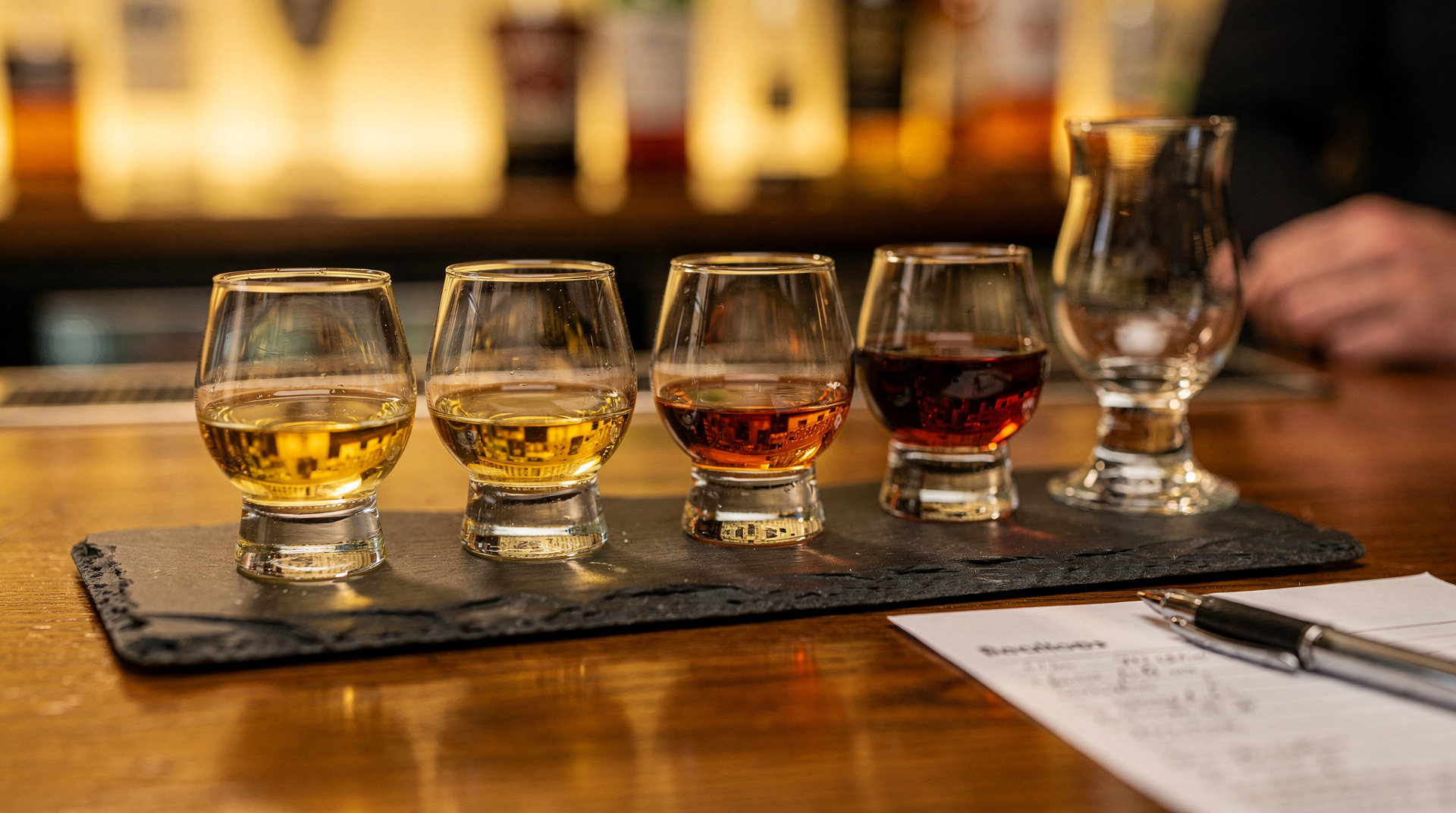
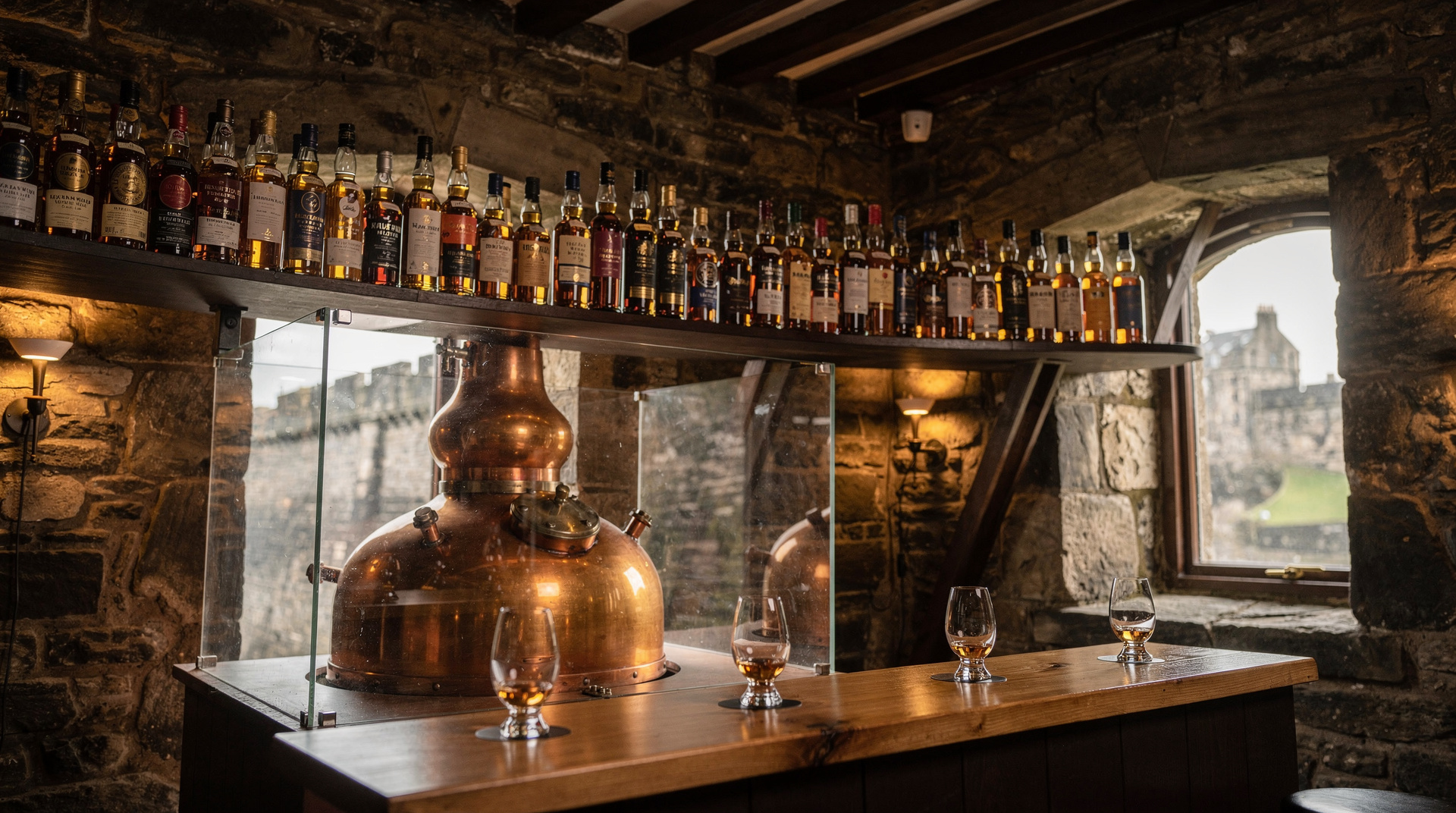
The most efficient way to taste across all five regions without travelling is the Scotch Whisky Experience regional tasting: the guided session is structured specifically around regional comparison, using drams chosen to represent typical character rather than flagship expressions.
For a more adventurous regional comparison, ask the staff at the Bow Bar or Cadenhead’s to build you a flight: one dram from each of the main regions, chosen to show clear stylistic contrast. A good flight might pair a Glenlivet 12 (Speyside, approachable fruit), a Glenmorangie Lasanta (Highland, sherry-influenced weight), a Glenkinchie 12 (Lowland, light and floral), and an Ardbeg 10 (Islay, full peat impact). The contrast is striking and makes the regional vocabulary feel real.
The small-group history of whisky tour with tasting includes historical context for why regional styles developed as they did — the geography of the peat bogs, the smuggling routes that shaped distillery locations, and the role of the excise laws in concentrating production in the Highlands.
Production factors that matter as much as region
Understanding that region is only part of the flavour story becomes clearer when you learn about the other production variables that whisky enthusiasts discuss:
Peating level: Whether and how heavily the malt is dried over burning peat determines the smoky, medicinal flavours associated with Islay. Peat is not exclusive to Islay (several Highland and Speyside distilleries use it), but Islay uses it most consistently.
Cask type: Bourbon casks (previously used for American bourbon, which must be aged in new oak) impart vanilla, coconut, and lighter fruit. Sherry casks impart richer dried fruit, chocolate, and spice. The Macallan’s famous sherry-cask programme is why it tastes so different from other Speysides using predominantly bourbon casks.
Distillery character: The shape of the pot stills, the cut points during distillation, the local water source, and the microclimate of the warehouses all contribute to a distillery’s house character independent of region. Glengoyne and Glenkinchie are both Lowland/Highland border distilleries using similar grain sources; they taste quite different.
Age: More years in cask generally means more complexity (up to a point), more interaction with the wood, and softer edges on the spirit. But age alone does not determine quality — a 12-year-old from a great distillery often outperforms a mediocre 25-year-old.
Blended Scotch: the misunderstood category
No guide to understanding Scotch whisky regions is complete without addressing blended Scotch, which accounts for over 90% of all Scotch whisky sold globally but is often dismissed by single malt enthusiasts as inferior.
Blended Scotch combines single malt whiskies from multiple distilleries with grain whisky (made from wheat or corn in column stills rather than pot stills, lighter and more neutral in character). The blender’s art is creating a consistent product from a rotating mix of component whiskies — if a particular distillery’s production changes or supply is disrupted, the blend must be maintained using different proportions or different component whiskies.
This sounds less romantic than the story of a single malt expressing its specific place and production. But the counterargument is that blending requires considerably more technical knowledge of whisky character than selecting the best expression from a single distillery’s range. The master blenders at Johnnie Walker, Chivas, and Bell’s taste thousands of samples annually and maintain remarkable consistency in the final product.
The Johnnie Walker Princes Street experience covers the craft of blending in an accessible format. If blended Scotch interests you as a category, the Whisky Maker’s Blend session there is the best way to understand it. The result might be more respect for the blended category than you arrived with.
How Scotch whisky is made: the essentials
Understanding the production process helps make sense of why whiskies from the same region can taste so different, and why specific production choices (peat, cask type, distillation style) matter more than geography.
Malting: Barley is soaked in water, allowed to germinate (which activates enzymes that will convert starch to sugar), then dried to stop germination. Traditional drying used peat fires, which impart the smoky phenolic compounds that characterise peated whisky. Most modern distilleries buy malted barley from commercial maltsters rather than malting on site.
Mashing: The dried malt is ground into grist and mixed with hot water in the mash tun. The sugars dissolve into the water, creating a liquid called wort. The spent grain is removed and sold as animal feed.
Fermentation: The wort is transferred to washbacks — large vessels made from wood or steel — and yeast is added. Fermentation takes 48–96 hours and produces a liquid of about 8% ABV called wash, essentially a strong, unhopped beer. The duration and temperature of fermentation affect the fruity ester compounds in the final spirit.
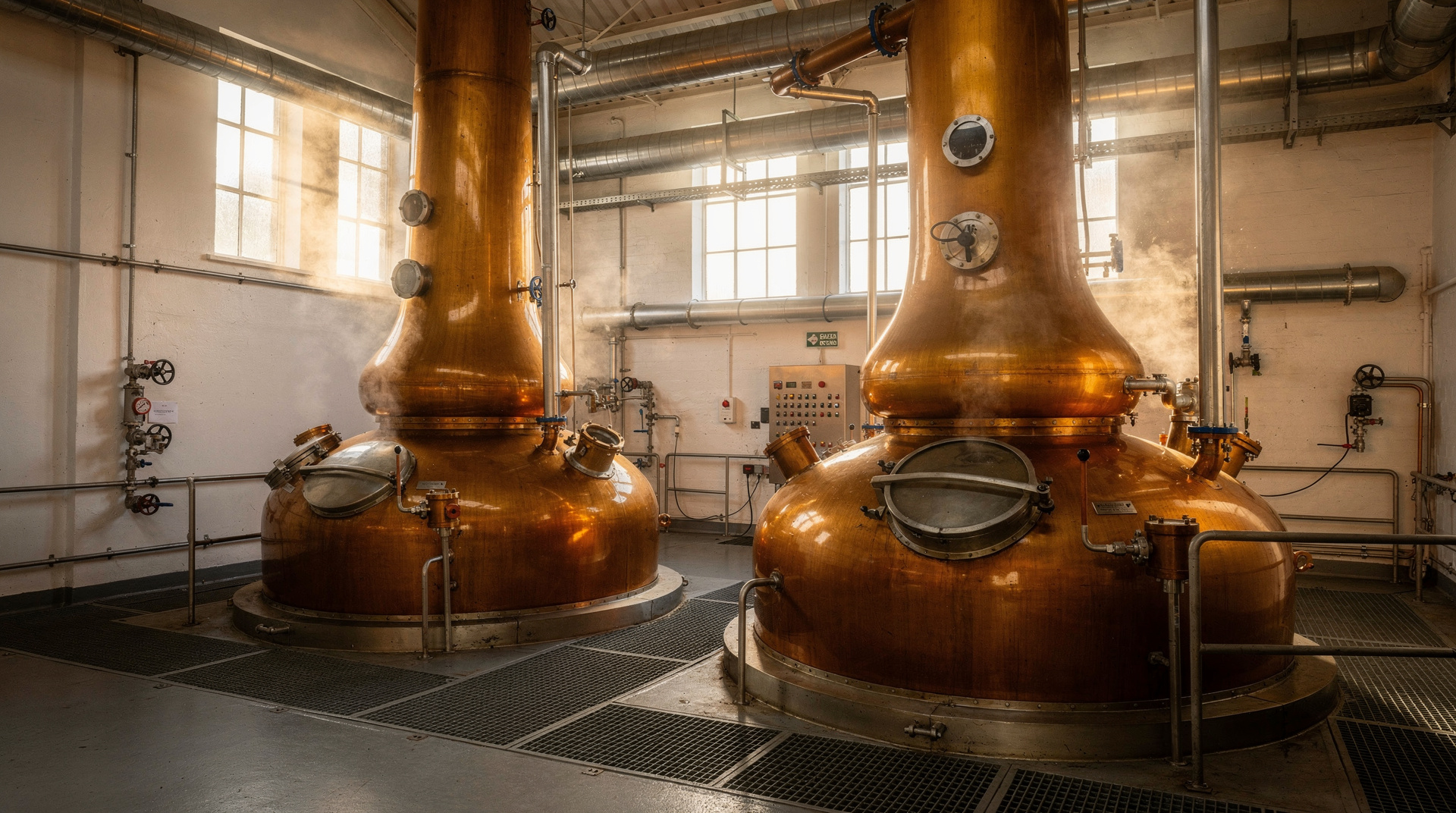
Distillation: Wash is distilled in copper pot stills. Scottish law requires at least two distillations. The shape of the still — tall and narrow for lighter spirit; short and squat for heavier — significantly influences the character of the spirit that comes off. The distiller takes “cuts” at different points in the run; the middle cut (the heart of the run) goes to maturation; the heads and tails are redistilled.
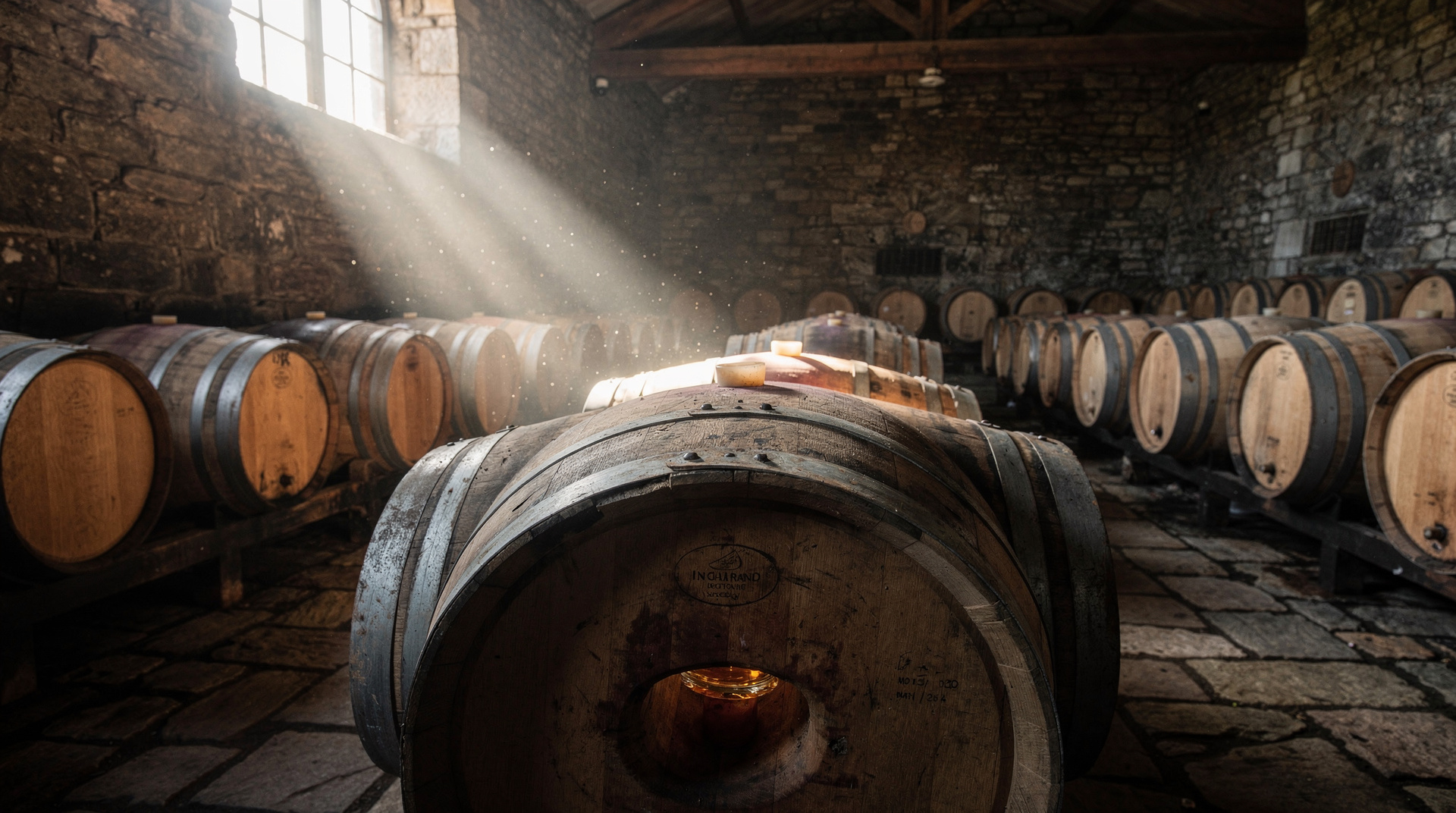
Maturation: New make spirit is aged in oak casks for a minimum of three years (legally required to call it Scotch whisky). Most Scotch is aged considerably longer. The cask is the single largest determinant of the final flavour after the new make spirit character — it contributes colour (all of it), vanilla and fruit notes, and structural complexity.
The age statement debate
A significant development in Scotch whisky marketing over the past decade has been the rise of no-age-statement (NAS) expressions from major distilleries. Instead of “12 Year Old” or “18 Year Old,” labels show names like “Select Reserve” or “Master Distiller’s Selection” — and the whisky inside may be a blend of different ages that the producer prefers not to disclose.
The industry rationale is that age statements constrain production flexibility. If demand for a distillery’s 12 Year Old grows faster than their stock of 12-year-old whisky, they cannot meet demand without either years of wait or releasing a younger product. NAS releases allow distilleries to manage supply more flexibly.
The consumer concern is transparency. Without an age statement, you cannot know how young the youngest component in the whisky is. Some NAS expressions are genuinely excellent; others use the label to release younger stock at premium prices.
The practical guideline: treat NAS expressions from respected distilleries as you would any other bottle — taste it if possible, read reviews from knowledgeable sources, make a decision on merit. Be sceptical of NAS expressions priced significantly higher than their age-stated equivalents from the same distillery.
Building your own regional tasting kit
For visitors who want to continue exploring after leaving Edinburgh, a small set of miniatures or a mixed case covering the five regions is easy to assemble at Cadenhead’s, the Royal Mile Whiskies shop, or the airport duty-free (though the airport range is more limited and skews toward flagship expressions rather than the more instructive independent bottlings). A useful starter set: a Speyside 12-year-old, a Highland with sherry cask influence, a Lowland triple-distilled expression, an Islay at standard 10-year strength, and — if you can find one — a Campbeltown Springbank.
Tasting these side by side at home, in the same order used in the guided tastings described above, recreates the comparative structure that makes the regional differences click — and gives you a genuinely useful reference point the next time you are choosing a bottle in an unfamiliar bar or shop. Keep tasting notes as you go; even brief jottings on aroma and finish build a personal reference far more useful than relying on memory alone after several drams, and looking back at them months later is often the moment the regional map genuinely sticks.
How to read a whisky label
A Scotch whisky bottle label contains specific information regulated by law:
Age statement: If present, gives the age of the youngest component. A “12 Year Old” contains no whisky younger than 12 years.
Strength: Minimum 40% ABV for Scotch whisky. Cask strength typically runs 55–65%.
Bottled by versus distilled at: If different companies, you have an independent bottling (Cadenhead’s, Gordon and MacPhail, Signatory). If the same, a distillery release.
Non chill-filtered: Chill filtering removes fatty esters that cause cloudiness but also removes some flavour. “Non chill-filtered” preserves more flavour; mild cloudiness when water is added is cosmetic, not a quality issue.
Natural colour: Caramel colouring (E150a) can legally be added to maintain consistent appearance. “Natural colour” means no added colouring; colour comes entirely from the cask.
The whisky cycle: how Edinburgh fits in historically
Edinburgh’s connection to whisky is primarily commercial rather than production-based. The city was never a major distilling centre in the way that Speyside or Campbeltown were; the Lowland distilleries were historically located further west (Auchentoshan near Glasgow, Bladnoch in Galloway) or in the rural south.
What Edinburgh provided was the commercial infrastructure: the bonded warehouses of Leith where whisky was stored and traded, the blending operations run by companies like John Walker, Matthew Gloag (Famous Grouse), and William Grant, and the export networks that made Scotch whisky a global product in the nineteenth and twentieth centuries. The Scotch Whisky Association has its headquarters in Edinburgh; most of the major industry organisations are based here.
This history explains why Edinburgh is rich in whisky commercial culture — bars, retailers, experiences, independent bottlers — rather than in working distilleries. The whisky tasting guide is the practical companion to the history covered here; between them they give you both the context and the planning framework for any Edinburgh whisky visit.
Turning region knowledge into a tasting plan
Once you understand the five regions, the practical question is how to structure an Edinburgh whisky day around that knowledge. Visitors with a single afternoon should default to a structured regional tasting rather than picking bottles at random — the Scottish whisky expert tasting session is built specifically to walk through the regional contrasts described above with an experienced guide who can adjust the flight to your stated preferences after the first dram or two.
Visitors with more time can extend this into an actual distillery day trip; the distilleries near Edinburgh guide covers which regions are practically reachable and which are not (Islay and Campbeltown, notably, require more than a day trip).
For a more folklore-driven angle on why the regions developed the way they did — smuggling routes, excise crackdowns, and the geography of peat — the whisky folklore walking tour covers the social history behind the regional map rather than the tasting notes alone.
Frequently asked questions about Scotch whisky regions
Which whisky region is best for beginners?
Speyside is generally the most accessible entry point — the sweet, fruity profile is approachable and the expressions are widely available. A Glenlivet 12 or Glenfiddich 12 is a reasonable starting point. If you like smoke in other foods (smoked salmon, barbecue), you may go straight to Islay without difficulty.
Does expensive Scotch always taste better?
No. Price reflects rarity, age, and marketing as much as quality. Some of the most interesting Scotch whisky comes from independent bottlers (Cadenhead’s, Gordon and MacPhail) at fair prices. Within distillery ranges, the jump from 12 to 18 years old is often more significant than the jump from 18 to 25.
What does “single malt” mean?
Single malt Scotch whisky is made from malted barley at a single distillery (no mixing of whiskies from different distilleries) using pot stills. “Single” refers to the distillery, not the cask or the year. “Blended” Scotch combines whiskies from multiple distilleries. Neither is inherently superior; they are different products.
Is adding water to whisky acceptable?
Yes, and often recommended. A small drop of water opens up the aroma of many whiskies, particularly cask-strength expressions. Try a dram neat first, then add a few drops and assess whether it changes for better or worse. Ice dilutes flavour and cools the dram below the temperature at which volatile aromatic compounds are released; most whisky enthusiasts avoid it.
How do you store an open bottle of whisky?
Upright (not on its side, unlike wine), away from direct light, in a cool stable environment. An opened bottle starts to oxidise gradually; most whisky will remain in good condition for a year or more after opening. Very old or very delicate whiskies are more sensitive to oxidation.
Can I taste all five Scotch regions without leaving Edinburgh?
Yes. Edinburgh’s whisky bars and tasting experiences stock representative bottlings from all five regions, so no travel is required to sample the range described in this guide. Visiting the actual distilleries is a different (and worthwhile) experience, but it is not necessary to understand or appreciate the regional differences — the whisky tasting guide covers exactly how to structure a same-city regional tasting.
Top experiences
Bookable activities with verified prices and instant confirmation on GetYourGuide.