Edinburgh day trips by train: the complete guide
The train case for Edinburgh day trips
Edinburgh’s location makes it one of the best-connected cities in Scotland for rail-based day trips. Waverley Station sits in the heart of the city and gives direct or near-direct access to a range of destinations that are genuinely worth visiting in their own right. No car required. No Highland road nerves. No parking fees.
The key advantage of train day trips from Edinburgh is also a significant constraint: the rail network covers the lowland and coastal destinations very well but does not penetrate the Highlands. For Loch Ness, Glencoe, and similar, an organised day tour by minibus remains the practical option — a Loch Ness and Glencoe highlands day tour covers the ground the trains cannot. See the full day trips guide for the tour-based Highlands options.
| Main station | Edinburgh Waverley (also Haymarket, 5 min west) |
| Fastest destinations | Linlithgow (25 min), North Berwick (40 min) |
| Cheapest fares | Book advance tickets 1-3 weeks ahead |
| Not reachable by train | Loch Ness, Glencoe, Isle of Skye — use an organised tour |
| Railcard savings | 1/3 off most fares with 16-25, Two Together, or Family & Friends |
Glasgow: 50 minutes, from around £8-15
The most obvious train destination from Edinburgh is Glasgow. The service runs at least every 30 minutes on the LNER and ScotRail inter-city route, with journey times of 50-55 minutes. Advance tickets can be very cheap (£8-12 return) and even walk-up fares are reasonable by UK standards.
A day in Glasgow can cover Kelvingrove Art Gallery and Museum (free, extraordinary), the West End’s Byres Road and Finnieston restaurant scene, Charles Rennie Mackintosh’s Glasgow School of Art (exterior viewing; the interior is gradually being restored after two fires), and the Barrowland area for vintage shops and street art.
See the Glasgow day trip guide for a structured itinerary.
Stirling: 55 minutes, from around £10-16
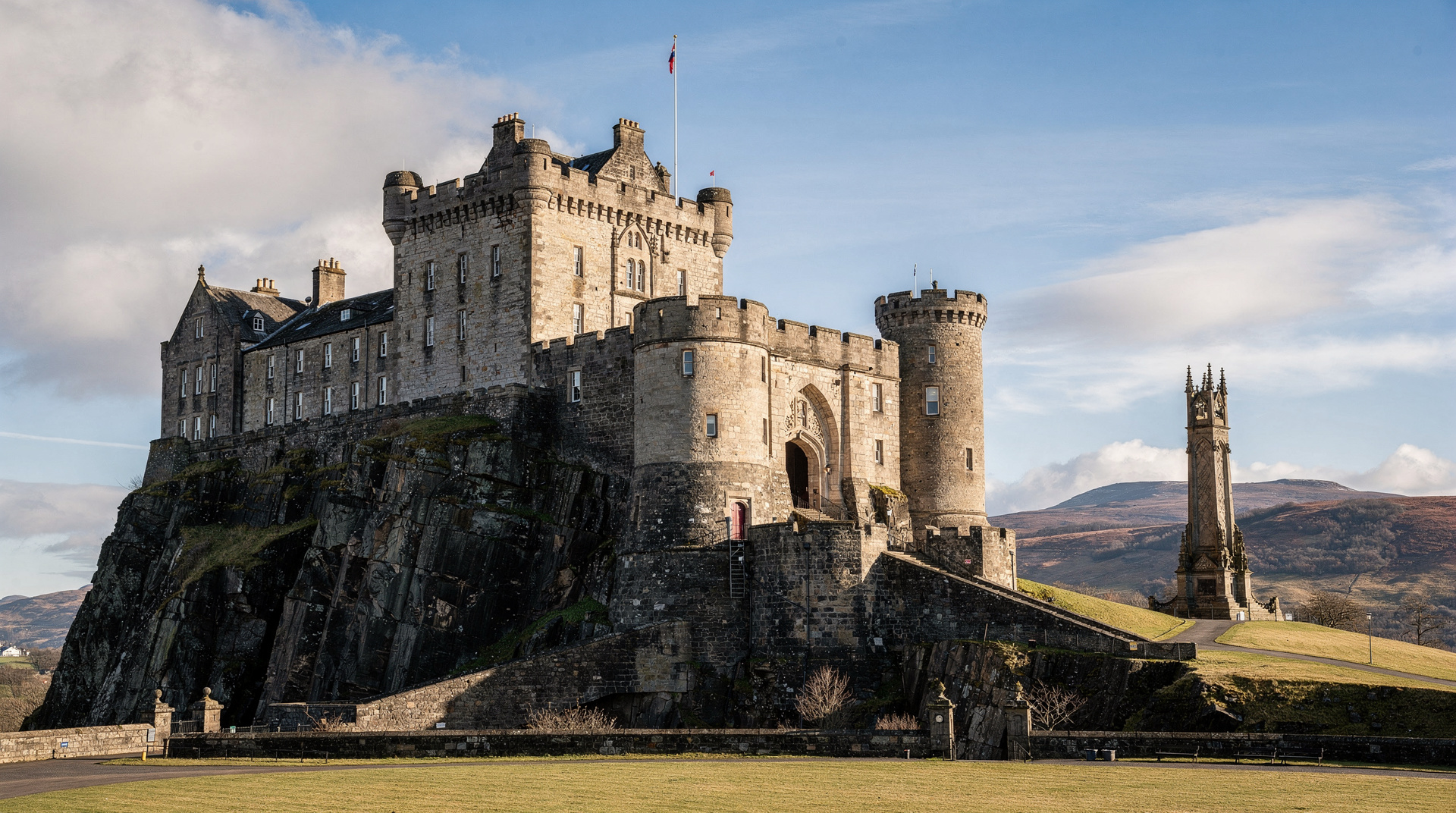
Stirling Castle sits at Scotland’s historical pivot point — the highest navigable point of the River Forth, the place where armies had to cross, the seat of Scottish royal power for centuries. The castle itself is as historically significant as Edinburgh Castle and considerably less crowded. The Wallace Monument is a 15-minute walk from the train station. Stirling’s Old Town, though smaller than Edinburgh’s, is genuinely interesting.
Practical timing: Trains run frequently from Edinburgh Waverley. From Stirling station, the castle is a 15-20 minute uphill walk or a short taxi ride. A full day covers the castle (allow 2-3 hours), the Old Town, and the Wallace Monument.
For the deeper context on Stirling’s history and what to prioritise, see the Stirling day trip guide.
North Berwick: 40 minutes, from around £8-12
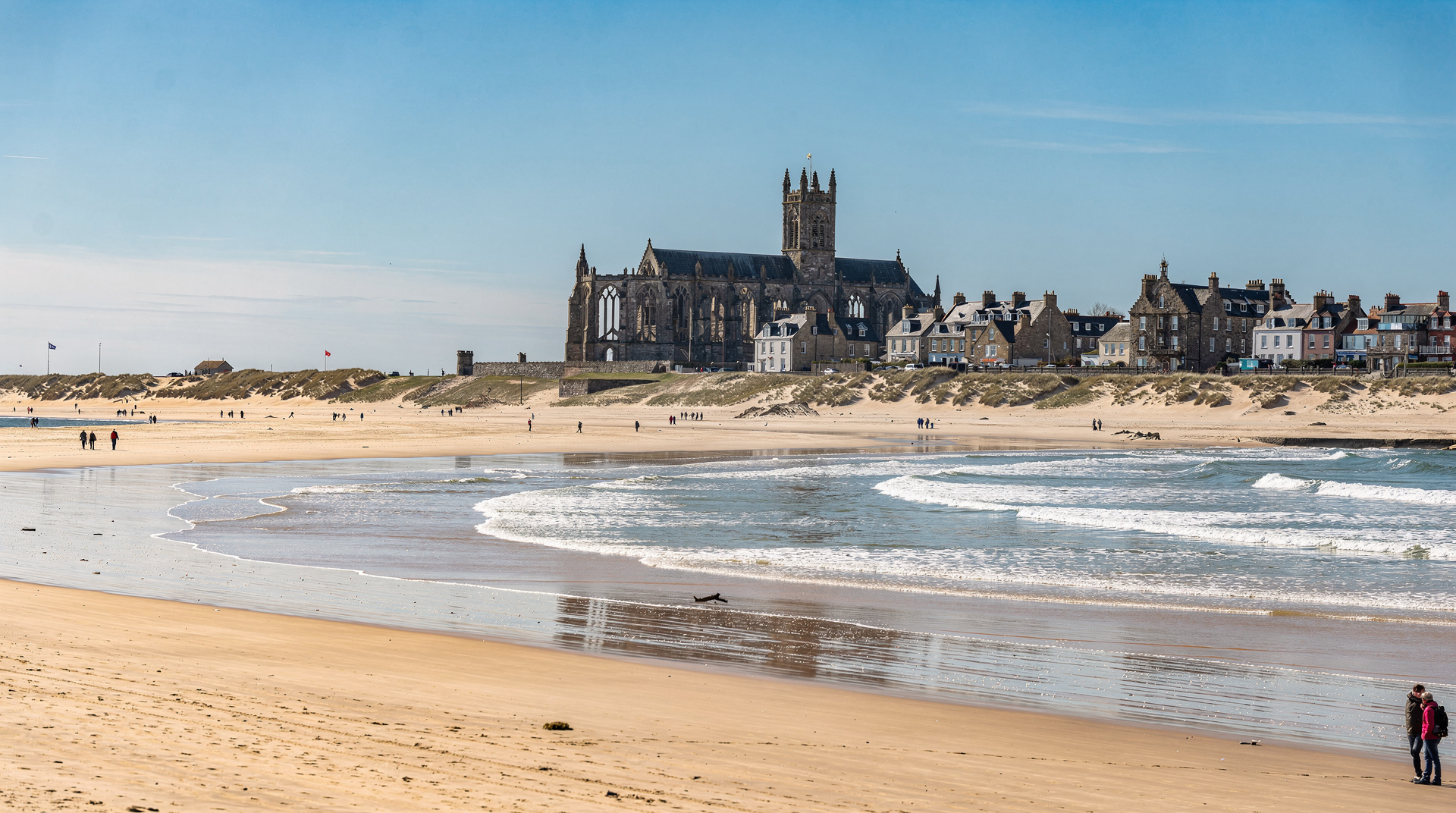
North Berwick is an East Lothian seaside town with an excellent small museum (the Scottish Seabird Centre), Tantallon Castle four kilometres east by taxi or bike, and a coast that feels genuinely wild considering how close it is to Edinburgh.
The puffin boat trips run from North Berwick harbour to the Bass Rock (the world’s largest gannet colony) between April and July. Seeing 150,000 gannets at close quarters is one of the more arresting wildlife experiences available within an hour of a major European capital.
Practical timing: Trains from Waverley to North Berwick take about 40 minutes and run hourly. The town is small enough to walk; the main coastal sights are within 2 km of the station. A North Berwick day trip is one of the easiest and best-value options from Edinburgh.
Linlithgow: 25 minutes, from around £6-10
Linlithgow Palace — the birthplace of Mary Queen of Scots — is a five-minute walk from Linlithgow station and is one of the most impressive medieval royal palaces in Scotland. It sits beside Linlithgow Loch and the ruins, which are more substantial than most expect, give a good sense of the palace’s scale in its prime. Admission is through Historic Environment Scotland (£10 for adults online).
Best combined with: Falkirk Helix (the Kelpies) is accessible by changing trains at Falkirk. The two form a reasonable half-day; Linlithgow in the morning and the Kelpies in the afternoon.
Dunfermline: 35 minutes, from around £8-12
Dunfermline Abbey and Palace sit above Dunfermline town centre — the abbey holds the tomb of Robert the Bruce (or most of him; his heart was buried separately in Melrose). The medieval buildings are in better condition than their modest fame suggests. The Andrew Carnegie Birthplace Museum is also here, free to enter and worth 45 minutes.
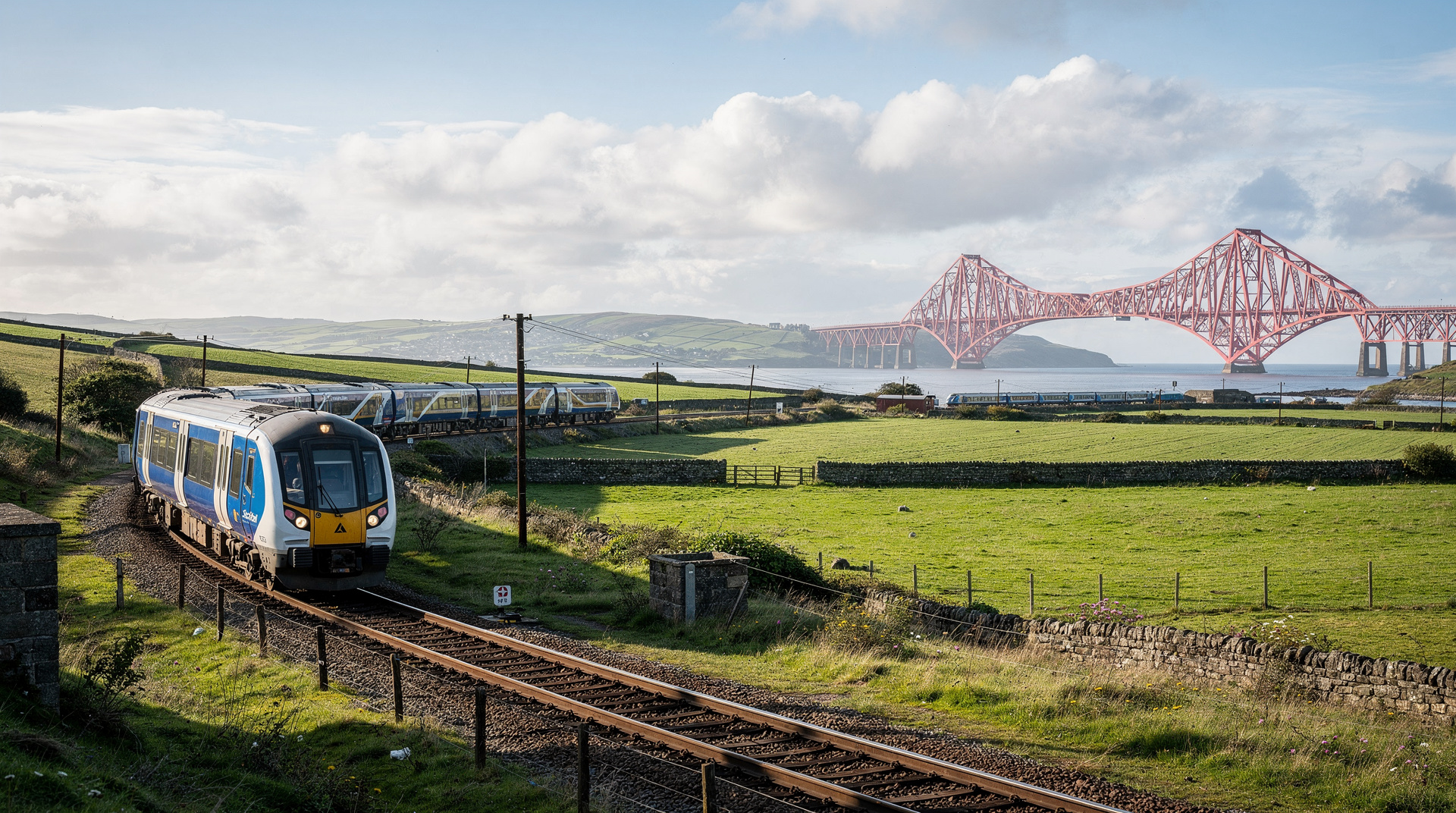
Practical note: Dunfermline is directly accessible from Edinburgh by ScotRail trains that cross the Firth of Forth via the rail bridge at South Queensferry — you get a brief but impressive view of the Forth Bridge from the train.
St Andrews: approximately 90 minutes (with a change at Leuchars or Cupar)
There is no direct train to St Andrews — the nearest station is Leuchars (or Cupar if coming from the other direction), from which buses connect to St Andrews in 10-15 minutes. The combined journey takes roughly 90 minutes from Edinburgh Waverley.
What St Andrews offers is the university town atmosphere, the cathedral ruins (one of the finest in Scotland), the Royal and Ancient Golf Course, and a town that rewards slower exploration. The beaches — particularly the West Sands, where the Chariots of Fire opening sequence was filmed — are excellent. See the St Andrews day trip guide for a full itinerary.
Perth: 80 minutes (direct), from around £15-25
Perth is sometimes overlooked as a day trip but the city has the excellent Perth Museum (recently reopened after a major renovation), the nearby Scone Palace (coronation site of Scottish kings), and easy access to the Perthshire countryside. Trains from Waverley to Perth run several times per hour.
Berwick-upon-Tweed: 55 minutes, from around £12-20
Technically in England but historically Scottish, Berwick-upon-Tweed is the most changed-hands border town in British history. The Elizabethan town walls are among the best-preserved in Europe, walkable in their entirety. Holy Island (Lindisfarne) is accessible by bus and causeway from Berwick, though tidal timing requires planning. See the Borders and Northumberland day trip guide for context.
Planning your rail days around the rest of your trip
Train days work best when they are slotted between city days rather than crammed into one stretch. If you are still deciding how long to stay, the guide to how many days in Edinburgh helps you see where a day out fits, and the 3-day Edinburgh itinerary leaves room for one easy rail excursion. Visitors with only a short stay can look at the Edinburgh in 1 day itinerary first and decide whether a day trip is realistic at all.
Weather matters too. A day trip to a coastal town or a castle ruin is far more pleasant in dry conditions, so check the Edinburgh weather guide and the best time to visit Edinburgh before fixing dates. For trips that include the Scottish Borders or Stirling, a flexible schedule lets you swap days if the forecast turns.
If you would rather see how the train compares with the road, the best day trips from Edinburgh overview and the Scottish castles near Edinburgh guide put every option side by side. Families can start with family day trips from Edinburgh, and anyone watching the budget will find the Edinburgh on a budget guide useful alongside the fares above.
Tips for Edinburgh train day trips
Book in advance for cheap fares — ScotRail and LNER both offer advance pricing that is significantly lower than walk-up. The Railcard (16-25, Two Together, Family & Friends) pays for itself very quickly on Scottish rail journeys.
Check engineering works before travel — weekend engineering works on Scottish main lines are more common than the frequency of service would suggest.
The Forth Bridge is on your route to many destinations north of Edinburgh — the crossing at South Queensferry is brief but spectacular from the train window.
For the fuller picture on getting around without a car, see the car guide. For day trips that genuinely require a tour or car (Highlands, Glencoe, Isle of Skye), see the organised Highland day trips guide.
Combining train day trips: multi-stop options
Several Edinburgh day trips combine well into a single more ambitious day out:
Fife circuit: Take the train to Dunfermline in the morning (35 minutes), walk the abbey and Carnegie birthplace (2 hours), catch the bus or train to Kirkcaldy, then continue along the Fife coast to Cupar and connect to St Andrews for a late afternoon. This covers medieval history, Victorian philanthropy, and one of the finest university towns in Scotland in a single day. The trains back run until late evening.
East Lothian coast: North Berwick by train (40 minutes) for the morning; Seabird Centre and harbour by late morning; taxi to Tantallon Castle (4km, £10) for the ruins overlooking the Bass Rock; return to Dunbar by bus for a late lunch and the John Muir House (the conservationist’s birthplace); train home. Full east Lothian coastal experience in a day.
Stirling and the Kelpies: Train to Stirling (55 minutes), castle and Wallace Monument before lunch, bus or taxi to Falkirk for the Kelpies (the enormous steel horse sculptures at the Falkirk Helix, free), train back to Edinburgh from Falkirk High station. A day combining Scotland’s most important castle with one of its most striking recent sculptures.
The cost reality of train day trips
Scottish rail fares have a wide spread between advance booking and walk-up prices. The Caledonian Sleeper discount booking windows, the ScotRail advance purchase system, and the LNER advance pricing all reward early commitment. For day trips, the practical advice:
- Book at least one week ahead for weekday travel; two to three weeks for weekends
- Use a 16-25, Two Together, or Family & Friends Railcard if you have one — the 1/3 discount applies to most Scottish journeys and pays for the card cost in a single round trip
- Split tickets (buying two tickets covering separate sections of the same journey) can reduce costs significantly on some routes — the ScotRail website does not always surface this automatically
Actual round-trip costs for main Edinburgh rail day trips in 2024:
- Glasgow: £8-15 advance; £15-25 walk-up
- Stirling: £10-16 advance; £18-22 walk-up
- North Berwick: £8-12 advance; £12-16 walk-up
- Linlithgow: £6-10 advance; £10-14 walk-up
- Perth: £15-22 advance; £25-35 walk-up
- Dunfermline: £8-12 advance; £12-16 walk-up
The rail infrastructure of Edinburgh
Edinburgh Waverley is the main station, sitting in the valley between the Old Town and the New Town — the same valley that was once the Nor’ Loch and is now Princes Street Gardens. The station layout is slightly confusing on a first visit but is well-signposted. Trains to Glasgow, Stirling, and the north depart from the main platforms; trains to North Berwick and Fife from the eastern end.
Edinburgh Haymarket, the second station, is five minutes west of Waverley on the same lines and often has shorter queues. Many day-trip trains stop at both stations.
The experience of arriving at Edinburgh Waverley by train from the south — emerging from the station straight into the heart of the city with the Castle on the ridge above — is one of the most dramatic station arrivals in Britain. See the trains from London guide for arrival and departure logistics.
Choosing between the train and an organised tour
For destinations the rail network reaches directly — Glasgow, Stirling, North Berwick, Linlithgow, Dunfermline — the train is almost always the better choice: cheaper, more flexible on timing, and no need to coordinate with a group. For the Highlands proper (Loch Ness, Glencoe, Isle of Skye) and multi-stop days that combine several sights, an organised tour wins because it removes the need to plan bus connections at the far end and includes commentary along the way.
St Andrews sits in between: the train-plus-bus combination works, but a tour bundling St Andrews with Falkland or the East Neuk fishing villages can be more efficient if you want to see more than the one town — a small-group tour of St Andrews and the Fife fishing villages is the easy way to do it without juggling connections. The East Neuk of Fife and St Andrews pages show what each stop adds. See the Loch Ness day trip guide for how the tour-based Highlands options compare on cost and pacing.
Frequently asked questions about Edinburgh train day trips
Which Edinburgh train day trip is best for a first-time visitor?
Stirling is the strongest all-round choice: under an hour away, historically on a par with Edinburgh Castle, and considerably less crowded. Glasgow is the best pick if city contrast and Kelvingrove’s free collection matter more than castles.
Can I reach the Scottish Highlands by train from Edinburgh?
Not directly for the classic Highland day-trip destinations — Loch Ness, Glencoe, and the Isle of Skye have no useful rail connection from Edinburgh for a single day out. An organised minibus tour is the practical way to see them in a day; the train network is better suited to lowland and coastal destinations like Stirling, St Andrews, and North Berwick.