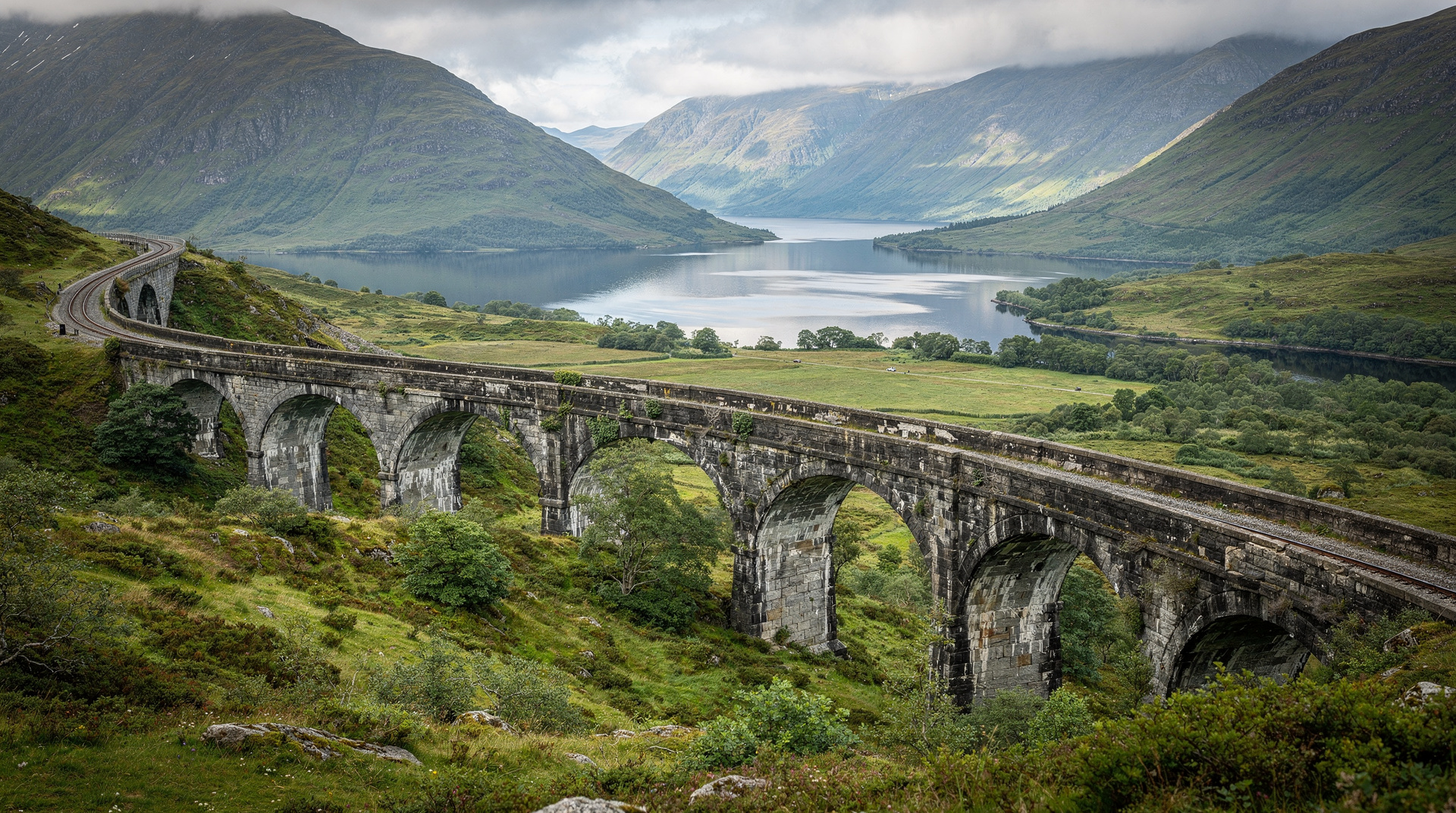
Oban
Oban from Edinburgh: fresh west-coast seafood, the Oban distillery, McCaig's Tower, and the gateway to Mull — 3 hours west by car or train.
Edinburgh: Loch Lomond, Loch Awe, Oban & Inveraray
Quick facts
- Best time to visit
- May–September; best seafood availability and ferry services
- Days needed
- 1 day
- Getting there from Edinburgh
- ~3 hours by car via A9/A82/A85; ~3 hours by train
- Budget per day
- £70–£130; guided day tour from £40
Scotland’s seafood capital — and an honest day-trip calculation
Oban is a small port town on the west coast of Scotland, about 3 hours from Edinburgh by car or train. It calls itself the “seafood capital of Scotland” — a description that is earned rather than just marketing. Oban sits at the junction of the Firth of Lorn and Loch Linnhe, surrounded by islands, with fishing boats bringing scallops, langoustines, lobster, and oysters directly to quayside stalls that are among the best-value places to eat shellfish in Britain.
The honest case for an Oban day trip: the town is more interesting than you expect for its size, the food justifies the drive, the setting on its own bay with McCaig’s Tower on the hillside behind is attractive, and the surrounding area — Inveraray to the south, Kilchurn Castle to the east, the ferry connections to Mull and Kerrera — adds variety to what could otherwise be a journey for a bowl of langoustines and a look at a Victorian folly.
The honest caveat: Oban is on the west coast of Scotland. The west coast gets significantly more rain than Edinburgh. A planned Oban day trip in poor weather produces a grey, wet town where the views are obscured and the attractions contract to the distillery, a couple of cafes, and a seafood takeaway. The day is weather-dependent in a way that Stirling or Glencoe (which are dramatic in cloud) is not. Plan with contingency.
| At a glance | |
|---|---|
| Where | West coast Highlands, ~100 miles from Edinburgh |
| Time needed | Full day (day tour) or an overnight if combining with Mull |
| Getting there | ~3 hours by car or train (via Glasgow) |
| Typical cost | Guided day tour from around £40; seafood lunch £15–£45 per person |
| Best time | May–September for weather, ferry frequency and seafood availability |
| Do not skip | The Oban Seafood Hut and Kilchurn Castle on the drive in |
Getting from Edinburgh to Oban
By car, the most direct route runs west through Glasgow on the M8, then north on the A82 through Loch Lomond and Crianlarich, then southwest on the A85 to Oban — approximately 100 miles from Edinburgh, taking about 3 hours in normal traffic. Alternatively, via the A9/A84 through Stirling and Callander adds roughly 15 minutes but passes through more varied and scenic terrain.
By train, ScotRail operates a direct service from Edinburgh Waverley to Oban via Glasgow Queen Street. The journey takes approximately 3 to 3.5 hours total with the Glasgow connection. The section from Crianlarich to Oban is particularly scenic — a single-track line passing through Glen Lochy and along the shores of Loch Awe. Check ScotRail timetables; trains to Oban are not frequent.
An organised day tour from Edinburgh provides the most straightforward access and typically combines Oban with other stops along the route. The Edinburgh to Loch Lomond, Loch Awe, Oban and Inveraray tour covers the entire western arc from Edinburgh, with Loch Lomond and Inveraray as additional stops. The combination makes excellent use of a long day and ensures you see the best of the route rather than driving past it.
If Oban is one of several Highlands ideas you are weighing, the Edinburgh to the Highlands guide and the best day trips from Edinburgh put the options side by side. Travellers who would rather see more of the Highlands over several days can look at the five-day Edinburgh and Highlands itinerary, and anyone undecided about hiring a vehicle will find the do you need a car in Edinburgh guide a useful starting point.
Oban town and harbour
The harbour front is the heart of Oban, with CalMac ferries to Mull, Colonsay, Lismore, Kerrera, and further islands departing from the main pier. The bay is attractive in good weather — the Isle of Kerrera sits directly across the harbour entrance, sheltering the bay, and the Mull ferry crossing gives the impression of island access even from the quay.
The main street (George Street and Stafford Street) is compact and walkable. Beyond seafood and distillery visits, there is not a large amount to fill multiple hours in the town itself — Oban rewards a focused half-day rather than forcing the pace over a full day.
The seafood
This is the primary reason most people make the drive. The Oban Seafood Hut — a blue converted truck on the ferry pier, entirely without pretension — is consistently rated among the best places to eat shellfish in Scotland and is priced accordingly (remarkably affordably). Fresh langoustines, scallops, Loch Creran oysters, and dressed crab. Outdoor eating, cash or card, no reservation possible — arrive before noon to avoid the queue at peak season.
For a sit-down seafood experience, Eeusk (pronounced “yoosque,” Gaelic for fish) on the North Pier is the standout: a modern, window-fronted restaurant looking directly over the harbour. The seafood platter is one of the better ways to spend £35–£45 per person in the Scottish Highlands. Kitchen Brig on the harbour, and the Waterfront Fishhouse Restaurant, are also good. Oban rewards advance booking at these places in July and August.
The Oban Distillery
The Oban Distillery sits in the middle of the town centre on Stafford Street, hemmed in by buildings on three sides — one of the most urban distillery settings in Scotland for a Highland malt. The distillery has been producing since 1794 and the 14-year-old Oban single malt is a classic west-coast whisky: slightly peaty, maritime, with a honeyed quality. Tours run daily and include a tasting; book online in advance. Entry costs approximately £15–£20 for the standard tour and tasting in 2026.
The distillery’s position makes it an easy stop between seafood and any other Oban activity — all within walking distance.
If the tasting sparks an interest, the understanding Scotch regions guide explains where a west-coast malt like this sits against Speyside, Islay and the Lowlands, and whisky tasting in Edinburgh is a good way to compare styles back in the capital.
McCaig’s Tower
McCaig’s Tower is the large colosseum-like structure on the hill directly above Oban town, built by a local banker named John Stuart McCaig between 1897 and 1900 as a family memorial and to provide winter employment for local stonemasons. It was never completed (McCaig died before the interior was built), so the result is an open-topped circular wall with Romanesque arches, surrounding a garden. It is free to enter and the views from the interior over Oban Bay, the harbour, and the surrounding islands on a clear day are excellent — the best viewpoint in the area by some distance.
The walk up from the town takes about 15 minutes on a steep lane. Worth doing, particularly in the late afternoon with low sun on the bay.
Dunollie Castle and Museum
About a mile north of the town centre, Dunollie Castle is a ruined thirteenth-century tower house on a sea cliff above the bay. It is a dramatic ruin in a beautiful setting and still the home of the MacDougall clan (Clan MacDougall were hereditary keepers of the castle). The associated museum and grounds are managed by the Dunollie Preservation Trust; entry costs approximately £6 in 2026. The views over the Firth of Lorn and towards the islands are very good, and the walk along the shore from the town is pleasant.
Inveraray: the natural pairing
Inveraray, a planned Georgian town on the shores of Loch Fyne, is about 40 miles south of Oban on the A83 and sits naturally on the Edinburgh-to-Oban route if you approach via Loch Lomond and the Rest and Be Thankful pass. The drive through the Rest and Be Thankful — a dramatic mountain pass where the A83 climbs steeply through Glen Croe before descending to Loch Fyne — is one of the best short drives on this route.
Inveraray is worth an hour: the town layout is architecturally remarkable (it was planned in the 1740s when the 3rd Duke of Argyll relocated the existing town to make way for his castle), the loch setting is beautiful, and Inveraray Castle (the ancestral seat of the Campbells of Argyll, open to visitors) is an eighteenth-century Gothic Revival structure with good interior collections. The jail museum in the town is a solid family attraction. Inveraray Pier Café does a good lunch.
The Loch Lomond, Loch Awe, Oban and Inveraray tour covers Inveraray as a stop on the same day, making the most of the route.
The first leg of the drive passes through Loch Lomond and the Trossachs, which makes a worthwhile stop in its own right; the Loch Lomond day trip guide covers it in detail. Visitors who like castles may also enjoy Stirling, another strong option for a weather-proof day.
Loch Awe and Kilchurn Castle
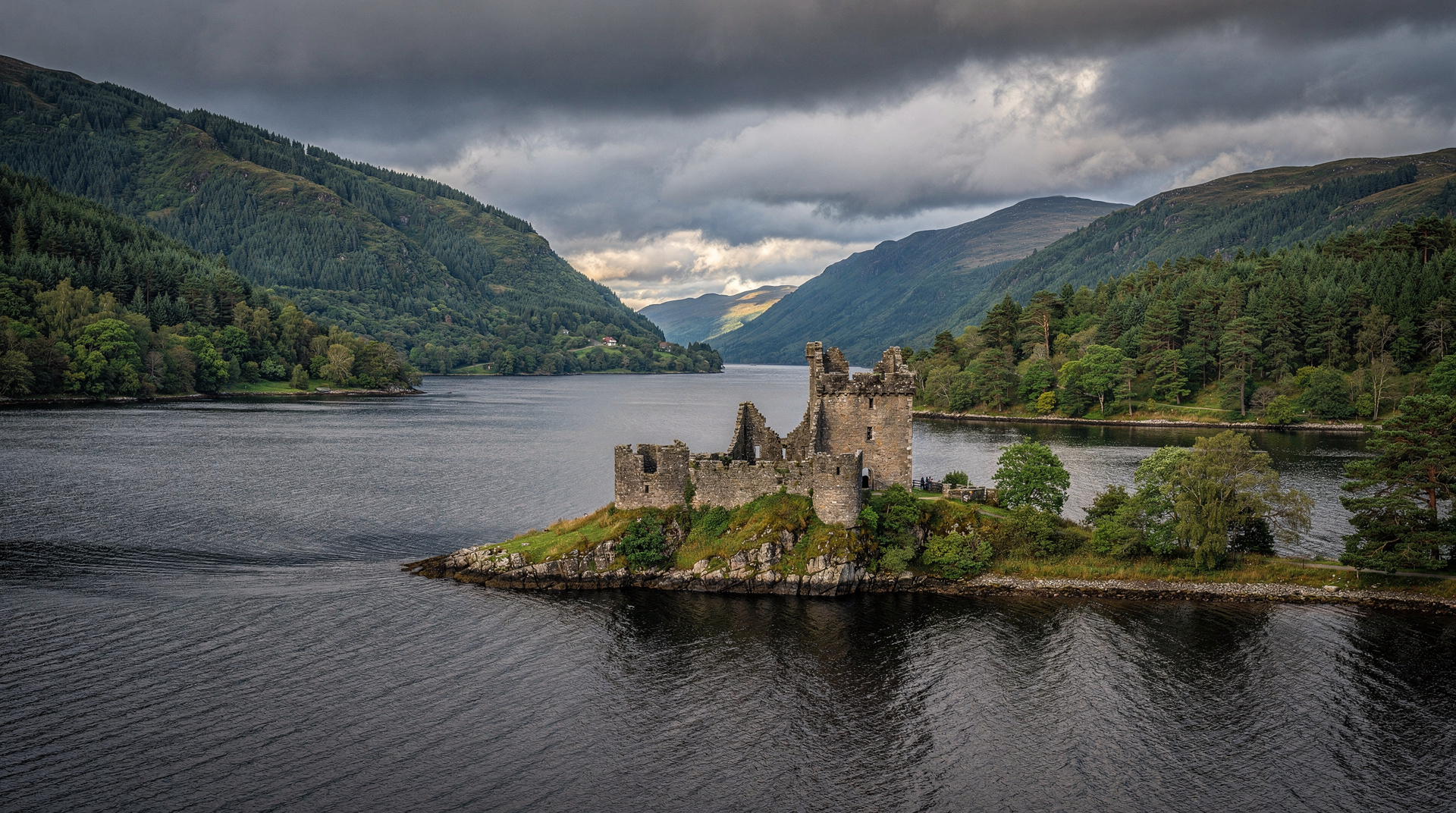
On the A85 between Crianlarich and Oban, the route passes Loch Awe — one of the longest freshwater lochs in Scotland (over 35 kilometres), surrounded by mountains and forest. At the northern end, visible from the road, Kilchurn Castle is a fifteenth-century Campbell castle ruin on a promontory (technically an island at high water). It is accessible on foot from a layby on the A819; the walk takes about 15–20 minutes. The views of the ruin reflected in the loch at dawn or dusk are extraordinary. Entry is free (Historic Environment Scotland); the site is open seasonally.
Kilchurn is one of several atmospheric ruins within reach of the capital; the Scottish castles near Edinburgh guide lists others if you want to compare.
Practical information for 2026
Weather planning: Check the west-coast forecast specifically (BBC Weather or Mountain Weather Information Service for the highlands). If rain is forecast all day, consider delaying the Oban trip for a better weather day and substituting with a closer, more weather-independent destination.
Driving: The A85 between Crianlarich and Oban is a winding single-carriageway road through Glen Lochy. Allow time, particularly behind slow vehicles in summer.
Car parking: Oban has several car parks near the harbour (pay-and-display). Arrive before 11am on summer weekends for a good space.
Ferries: Oban’s ferry connections make it possible to extend a day trip to a quick visit to the Isle of Kerrera (a 2-minute crossing on a small boat; entirely rewarding for walkers). Day trips to Mull require a full additional day. See the best day trips guide for island options.
UK ETA: See the UK ETA guide for entry requirements. Currency: £ sterling; see the Edinburgh currency guide.
The Isle of Kerrera: a quick island detour
For visitors who want the feeling of island travel without a full-day commitment, the Isle of Kerrera is a genuine option. The ferry from Gallanach (2 miles south of Oban, taxi or short walk) takes two minutes and costs about £5 return. Kerrera is small (roughly 5 miles by 2 miles), largely farmland and moorland, with a good circular walk of about 6 miles (3–4 hours) that passes the ruined Gylen Castle on the south coast — a sixteenth-century tower house in a clifftop setting above the Sound of Kerrera. The walk gives outstanding views back to Oban, south to the Garvellachs and Jura, and west to Mull.
The island has no cars (except farm vehicles), a small tearoom at the ferry landing, and feels genuinely remote despite being minutes from the mainland. It is one of the less expected day-within-a-day options in the western Highlands and significantly less visited than the other islands served from Oban.
What to see around Oban: the wider area
Seil Island and the Atlantic Bridge: About 15 miles south of Oban on the B844, Seil is connected to the mainland by the Clachan Bridge — often called the “Bridge over the Atlantic” (technically the Bridge over the Sound of Seil, a tidal channel). The bridge is an elegant 1792 stone arch. The village of Ellenabeich on Seil is attractive, with a row of whitewashed workers’ cottages. Tigh an Truish pub (“House of the Trousers”) has a story attached — allegedly where Highlanders changed from kilts to trousers after the Dress Act forbidding Highland dress following the 1745 Rising.
Sea Life Sanctuary at Barcaldine: About 12 miles north of Oban on the A828, the Scottish Sea Life Sanctuary is a marine life centre with seals, sharks, seahorses, and otters, primarily aimed at families. Entry costs approximately £22 for adults in 2026. Worth including if travelling with children.
Connel and the Falls of Lora: At the village of Connel (about 5 miles north of Oban), the sea loch Loch Etive narrows to a passage called the Falls of Lora — where the tidal flow over a submerged rock ridge creates rapids and whirlpools at certain tidal states. The Connel Bridge over the narrows gives the best view. Timing your arrival to coincide with the tidal flow (check local tide tables) can produce a spectacular display.
If the pull of the islands is strong, the Isle of Mull and Iona page explains what a longer stay would look like, and Glencoe and Fort William are natural neighbours on a wider western Highlands circuit. The Glencoe day trip guide is helpful if you would like to see how that area compares with Oban.
Whisky in the Oban area
Beyond the Oban Distillery in town, the surrounding area has several distilleries worth visiting for those extending their trip. Glenmorangie (near Tain, north of Inverness), Tamdhu (in Speyside), and Ben Nevis Distillery (in Fort William, about 40 miles northeast) are all accessible on a wider western Highlands circuit. Closer to Oban, the Ardnamurchan Distillery on the Ardnamurchan peninsula produces a peated western Highland malt and occupies one of the most remote distillery settings in Scotland. The distillery is accessible only by a long, scenic drive or ferry from Tobermory on Mull — not compatible with a simple Oban day trip, but worth knowing for multi-day planning.
The distilleries near Edinburgh guide and the whisky day trips guide cover the broader whisky landscape for Edinburgh-based visitors.
Day trip versus staying overnight: an honest comparison
Oban works as a long day trip from Edinburgh, but the drive itself (roughly 6 hours round trip) eats a significant share of the day. Whether that trade-off is worth it depends on what else you want from the visit:
| Day trip from Edinburgh | Overnight in Oban | |
|---|---|---|
| Driving/travel time | ~6 hours round trip | Same outbound, but no return drive that evening |
| Time in Oban itself | 4–6 hours realistically | A full evening plus a morning |
| Ferries to Mull/Kerrera | Kerrera only (2-minute crossing) is realistic | Mull becomes genuinely possible as a next-day add-on |
| Best for | Visitors with one Highlands day to spend and a strong seafood/whisky interest | Visitors planning to continue toward Mull, Iona, or the wider Argyll coast |
| Typical cost | Guided day tour from ~£40 plus food | Adds one night’s accommodation (£70–£150) but removes the same-day driving pressure |
For most Edinburgh-based visitors with a single spare day, the day trip is the right call — Oban rewards a focused half-day rather than a rushed full one, and the guided tour handles the long drive. If Mull or Iona are on your list, building in one Oban night changes the trip considerably for the better.
Whichever you choose, remember that Edinburgh itself is a good fallback when the west coast weather turns. The Edinburgh weather guide and the best time to visit Edinburgh help with timing, while multi-day Highland tours from Edinburgh are worth a look if you decide a single day is too short.
Frequently asked questions about Oban
How far is Oban from Edinburgh?
Oban is approximately 100 miles west of Edinburgh, about 3 hours by car via the M8/A82/A85 or the A9/A84/A85 through Stirling. By train (with a change in Glasgow), the journey takes approximately 3 to 3.5 hours.
Why is Oban called the seafood capital of Scotland?
Oban sits at the junction of several productive fishing grounds in the Firth of Lorn and surrounding sea lochs. Local boats bring scallops, langoustines, oysters, lobster, and fish directly to the harbour. The Oban Seafood Hut on the ferry pier has become nationally known for fresh shellfish at accessible prices. The surrounding sea lochs, particularly Loch Creran and Loch Fyne, are among the most productive shellfish-farming areas in Britain.
Is there a whisky distillery in Oban?
Yes — the Oban Distillery sits in the middle of the town on Stafford Street, making it one of Scotland’s most accessible distilleries. It produces the Oban 14-year-old Highland single malt, a west-coast whisky with maritime and slightly smoky characteristics. Tours and tastings run daily; book in advance online.
Can I take a ferry to a Scottish island from Oban?
Yes. Oban is one of Scotland’s main ferry hubs. CalMac operates services to Mull (45 minutes), Colonsay (2.5 hours), Lismore (50 minutes), and Kerrera (2 minutes). For a day trip from Edinburgh via Oban, only Kerrera is realistic for a brief island visit — Mull requires a separate day at minimum. See the island guides for planning multi-day island extensions.
What is McCaig’s Tower?
McCaig’s Tower is a Victorian folly above Oban town — a large circular structure with Romanesque arches built 1897–1900 by John Stuart McCaig as a family memorial. It was never completed internally. The interior is a public garden; entry is free. The tower’s main value is the views it provides over Oban Bay and the surrounding islands — the best panoramic viewpoint in the town.
What is Inveraray and is it worth stopping on the way to Oban?
Inveraray is a planned Georgian town on Loch Fyne, about 40 miles south of Oban on the A83. It is worth stopping for an hour: the town architecture is unusual and attractive, Inveraray Castle (the Campbell seat) is open to visitors, and the loch setting is beautiful. The Loch Fyne Oyster Bar at Clachan (about 20 minutes northeast of Inveraray on the A83) is also excellent for seafood. Most Edinburgh day tours that go to Oban include Inveraray as a stop.
Top experiences
Bookable activities with verified prices and instant confirmation on GetYourGuide.