Best time to visit Edinburgh for fewer crowds
The crowd problem in Edinburgh
Edinburgh receives around 4.5 million overnight visitors per year, and those visits are massively concentrated. August — when the Fringe and associated festivals run — accounts for a disproportionate share of this total: hotel occupancy rates exceed 95% across the city for most of the month, the Royal Mile is genuinely difficult to navigate at peak times, and prices for accommodation, food, and tourist attractions reach their annual maximum.
The result is that visitors who come in August are paying more, dealing with more crowds, and often getting a less authentic experience of the city than those who come in the shoulder months. The city itself — the architecture, the landscape, the history — is identical. Only the crowd levels and prices change.
Here is the breakdown of the best times to visit Edinburgh for fewer crowds, with honest notes on what you give up and what you gain.
| Best months | May, June, or early September |
| Worst month | August (Fringe, Tattoo, International Festival) |
| Price swing | Up to 40-50% lower outside August/Hogmanay |
| Trade-off | Cooler, more variable weather outside peak summer |
| Booking | Castle and accommodation still worth booking ahead even off-peak |
The best months for crowd avoidance
May
May is arguably Edinburgh’s optimal month. The city is coming out of winter, the weather is improving (average 13-15°C, increasing sunny spells), and the tourist crowds have not yet arrived in force. Hotel prices run roughly 30-40% below August levels. The Royal Mile is walkable. Arthur’s Seat is not lined with tour groups. The castle has manageable queues.
May also benefits from the tail end of Edinburgh’s festival season: the Beltane Fire Festival on Calton Hill on 30 April (one of the most dramatic spectacles in Edinburgh’s calendar, celebrating the Celtic spring festival) and the Scottish Seed Festival in late May are both atmospheric events that attract enthusiastic local audiences rather than mass tourism.
The main drawback: the Edinburgh weather in May can still be cold and changeable. Packing for all eventualities remains necessary.
June
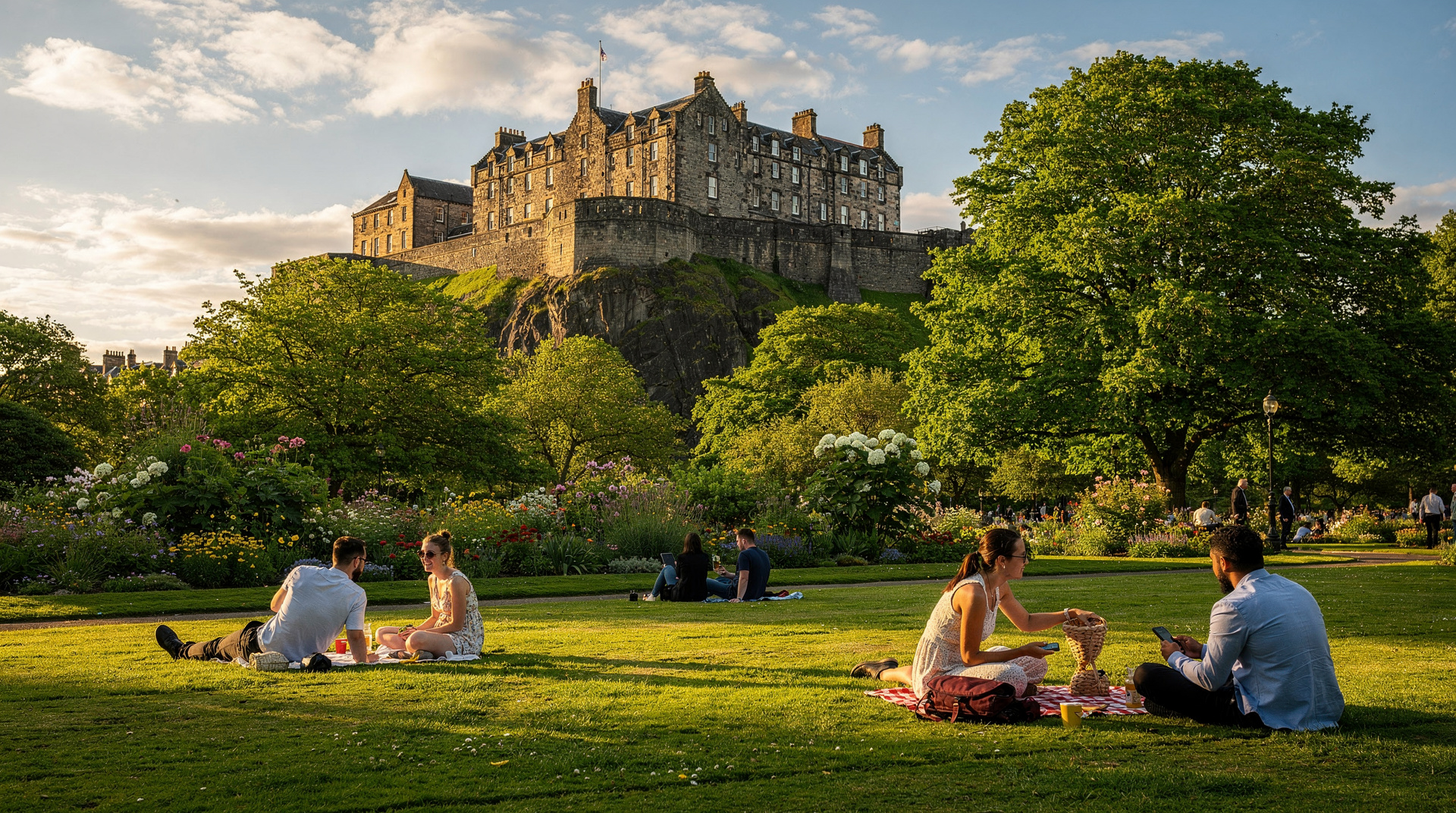
Early June before the school holiday season is almost as good as May, with marginally better weather odds (June is statistically one of Edinburgh’s driest months). Prices remain below summer peak. The day is very long — Scottish summer daylight extends to almost 10pm in mid-June — giving a sense of expansiveness that winter visits lack entirely.
A Arthur’s Seat sunset hike in June, when sunset falls after 9:30pm, is one of Edinburgh’s most distinctive seasonal experiences and is entirely impossible outside the spring and summer window.
September (early)
Early September — the first two weeks — is the best autumn option. The Fringe ends in the final week of August; by the second week of September the city has exhaled, the prices have dropped dramatically overnight, and the architecture benefits from the warm, lower-angled autumn light. Hotel prices typically drop 25-35% from August in the first week of September.
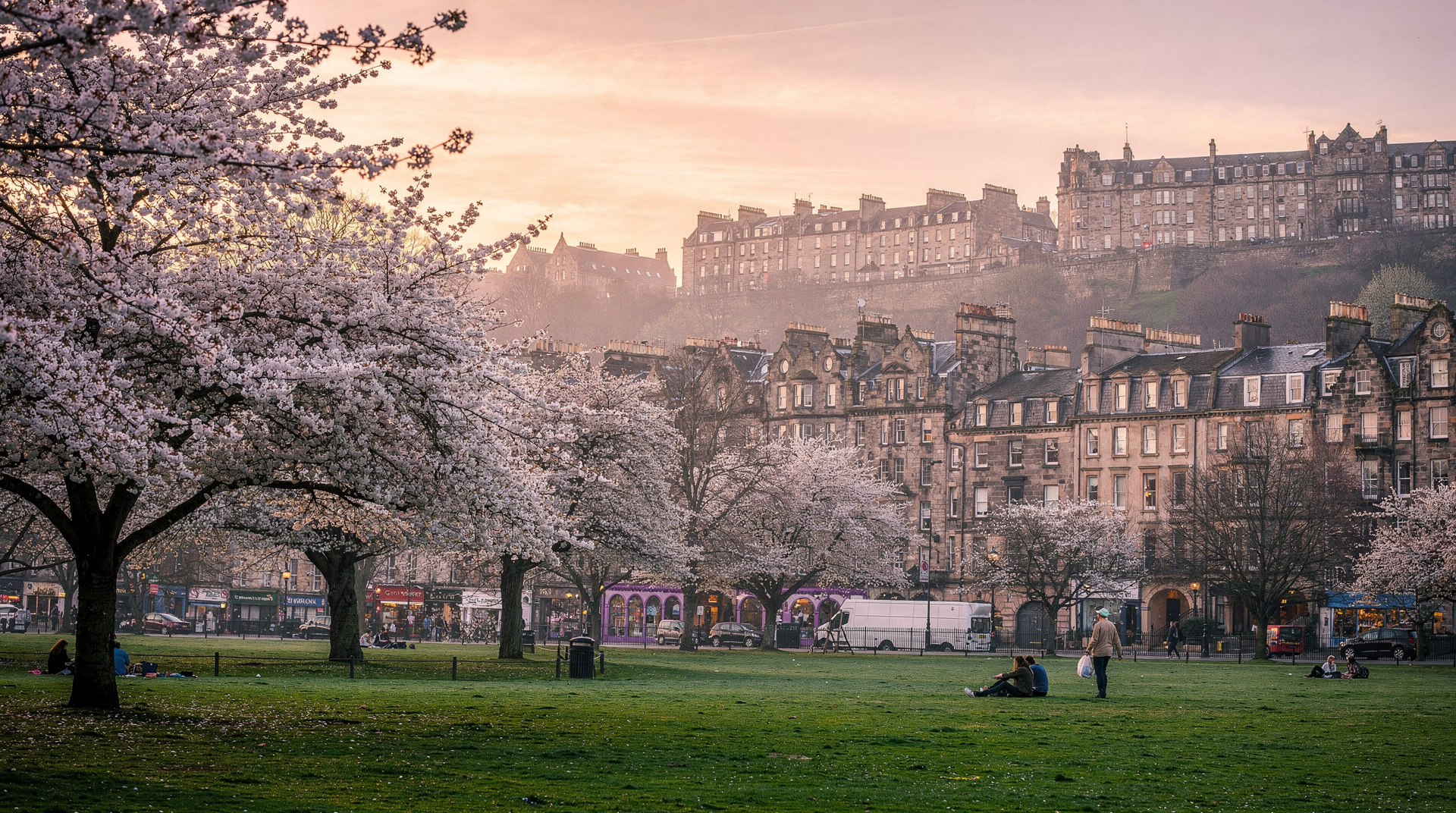
Late September increases the chance of poor weather but the visual quality of the city in autumn colour — the trees around Holyrood Park and the Botanics in particular — can be exceptional.
October and November
The deeper shoulder season. Hotels are genuinely cheap (many properties run 40-50% below August rack rates on weekdays). The city is quiet in the tourist sense but fully alive in the residential sense: the university year has begun, the cultural programme for the winter is underway, and the Scottish Borders are at their most colourful in October.
The main trade-offs: weather becomes more reliably grey and wet, daylight shortens noticeably (sunset around 4pm by November), and some of the outdoor experiences that define Edinburgh in warmer months are less appealing.
January and February
The cheapest time to visit Edinburgh. Accommodation on weekdays in January can be extraordinary value — rooms that cost £180 in August may be available for £60-80. The city’s free museums, the underground attractions, and the pub culture are all excellent in midwinter.
What you lose: daylight (around 8 hours in January), warmth (average 4-6°C, with wind chill making it feel colder), and the sense of the city in full life that the summer months provide. Arthur’s Seat is achievable with the right kit but not comfortable.
What the crowds actually look like: month by month
| Month | Crowd level | Relative price | Weather |
|---|---|---|---|
| Jan-Feb | Low | Cheapest | Cold, grey |
| March | Low-moderate | Low | Improving |
| April | Moderate | Moderate | Variable |
| May | Moderate | Below peak | Good |
| June | Moderate-high | Below peak | Best |
| July | High | Approaching peak | Generally good |
| August | Maximum | Most expensive | Good but crowded |
| September (early) | Decreasing | Dropping rapidly | Still good |
| October | Low-moderate | Low | Variable |
| November-December | Low | Low | Cold; Christmas lights |
The honest case for visiting out of peak
The travellers who are most enthusiastic about Edinburgh are disproportionately those who visited in May, June, or September rather than August. The city is the same city — the castle is the same castle, the Royal Mile the same Royal Mile, the National Museum the same museum. But when you can walk down the High Street without being funneled by tour groups, when you can actually stand still in front of the Crown Jewels, when the café you want is not full — the experience is qualitatively different.
The one counter-argument is that August is something genuinely unique. The Fringe is extraordinary and exists nowhere else. The Tattoo on the castle esplanade is one of the most spectacular live events in Europe. If these are the reason to come, then August is right despite everything. See the August survival guide for how to manage it.
For everything else, May and early September are the months Edinburgh most deserves.
See the comprehensive best time to visit guide for month-by-month detail, pricing data, and event calendars.
What the crowds actually look like on the ground
The crowd difference between May and August in Edinburgh is not just a statistical abstraction. On a Wednesday in May, you can walk the length of the Royal Mile in ten minutes and have a clear view of the castle from the esplanade with a dozen other people around you. On a Wednesday in August, the same walk takes twenty-five minutes because the pavements are packed shoulder-to-shoulder with festival crowds, flyerers, and tour groups, and the esplanade is a queuing zone.
Inside Edinburgh Castle, the difference is equally stark. In May, the Crown Room typically has a queue of five to fifteen minutes. In August, 30-45 minutes is normal. The quality of the actual experience — looking at the Honours of Scotland, standing at the battlements — is identical, but the context is completely different.
The same dynamic plays out in every popular attraction: the Real Mary King’s Close, Camera Obscura, Greyfriars Kirkyard. The sites do not change; only the people around you do.
How to time specific activities for fewer crowds
Edinburgh Castle: Weekday mornings at opening time (9:30am) throughout the year. Even in August, the first 30-60 minutes of the day are the least crowded. See the castle guide for timing strategy.
Arthur’s Seat: Any morning before 8am in summer gives the summit to yourself or near-yourself. The hill is busiest between 10am and 2pm on weekends in July and August.
The National Museum: Genuinely never extremely crowded, even in August. The building is large enough to absorb visitor numbers. But the technology galleries and children’s interactive floors are busiest on school-holiday weekday mornings.
The Royal Botanic Garden: Weekday mornings throughout the year. The garden is at its quietest before 10am and after 4pm.
The underground vaults: Late-evening ghost tours in October and early November are the atmospheric sweet spot — post-Fringe crowds, Halloween season ambience, and the best operator-to-atmosphere ratio of the year. See the vaults guide.
The events calendar and crowd avoidance
Some events bring crowds that are worth knowing about even outside August:
Easter weekend: Hotel prices spike; the Old Town is busier than average. Not as extreme as August but noticeable.
May bank holiday weekends: Similar spike. Avoid if crowd avoidance is a priority.
Hogmanay (29 December - 1 January): Significant crowds in the central Hogmanay zone. If you want the Hogmanay experience, this is unavoidable by definition — but arriving two or three days early (26-28 December) gives the festive atmosphere without the Hogmanay peak.
The Beltane Fire Festival (30 April): A significant crowd on Calton Hill on the evening of 30 April, but concentrated and purposeful rather than diffuse tourist flow. The surrounding days are quiet.
Avoiding specific tourist traps in peak season
If you must visit Edinburgh in July or August, the crowd-avoidance strategy is straightforward: do the big attractions in the first hour they are open (castle, Holyrood), avoid the Royal Mile between 11am and 6pm, eat in Leith or Stockbridge rather than the Old Town, and use the residential neighbourhoods — the Meadows, Bruntsfield, Stockbridge — for your coffee and lunch breaks.
The honest planner guide on avoiding crowds covers the specific tactical decisions for August visits. The tourist mistakes guide addresses the most common errors that turn an August Edinburgh visit into a disappointing one.
Weekday versus weekend, even in low season
Crowd avoidance isn’t only about which month you pick — the day of the week matters even in quiet periods. Saturdays are consistently the busiest day at Edinburgh Castle and on the Royal Mile year-round, driven by weekend-break visitors from the rest of the UK rather than international tourism alone. A Tuesday or Wednesday visit in, say, March or October will be noticeably quieter than a Saturday in the same month. If your dates are flexible at all, shifting a visit to include more weekdays than weekends compounds the benefit of choosing a shoulder-season month in the first place.
Fewer crowds without changing your dates
Not everyone can pick their travel dates around crowd levels — work, school holidays, and flights often decide that. Even within a fixed August or Hogmanay trip, some tactics still help: book the first entry slot at ticketed attractions, eat lunch at 11:45am or 2pm rather than the 1pm peak, and use the residential neighbourhoods (Stockbridge, Bruntsfield, Leith) for breakfast and coffee rather than the Old Town. None of this replicates a May visit, but it meaningfully reduces the friction of a fixed-date August trip. See the tourist mistakes guide for the fuller tactical list.
Where to spend the quiet hours
Crowd avoidance works best when you pair a calm window with places that suit it. Early mornings and late evenings are the easiest times to enjoy the Old Town, and the Royal Mile guide explains which stretches to see first. When the middle of the day gets busy, the Water of Leith walkway and the village-like corner of Stockbridge are much calmer places to slow down.
If you want the castle without the worst of the crush, a guided visit with timed entry to the castle takes some of the guesswork out of the queue, whatever month you choose. The Edinburgh Castle guide covers what to see once you are inside.
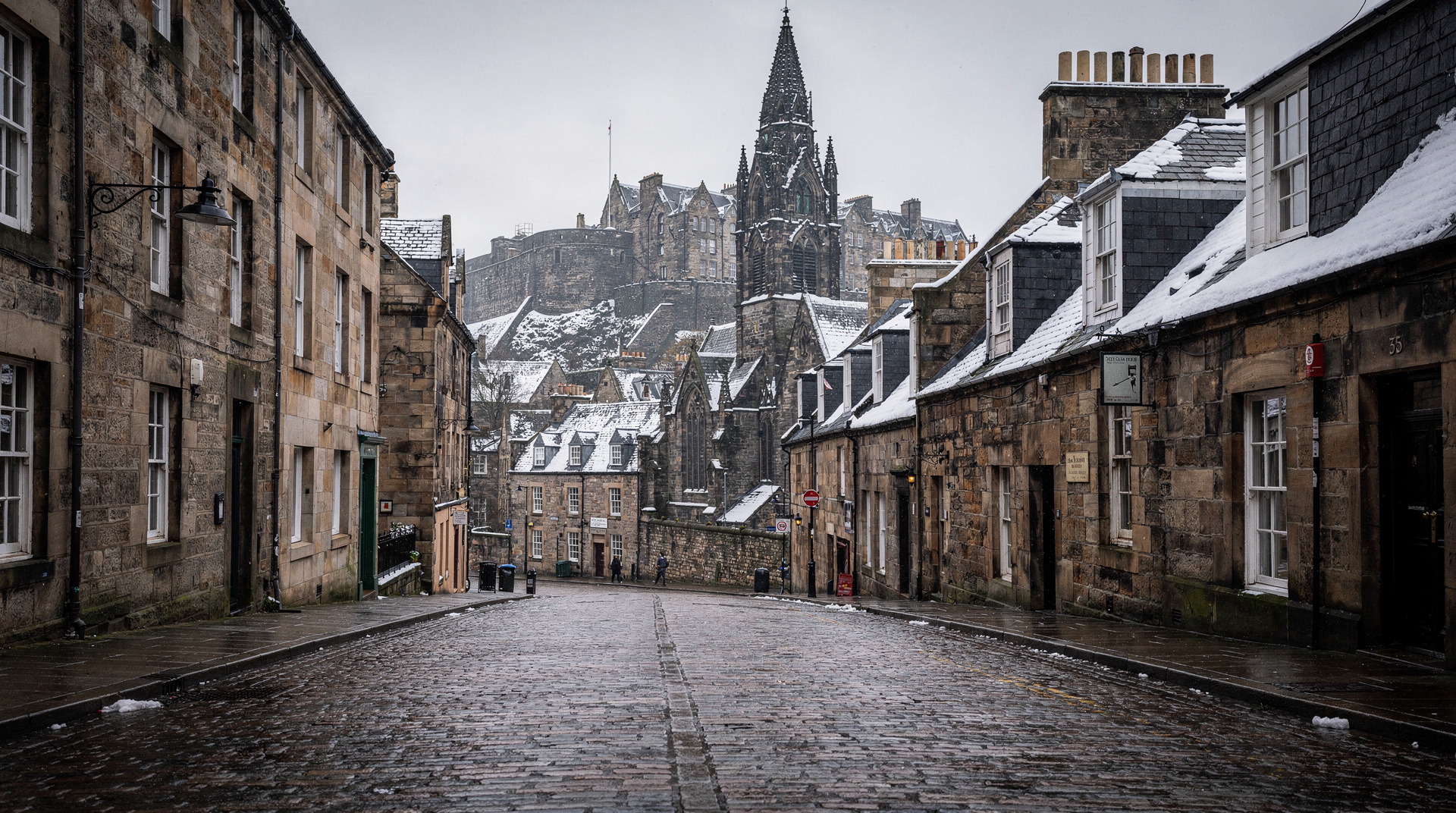
For wet or grey days in the quieter months, the rainy day guide lists indoor ideas, and the Edinburgh in winter guide shows how the city feels once the festival crowds have gone. If you are tempted by a short stay, one day in Edinburgh is a good template for a calm weekday visit.
Frequently asked questions about avoiding crowds in Edinburgh
What is the single quietest week to visit Edinburgh?
The last week of January or the first two weeks of February, excluding any school half-term dates, is typically the quietest combination of low visitor numbers and reasonable (if cold) weather. Early September runs a close second with notably better weather.
Can I still enjoy Edinburgh Castle and the Royal Mile even in August?
Yes, with the right tactics: arrive at castle opening (9:30am), do the Royal Mile before 10am or after 7pm, and treat the middle of the day as time for indoor attractions or neighbourhoods away from the Old Town. It requires more planning than a shoulder-season visit, but it isn’t ruined by the crowds if you work around them.