Best bookshops in Edinburgh for book lovers
Top-rated tours to book
A city built on books
Edinburgh was the world’s first UNESCO City of Literature, designated in 2004. This is not an honorary title — it reflects a genuine literary culture rooted in the Scottish Enlightenment, the publishing industry that developed here in the eighteenth and nineteenth centuries, and the deep tradition of Scottish writing that runs from Burns and Scott through Stevenson, Conan Doyle, Muriel Spark, and Iain Banks to the present day.
The bookshop culture reflects this history. Edinburgh has a disproportionate number of genuinely excellent independent bookshops for a city of its size, and several that warrant a deliberate visit rather than a passing stop.
If this is your first trip, the first-time Edinburgh travel guide will help you place a bookshop morning alongside the sights, and the Edinburgh in a day plan shows how little time the main landmarks need if you want to spend the rest among the shelves.
| Where | West Port (second-hand), Stockbridge, university area |
| Time needed | 2-3 hours for a focused route; a full morning for the complete crawl |
| Cost | Free to browse; £2-12 second-hand, £10-20 new |
| Best time | Weekday mornings, when shops are quiet and owners have time to talk |
| Combine with | Old Town walk, Stockbridge Sunday Market, a coffee stop |
Quick reference: which shop for what
| Shop | Neighbourhood | Best for |
|---|---|---|
| Armchair Books | West Port | Second-hand, Scottish history, browsing |
| Lighthouse Bookshop | University area | Politics, activism, LGBTQ+ literature |
| Typewronger Books | Stockbridge | Curated new fiction, translated fiction |
| Edinburgh Books | West Port | Art, architecture, photography, antiquarian |
| Golden Hare Books | Stockbridge | New literary fiction, poetry |
| Peter Bell Books | University area | Antiquarian, philosophy, Scottish literature |
| Waterstones Princes St | New Town | Comprehensive mainstream new stock |
| Blackwell’s | South Bridge | Academic non-fiction, history, science |
The essential stops
Armchair Books, West Port
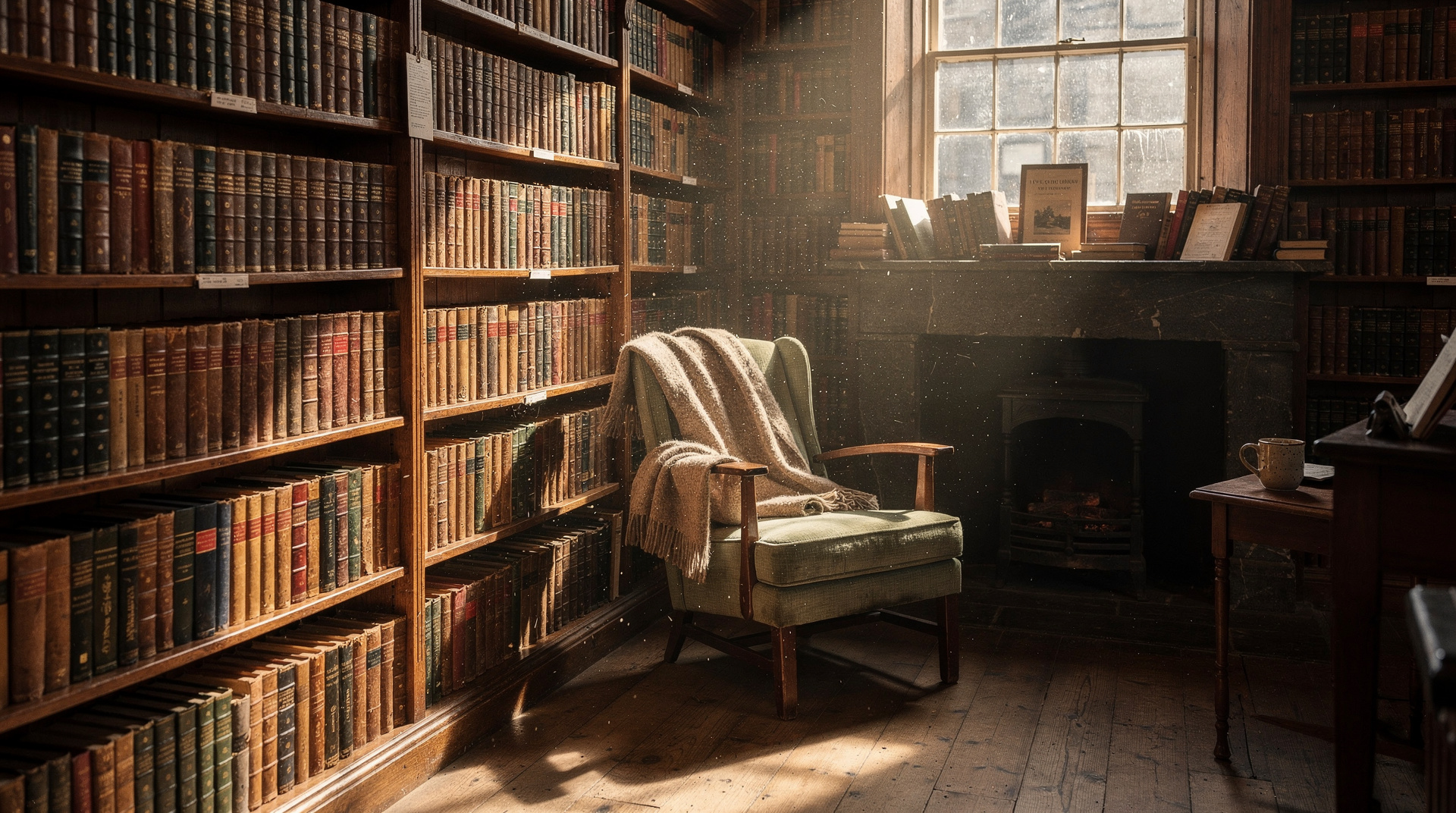
In a street full of second-hand bookshops near the Grassmarket, Armchair Books is the one that consistently appears on “best bookshop” lists without becoming self-conscious about it. The shop is gloriously crammed: floor-to-ceiling shelves, narrow aisles, the kind of organised chaos that rewards browsers who are not in a hurry. Strong on Scottish history and literature, surprisingly deep on mid-century fiction, and reliably stocked with the kind of out-of-print material that is difficult to find online.
Open daily; prices generally £2-12 for standard stock. The staff know what they have, which is more than can be said for many second-hand shops.
Lighthouse Bookshop, West Nicolson Street
Edinburgh’s overtly political and activist bookshop, the Lighthouse on West Nicolson Street near the university is a genuine community institution. Strong stock on politics, social justice, feminism, LGBTQ+ literature, and Scottish writing. Regular events and launches. The coffee at the counter is good and the atmosphere is welcoming in a way that does not involve any pressure to buy.
Typewronger Books, Henderson Row
A newer addition to the Edinburgh independent scene, Typewronger in Stockbridge has rapidly developed a reputation for an intelligent, curated selection of new books. The staff picks are genuinely reliable recommendations rather than publisher promotions. Good for fiction, particularly translated fiction and literary novelty. Events run throughout the year.
See the Stockbridge guide for a walking itinerary that includes Typewronger alongside the neighbourhood’s other independent shops.
Edinburgh Books, West Port
A few doors from Armchair Books on the same West Port strip, Edinburgh Books is more systematically organised and particularly strong on art, architecture, and photography books — a good source of visual material about Edinburgh itself if you are building a collection. Also worth browsing for Scottish history and antiquarian material.
Golden Hare Books, St Stephen Street
One of Edinburgh’s most beautifully curated independent bookshops, Golden Hare on St Stephen Street in Stockbridge occupies a small, thoughtfully designed space where every book on the shelf has been deliberately chosen. The selection is entirely current and strongly literary — this is the shop for new fiction, poetry, and essay writing. Staff recommendations are excellent.
Peter Bell Books, West Crosscauseway
Off the main tourist circuit in the university area, Peter Bell Books is one of Edinburgh’s most respected antiquarian and second-hand bookshops. Particularly strong on Scottish literature, philosophy, and nineteenth-century material. Not a browsing shop in the casual sense — it rewards visitors who know what they are looking for.
The chains worth knowing
Waterstones on Princes Street has the most comprehensive new-book stock in the city — five floors, good travel section, reliable Scottish literature selection. Not interesting but useful for mainstream stock.
Blackwell’s on South Bridge, near the university, is the academic option: excellent for non-fiction, history, philosophy, and science at academic as well as general-reader level. The science and social science floors are particularly good.
The Writers’ Museum: context for the bookshops
Any visitor to Edinburgh’s bookshops should also visit the free Writers’ Museum on Lady Stair’s Close, a seventeenth-century house preserved to celebrate Burns, Scott, and Stevenson. The exhibits include original manuscripts, personal objects, and handwritten letters that give physical reality to the literary tradition the bookshops are sustaining. The close it occupies is itself carved with literary quotations from Scottish writers. See the literary Edinburgh guide for a broader tour of the city’s literary connections.
The Book Festival
The Edinburgh International Book Festival runs in late August during the wider festival season, occupying Charlotte Square Gardens with a programme of author events, talks, and children’s programming. Tickets range from free to around £15 for major author events; the atmosphere in the gardens is relaxed and distinctly literary. It is the one genuine overlap between the August festival madness and a quieter cultural Edinburgh.
Bookshop-adjacent: the libraries
Edinburgh’s Central Library on George IV Bridge is an excellent Victorian building with a reading room that is worth seeing regardless of library use. The National Library of Scotland on George IV Bridge has a free exhibition space that often shows rare manuscripts and book-related exhibitions. Both are free to enter.
The Old Town area between the university and the Royal Mile, which contains several of these bookshops plus the Central Library and the National Library, is the most literary concentrated zone in Edinburgh. A morning walking this area with stops at the bookshops and a coffee at Brew Lab on South College Street makes for one of the more enjoyable Edinburgh days that does not involve a queue.
Scottish books to buy in Edinburgh
Any visit to Edinburgh’s bookshops is enriched by knowing what to look for. The Scottish literary tradition is specific and deep, and the best of it is available in the independent shops in editions and formats that the chains do not carry.
Muriel Spark: The Prime of Miss Jean Brodie is the Edinburgh novel — the story of an extraordinary teacher at a Morningside girls’ school in the 1930s is inseparable from the city’s character and geography. Set in the area of Edinburgh visitors rarely get to: the Southside, Bruntsfield, the respectable middle-class Edinburgh that exists below the tourist horizon.
Robert Louis Stevenson: The Strange Case of Dr Jekyll and Mr Hyde was inspired by Deacon Brodie, the Edinburgh town councillor who ran a gang of burglars by night. Stevenson grew up in Edinburgh’s New Town and the city is in his bones. Kidnapped is the more readable novel; Jekyll and Hyde is the more Edinburgh one.
James Hogg: The Private Memoirs and Confessions of a Justified Sinner (1824) is the most genuinely unsettling Scottish novel — a Calvinist psychological thriller set partly in Edinburgh. Out of print in mass-market editions; the independent bookshops are the best source.
Iain Banks: The Wasp Factory (not Edinburgh) and The Crow Road (not Edinburgh) are both essential Scottish fiction, but his Banks/Iain M. Banks letters make the best Edinburgh bookshop conversation piece.
Irvine Welsh: Trainspotting is set in Leith and Muirhouse — the Edinburgh that existed at the same time as the Georgian symmetry and the castle tours but in a completely different social universe. A useful companion to understanding the city’s full range. The Leith neighbourhood guide and a perfect day in Leith show the port district where much of that story is set today.
Contemporary Scottish writing: The Lighthouse Bookshop on West Nicolson Street has the best range of current Scottish writing, including the small-press poetry collections and debut novels that the chains will never stock.
Edinburgh’s literary calendar
The Edinburgh International Book Festival in August is the city’s most visible literary event, but the literary calendar runs year-round:
Neu! Reekie! runs irregular events combining poetry, music, and spoken word at various venues across the year. The format is deliberately eclectic and reliably worthwhile.
StAnza Poetry Festival in St Andrews (90 minutes from Edinburgh by rail and bus) is the major Scottish poetry festival, running in late March.
Edinburgh Literary Pub Tour: A commercially operated tour that takes visitors to the pubs associated with Burns, Scott, Stevenson, and others. The guides are professional storytellers and the tour is better than the tourist-facing format suggests. See the literary Edinburgh guide for context.
The second-hand book economy
Edinburgh’s second-hand book market is genuinely good relative to city size. The West Port cluster (Armchair Books, Edinburgh Books, and several smaller shops in the same area) is the most concentrated, but the charity shops in the university area (South Bridge, Nicholson Street) regularly turn up good stock from academic and literary estates.
Prices in Edinburgh’s second-hand shops are generally fair — lower than London equivalents, broadly comparable to the specialist second-hand market nationally. The staff knowledge varies widely; the small independent shops tend to have owners who know their stock; the larger shops operate more as general warehouses.
For visitors who want to spend a morning doing nothing but browsing books: the West Port area on a weekday morning, when the shops are quiet and the owners are in, is the right approach. Allow two to three hours. Budget a reasonable amount for impulse purchases — the shops will not disappoint.
A suggested bookshop-hopping route
Rather than treating Edinburgh’s bookshops as isolated stops, they string together into a genuinely enjoyable half-day route. If you would like the Old Town stretch of the walk explained as you go, a guided history walk through the Old Town pairs well with a morning of browsing, and the Edinburgh Old Town history guide covers the same ground at your own pace. Start at the West Port cluster (Armchair Books and Edinburgh Books, five minutes from the Grassmarket) in the late morning, when the owners are in and the shops are quiet. Walk east through the Old Town to the Writers’ Museum on Lady Stair’s Close for context, then continue to the university area for the Lighthouse Bookshop and Peter Bell Books.
Break for coffee at Brew Lab on South College Street before crossing town — bus or a twenty-minute walk — to Stockbridge for Typewronger Books and Golden Hare Books, finishing at the Stockbridge Sunday Market if your visit lands on a Sunday. The full route, done unhurried, takes four to five hours including the coffee stop and the museum, or can be split across two shorter outings.
Bookshops are also a good answer to a wet day, and the Edinburgh in the rain and rainy weekend guides suggest what to combine with them. If the weather turns, the literary-minded can follow a browse with a guided tour beneath the Royal Mile in the preserved closes, which keeps the afternoon indoors and rooted in the city’s history.
If time is tighter, the West Port cluster alone — two shops five minutes apart — gives a genuine taste of Edinburgh’s second-hand book culture in under an hour, and pairs naturally with a lunch in the Old Town or Grassmarket afterward.
Frequently asked questions about Edinburgh’s bookshops
Which Edinburgh bookshop should I prioritise if I only have time for one?
Armchair Books on West Port for second-hand browsing and Scottish history, or Golden Hare Books in Stockbridge if you prefer new, carefully curated fiction and poetry. Both are compact enough to properly appreciate in 20-30 minutes.
Are Edinburgh’s independent bookshops good for finding Scottish literature specifically?
Yes, consistently better than the chains. The Lighthouse Bookshop has strong current Scottish writing, Peter Bell Books is excellent for Scottish literature and philosophy in older editions, and Armchair Books and Edinburgh Books both carry deep Scottish history and literature sections that Waterstones does not match in depth.