Why Edinburgh is worth visiting in 2024
The case for Edinburgh
Edinburgh consistently appears near the top of European city-break rankings — it was voted Europe’s most beautiful city in multiple reader surveys, draws over 4.5 million visitors a year, and hosts a festival in August that is arguably the world’s most extraordinary concentration of live performance.
But rankings and visitor numbers tell you little about whether a particular city is right for a particular traveller. Here is an honest case for Edinburgh, with a genuine caveat about when it is not the right destination.
| Best for | History, walkability, dramatic landscape within a city |
| Time needed | 3 days minimum, more if combining Highland day trips |
| Best time to visit | May, June or September for weather and lower crowds |
| Skip if | You want a relaxed trip and can’t avoid August |
| Getting around | Entirely walkable in the centre; no car needed |
1. The geology is extraordinary
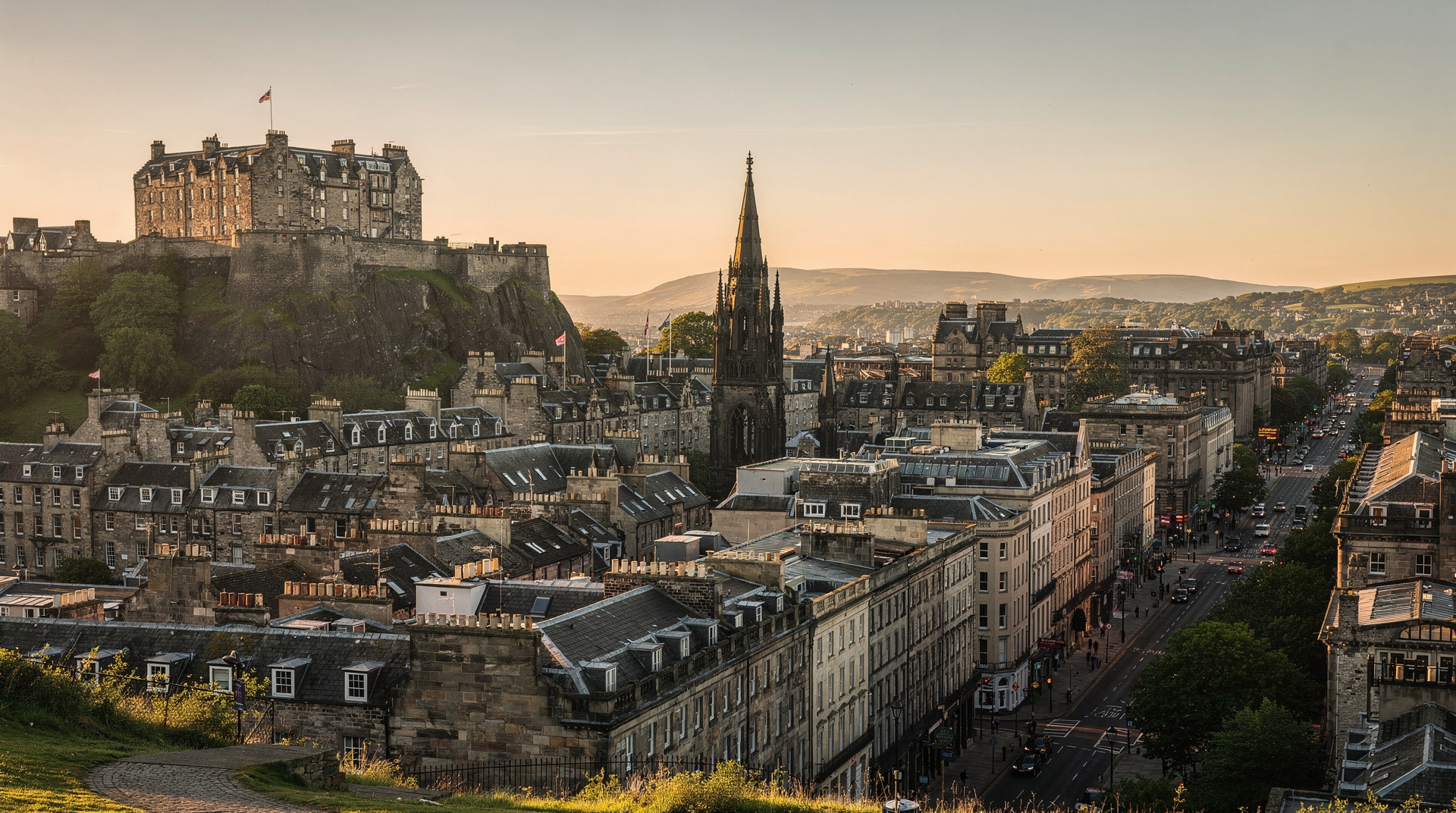
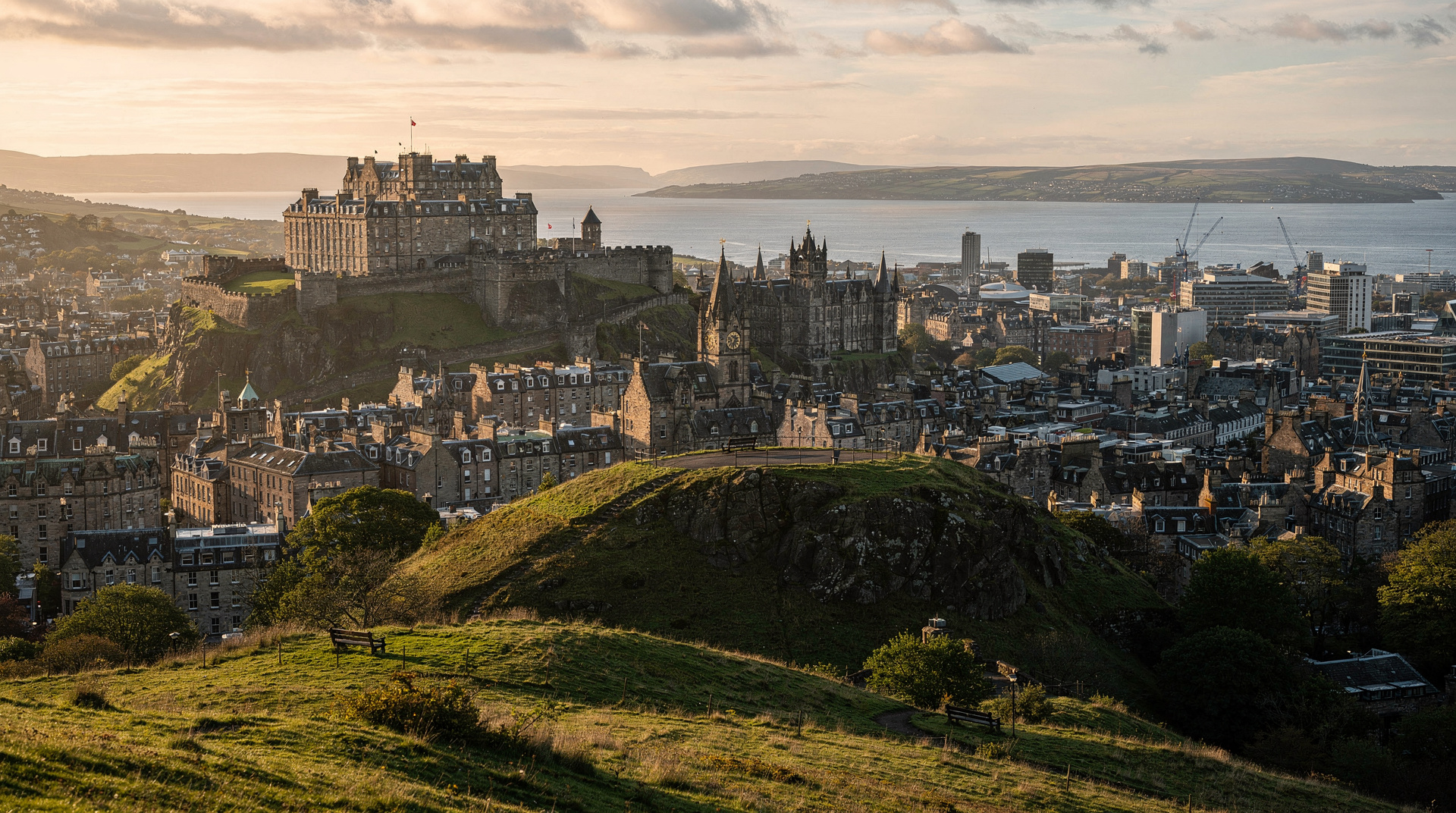
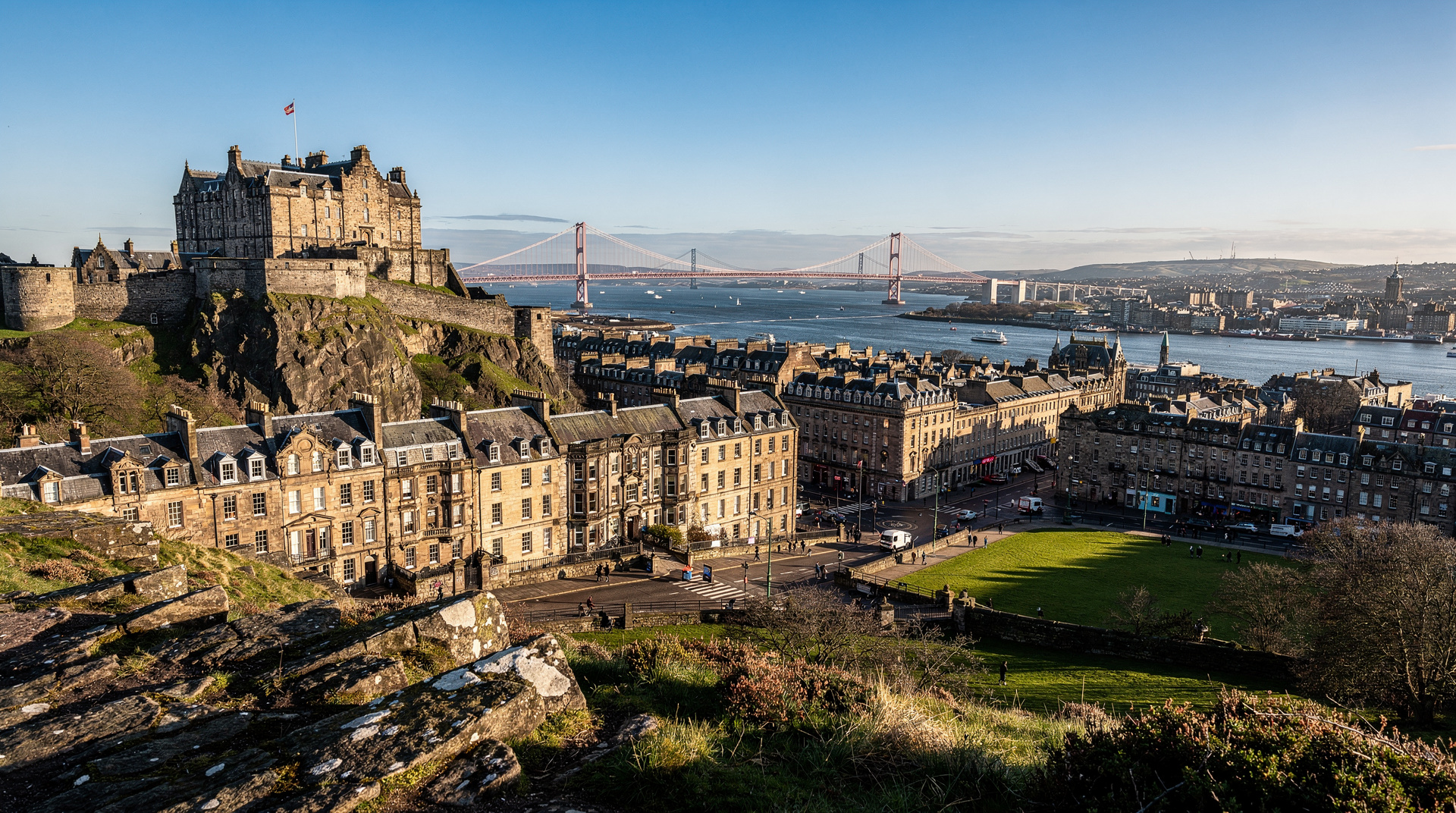
Edinburgh was built on the remnants of an ancient volcanic system. The castle sits on a plug of basalt that solidified when the volcano became extinct 350 million years ago; Arthur’s Seat is the eroded core of a volcano that last erupted around the same time. The result is a cityscape of dramatic natural topography — hills rising from the urban grid, cliffs dropping from medieval streets, a constant visual drama that no planned city can manufacture.
The Holyrood Park is 263 acres of this landscape preserved within the city: a wild parkland of crags, lochs, and hillside that exists within walking distance of Princes Street.
2. The Old Town is genuinely ancient
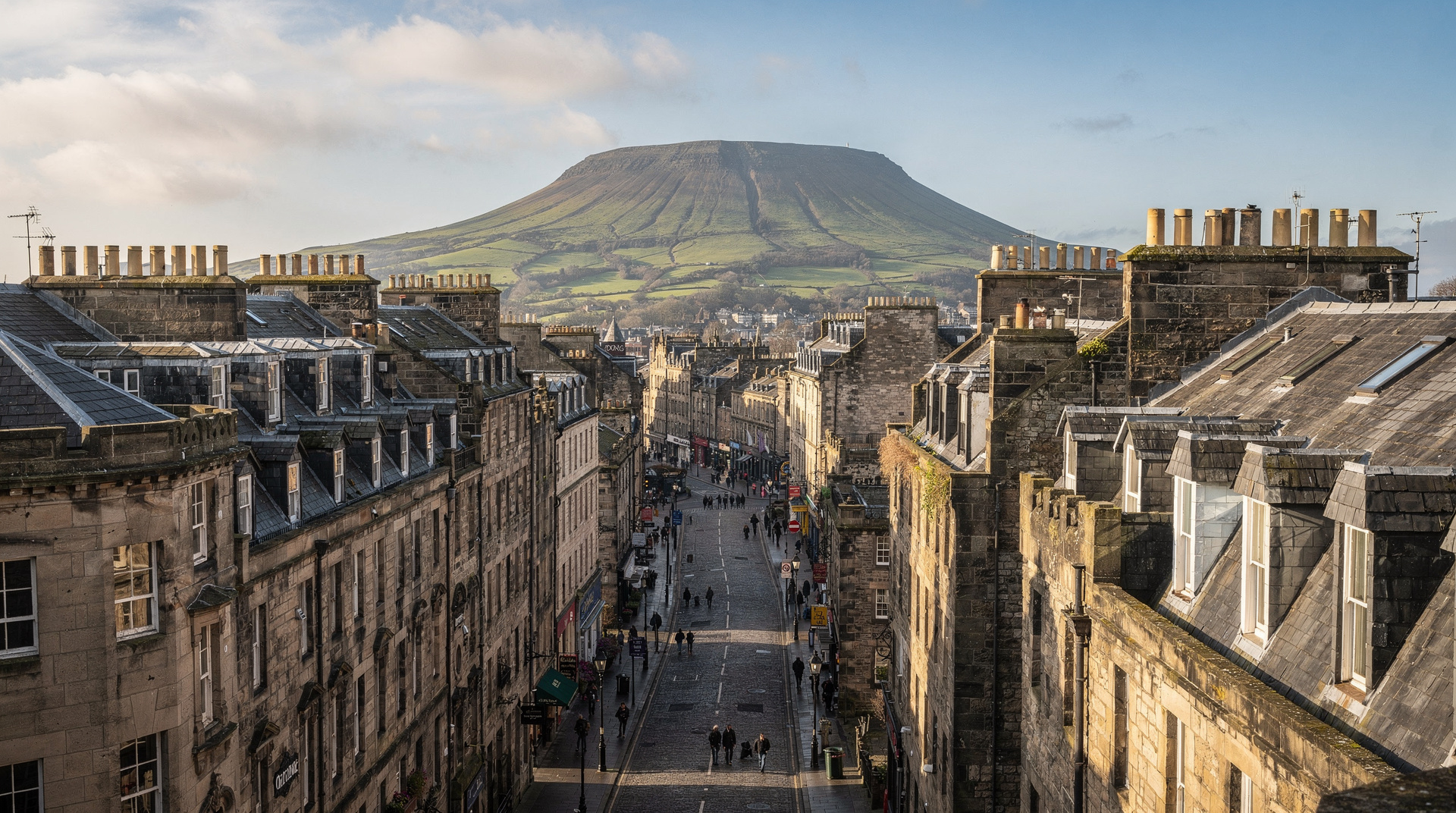
The Royal Mile has been a street since at least the twelfth century. The closes and wynds leading off it follow boundaries that predate written records. The buildings — some of them ten storeys tall, some of the earliest skyscrapers in the world — were built between the fifteenth and nineteenth centuries and give the Old Town a physical depth and density that few European medieval city centres retain. A secrets of the Royal Mile walking tour makes sense of what you’re looking at in a way that walking alone cannot. See the Royal Mile guide.
3. The free museums are world class
The National Museum of Scotland, the Scottish National Gallery, the Scottish National Portrait Gallery, the Museum of Edinburgh, the Writers’ Museum — none of these cost anything to enter. The National Museum in particular is one of the best in Britain: Dolly the sheep, the Lewis Chessmen, the Monymusk Reliquary, centuries of Scottish history in a building that is itself interesting. Allow a full morning.
4. The festival is genuinely extraordinary
The August festival season — the Fringe, the International Festival, the Tattoo, the Book Festival, the Art Festival — transforms Edinburgh into something unlike any other city for three weeks. Over 3,000 Fringe shows alone. Street performers on every corner. Late-night comedy in converted church basements. Free outdoor concerts. The Tattoo on the castle esplanade under floodlights. It is overwhelming and extraordinary in equal measure. See the Fringe guide for how to navigate it.
5. The day trips are exceptional
Edinburgh’s geographical position gives it access to some of Scotland’s most remarkable landscapes within a single day’s reach. Stirling Castle and the Wallace Monument are one hour away. St Andrews is 90 minutes. Loch Ness — with Glencoe en route — is 3.5 hours. The Scottish Borders and Rosslyn Chapel are 30 minutes. Good organised day tours mean you do not need a car to access any of these. See the day trips guide.
6. The food and drink scene has genuinely improved
Edinburgh’s food reputation was fair in 2010 (too many tourist menus, too few interesting independent restaurants) and considerably better by 2024. Leith has become a serious dining destination. Stockbridge has excellent neighbourhood restaurants. The New Town has a growing craft beer and cocktail scene. The city also has a genuine whisky culture that goes well beyond the Royal Mile gift shops — the Scotch Whisky Experience, the Johnnie Walker Experience, and the Lost Close underground tasting are all worth considering. See the whisky tasting guide.
7. The architecture is extraordinary and varied
The Old Town’s medieval tenements, the New Town’s Georgian terraces, the Victorian gothic of St Giles’ Cathedral and the National Portrait Gallery, the Scottish Parliament’s contentious post-modern vocabulary — Edinburgh has architectural layers that repay sustained attention. The New Town in particular is one of the finest examples of planned urban design in Europe, inscribed as a UNESCO World Heritage Site alongside the Old Town.
8. It is very walkable
Central Edinburgh is compact. Edinburgh Castle to Holyrood Palace — the full length of the Royal Mile — is less than one mile. Waverley Station to Calton Hill is ten minutes. Princes Street to Stockbridge is fifteen minutes. You do not need a car, a taxi, or even a bus for most of what first-time visitors want to see. See the transport guide for the few journeys where a bus or tram makes sense.
9. The literary connections are real
Edinburgh was the home of Walter Scott, Robert Louis Stevenson, Arthur Conan Doyle, Robert Burns (for significant periods), and Muriel Spark. J.K. Rowling wrote the early Harry Potter books in several Edinburgh cafés. The city’s publishing and literary culture is deep and its bookshops are genuinely excellent — see the bookshops post for the best of them.
10. The ghost and dark history tours are some of the best in Europe
Edinburgh’s dark history — the body snatchers, the underground vaults, Mary King’s Close, the witch trials, Greyfriars’ supposed poltergeist — provides the raw material for some of the most genuinely interesting guided tours in Europe. The ghost tour guide distinguishes the excellent from the theatrical.
11. Hogmanay
Scotland’s New Year celebration has no real equivalent in the English-speaking world. The Edinburgh Hogmanay programme — which runs from 29 December to 1 January — includes a Torchlight Procession, a Concert in the Gardens, the famous Princes Street street party, and the Loony Dook sea swim on New Year’s Day. It is one of the world’s great winter celebrations and the city fills with visitors from across Scotland and beyond. See the Hogmanay guide.
12. It feels like a real city
This sounds like faint praise but it is not. Some cities become so consumed by tourism that they lose their resident identity — Venice is the extreme example; Dublin’s Temple Bar is a lesser one. Edinburgh, despite 4.5 million visitors a year, remains a city where people actually live and work: universities, law courts, financial institutions, the Scottish Parliament. The residential neighbourhoods around the tourist circuit are genuinely inhabited and the city’s character is not a performance.
The honest caveat
Edinburgh in August is extraordinary, but it is also the most expensive, most crowded, and most operationally complex version of the city. Hotel prices double or triple; accommodation sells out months in advance; the Royal Mile becomes almost impassable at peak times. If your primary interest is Edinburgh itself — the architecture, the history, the food — rather than the festival specifically, May, June, and September are genuinely better times to visit. See the best time to visit guide for a month-by-month breakdown.
13. It’s a genuine gateway to the Highlands
Edinburgh’s case is strengthened by what surrounds it. Loch Ness, Glencoe, the Isle of Skye, and Stirling are all reachable as day trips or short multi-day extensions, meaning a single Edinburgh base gives access to both a world-class city and Scotland’s most dramatic landscapes without needing to change hotels. The Edinburgh and Highlands five-day itinerary shows how well the combination works in practice.
14. The value compared to other European capitals
Edinburgh sits in an unusual position: comparable in historical density to Prague or Vienna, but with a compactness that means less time is lost in transit between sights. A visitor with three days genuinely sees more of what makes Edinburgh distinctive than a visitor with three days in a sprawling capital, simply because so much is within walking distance. The is Edinburgh expensive guide covers the specific cost comparison against other UK and European cities.
A city highlights walking tour is one of the most efficient ways to get oriented on day one, before deciding where to spend the rest of a trip’s time.
For a full planning overview, the first-time visitor guide covers everything from arrival to day trips.