Edinburgh in spring: the best time nobody talks about
March to June: the Edinburgh most visitors miss
The months before Edinburgh’s summer peak — roughly March through early June — offer a version of the city that is, in many ways, better than what the majority of visitors experience. The days are lengthening. The Royal Botanic Garden is at its most spectacular in April and May. Arthur’s Seat is carpeted in gorse and wildflowers. The Beltane Fire Festival on Calton Hill on 30 April is one of the most extraordinary events in the Edinburgh calendar. And the crowds that define August are absent.
This is the case for a spring Edinburgh trip.
| Best month overall | May |
| Signature event | Beltane Fire Festival, 30 April, around £15-20 |
| Accommodation vs August | typically 25-35% cheaper |
| What’s not running | The Fringe, the Tattoo |
| Booking lead time | 1-3 weeks, except Easter weekend |
| Month | Weather | Crowds | Highlight |
|---|---|---|---|
| March | Cold, 8-10°C, often grey | Low | Science Festival, first clear days |
| April | Mild, brightening | Low-moderate | Beltane Fire Festival, rhododendrons begin |
| May | 13-15°C, reliable sun | Moderate | Gorse on Arthur’s Seat, puffin season, long evenings |
| Early June | Similar to May, slightly warmer | Rising | Midsummer Festival, longest daylight |
What spring looks like month by month
March
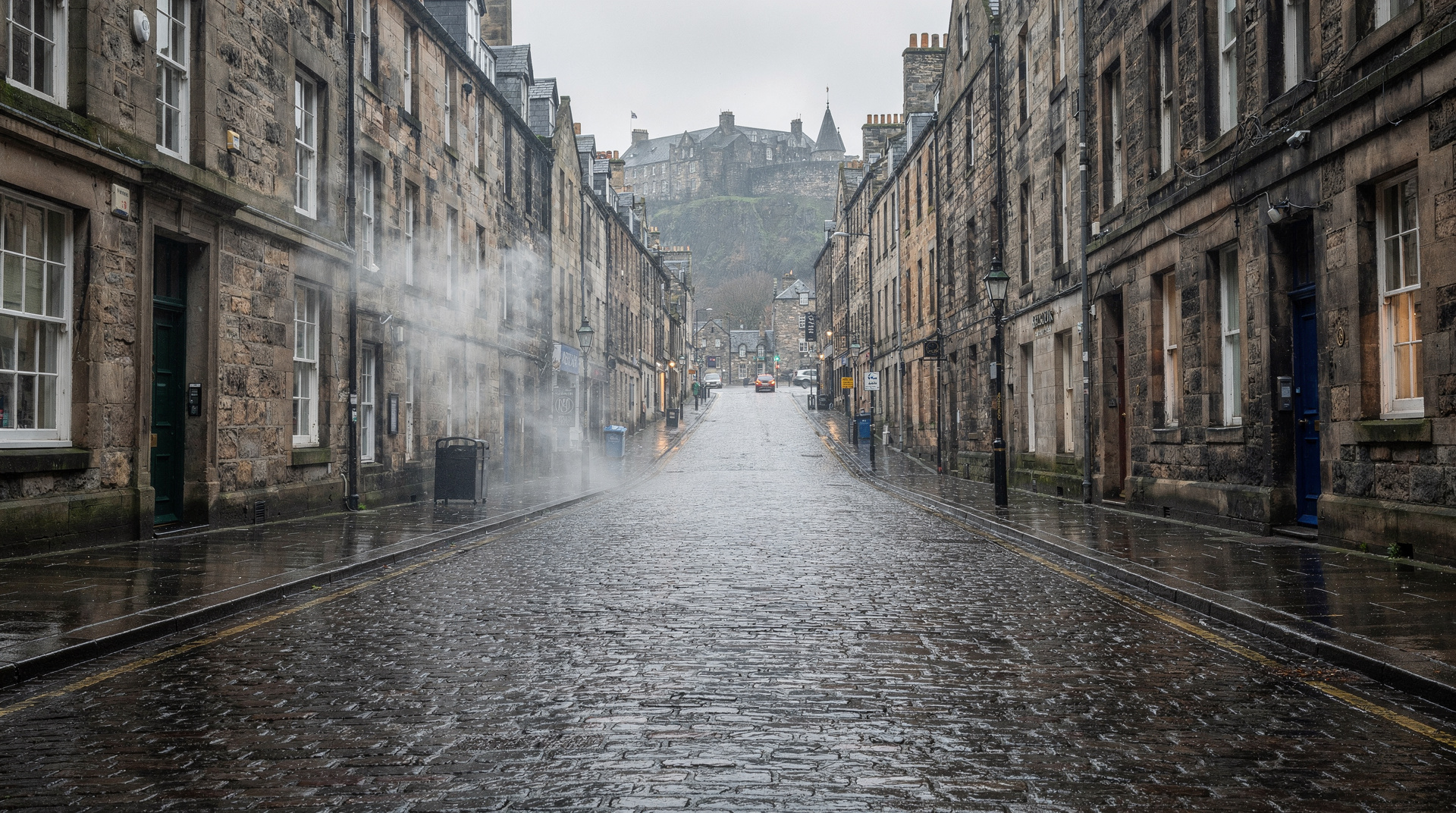
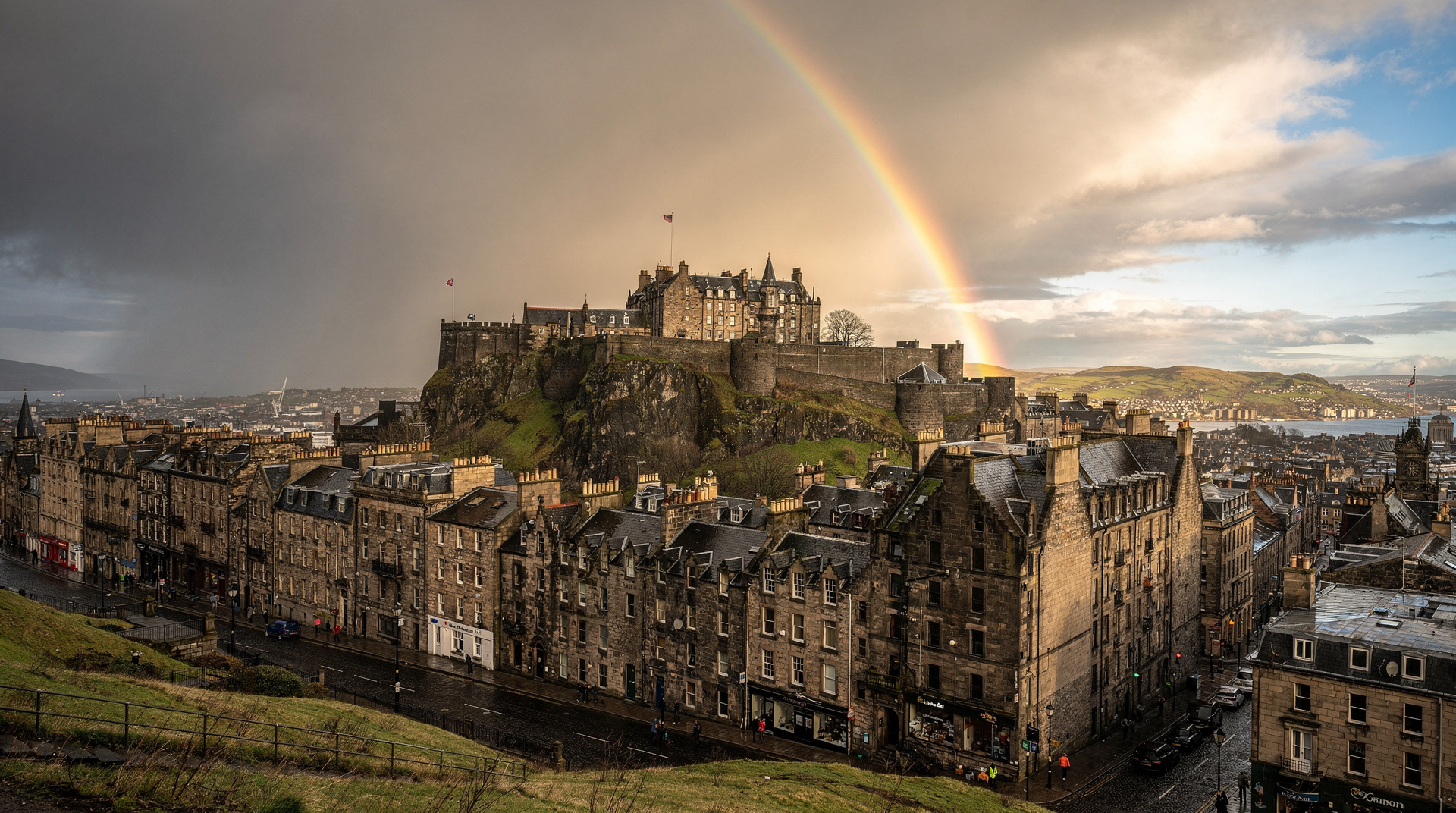
March is transition month — still cold (average 8-10°C), often grey and wet, but with increasing daylight and a palpable sense of the city emerging from winter. The second half of March, particularly if there are clear days, can be stunning: low sunlight on the castle, Calton Hill with the city stretching below in clean air.
What’s on: Edinburgh’s Science Festival runs in late March/early April and takes over venues across the city with talks, exhibitions, and events aimed at general audiences as much as specialists.
What’s not on: the street performers have not arrived yet, the tourist infrastructure is not yet in full swing, and the city feels genuinely local.
April
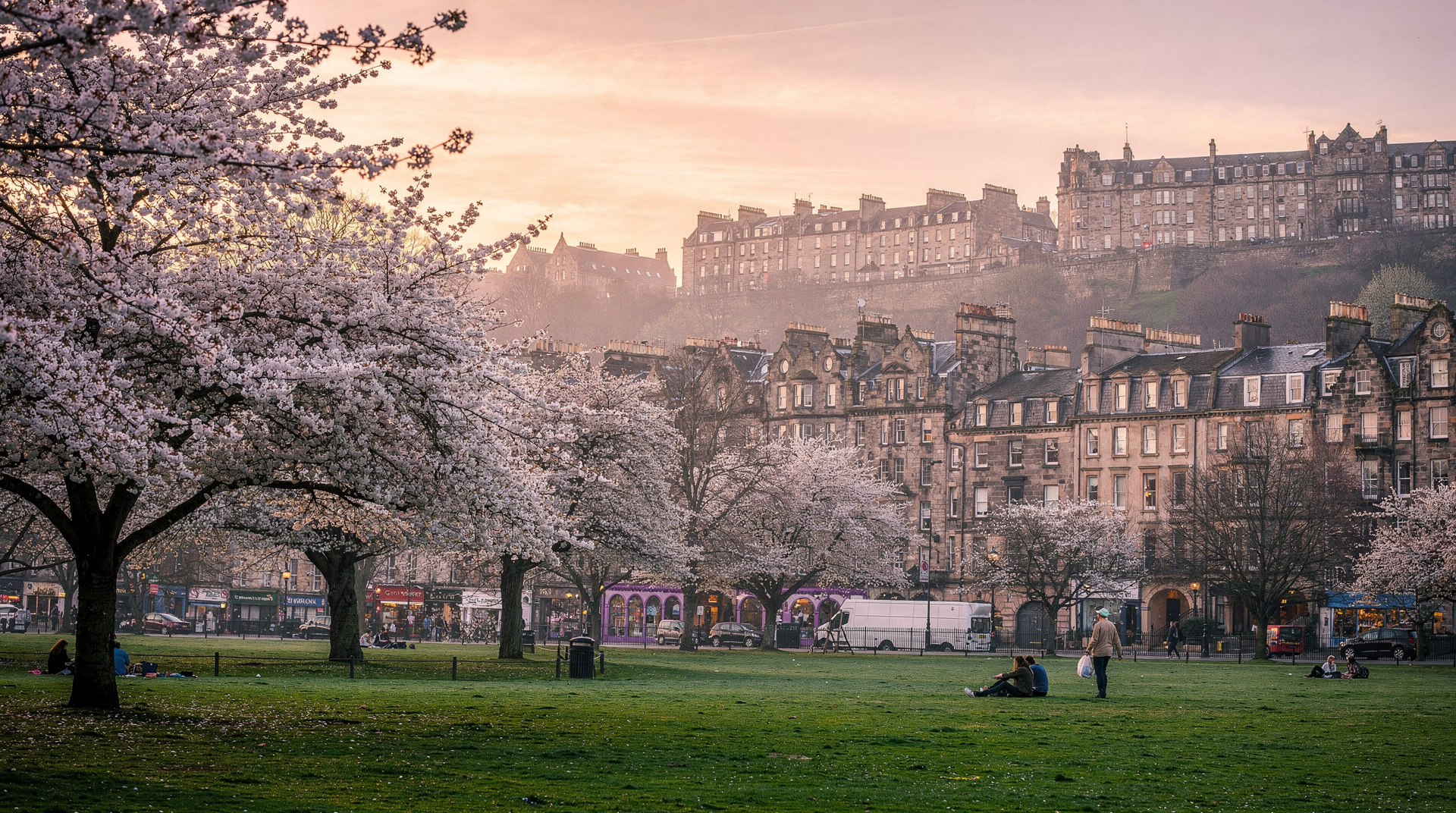
April is when Edinburgh’s spring character becomes most obvious. The Royal Botanic Garden’s rhododendron collection begins in late April and extends into May — one of the finest in Britain, entirely free to visit. The Meadows’ cherry trees blossom in a brief, intense burst usually around mid-to-late April, turning the wide open park near the university into something almost Japanese in aesthetic.
The Beltane Fire Festival (30 April): The most distinctively Edinburgh thing to happen in spring. On the night of 30 April — the eve of the Celtic festival of Beltane, marking the beginning of summer — a costumed procession winds around the summit of Calton Hill, involving a May Queen, a Green Man, fire performers, and around 300 participants in elaborate costumes. Several thousand spectators attend. Tickets are required (book at beltane.org, usually £15-20 advance) and it genuinely needs to be seen to be understood. There is nothing else like it in Scotland. See the Beltane Fire Festival guide for ticket tiers and viewing tips.
Accommodation prices in April are typically 25-35% below August levels.
May
May is Edinburgh’s sweet spot. Average temperatures reach 13-15°C, there are reliable sunny periods, the city is fully operational but not overcrowded, and the landscape of Holyrood Park and the surrounding hills is at its best. Gorse blazes yellow across Arthur’s Seat. The evening light extends to 10pm by late May.
The Scottish Seabird Centre’s puffin season is in full swing from April through July — a day trip to North Berwick for the puffin boat trip to Bass Rock is particularly good in May when the colony is active and the summer tourists have not yet arrived. See the North Berwick guide.
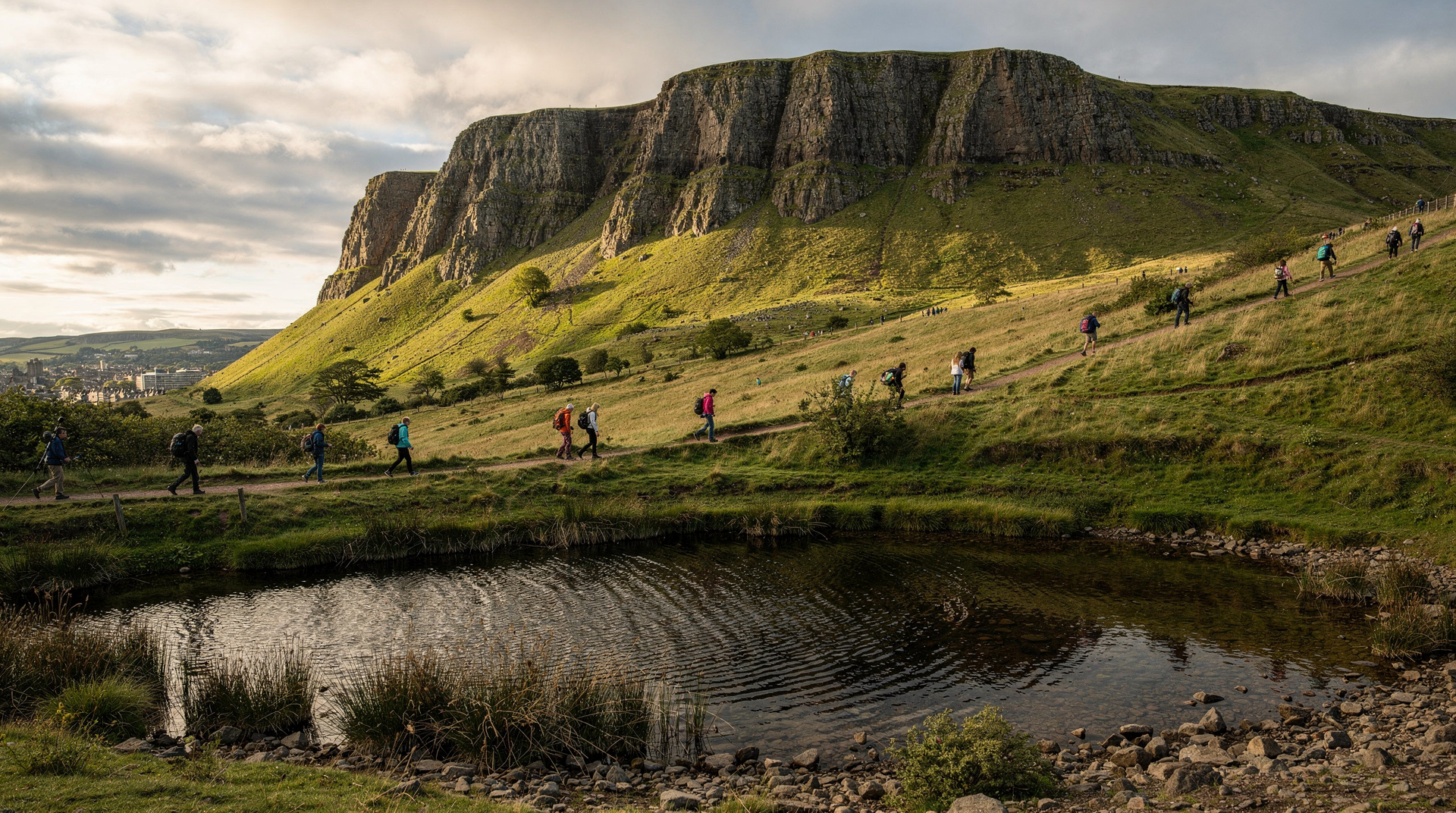
A guided hike up Arthur’s Seat in May, with clear views and the hillside in spring colour, is one of Edinburgh’s best seasonal experiences.
June (early)
Early June gives May’s advantages with marginally better weather odds. Edinburgh’s Midsummer Festival programme is underway. The days are at their longest — the solstice in Edinburgh puts sunset at around 10:15pm, giving extraordinary golden-hour light on the castle from the east.
The tourist season proper has begun by June, but the August extremes are not yet present. Hotels are beginning to fill on weekends but weekday visits are still relatively uncrowded.
Spring-specific activities
The Royal Botanic Garden
52 acres of maintained garden, completely free, at its best in spring. The rhododendron walk and azalea garden peak in late April and early May; the rock garden and the glasshouses are worth visiting year-round. Allow two to three hours. See the walks guide for a combined walking route.
Calton Hill at sunrise
In May, Edinburgh’s sunrise falls before 5am. A walk up Calton Hill in the hour after sunrise — with the city below barely awake, the Forth glittering in low morning light, and Arthur’s Seat to the south-east — is the best free experience in Edinburgh and almost impossible in August when the hill fills by 9am.
Arthur’s Seat in spring gorse
The summit approach to Arthur’s Seat in late April and May runs through gorse in full bloom — intense yellow, coconut-scented, one of the more visceral landscape experiences Edinburgh offers. The summit in clear spring conditions gives views extending to the Highland Line.
Stockbridge Sunday Market
Running Sundays year-round but at its best in spring and summer, the Stockbridge Market on Saunders Street brings local food producers, craft stalls, and the neighbourhood’s particular relaxed character together in a genuinely pleasant morning out. Best combined with a walk along the Water of Leith toward Dean Village.
What to book for a spring visit
The Tattoo does not run in spring. The Fringe does not run in spring. These are features, not bugs. Edinburgh in spring is Edinburgh without the performance of itself — the underlying city, in its best seasonal condition, with room to breathe.
For practical planning: accommodation is bookable with a few weeks’ lead time in April and May rather than months. The Easter weekend is the one exception, when family visitors push up prices for a few days.
See the full seasonal guide for month-by-month breakdown. The three-day itinerary works particularly well as a spring trip with minor seasonal adjustments.
What makes spring Edinburgh distinctive
The specific quality of Edinburgh in spring is difficult to capture in a list of events. It has something to do with the combination of the city emerging from grey winter — the stone literally looks different in spring light, warmer and less forbidding — and the sense of possibility that arrives with the longer days and the gorse on Arthur’s Seat.
The city in spring is also Edinburgh without a performance. There is no festival to attend, no street party to join, no August-sized obligation to fill every hour with organised experience. Spring is the season when you can simply be in Edinburgh and let the place reveal itself at its own pace.
Spring walks and outdoor Edinburgh
The outdoor Edinburgh is at its best in spring and the following walks reward the season specifically:
Arthur’s Seat in late April or May: The gorse bloom transforms the hillside into an intense yellow, and the smell — coconut-sweet and distinctive — is something no other season gives. The path from the St Margaret’s Loch car park toward the summit is the most fragrant route. See the Arthur’s Seat guide.
Water of Leith in March-April: The trees along the river come into leaf, the riverside banks have early spring flowers, and the water level is often higher than summer. The walkway guide covers the full route from Dean Village to Leith.
Pentland Hills in May: The Pentlands south of Edinburgh are excellent in late spring — the upland grasslands are coming into full growth, the reservoirs are at winter capacity, and the views north toward Edinburgh and the Forth have the clarity of clean spring air. See the Pentland Hills guide.
Portobello in May: The beach at Portobello comes into its own in late spring when the weather improves but the summer crowds have not yet arrived. The beach and the esplanade in May have a relaxed, unhurried character that August cannot replicate. See the Portobello guide.
Spring day trips beyond the city
Spring is also a good moment to leave the capital for a day. The roads and villages are quieter than in high summer, and the softer light suits coastal scenery. If you would rather not drive, a small-group tour of St Andrews and the Fife fishing villages is an easy way to see the coast on a clear spring day. See the St Andrews guide and the East Neuk of Fife guide for what to expect, or the day trips by train article if you prefer rails to roads.
For a shorter outing closer to town, the Rosslyn Chapel guide and the Stirling guide both suit spring weather, when you can combine indoor sights with time outside. The best day trips guide compares the options side by side.
Spring food and the Scottish larder
Spring is one of the better seasons for Scottish food. Rhubarb from the Borders — some of Scotland’s best is grown in the Lothians — appears in March and April. Asparagus begins in May. Spring lamb is on the menus. The seafood — crab, lobster, langoustines — is beginning to run in the Firth of Forth fishing communities from late spring onwards.
Edinburgh’s restaurant menus shift noticeably in spring to reflect the Scottish seasonal larder. The Leith waterfront restaurants, which have direct relationships with East Lothian and Fife producers, usually show the best seasonal menus. Fishers Leith and The Shore on the Shore are reliable places to find spring-specific Scottish cooking.
Spring accommodation and booking
Spring accommodation in Edinburgh is among the easiest to book of any season. Outside the Easter weekend (when prices spike briefly) and any May bank holiday weekends, hotels and guesthouses are available with one to three weeks’ lead time and at prices 25-35% below summer rates.
This flexibility also makes spring the best season for spontaneous Edinburgh visits — deciding on a Tuesday to visit the following weekend is entirely possible in April or early May in a way that is unimaginable in August.
For the full picture of spring Edinburgh, including the May festival programme and early summer events, see the best time to visit guide. The crowds guide puts spring in context alongside the rest of the year.
Spring versus early autumn: which quiet season wins
Spring and September/October are Edinburgh’s two shoulder seasons, and they are often compared but genuinely different. Spring offers lengthening days, gorse and rhododendrons, and Beltane; autumn offers game season menus, changing leaves, and the run-up to the Fringe’s afterglow rather than its build-up. Neither is objectively better, but spring wins on daylight hours and flowering landscape, while autumn wins on food. If crowds are your main concern, both are comparably quiet outside specific event dates. See the Edinburgh weather guide for the full month-by-month comparison.
What to pack for spring in Edinburgh
Spring temperatures swing more than the averages suggest — a sunny 15°C afternoon can follow a 6°C, sideways-rain morning within the same day. Layers matter more than any single heavy coat: a base layer, a mid layer, and a genuinely waterproof (not just water-resistant) outer shell cover most conditions. Waterproof shoes help on the Botanic Garden’s paths and the Water of Leith walkway, which can be muddy after spring rain.
Frequently asked questions about Edinburgh in spring
Is Beltane suitable for children? The fire performances and the size of the crowd make Beltane better suited to older children and adults; it runs late into the evening and the atmosphere is intense rather than family-oriented. Families are better served by the daytime Botanic Garden or a Portobello beach visit in spring.
Is spring a good time to hike Arthur’s Seat? Yes, particularly late April and May when the gorse is in bloom and the paths have dried out from winter mud, though a guided hike is worth considering for anyone unfamiliar with the terrain or wanting the best vantage points. See the Arthur’s Seat hiking guide.