25 things to know before visiting Edinburgh
What nobody tells you before you land
Edinburgh is one of the most walkable, well-signposted, and traveller-friendly cities in Europe — yet first-time visitors consistently make the same avoidable mistakes. The hills are steeper than the map suggests. August is genuinely overwhelming. The food scene has improved almost beyond recognition in the past decade. And the people, if you talk to them rather than treating them as part of the scenery, are usually excellent company.
Here are 25 things worth knowing before you arrive.
| Best months | May, June, or early September for good weather with fewer crowds |
| Getting around | Walking, Lothian Buses, and the tram to the airport — a car is rarely useful |
| Currency | Pounds sterling (£); Scottish banknotes are legal tender everywhere in the UK |
| Typical daily budget | Around £70-120 per person for food, transport, and one paid attraction |
| Booking ahead | Castle tickets and August accommodation — book weeks to months ahead |
1. Edinburgh is two cities layered on top of each other
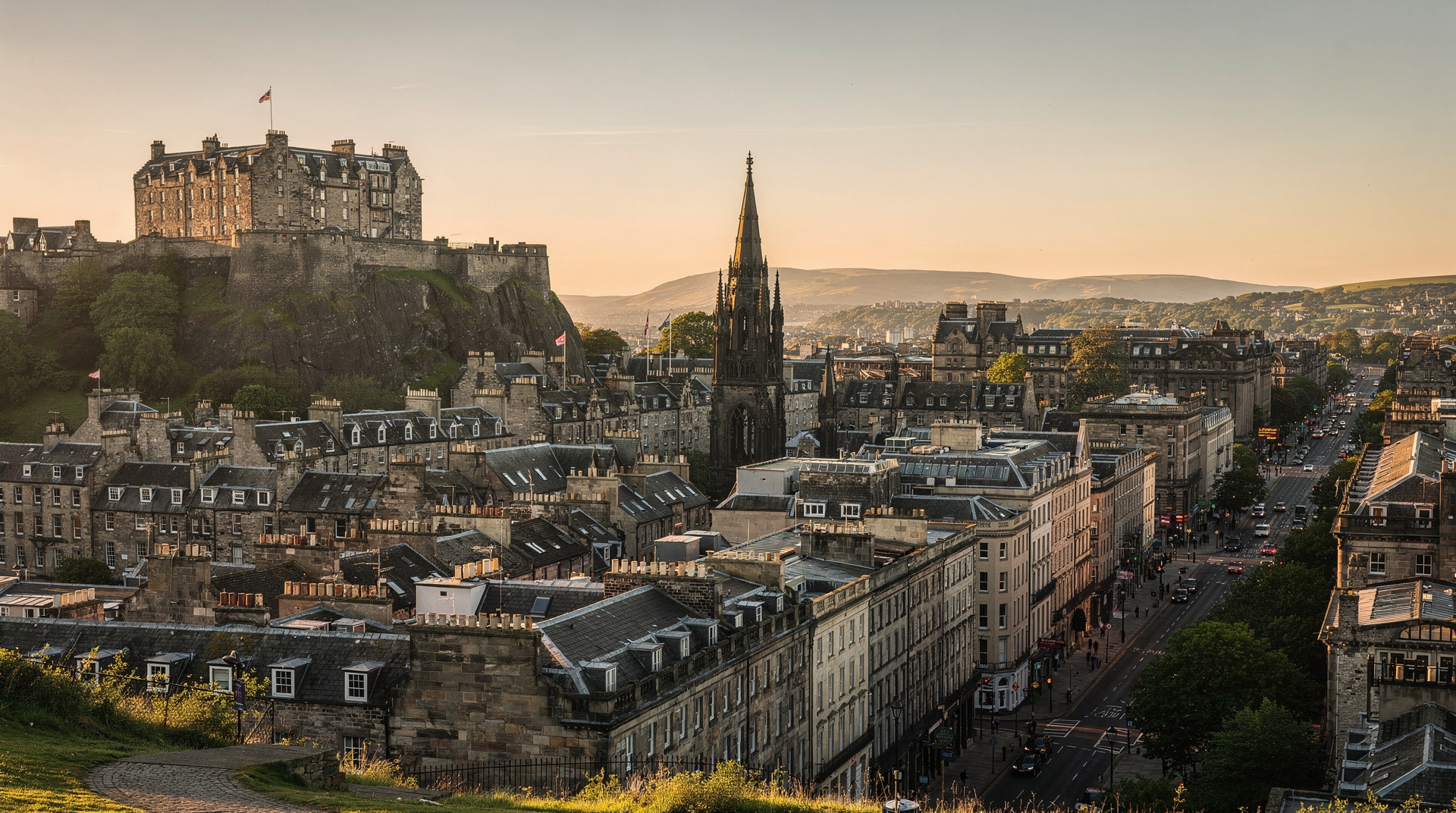
The Old Town sits on a volcanic ridge and runs downhill from the Castle to Holyrood. The New Town spreads north in elegant Georgian grid across a valley that was once a loch. Both are compact enough to walk in a morning, but the climb between them — via the Waverley Steps or the bridges over the ravine — catches visitors off-guard. Comfortable shoes are not optional.
2. August is spectacular and absolutely exhausting
The Edinburgh Festival Fringe runs for most of August, alongside the International Festival, the Royal Edinburgh Military Tattoo, the Book Festival, and the Art Festival. The city genuinely transforms: over 3,000 shows, street performers on every corner, and hotel prices that can be two to three times their normal level. If this is what you want, book accommodation and Tattoo tickets six to twelve months in advance. If you’d prefer a calmer Edinburgh, come in May, June, or September instead. See the summer guide for August logistics in full.
3. Scottish weather cannot be predicted more than about six hours ahead
You will need a waterproof layer regardless of what the forecast says when you leave home. Scottish weather shifts quickly and the city sits on the east coast, which means haar — a cold sea fog from the Firth of Forth — can roll in on otherwise clear days and drop the temperature by ten degrees in an hour. Pack layers. Don’t bet on the umbrella.
4. The Royal Mile is not where you should eat
The restaurants along the Royal Mile serve consistently overpriced, average food to a captive tourist audience. The good food — the places Edinburgh people actually go — is in Leith, Stockbridge, Bruntsfield, and Newington. A walk of twenty minutes in almost any direction from the Old Town takes you somewhere considerably better for considerably less money. See the where to eat guide for specific recommendations.
5. Edinburgh Castle is worth it — but buy tickets in advance
At £23.50 for adults in 2026, Edinburgh Castle is one of the most expensive paid attractions in Scotland, but the Crown Jewels and the One O’Clock Gun are genuinely worth experiencing. The queue at the ticket desk can be 30-45 minutes on a busy day; buying in advance or as part of a guided tour with entry included is the sensible approach.
6. Arthur’s Seat is a real hill, not a short stroll
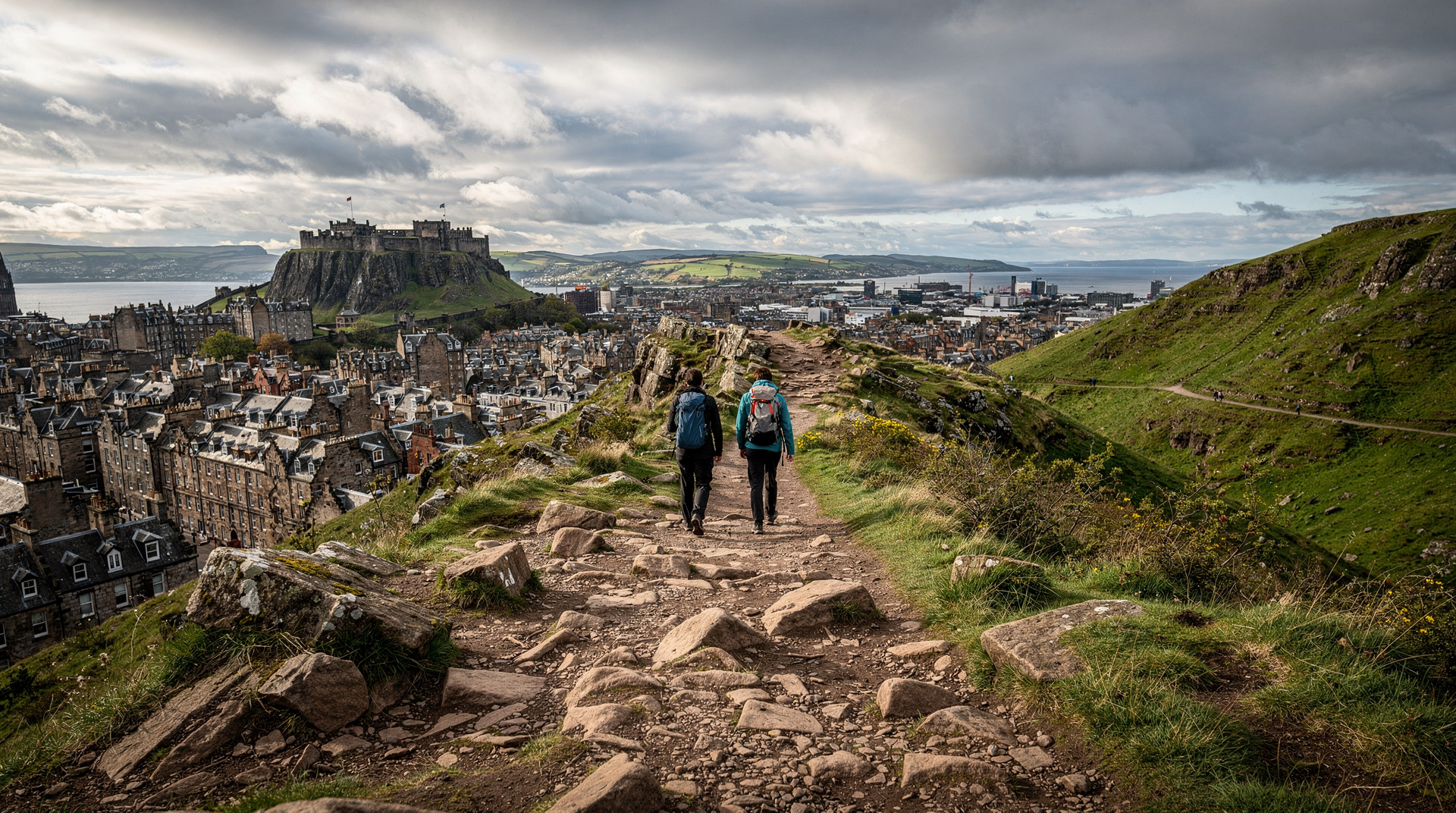
The extinct volcano that anchors Holyrood Park rises to 251 metres and takes about 45-60 minutes to climb at a moderate pace from the car park at the base. It involves a proper ascent on uneven ground, some scree near the summit, and exposure to wind. It is not difficult by mountain standards, but it is not a gentle amble either. Wear proper footwear. See the Arthur’s Seat hiking guide for route options.
7. Greyfriars Bobby is not what most people expect
The statue of the Skye terrier who supposedly guarded his master’s grave for fourteen years is tiny and unremarkable. The Greyfriars Kirkyard behind it, however, is genuinely atmospheric: old gravestones, mortsafes fitted to prevent body-snatching, and a section that was reportedly the inspiration for Lord Voldemort’s name. Worth ten minutes if you are passing. Worth a guided tour if dark history is your thing — see the Greyfriars guide.
8. The tram goes to the airport
Edinburgh Airport is connected to the city centre by tram. The journey takes about 30 minutes and costs £7.90 for a single fare. It drops you at the St Andrew Square end of Princes Street, a 15-minute walk from most Old Town accommodation. It is significantly cheaper than a taxi (£25-35) and much less stressful than coordinating an Uber through airport traffic. See the airport transfer guide for all options.
9. You don’t need a car in the city
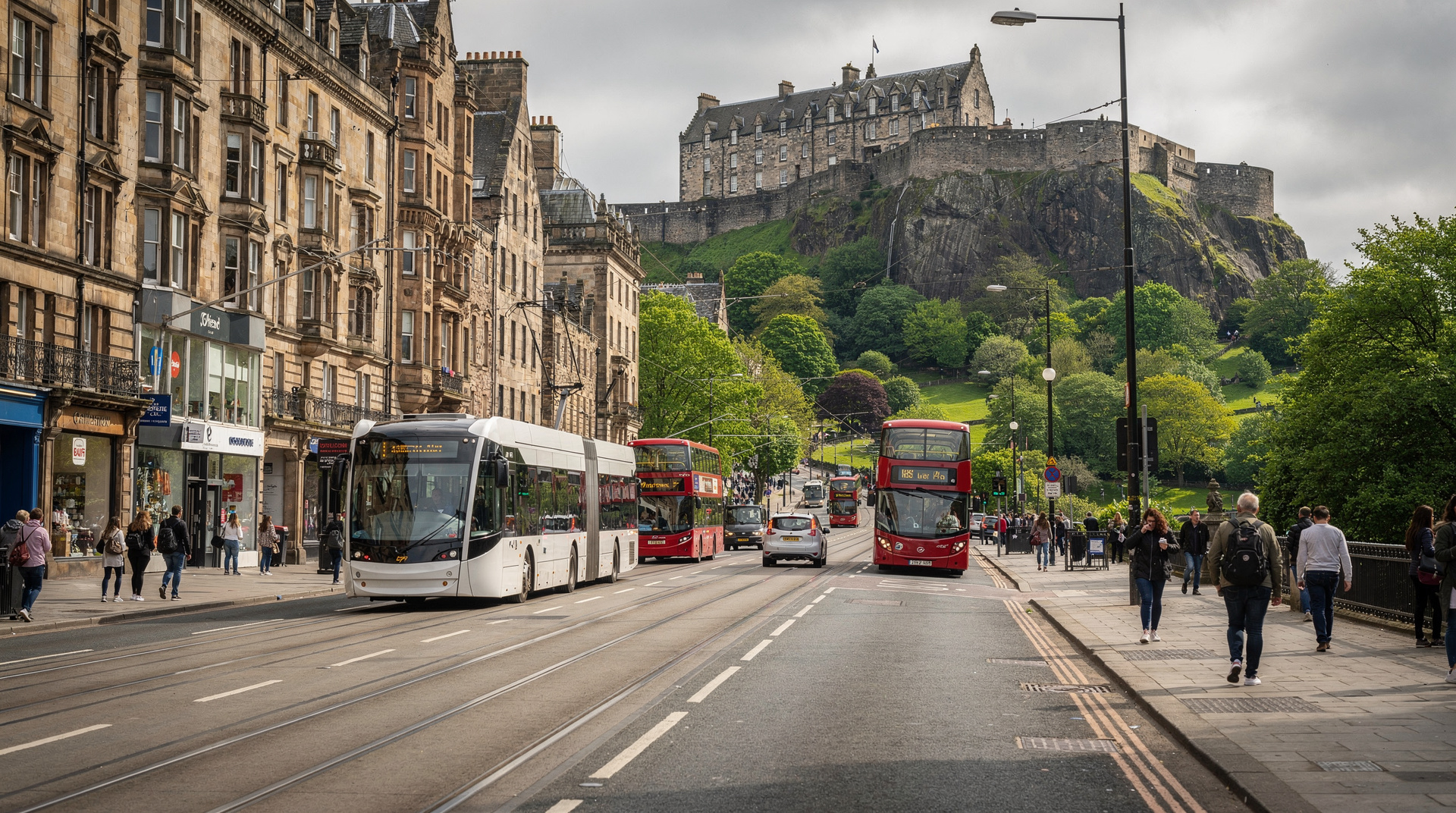
Edinburgh’s centre is compact, extremely walkable, and served by an excellent network of Lothian Buses (frequent, cheap, reliable) and the new tram line. A car in central Edinburgh is a liability — parking is expensive and the Old Town streets were laid out when horse-drawn carts were the widest thing on the road. If you’re planning day trips to the Highlands or outlying areas, consider a guided tour rather than self-driving; the roads can be narrow and the distances misleading on a map. The car guide has more detail.
10. Haggis is genuinely worth trying
Many visitors arrive with a suspicion that haggis is a joke food for tourists. It is not. Properly made haggis — sheep’s offal, oatmeal, onion, and spices, served with neeps (turnip) and tatties (potatoes) — is flavoursome and filling. The best place to try it is not the Royal Mile but somewhere with a short menu and regular turnover. The best haggis guide has real recommendations.
11. Scotland has its own banknotes — which are legal tender
Shops in Scotland may issue you change in notes from Royal Bank of Scotland, Bank of Scotland, or Clydesdale Bank. These look different from Bank of England notes but are valid currency. However, some businesses in England may be reluctant to accept them — spend them before you head south. All Scottish banknotes are denominated in pounds sterling; there is no separate Scottish currency.
12. Tipping is expected but not at the same level as in the US
In Edinburgh restaurants and bars, rounding up the bill or leaving 10% is standard for good service. Staff do not rely on tips as a primary income the way American servers do. Automatic service charges added to bills can be removed if the service was poor; just ask. You are not obliged to tip for drinks at a bar.
13. The underground vaults are a proper experience
The network of sealed stone chambers under the South Bridge, used from the 1790s and discovered again in the 1980s, have been turned into tour attractions of varying quality. The best operators — the original Mercat Tours and Auld Reekie Tours — are genuinely good. The worst are ghost-story theatre with variable acting. See the underground vaults guide for which to book and which to skip.
14. There are more Hogmanay events than the street party
The famous Hogmanay street party on Princes Street on New Year’s Eve requires a ticket and sells out. But the broader Hogmanay programme — the Torchlight Procession on 29 December, the Loony Dook sea swim on 1 January, and the various concerts — offers ways to experience the festival without the main event. See the Hogmanay guide for the full picture.
15. Calton Hill is free and gives the best city view
The summit of Calton Hill, a ten-minute walk from Princes Street, gives the iconic view of Edinburgh Castle on its volcanic plug with Arthur’s Seat behind. It is entirely free, rarely crowded before 9am or after 6pm, and significantly less effort than Arthur’s Seat. Sunset from Calton Hill is one of the best free experiences in the city. See the Calton Hill guide.
16. The pubs shut at a reasonable time
Unlike England, Scotland has no historical 11pm pub curfew — licensing hours are set by local councils and tend to be more flexible. Most Edinburgh pubs close between midnight and 1am on weekdays and 2-3am on weekends. The Cowgate and Grassmarket areas are the main late-night drinking districts. The pub guide covers the landscape.
17. Dean Village is worth twenty minutes of your time
Hidden in a gorge a fifteen-minute walk from the New Town, Dean Village is a cluster of old mill buildings beside the Water of Leith that looks almost implausibly picturesque. It is genuinely quiet even in summer — most visitors on the Royal Mile never find it. Combine it with Stockbridge and the Water of Leith walkway for a half-day that feels entirely different from the main tourist circuit.
18. Not all ghost tours are equal
Edinburgh has more ghost tours per square mile than almost any city in Europe, ranging from excellent to embarrassing. The quality varies enormously. The key questions to ask before booking: is it a real historian or an actor in a cloak? Does it include the underground vaults? Is the group size reasonable? See the ghost tour guide for ranked recommendations.
19. The National Museum of Scotland is excellent and free
The National Museum on Chambers Street is one of the best museums in Britain and it is completely free. Dolly the sheep, the Lewis Chessmen, a Jacobite collection, Viking artefacts, and a spectacular Victorian atrium. Allow at least three hours. If it rains heavily on your first day, this is where to spend it.
20. Stockbridge is the city’s best neighbourhood for a morning
The village feel of Stockbridge — independent shops, the Sunday market, good coffee, the Water of Leith — is completely at odds with the castle-and-closes Edinburgh that most first-timers see. It is ten minutes’ walk from Princes Street and utterly different in atmosphere. See the Stockbridge guide.
21. Day trips are better than you might expect
Edinburgh sits within striking distance of some genuinely remarkable places: Stirling Castle is an hour away, St Andrews is 90 minutes, Loch Ness is 3.5 hours. Organised day tours cover these distances efficiently and spare you the stress of driving on narrow Scottish roads. The day trips guide covers the options by train, bus, and tour.
22. The Fringe is mostly not famous comedians
The Edinburgh Fringe is the world’s largest arts festival. Of the 3,000+ shows, a handful will become next year’s television stars. Most are students, amateurs, and aspiring professionals performing at lunchtime in converted church halls. That is the point. Free shows and cheap tickets (£5-£12) are everywhere. Expensive shows by established names are also available but the Fringe experience is fundamentally about taking a chance on something unknown. See the Fringe guide.
23. Leith is Edinburgh’s coolest neighbourhood
Once a separate city with a distinctly rough reputation, Leith has become Edinburgh’s dining and drinking capital. The Shore and the surrounding streets have a concentration of good restaurants, craft beer bars, and independent coffee shops that rivals anything in the city centre. The Royal Yacht Britannia is moored here and is well worth visiting. See the Leith guide.
24. Booking accommodation in August requires planning months ahead
In August, accommodation prices in Edinburgh reach their annual peak and the city’s hotel stock is effectively fully booked from mid-July. If you are visiting for the festival, treat accommodation like a theatre ticket — book it the moment you know your dates. Budget travellers should look at Leith, Bruntsfield, and Dalry for better value than the Old Town.
25. The people are genuinely friendly
This may seem like a cliché but visitors frequently comment on it. Scots, and Edinburghers in particular, are straightforwardly helpful when asked for directions, happy to talk about the city, and considerably less guarded with strangers than the English reputation for reserve might suggest. Ask a local where to eat and you will get an honest answer, not a shrug. That quality, as much as any castle or festival, is what makes Edinburgh worth the journey.
Five more things worth knowing
26. Scots words appear on menus and signage, not just in conversation. “Wee” (small), “bonnie” (pretty), “dreich” (grey, damp weather) and “aye” (yes) turn up constantly. Nobody expects you to use them back, but recognising them saves confusion on menus and in shop windows. See the Scottish words for visitors guide for the fuller list.
27. Outlander filming locations get seasonally busy. Fans planning a trip around the show should know that certain sites — Doune Castle, the Royal Mile closes used as filming backdrops — see visible spikes tied to new series releases. A dedicated Outlander filming locations day tour is a more efficient way to see several sites than chasing them independently. See the Outlander locations guide.
28. Sunday opening hours are genuinely different. Many shops on Princes Street and in the New Town open later (often 10am or 11am) and close earlier on Sundays, and some independent shops close entirely. Plan Sunday mornings around a walk or a museum rather than shopping.
29. A Highlands day trip needs the full day, not a half. Loch Ness and Glencoe are 3-3.5 hours from Edinburgh each way; even the closer options like Stirling or St Andrews eat a meaningful chunk of a day. Treat any Highlands day trip as a full-day commitment and book the earliest departure available. The Highlands from Edinburgh guide has realistic timings.
30. Be considerate photographing in the closes and stairwells. Many of the atmospheric closes off the Royal Mile lead to residential stairwells where people actually live. A quick photo from the entrance is fine; wandering deep into a close or photographing directly into ground-floor windows is not.
Frequently asked questions about visiting Edinburgh
How many days do I need in Edinburgh?
Two days is enough to see the main highlights: Edinburgh Castle, the Royal Mile, Holyrood, Arthur’s Seat, and a first taste of Leith or New Town. Three days allows a more relaxed pace plus a day trip. If you want to cover a day trip to Loch Ness or St Andrews, allow four to five days minimum. See the how many days guide.
Is Edinburgh expensive?
Relative to other UK cities, Edinburgh falls between London and the northern English cities. Budget accommodation starts around £30-50 per night for a hostel dorm; mid-range hotels run £100-160; the main tourist attractions cost £10-20 per adult. Food and drink is broadly comparable to London if you stay on the tourist circuit, but eating in local neighbourhoods is significantly cheaper. See the is Edinburgh expensive post for a full breakdown.
What currency does Edinburgh use?
Pounds sterling, exactly as in England and Wales. Scotland is not in the eurozone and never has been. There is no Scottish pound — Scottish banknotes are denominated in pounds sterling and issued by Scottish commercial banks. ATMs are widely available and credit cards accepted almost everywhere.
Do I need to book Edinburgh Castle in advance?
Strongly recommended in summer (May-September), essential in August. The queues at the ticket desk on busy days can be 30-45 minutes long. Buying tickets online in advance, or as part of a guided tour, gives you a timed entry slot and saves significant time.
Is Edinburgh safe?
Yes, by the standards of any comparable city. The main tourist areas of the Old Town and New Town are generally safe at all times of day. The Grassmarket and Cowgate can be rowdy late on Friday and Saturday nights but are not dangerous in the way some city-centre nightlife districts are. Standard precautions — watch your bag in crowds, be aware in busy areas — apply as anywhere.
Do I need to tip in Edinburgh?
Rounding up or leaving around 10% for good restaurant and bar service is standard practice; it is appreciated rather than obligatory. Staff do not depend on tips as a primary income the way they do in the US, and an automatic service charge already added to a bill can be removed if the service fell short — just ask.
What should I pack that first-timers forget?
A genuine waterproof layer (not just an umbrella), comfortable shoes with grip for the hills and cobbles, and a portable phone charger for long days out. Layers matter more than any single heavy coat, since temperatures and wind shift quickly across a single day.